


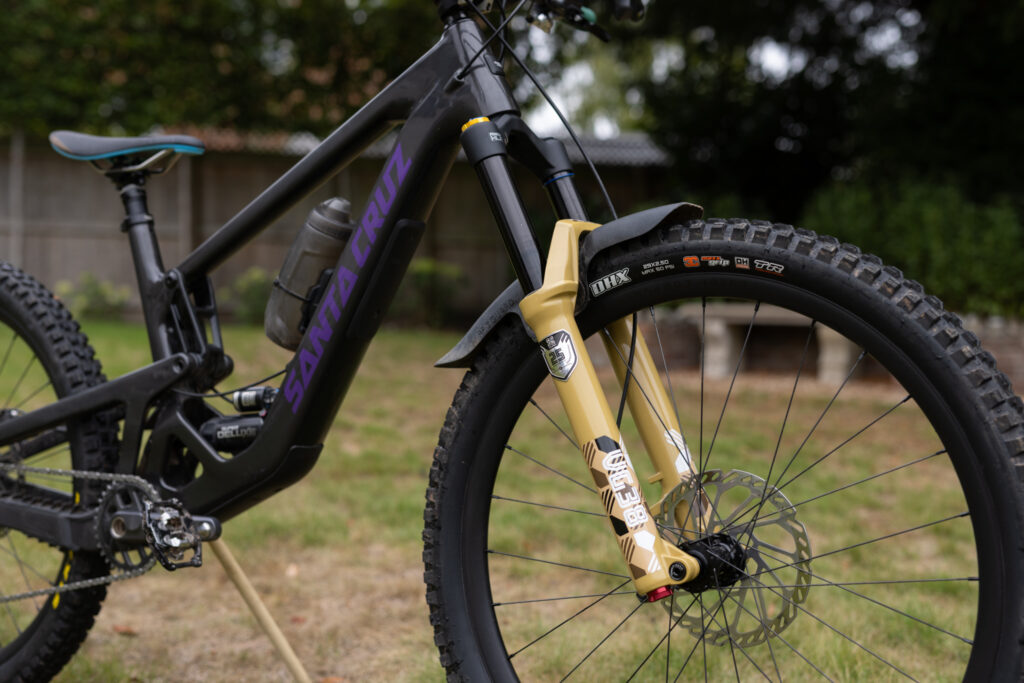

With Fox and RockShox taking most of the suspension limelight, XFusion has become more of an unsung hero. Granted, it’s been late to the fat stanchion party with the release of the Vengeance38 HLR, but it’s been worth the wait, as it’s a serious underdog that provides top-level stiffness in a package that wants to be plowed through the most dubious of tech. It dons all of the adjustments at a much more approachable price, too. However, mid-stroke support leaves something to be desired, and it needs a touch of extra care when setting up.
XFusion Vengeance38 HLR – Technical details
The Vengeance38 HLR is XFusion’s enduro-focused fork that can offer travel from 160mm to 180mm. What’s great here is that users can adjust between those travel amounts by pulling the lower and swapping out some internal spacers.
Additionally, this fork is very much the real deal. As its name suggests, the HLR damper offers high and low-speed compression adjustments, as well as 25 clicks of rebound adjustment. It’s also sorted with, granted, more basic versions of technologies we’ve seen on pricier forks. One of which is the Neutra Valves.
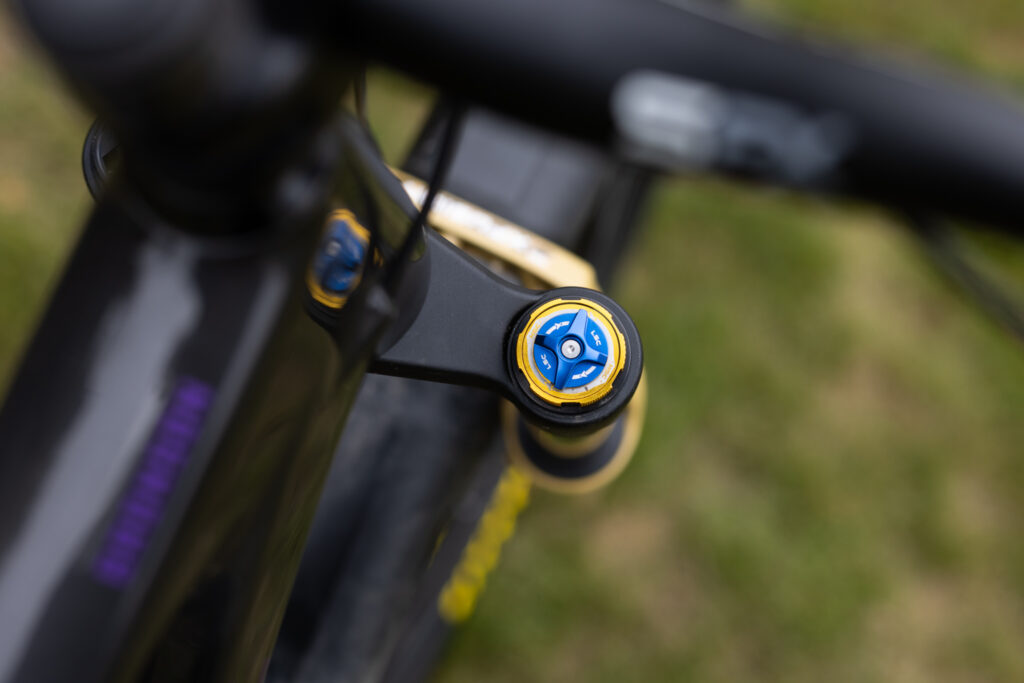
These take the place of lower leg bleed valves that help neutralise the internal pressure of the fork that might build after long descents with big variations in altitude. They’re not the buttons as we’d see on the higher-end Fox and RockShox alternatives; rather, they’re little grub screws that are undone with a small allen key. They do the same job, nonetheless.
Along with Nvolve Wiper seals, added to reduce stiction, there’s a pair of 38mm stanchions built from aluminium, a tapered steerer and a Boost 110x15mm axle, which is just wound in place – there are no extra clamp bolts here.
Available in 44 and 51mm offsets, the Vengeance38 can play ball with rotor sizes from 180mm to 220mm.
XFusion Vengeance38 HLR – Performance
I’ll admit, I’ve been spoiled with the top-shelf and spendy suspension from the big brands, so I approached the Vengeance38 with a fine pinch of salt, but generally, I’ve been both surprised and impressed with the performance on offer, especially as it’s nearly half the price of its biggest competitors.
Setup is no different from your usual adjustment-laden forks, and I’ve found that the pressure chart found on the back of the damper-side leg is pretty bang-on. Once inflated with a few clicks of all of the adjustments thrown in for good measure, I was off to the races.
However, I did come across a couple of instances where the fork would lock itself in its fully compressed position. I believe this is down to the positive and negative air chambers balancing unevenly, despite my best efforts to balance them as I inflated the fork. Though, with a bit of effort, I got them balanced and performance has been consistent since; it just needs a little bit more care when setting the fork up.
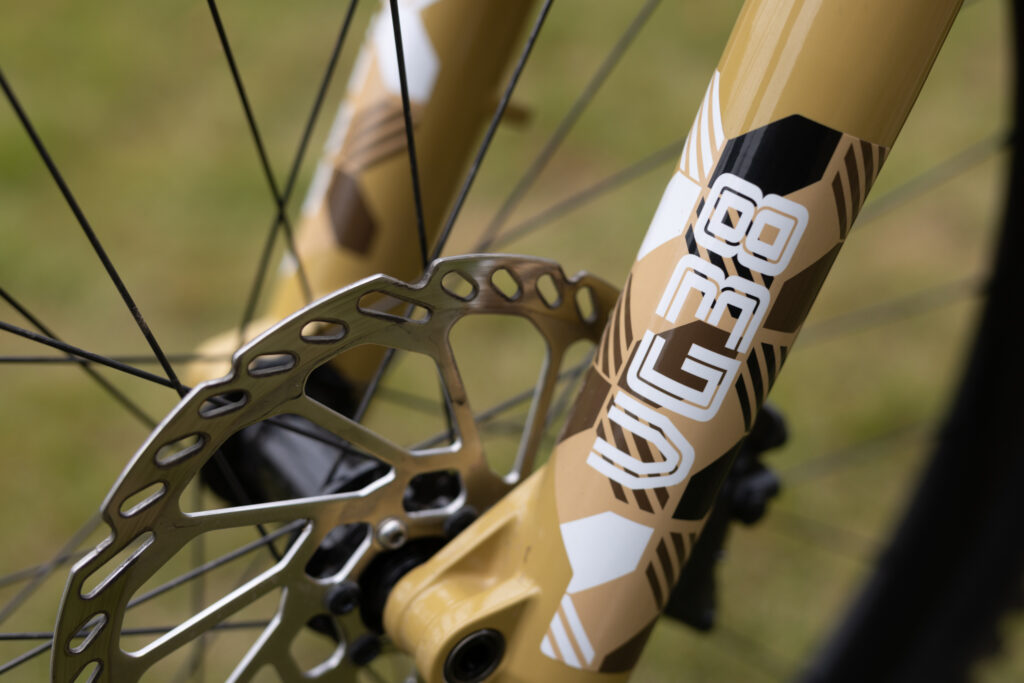
It’s excellent to see travel adjustment, too. While it is an internal change around of the spacers, it’s great that it can be done at home if you’re willing to pull the lower off and get a little oily. Admittedly, it’s not something I’d be fiddling with on the regular, but this feature means that the fork can be swapped to new bikes of different fork travel.
At first, the Vengeance38 comes with one main drawback that’s pretty common on more affordable forks – stiction. There is some breakaway friction to contend with, where the fork starts moving to absorb impacts, but once it’s past that initial breakaway, the travel smooths out rather well. Granted, it’s not as beautifully supple as much pricier options. Importantly, this doesn’t lead to any excess vibrations transmitted to the hands.
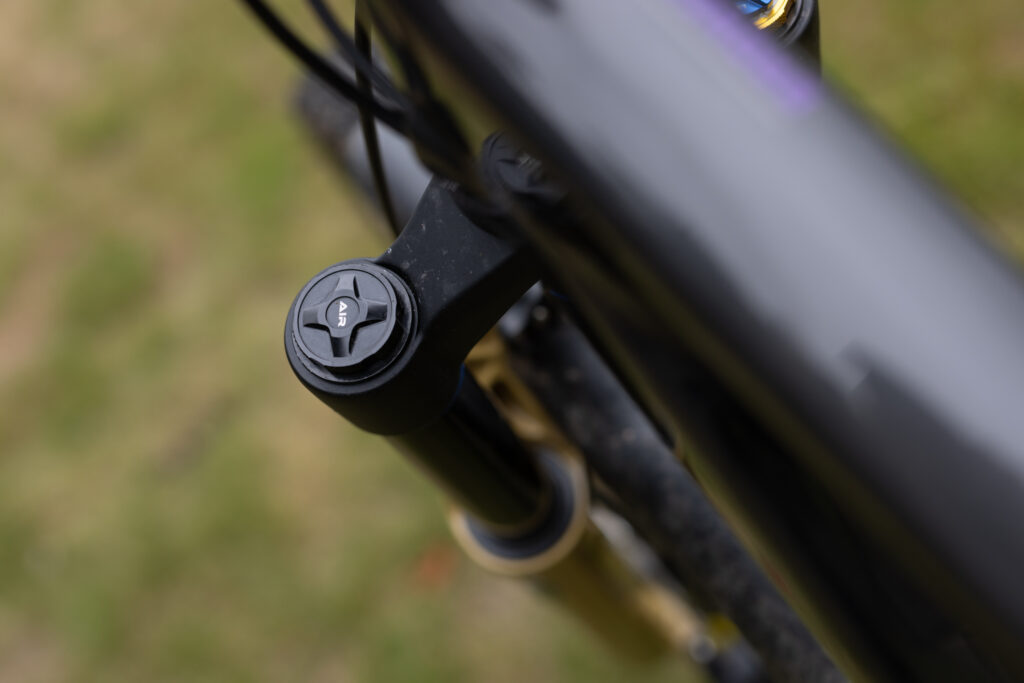
This is a 38mm stanchioned fork, so it performs with the level of stiffness that you would expect of such. I mean, this fork is most at home when pushing it at speed through the most uneven of terrain. The stiffness it rustles up brings direct steering but also a super confident feel when landing into a web of roots. Point it towards something nasty, and the Vengeance38 brings excellent front-end composure and a ride that rarely deviates from its line.
With that, it’s a fork that likes to sit within its midstroke. At that point, it’s at its most active as it does a commendable job of staving off small to mid-level bumps, complementing its stiffness. Because it sits mostly in the midstroke, I found that the fork worked at its best with the rebound set to be a little faster than usual. This helped keep it propped up in its travel a little more, while dealing with the fast-repeating hits of my local tracks. Unusually for me, I settled on running the rebound four clicks in from open, which is pretty fast compared to how I would set other forks.
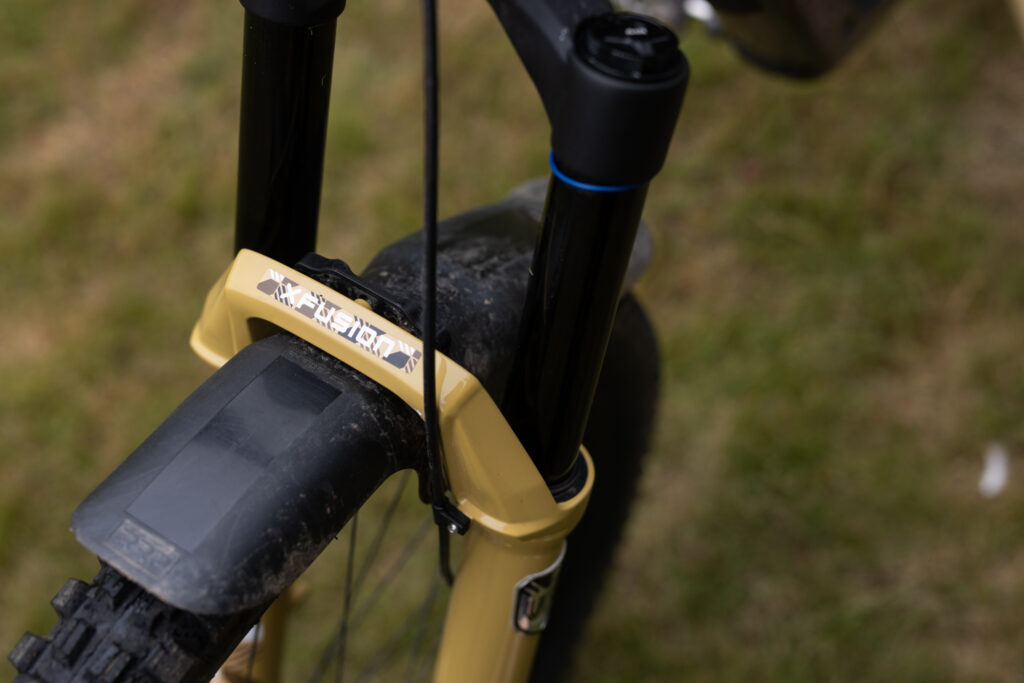
When it comes to such hits, the Vengeance38 performs impeccably, relishing a combination of speed and gnar as it effectively soaks up nasty tech and irons out most manners of trail imperfections. Over flatter but still very chunky terrain, the fork has an awful lot to offer
But that tendency to perform in its midstroke comes with quite the caveat. On steeper tracks, it sits deeper into its travel, relenting its support when weighted more. The downside here is that it lowers and steepens the bike’s dynamic geometry, so when tackling steep gradients, it’s not as supportive or as confident as it is everywhere else.
Winding on a good handful of low-speed compression does work to keep the fork propped up, but that is at the expense of traction. So there’s a real balance to hit here.
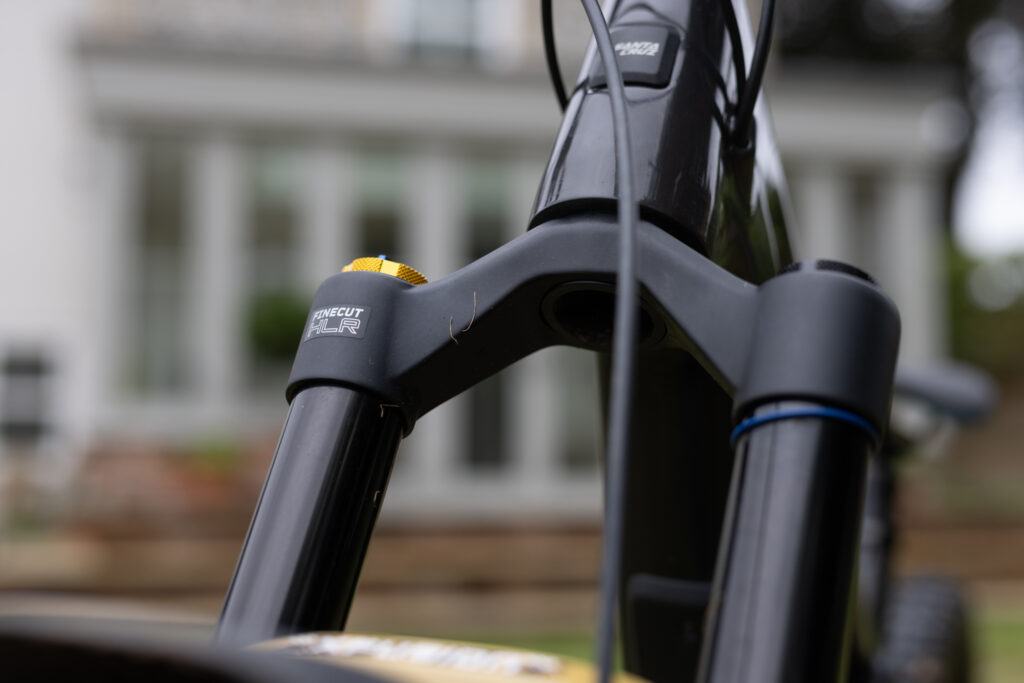
Fettling with volume spacers does aid this, and it’s the same simple case of unwinding the air spring’s cap to get to them, and thread them in place. Though, I found that I was looking for a setting that was between one and two spacers. With one, I couldn’t quite achieve the support I was looking for without winding on a good helping of low-speed compression, and with two I wasn’t using a good deal of the fork’s travel. I settled on running one, and I was reasonably happy, but again, a touch more support would have brought a bit more confidence.
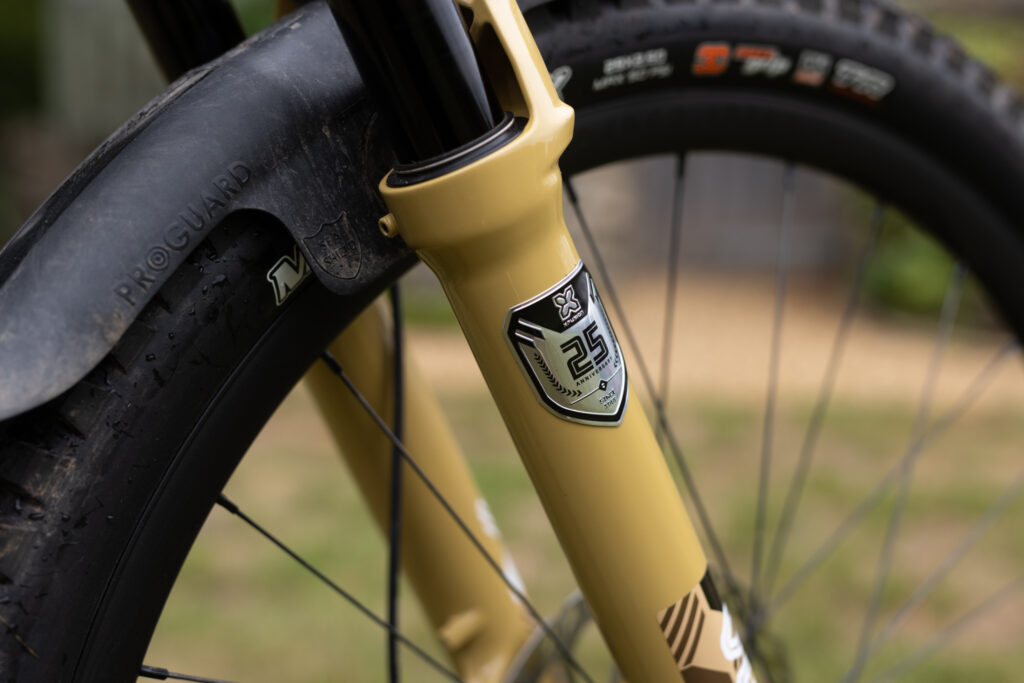
A neat feature that I never thought I would find myself praising is the fork’s mudguard mount. It uses a combination of bolt interfaces that you’ll find elsewhere on a bike: one that you would usually use to mount brake calipers, and two that usually hold bottle cages in place. The cool bit here is that these types of bolts aren’t specific to the fork’s mudguard mount, and they’re super easy to get hold of.
XFusion Vengeance38 – Verdict
As for the Vengeance38’s value, it’s pretty darn good, but there are cheaper forks around. Yep, it has its foibles, but for a fork that has all of the necessary adjustments at a price of £800, it’s a very attractive option. It might not have the brand cache of the big duo, but in general, its performance does stack up.
It won’t pry my RockShox Lyrik Ultimate Charger 3.2 out of my hands. It’s a more supportive fork, with more consistent progression and more adjustability, but it costs £1,225. It is a better and lighter fork, but it’s considerably more expensive. The same goes for the ZEB Ultimate at £1,265. The second-generation Manitou Mezzer Pro is the Vengeance38’s closest competitor at the high end, at £1,199.99. We’ve got the current model on test, but the previous generation is a winner and performs better in general; again, you’re going to have to pay for it.
But if we look at the more affordable range, you’ve got the RockShox ZEB Select at £864. It gets many similar features but fewer adjustments. Then there’s the RockShox Domain Gold at £620, but it’s simpler and, again, offers fewer adjustments. Neither of those forks get any form of travel adjustment, but they do come in a wider range of travel options. But with all of those forks in mind, what the Vengeance38 has to offer still holds up rather well, and if I were looking in that price bracket, it would be high on my list. It’s not as refined as more expensive options, but it is better equipped than those that are more affordable.
While the XFusion Vengeance38 has its drawbacks, including the somewhat lacking midstroke support, additional stiction, and an extra few grams, the asking price does a lot to make up for those. Although I’ve had a couple of niggles, I have been fairly happy riding it; it’s active, traction-rich, and stiff, while packing the adjustments you need, for a price that really brings the heat to the bigger players. If you’re an enduro rider looking for a more affordable fork upgrade, you’ll be doing yourself a disservice by ignoring the Vengeance38.
Test Report
What does the manufacturer say about this product?:
Xfusion doesn’t provide a description.
Tell us some more about the technical aspects of this product:
Weight: 5.3lbs/2400 grams
Wheel Size: 29 inch
Travel: 180mm, (ITA 160/170/180)
Stanchion: 38mm Aluminum
Spring: Air Spring
Damper: Finecut HLR
Adjustments: High and Low Speed Compression, Rebound
Steerer: Taper only
Axle: bolt-On Boost 110*15mm
Features: Neutra Valves
Colors: BLUE/SAND
Axle to Crown: 596mm @ 180mm of travel
Offset: 44mm/51mm
Rotor Size: 180mm / 203mm(adaptor) / 220mm(adaptor)
Any further comments on quality?:
Spot on for a fork of this price
Any further comments on performance?:
Very competitive, though not to the tastes of every riding style.
How does the price compare to that of similar products in the market, including ones recently tested?:
You get all of the adjustments found on forks well north of its price.
Did you enjoy using the product? Yes
Would you consider buying the product? Yes
Would you recommend the product to a friend? Yes
Use this box to explain your overall score
Considering the asking price, it’s an excellent fork for the money and it’ll suit a lot of riders who are happy to steer away from the norm.
About the tester
Age: 34
I usually ride: Santa Cruz Bronson
I’ve been riding for: 10-20 yearsI ride: A few times a weekI would class myself as: Experienced
I regularly do the following types of riding: Mountain bike Enduro
