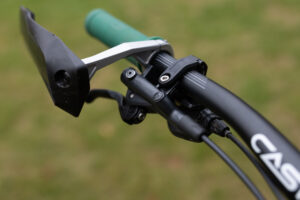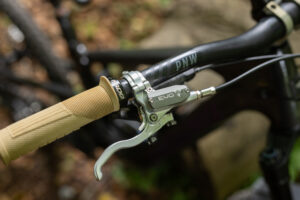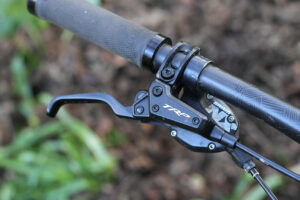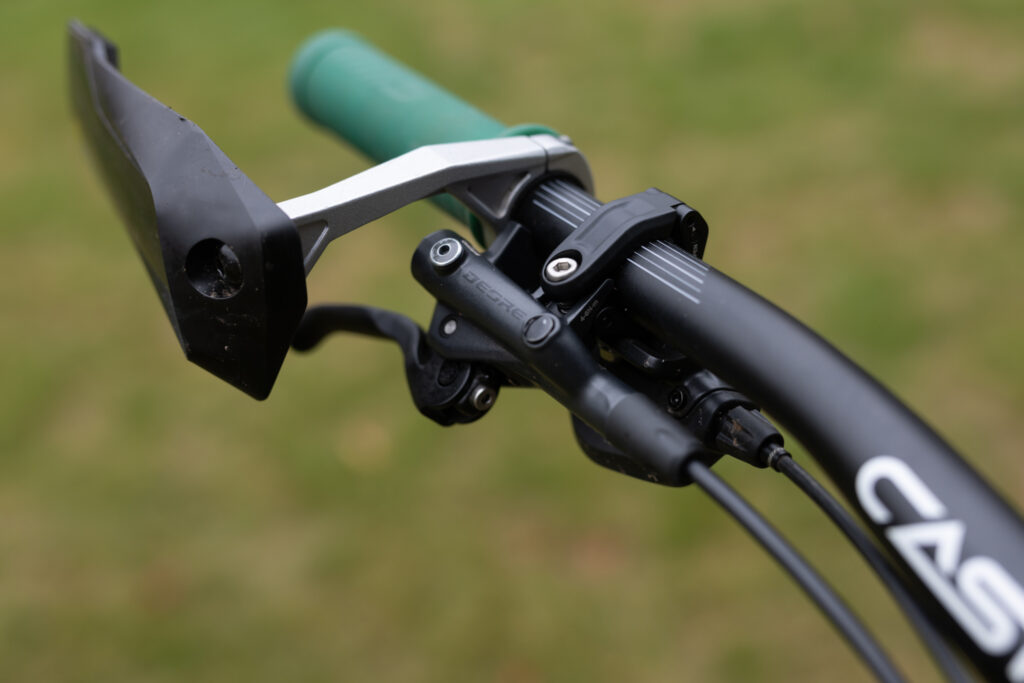

Upon the release of its updated mechanical drivetrains, an updated Shimano Deore M6200 four-piston brake hit the market. As before, it’s consistent, easy to use, and provides just enough power for general trail shenanigans, but now it’s even easier to bleed and even more comfortable.
Shimano Deore M6200 four-piston brake – Technical details
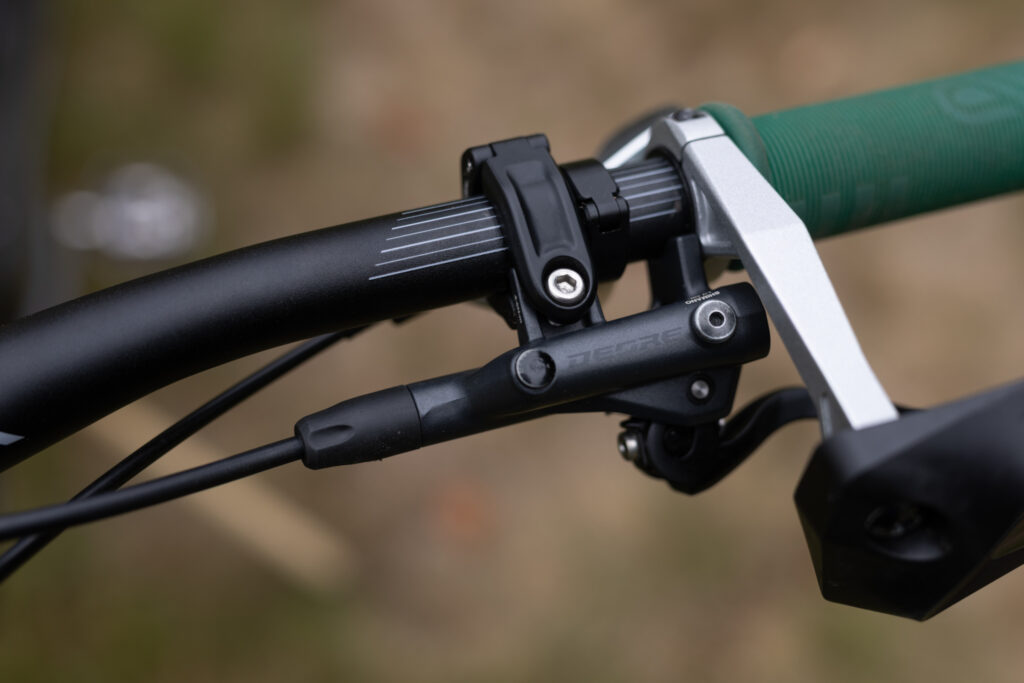
When Shimano unveiled its newest XT and XTR brakes, they came with a whole bunch of new features that have trickled down to the Deore-level offering. Now, the lever comes with a rejigged shape that brings the hose closer to the bar to achieve a tidier look and better integration with headset-routed bikes.
However, simplicity is the name of the game with the new brake. It doesn’t carry much in the way of bells and whistles; rather, it gets updates that matter.
Importantly, the Deore M6200 uses the new low-viscosity mineral oil that promises more stable braking over a wider range of temperatures, plus this should do away with wandering bite point woes.
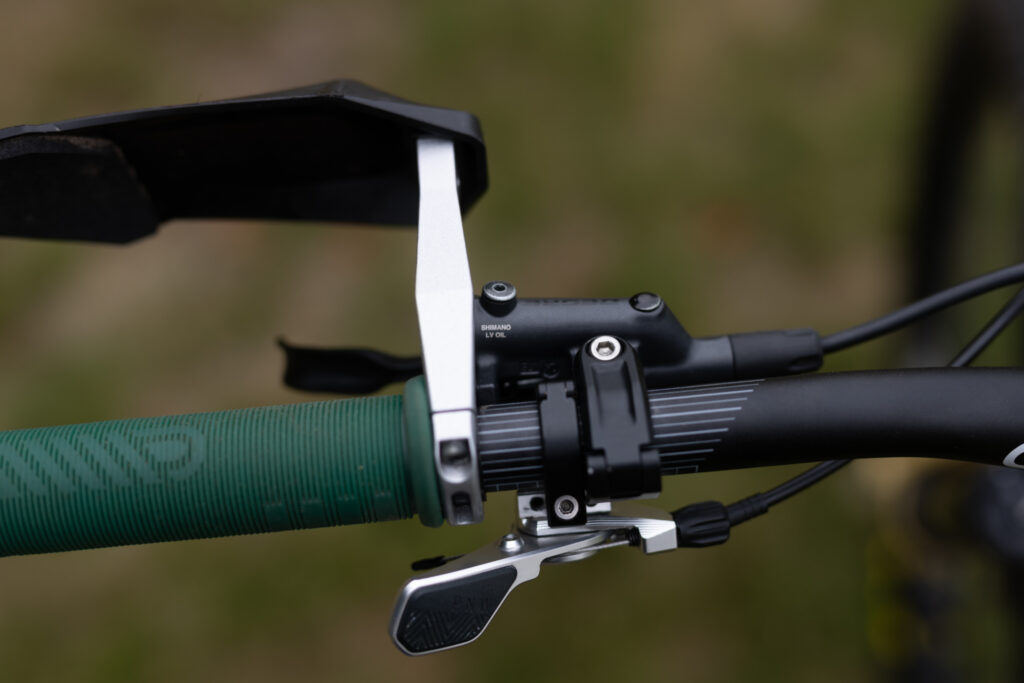
Also found on the lever is Shimano’s Servo Wave technology that hastens pad contact with the rotor while ‘optimising’ the brake’s power curve. It’s then available with I-SPEC EV and clamp band mounts.
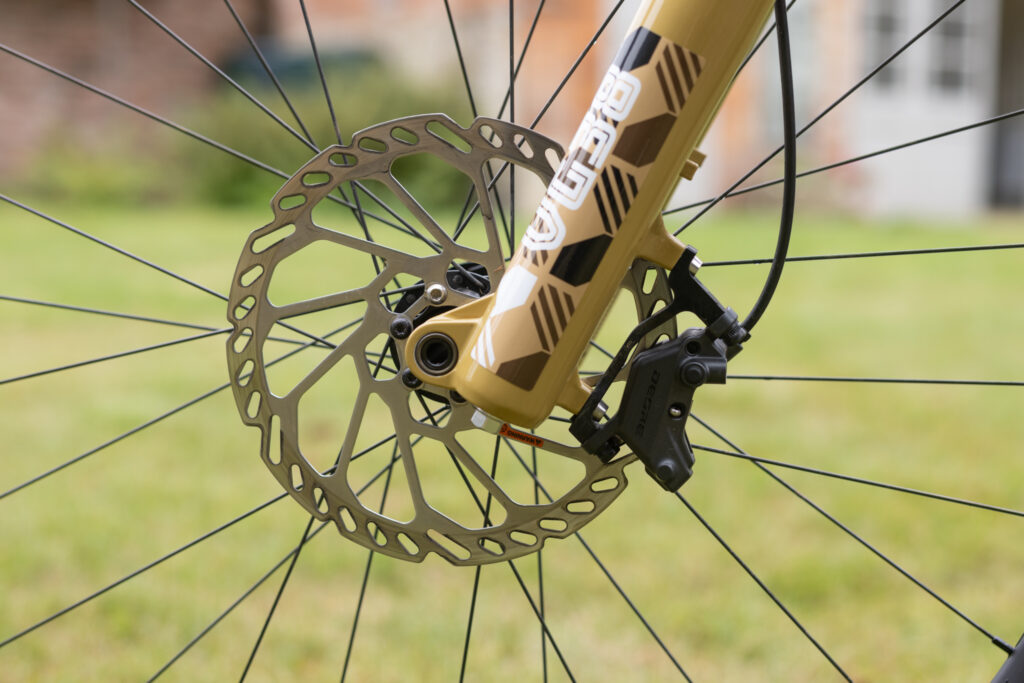
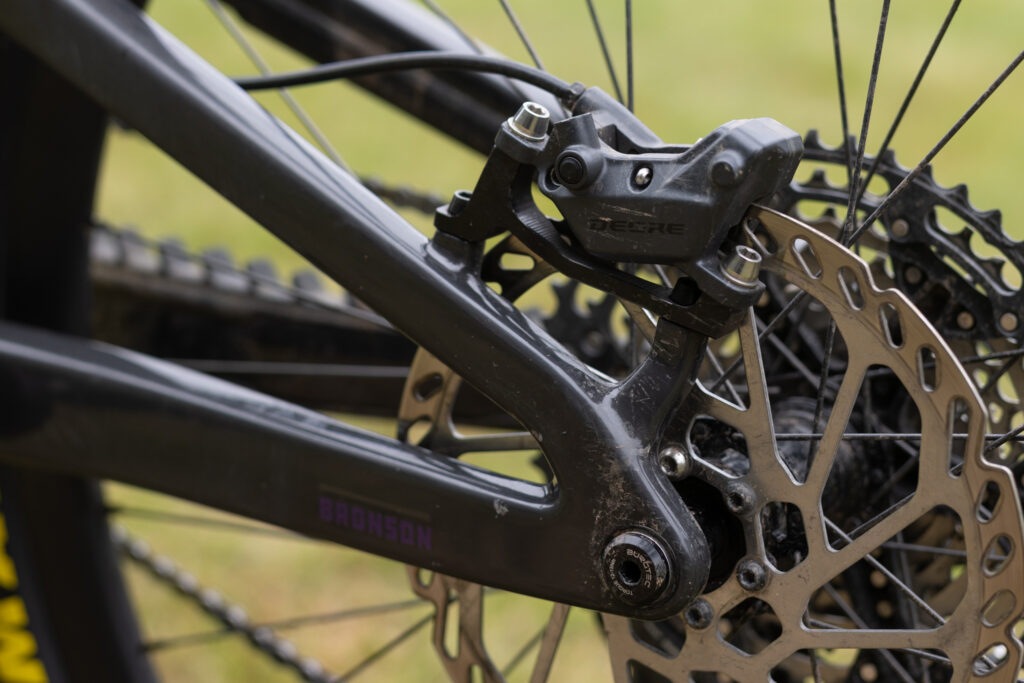
Moving on to the caliper, it uses the usual two-piece construction, so the two halves of the caliper are joined, and Shimano has thrown in some updated piston seals, as well as new heat-resistant pistons. As for pads, it’s designed to work with Shimano’s finless offerings, held in place with the ol’ reliable split pin.
As with all of Shimano’s brakes, the M6200 uses the brand’s one-way bleeding method, but like on the spendier options, it’s seen a bit of a tweak. Now, there’s a valve that needs to be released after popping a hose in place. This is an excellent move, as the hose is held into the caliper more securely, and there’s less chance of air finding its way into the system when installing and removing the hose. It’s also less messy.
What the Deore M6200 doesn’t get from the XT and XTR line is the Ergo Flow lever, toolless adjustment, and the bite point adjustment. Oh, and compatibility with Shimano’s finned pads.
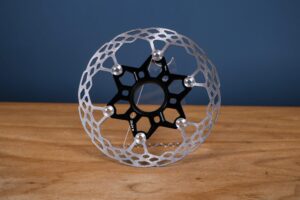
Naturally, the brake is compatible with both Shimano’s regular-thickness rotors and the newer 2.2 mm-thick rotors. The latter of which I’ve used during this test.
Shimano Deore M6200 four-piston brake – Performance
Admittedly, I’ve been spoilt with some rather posh brakes over the years, but as Shimano’s Deore brake has been such a regular hit for a good while now, I was very keen to find out what the updated M6200 version had to offer. Generally, it’s seriously consistent.
But to start with the bleed process, it’s certainly much simpler, and as I mentioned, I’m quite the fan of the new arrangement. For the most part, it’s the very same affair as before, but you just need to unwind a screw a quarter turn before pushing fluid through the system. The result is a cleaner and easier bleed, without the need for interesting tools and cable tie bodges to keep a syringe’s hose in place.
With that, I found the bleed to be very straightforward, and I’ve only performed a full bleed once during my time with the brakes, only going for a lever bleed once, mostly for the fun of it. During that lever bleed, done after a couple of months of riding, only a little air bubbled through.
Having bedded them in, the lever feels very much as you would expect from a Shimano brake. It’s sharp, and once the pads hit the rotor, power is pretty immediate. However, the brake doesn’t dump all of its power once the lever hits the bite point. Rather, there’s a welcome touch of modulation. The lever feel is super positive, but power isn’t quite as hasty and abrupt as with previous generations.
This brings a heightened level of control to the Deore M6200’s braking. It does offer a great deal of power early in its stroke, but it allows for easy modulation of that power, and excellent communication with the wheels. So it’s easy to feel when a tyre is breaking traction, and to know when to let off the brakes a touch. Generally, it’s a very easy brake to work with.
The lever itself is a small deviation from levers prior in that the blade itself isn’t as sharply hooked as before. Instead, it’s smoother and very natural-feeling. It doesn’t quite instil that brake lever sense of security, but it’s comfortable, and I’ve not had my fingers slip or move about at all. It’s also slightly different in shape from the XT and XTR brakes in that it doesn’t have that mild upsweep, which, for me, is pretty hard to get used to. So top marks for lever shape here, Shimano.
As mentioned, I ran the M6200 with Shimano’s thicker 2.2mm rotors, and they definitely brought an improvement to where that bite point sat in the lever throw. Of course, there’s more material in between the pads, so the bite point is reached sooner into the lever’s travel. I found that this gave me an extra touch of adjustment in how I could set my levers up, so I ran them a little closer to the bar than usual without much of a reduction in overall performance.
Although this is a smaller brake compared to SRAM’s Maven or Hope’s gravity-fuelled brakes, there’s definitely enough power here for a good range of riding. I’ve ridden them as I would any brake, and even during steeper sections of my usual ride, the level of power on offer has been more than enough to maintain control.
To start with, I ran the M6200 with the included organic pads and performance was fairly consistent, but while tackling those steeper tracks, I did notice some minor brake fade. Granted, my steep tracks aren’t particularly long, so I could definitely get away with it, but if I were riding more brake-intensive and longer trails, it would be more of a problem. While a bit of a drawback, this is just organic pads doing what organic pads do in a simpler brake, so if you’re regularly riding steeper trails, a change in pad compound is a worthy upgrade.
Shimano Deore M6200 four-piston brake – Verdict
At £149.99 an end, the Deore M6200 continues to be pretty darn good bang for buck. But there are others around that look to take the brake’s crown. One of which is Magura’s MT5. Although it uses a mostly plastic build, this brake can be picked up for around £95 an end, and it offers decent power for trail and enduro use. However, its two-finger blade comes with a spongy feel.
If you’re in this price bracket and happy to spend a little more, Formula’s Cura 4 is worth looking at, at £179 an end. It’s a fancier brake, and it benefits from a tool-free reach adjustment, and there’s a progression adjuster, but it’s nearly £30 pricier.
If I were looking for an affordable brake upgrade, the Shimano Deore M6200 would be it. In anything but the steepest and most brake-intensive tracks, it offers up a great level of very usable power, a familiar but excellent lever feel, and great consistency. It’s just when that heat builds that the brake begins to fade, but a change in pad compound fixes that sharpish.
Test Report
What does the manufacturer say about this product?:
When you need reliably consistent braking action and a streamlined, clean appearance without shelling out big cash.
Tell us some more about the technical aspects of this product:
Servo wave, low viscosity oil, four piston caliper, I-Spec EV compatibility.
Any further comments on quality?:
Excellent quality, although its clear it’s a more affordable brake.
Any further comments on performance?:
Superb consistency and great level of power. Included pads are prone to fade.
How does the price compare to that of similar products in the market, including ones recently tested?:
More expensive than the Magura MT5, cheaper than the Formula Cura 4.
Did you enjoy using the product? Yes
Would you consider buying the product? Yes
Would you recommend the product to a friend? Yes
Use this box to explain your overall score
The Shimano Deore M6200 is a superb upgrade compared to previous iterations with good power, easy bleeding and a great feel.
About the tester
Age: 33
I usually ride: Santa Cruz Bronson
I’ve been riding for: 10-20 yearsI ride: A few times a weekI would class myself as: Experienced
I regularly do the following types of riding: Mountain bike Enduro