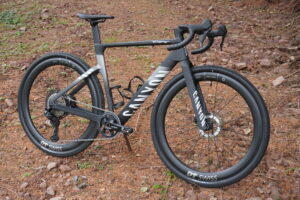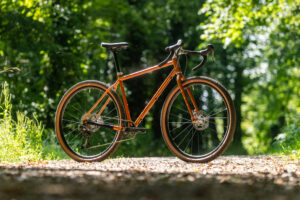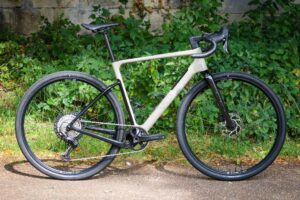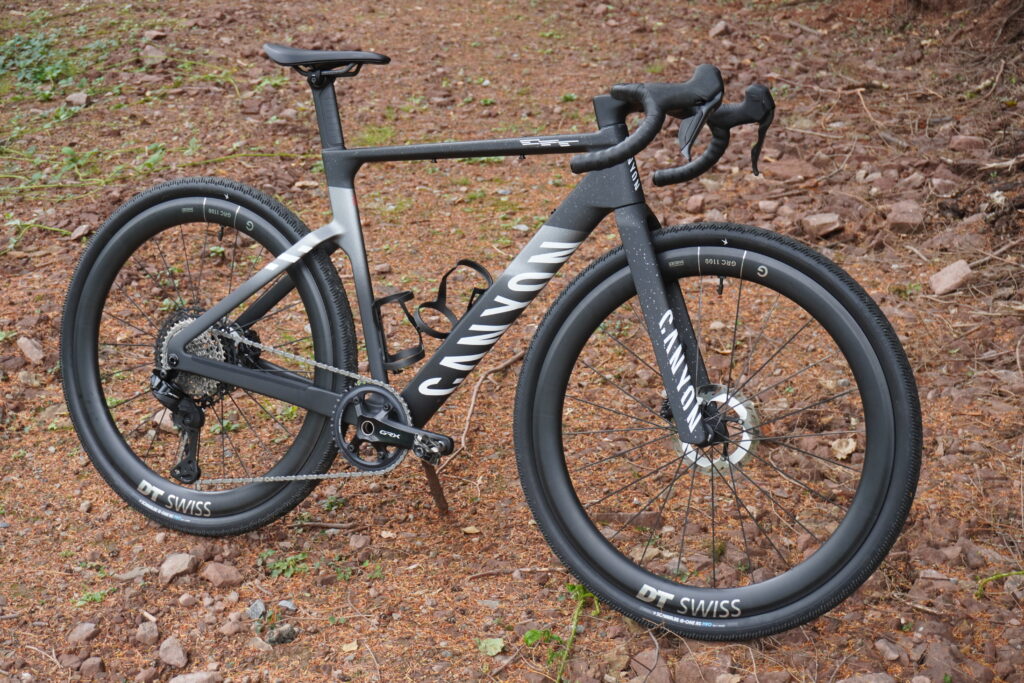

Canyon has updated the Grail gravel bike and created something with a tick-box wishlist designed to please racers. Up-to-date 57mm tyre clearance, significant changes to the aerodynamic profile, and the ability to attach additional frame storage quickly and neatly are all featured. But while the frameset might be exactly what riders and racers are looking for, some of the component choices leave questions about this CFR Di2 model.
The history of the Grail dates back to 2018, with the infamous Hover Bar, which certainly stood it out from the crowd. This was followed by the Gen 2 in 2023, which ditched the double-decker handlebar and returned to a standard cockpit setup, which also fell short in some key areas, with official tyre clearance of only 42mm. The new Gen 3 Grail further separates the model from the Grizl, which was intended more as an adventure bike, although there has always been significant crossover between the two. With a greater emphasis on racing and aerodynamics, the updates help create a distinctly different model line-up, although there are still some question marks over individual models within the range.
Canyon Grail CFR Di2 – Technical Details
Within the new Gen 3 range are three versions of the frameset. All share the same updated frame shape, with improved aerodynamics and increased tyre clearance. The range starts with the CF, which lacks internal frame storage but features Canyon-specific mudguard mounts and a standard cockpit setup. Next are the CF SLX models, which use the PACE cockpit and have internal frame storage. The CFR is the most expensive and most race-focused option, and removes the Canyon-specific mudguard mounts.
Each frameset model has a different carbon layup, which also affects the overall weight. Compared with the previous Gen 2 Grail, Canyon claims the new frameset claims to offer greater adaptability and improved dynamics, although weight has increased slightly across the range. Claimed frameset weights in a size Medium are 989g for the CFR, 1095g for the CF SLX and 1128g for the CF.
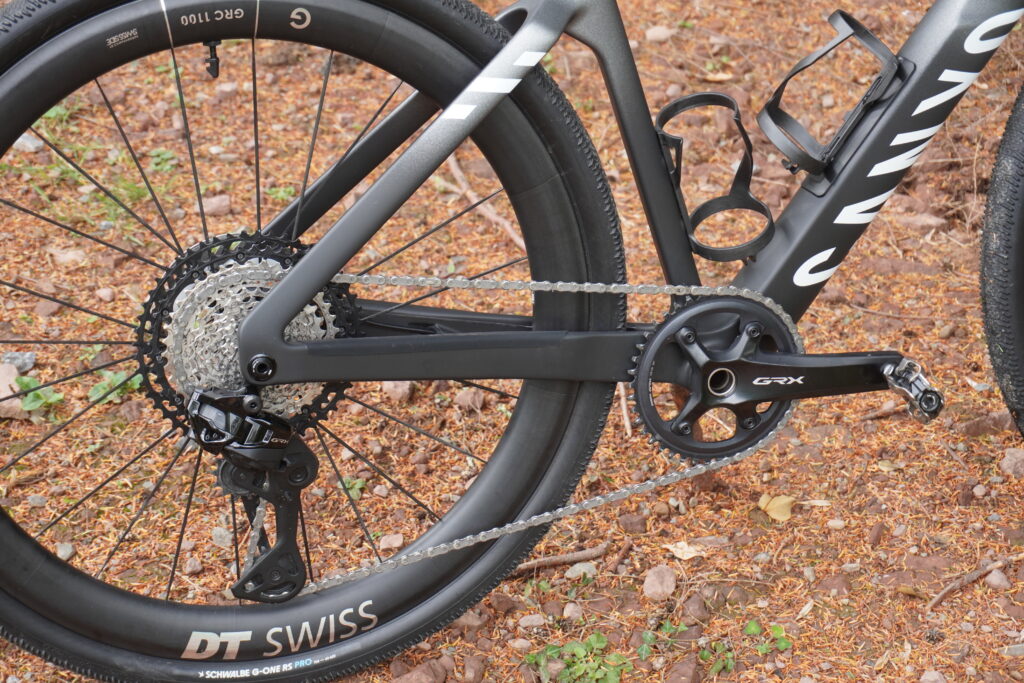
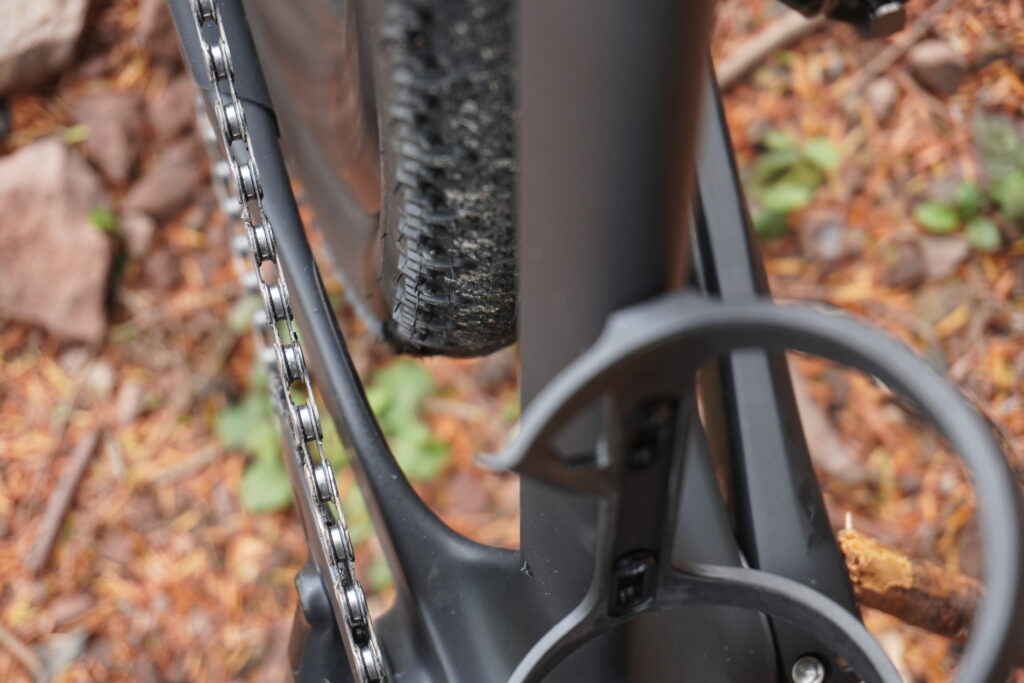
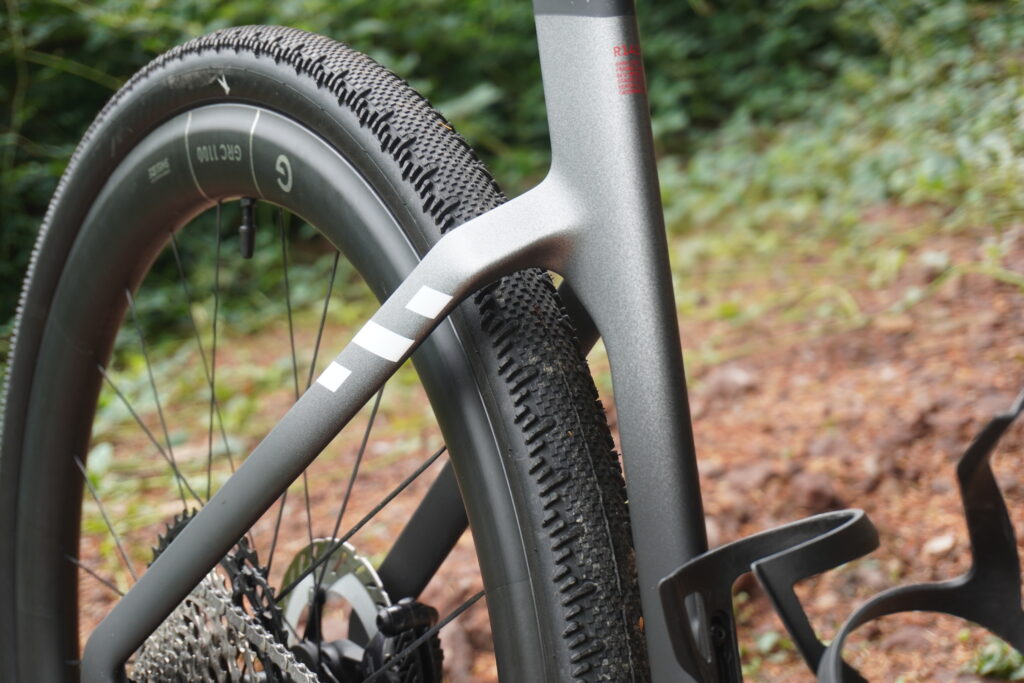
All new Grail versions are now 1x specific, which seems like a significant departure for Canyon, as it was one of only a handful of brands that still offered double chainsets within its gravel range. Official chainring clearance is a massive 52 teeth. This may seem extreme, but it is made possible by a very narrow chainstay section, similar to some other bikes, including the recently updated Scott Addict Gravel.
One omission from the frameset, despite it being 1x specific, is the lack of provision for any form of chain guide. While modern drivetrains with a clutch or increased tension in the rear derailleur mean chain drops are relatively rare, they can still happen, particularly in muddier conditions.
Gravel racing has become a huge area of cycling in general, and with Canyon’s All-Terrain Racing squad, it is no surprise that aerodynamics is a major focus of the new Grail. Canyon has provided aerodynamic data from testing carried out at 35kph, a typical speed for the highest levels of gravel racing. Compared with the Gen 2 Grail, the new model has lower drag even with a 55mm tyre fitted, compared with a 40mm tyre on the Gen 2. Against competitors including the Factor Ostro, Cervélo Áspero-5 and Rose Backroad FF, all fitted with 45mm tyres, the Grail also recorded the lowest drag, according to Canyon, although the differences are marginal and within a few watts.
Geometry figures for the new frameset have remained largely unchanged, with Canyon aiming to retain the same overall feel and ride characteristics. On a size Medium, recommended for riders between 178 and 184cm tall, the key figures are a 71.5-degree head tube angle, 73.5-degree seat tube angle, 411mm reach and 575mm stack. Compared with the updated Scott Addict Gravel, the Scott has a slightly slacker head angle and a steeper 74.5-degree seat tube angle.
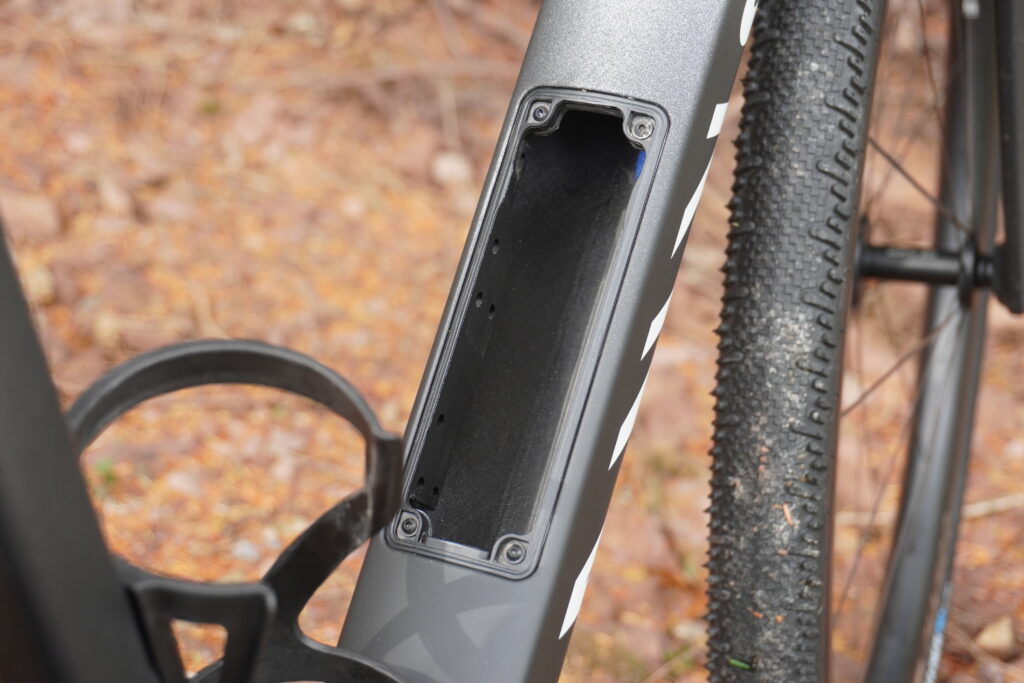
The internal downtube storage on the CFR has a latch-locking mechanism, while inside there are dedicated areas to hold a 16g CO2 cylinder, inflator head, pump, and multi-tool. There is also space within the lower downtube to place the Canyon LOAD downtube bag. During use, I have found the door and latch really easy to operate, with no rattles or movement, while a good seal around the opening has prevented water from entering, even during the heaviest rain showers.
Another addition to the Gen 3 is the range of mounting options for Cyclite bags, with a typical two-bolt top tube mount and a new system for attaching a frame bag within the front triangle. The system is neat, with the mounting points sitting flush with the frame, and the bag’s performance overall is very good. Canyon claims that the bags offer neither a negative nor positive aerodynamic effect on performance. At the time of release, the top tube bag retails for €69.99, while the frame bag is €124.99. Both are at the top end of the pricing scale, but they are likely to be among the cleanest carrying solutions for longer endurance rides and ultra-distance races.
Canyon Grail CFR Di2 – Componentry
The Grail CFR Di2 that we have on test is the second most expensive model within the new range, only topped by the CFR AXS version with its SRAM Red XPLR drivetrain, which adds £1,400 to the price.
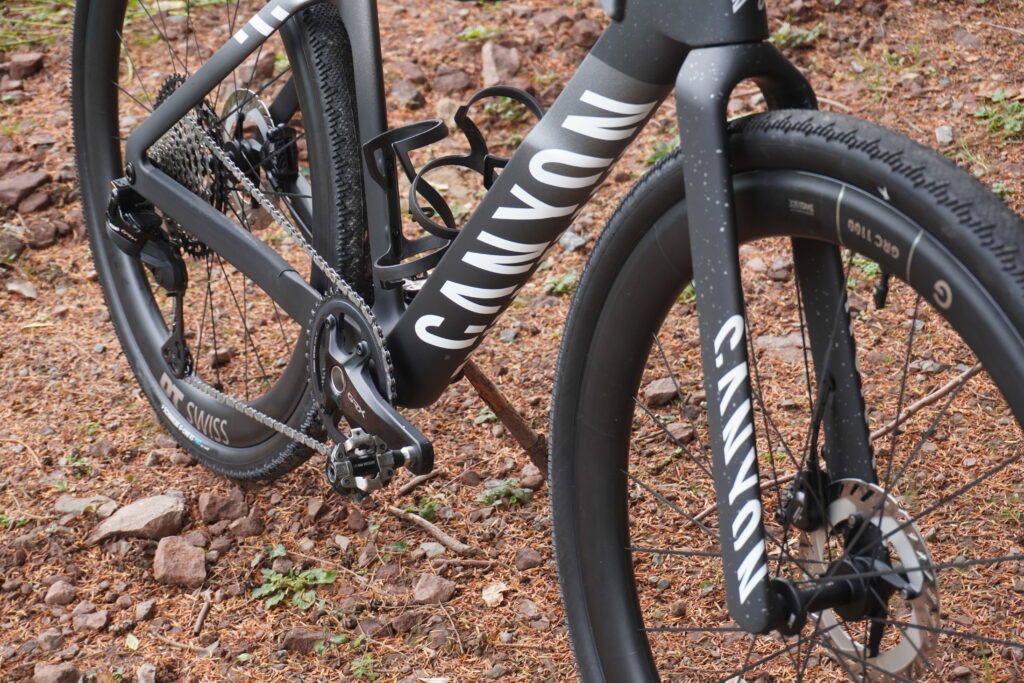
This CFR Di2 model shares all the key components, including the Canyon CP0048 PACE cockpit and Canyon SP0093 VCLS seatpost. There’s then a Shimano GRX Di2 groupset with an XT 10-51 cassette, GRX brakes, DT Swiss GRC 1100 wheels, and a Fizik Vento Argo X1 saddle.
The full bike weight, in size Medium, measured without any tools in the internal storage and without pedals, is 8.4kg, exactly matching the claimed weight. Swapping to the SRAM Red AXS model would save a claimed 600g, although the only changes are the groupset and brakes. Perhaps the bigger question comes when comparing it with models within the CF SLX range, where the CF SLX 8 AXS is close to the same weight at 8.9kg, but also significantly cheaper at £4799.
Of course, weight is not everything, and the focus of the updated Grail is very much on aerodynamics. However, I can’t help but question why Canyon has chosen the specification it has for one of its top models, knowing that it will be relatively heavy compared with other bikes in the range, as well as the SRAM AXS version.
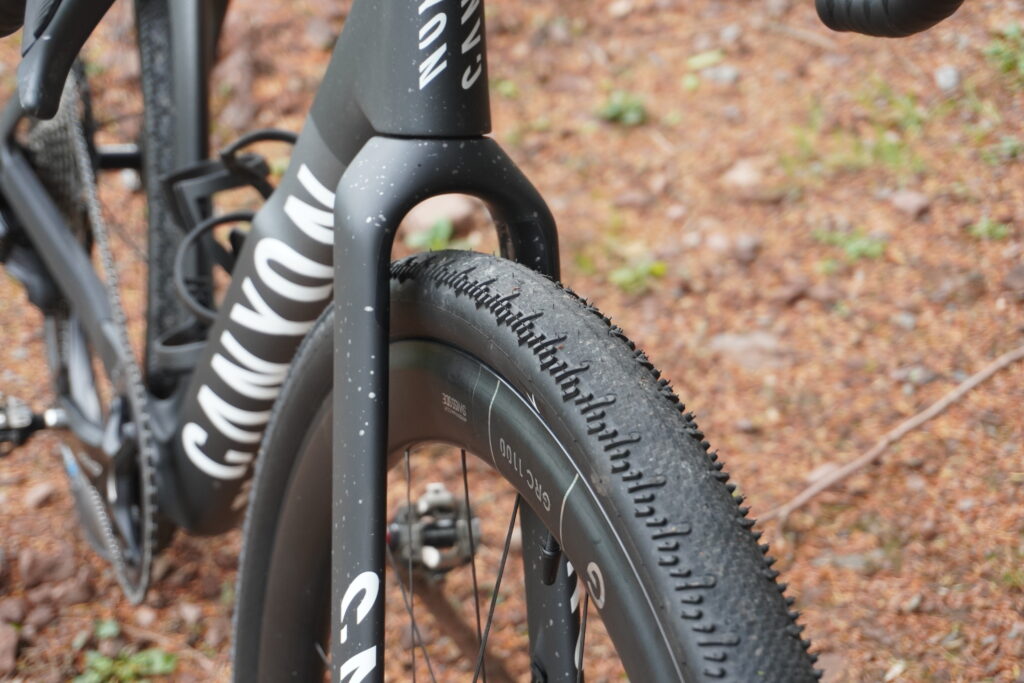
Despite the updated frameset having clearance for 57mm tyres, all models come from the factory with 45mm Schwalbe G-One R or RS tyres. With so many benefits to using wider race tyres, the choice of 45mm seems strange. I believe a 50mm option would have been a better choice for the type of riding people will typically be doing off-road, and especially within the UK.
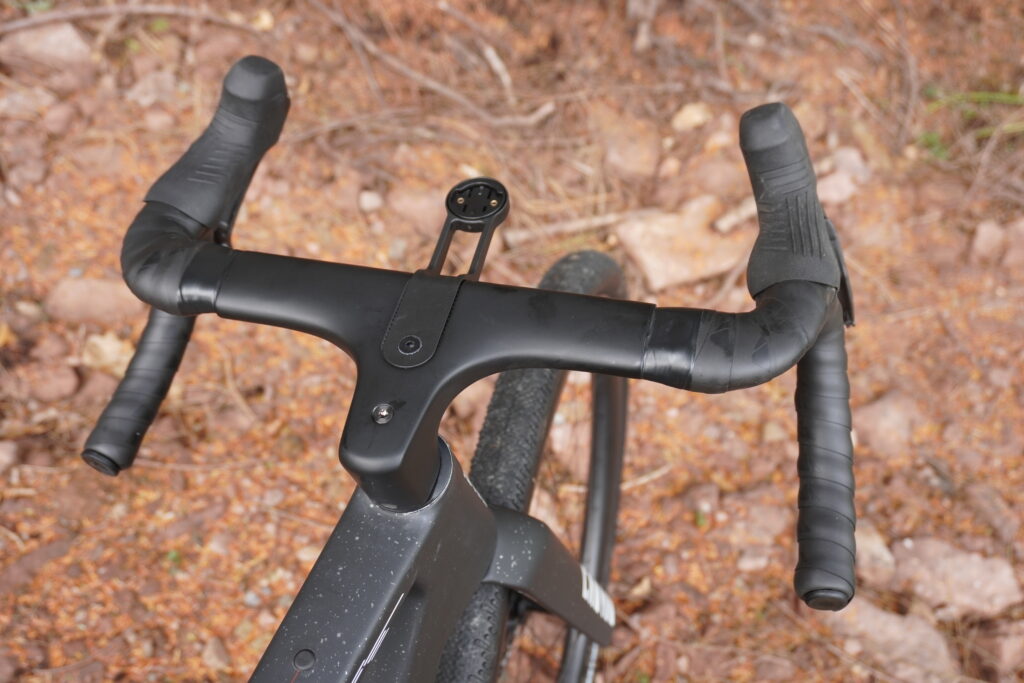
The PACE cockpit setup is simple to set up and offers a good degree of adjustability, with an increasing range of accessories that can be mounted to it. This includes an out-front computer mount for the most popular Garmin or Wahoo-style computers, although the attachment isn’t the most secure. Various other options, including aero bars, are available, but the system is still more limited than a standard handlebar. One key omission from the official Canyon range is any form of action camera mount, either for a camera or a front light. I expect this will change, and third-party companies will almost certainly begin creating their own 3D-printed options.
Canyon Grail CFR Di2 – Performance
Enough about the aero savings and grams; how does the Grail CFR ride in the real world? In short, it feels quick, and there are some nice touches. This is the first bike I have tested that uses Canyon’s PACE cockpit, and it made for an extremely easy setup. The handlebar width can be set to either 370, 395, or 420mm by undoing two bolts on each side underneath and unwrapping a section of bar tape.
Out of the box, the entire bike was put together in less than 30 minutes and ready to ride. Separate adjustments to the handlebar can be completed in around 15 minutes. The stem height can also be adjusted without needing to cut the steerer tube, although it only provides 20mm of movement using the split stem spacers provided; there is no option to change the stem angle.
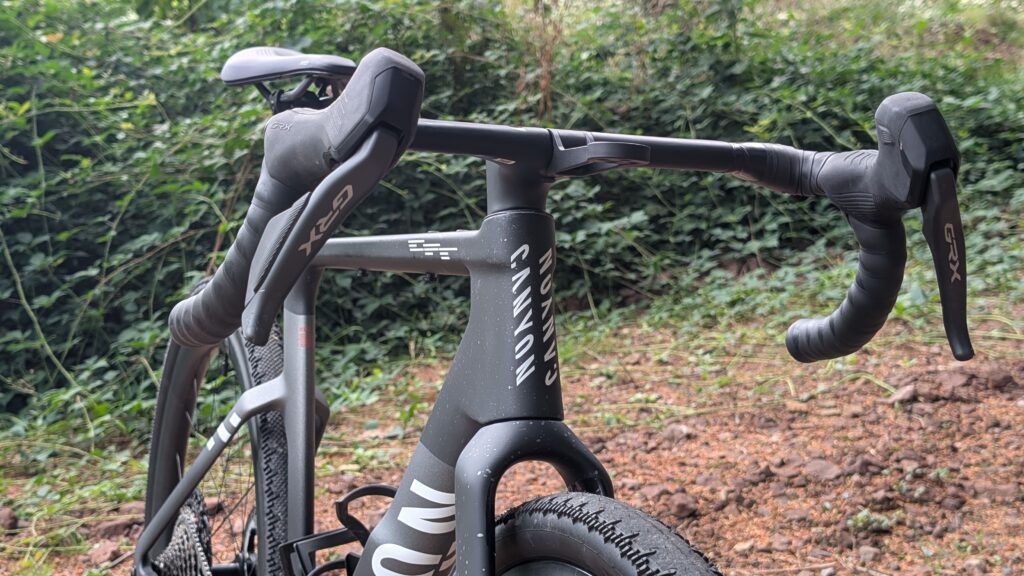
While this makes for a simple setup, it also means choosing the correct frame size is more important and trickier, with more to consider than simply looking at reach, stack, and standover measurements. Canyon does provide measurements called Stack+ and Reach+, and these are worth understanding and comparing, although to compare them with your own bike, you will need to get a measuring tape out, as most other manufacturers are not yet using them within their official measurement lists.
The Control drop handlebars that come fitted have a 120mm drop and 17-degree flare, but if this doesn’t suit, you can replace them with the other PACE versions that Canyon produces. These were originally designed for more road use and include standard, compact, and race drops. Alternatively, you can replace the system with the one-piece cockpit setup, which can save some weight but removes the easy adjustment offered by the separate PACE setup.
I started with the handlebar at its widest option and moved it a step closer on subsequent rides, eventually leaving the setup at the narrowest 370mm width. With this amount of adjustment, the cables inside the system did rattle while riding, although if this was going to be a permanent change, having them trimmed would be a reasonably simple job. There is just one small frustration, and that is the handlebar tape. It uses a stick-on backing, which could mean replacing the tape every time you decide to change the setup. It would have been nice to see Canyon use a gel-backed tape throughout, which would have made any adjustments quicker and simpler.
After a few short test rides, I made the decision to use the Grail CFR at the British Cycling Gravel Championships, giving it a true test of what it was designed for. The course was challenging, with lots of climbing within a relatively short distance and a few rougher descents, but most of the riding was on typical forest roads. The only change I made to the bike from the standard setup was the tyres, and this is something I would choose to do for almost all riding. While the Schwalbe G-One RS is a superb tyre, and for a long time it was my go-to race option, I chose to fit a wider tyre.
Frameset comfort is acceptable, but it isn’t a magic carpet ride, and it relies heavily on the ability to use wider tyres, and there are a few other simple ways to improve comfort I found some other ways to improve the comfort. For the Gen 3 Grail, Canyon has removed the ability to fit a suspension fork, but I doubt that would affect too many, given this is designed purely for racing. If you prefer to run 40mm tyres at 40psi or above, this is going to be a rough ride, which is why I swapped to 50mm tyres, run at low to mid-20psi, and also swapped to a different saddle.
I’ve long been a fan of the Ergon and Canyon VCLS seatposts, and adding the same technology to an aero design seems to work. While saddle choice is very much a personal aspect, the Fizik Vento Argo X1 has a harsh ride, with a rigid base and padding that adds little to the overall ride quality. The front end of the Grail is also more compliant and comfortable than I was expecting for a gravel race bike, and I believe the handlebar is a major factor, as there is a noticeable amount of flex built into the design.
Despite this flex in the handlebar, the overall build still feels fast and precise, with excellent handling on both faster corners and steeper, rougher tracks. It isn’t anywhere close to a mountain bike, but if your local gravel riding includes a few steeper tracks, it can cope. Riding within a group during races, it excelled on the faster stretches, and I felt confident enough in the bike, along with the composure and comfort it offers, to move off the main racing line and use every option for overtakes on rougher downhill sections during the British Championship race.
The DT Swiss GRC 1100 Dicut wheels are firm and fast, but a lot has changed in the 18 months since I originally had the wheels to test, and there are now much lighter wheels available that still provide the speed racers are going to want. The 24mm internal diameter suits narrower 40 and 45mm tyres, but going beyond that, I expect there will be other wheels that offer a better overall aerodynamic package. At this premium price for the Grail CFR, I don’t think it is good that one of the first components I would consider changing is the wheelset.
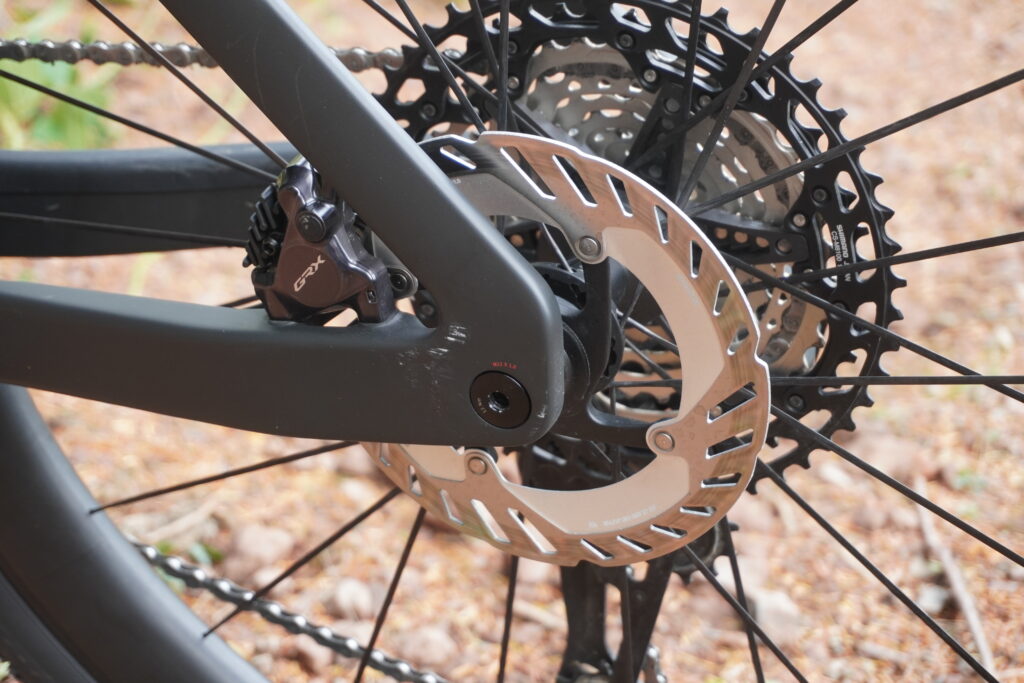
The GRX brakes are superb, with sharp initial bite and strong overall braking, providing enough modulation to avoid skidding the rear wheel too often. The rear braking is more affected by the tyre and limited tread depth than by any function within the brake itself. There is a short amount of free stroke in the lever, and this is still present with the lever adjusted to the shortest reach position.
The shifting is quick and precise, with accurate shifts, but the GRX 1x system can be frustrating, as the left-hand lever is effectively a blank, with no electronic shifting options. While this is standard for Shimano, it would have been nice to have at least the option to use the left-hand lever for some shifting actions. The right-hand lever has the standard two shift buttons and a third small button close to the top of the hoods, but I found this small and awkward to find and use while riding. Overall, while shifting performance is OK, this is an area where SRAM is a clear winner for 1x shifting. With no option to create a 2x drivetrain, the choice of a Shimano drivetrain is a major limiting factor.
Gearing on the Grail CFR is okay, although I question whether there could be a better choice of chainring and cassette for pure racing. The 44-tooth chainring combined with a 10-51 cassette gives a broad 510% range, but there are also some big gaps between the gears. Personally, I think the Shimano XT 9-45 cassette combined with a smaller 38- or 40-tooth chainring could be a better option for racing.
I appreciate this will depend a lot on where people ride and the types of climbing involved. Some riders may be put off by the nine-tooth cog, but this combination still provides a 500% range, along with closer gaps through the middle of the cassette, which I feel is more important for general racing. One neat feature of electronic drivetrains is the ability to see the gearing you actually use, and with the 44-tooth, 10-51 combination, I could see within the app that the extremes of the drivetrain, including the upper end with the 51-tooth cog, were barely used.
Canyon Grail CFR Di2 – Verdict
The updates are positive, and the new Grail is fast while retaining excellent handling and good comfort thanks to its ability to run larger tyres. Some riders might speculate about the lack of a 32in wheel option, and if I were to gaze into my crystal ball, I suspect Canyon will offer 32in wheels in larger frame sizes within the next 12 months. The brand has a history of supporting multiple wheel sizes, although previously this has been with smaller frames using 650/27.5in wheels.
The new Grail is a big departure from the previous generation, but it makes more sense for a brand that already offers a separate model aimed at more adventurous riding – the Grizl. The more time I spent riding and racing the Grail CFR, the more I enjoyed it, and I would happily continue to race on it. It isn’t as light as some competing options, and while Canyon is open about this and has made aerodynamics the focus. Grams remain a much more tangible figure than CdA (coefficient of aerodynamic drag) to racers. Despite everything the science tells us about the relative importance of aerodynamics over weight, try telling that to any racer.
There are also some issues with the specification of the model on test that affect the overall package, particularly the groupset and saddle. The wheelset isn’t one I would choose myself, but it still performs well, whereas the saddle has a much more noticeable negative impact on comfort.
Against key updated competitors such as the Scott Addict Gravel, the Canyon Grail sits slightly higher on price, although the models don’t directly compare. Scott has also chosen not to use Shimano on its premium options, with Shimano only appearing on the entry-level Addict 40.
Given the choice of the new Grail range, I would probably choose the CF SLX AXS. It retains the key features of the CFR, has the option to add Canyon-specific mudguards for muddier races or winter riding, and comes with only a minimal increase in frameset weight.
Whether the aerodynamic changes justify the weight increases will depend on where and how you ride. For many riders, I expect the Grizl will remain the better option within the Canyon range. With no mudguard or rack mounts, the CFR versions are pure race bikes, and for some riders that could be a step too far.
For those looking for a pure gravel race bike with generous tyre clearance, excellent handling and a fast, composed ride, the Grail CFR is a highly capable option. It isn’t perfect, with the specification of the wheels, tyres, saddle and groupset all leaving room for improvement, but these are changes that could unlock more from an already impressive frameset. As supplied, it remains a fast and enjoyable gravel race bike, and with a few component changes, it has the potential to be even better.
Test Report
What does the manufacturer say about this product?:
Canyon says:
Nothing this capable goes this hard. Engineered to unlock pure all-terrain speed, the new gen 3 Grail is the fastest, most accomplished gravel race bike out there.
57mm tyre clearance front and rear, with over 4mm ISO clearance to spare.
All-terrain aero, tested and benchmarked at real-world gravel race pace.
Proven progression geometry gets a racier fit.
Adjustable PACE cockpit tech with new Control drops.
LOAD Down Tube storage is always there, out of sight.
Cyclite packs tailored to Grail won’t slow you down.
Tell us some more about the technical aspects of this product:
The Grail CFR uses Canyon’s latest race-focused gravel frameset, with aerodynamic tube profiles, 57mm tyre clearance and a 1x-specific drivetrain design with clearance for up to a 52-tooth chainring. The CFR uses Canyon’s PACE adjustable cockpit, which allows the handlebar width to be changed between 370, 395 and 420mm, while the stem height can also be adjusted without cutting the steerer. There is integrated downtube storage with space for tools, a pump and CO2 equipment, along with mounting options for Canyon’s LOAD and Cyclite bags. The frameset also uses Canyon’s VCLS seatpost for additional compliance. The test bike is equipped with Shimano GRX Di2, an XT 10-51 cassette, GRX hydraulic brakes and DT Swiss GRC 1100 Dicut wheels.
Any further comments on quality?:
Excellent frame finish, good component quality, and arrives well-presented and easy to build. The splatter-effect paintwork is also nice, although it does make it look dirty all the time.
Any further comments on performance?:
It feels quick downhill and on flatter terrain, with excellent handling. It is heavier than I would expect for this level of bike and price point, which will slightly impact uphill performance. The wheels are one clear area where weight could be saved.
How does the price compare to that of similar products in the market, including ones recently tested?:
The new Scott Addict Gravel has their top frameset HMX version with SRAM Force XPLR 13 for £5799, and the updated Ridley Kanzo Fast is £6299, which is also a build with SRAM Force XPLR 13.
List the components used to build up the bike:
Canyon specification:
Frame: Grail Gen 3 CFR frameset
Wheels: DT Swiss GRC 1100 50mm
Groupset: Shimano RX825 GRX Di2 12 speed w/ 4iiii single-sided power meter
Cassette: Shimano XT, 10-51
Brakes: Shimano GRX
Tyres: Schwalbe G-One RS – 45mm
Cockpit: Canyon CP0048 PACE Bar w/Control drops
Seatpost: Canyon SP0093 VCLS Aero
Saddle: Fizik Vento Argo X1
Handlebar Tape: Canyon
Sizes: 7 (XXS to 2XL)
Weight: 8.4kg
Artworks: Mercury Blast, Sonic Marble
Tell us what the bike is for and who it’s aimed at. What do the manufacturers say about it?:
Aimed at performance areas of gravel riding, with an emphasis on aerodynamics and speed over bikepacking or adventure riding. There is a bigger difference over the Canyon Grizl compared to the previous Grail version.
Where does this model sit in the range? Tell us briefly about the cheaper options and the more expensive options:
Three versions of the updated Gen 3 Grail are available, with the CFR version on test as the top frameset option. One other model within the CFR lineup has SRAM Red and retails for £7600. The CF frameset models start from £2499, and the CF SLX models begin at £3899.
Tell us about the build quality and finish of the frame and fork:
Very good. Clean finish throughout. Cable routing is very neat, with internal cable ports that you can see through the storage hatch in the downtube.
Tell us about the materials used in the frame and fork:
Canyon CFR frame and fork.
Tell us about the geometry of the frame and fork:
Key numbers (medium):
Recommended body height: 178 to 184cm
Seatpost length: 522mm
Top tube length: 581mm
Stack: 575mm
Reach: 411mm
Effective Stack: 558mm
Effective Reach: 660mm
Effective seat tube angle: 73.5 degrees
Head tube angle: 71.5 degrees
Trail: 69 degrees
Stem length: 80mm
Crank length: 165mm
How was the bike in terms of stack and reach? How did it compare to other bikes of the same stated size?:
Care is needed with the sizing, as a medium sizes up slightly larger than other brands. Canyon uses Reach+ and Stack+ measurements, and these are useful when comparing actual sizing.
The height sizing guide I found a little above what I would consider to be OK. I am within the size guide for an XS size, but the actual measurements of a small or medium suit me, and racing better.
Was the bike comfortable to ride? Tell us how you felt about the ride quality:
Comfort is average compared with many other gravel bikes, but the ability to run wider tyres at lower pressures is an important way to improve both comfort and potentially speed off-road. Swapping the saddle for one with a more flexible base also made an immediate and noticeable improvement to overall comfort.
Did the bike feel stiff in the right places? Did any part of the bike feel too stiff or too flexible?:
Yes, very stiff, responsive and perfect for the style of riding it is intended for.
Was there any toe overlap with the front wheel? If so, was it a problem?:
No problems, even running cleats set quite far back on the foot.
How would you describe the steering? Was it lively, neutral or unresponsive?:
Quite neutral, and not as quick or lively as some more race-focused bikes.
Tell us some more about the handling. How did the bike feel overall? Did it do particular things well or badly?:
It corners well, and when I fitted wider tyres for much of the test riding, it felt fast and stable on rough descents.
Which components had the most effect (good or bad) on the bike’s performance? Would you recommend any changes?:
While the Grail is clearly aimed at speed and racing, the tyres and wheels don’t feel like the best match. With such generous tyre clearance, I don’t understand why Canyon fits only 45mm options, as wider tyres would offer greater versatility and potentially more comfort and speed off-road. The wheels also feel relatively heavy and are better suited to flatter terrain. The GRX Di2 drivetrain is slick and smooth, but it doesn’t offer the same flexibility for additional shifter options that SRAM provides.
Any comments on power transfer?:
Excellent, with a very efficient ride.
Any comments on acceleration?:
Excellent
Any comments on sprinting?:
It feels almost like a road bike in terms of efficiency and acceleration when sprinting.
Any comments on stability?:
It feels quite low and stable, especially through faster corners.
Any comments on cornering?:
Confident and good on smooth and rougher terrain.
Any comments on climbing?:
For the price, having lighter wheels would make a big difference on hilly terrain.
Any comments on drivetrain performance?:
Smooth, fast and sharp. But I made more accidental shifts compared to a SRAM AXS setup, and everything is on one shifter, with a 3rd button that is difficult to find and use.
Any issues with drivetrain durability?:
No, and the battery life is very good.
Tell us some more about the drivetrain. Anything you particularly did or didn’t like? Any components which didn’t work well together?:
There are no additional buttons on the left shifter, and just one on the right. Personally, I found the gaps in the cassette through the middle quite big, and I prefer the 9-45 cassette option, with a smaller chainring.
Any comments on wheel performance?:
Excellent wheel internals, but 1600g weight is no longer competitive, even for a gravel wheelset with a 50mm deep rim and 24mm internal rim width.
Any issues with wheel durability?:
No
Any comments on wheel weight?:
Excellent wheel internals, but 1600g weight is no longer competitive, even for a gravel wheelset with a 50mm deep rim and 24mm internal rim width.
Any comments on wheel comfort?:
Although not the most compliant, they don’t feel overly harsh, especially when choosing to use wider tyres and use them at low intended pressures.
Tell us some more about the wheels. Did they work well in the conditions you encountered? Would you change the wheels? If so, what for?:
There are better-suited wheels fitted to other models within the Canyon Grail Gen 3 range.
Any comments on tyre performance?:
Exceptionally fast tyres, but with the clearance, a 50mm would be better.
Any comments on tyre durability? How much did the tyres wear during testing?:
The G-One RS is fast and great for racing, but not the strongest tyre available.
Any comments on tyre weight?:
Perhaps the 45mm width was chosen to save a few grams and help reduce the overall bike weight?
Any comments on tyre comfort?:
A wider tyre fitted would have improved comfort, control and potentially speed as well. But it is supple, and this improves comfort for the size.
Tell us some more about the tyres. Did they work well in the conditions you encountered? Would you change the tyres? If so, what for?:
While the tyre model is good and still one of my favourites for racing, fitting a 45mm when there is clearance for 55mm, and Schwalbe makes 50mm and 55mm options.
Any comments on brake performance?:
Good initial bite with plenty of power and enough modulation.
Any issues with brake durability?:
No
Tell us some more about the brakes. Did they work well in the conditions you encountered? Would you change anything? If so, why?:
No problems, and nothing I would change.
Any comments on controls performance?:
The PACE Control drop handlebar is very good overall, with an adjustment that is really easy to use.
Any issues with controls durability?:
No
Any comments on controls comfort?:
Nice shape, and excellent comfort.
Tell us some more about the controls. Any particularly good or bad components? How would the controls work for larger or smaller riders?:
There are still limited options for the drops, although this is likely to grow. The biggest drawback for me is the limited height adjustment, with only 20mm headset spacers.
Anything else you want to say about the componentry? Comment on any other components (good or bad):
PACE cockpit setup is growing to become a more widely acceptable option, and the optional Cyclite bags integrate nicely.
Did you enjoy using the product? Yes
Would you consider buying the product?
Yes, but with a different specification.
Would you recommend the product to a friend?
Potentially the frameset, or a different model, but probably not the CFR Di2 model.
Use this box to explain your overall score
A very capable gravel race bike that combines excellent handling, strong aerodynamics and good versatility from its generous tyre clearance. It feels fast and composed when pushed hard, but the specification isn’t quite as convincing as the frameset itself, with the wheels, tyres, saddle and Shimano 1x setup all having areas that could be improved. Making a few component changes would unlock more of the Grail’s potential, but even as supplied, it remains a highly capable and enjoyable gravel race bike.
About the tester
Age: 42Height: 168cmWeight: 61kg
I usually ride: Road / Gravel / MTBMy best bike is: Cannondale SystemSix (road)
I’ve been riding for: Over 20 yearsI ride: Every dayI would class myself as: Semi-pro or ex-pro
I regularly do the following types of riding: Cyclocross, Gravel riding, Indoor riding, Bikepacking, Audax, Mountain bike XC