


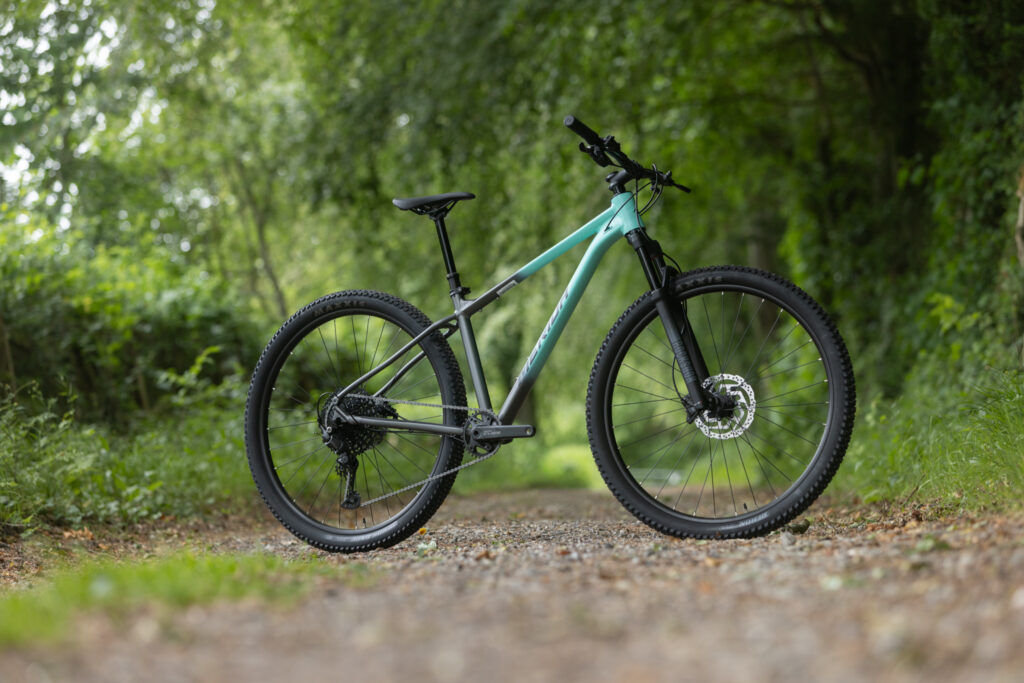

Merida’s Big.Nine 400 takes the brand’s mega racy cross-country bike, but relaxes its geometry and throws in some wallet-conscious componentry to bring welcoming, familiar but versatile performance to a much friendlier price tag. For anything from canal path jaunts to full-on trail centre efforts, the Big.Nine is a dialled bit of kit, but better specifications can be found for less money, and its use of quick-release skewers limits its upgrade potential.
Merida Big.Nine 400 – Technical details
Donning the same name as its lightweight, race-focused brethren, the Big.Nine 400 is a bit of a different beast. Yes, there are some clear inspirations taken, but rather than being designed for rubbing elbows between the tapes, this bike is more for those dipping their toes into mountain biking, or those who want a capable and well-equipped mountain bike but without breaking the bank.
Delivering everything you need and nothing you don’t is a frame constructed of Merida’s TFS (Techno Forming System) aluminum. Compared to the LITE aluminium found on bikes like the One-Twenty, TFS is a not-quite-so posh formula that’s formed mechanically, rather than hydroformed, which helps bring the price down to something easier to swallow.
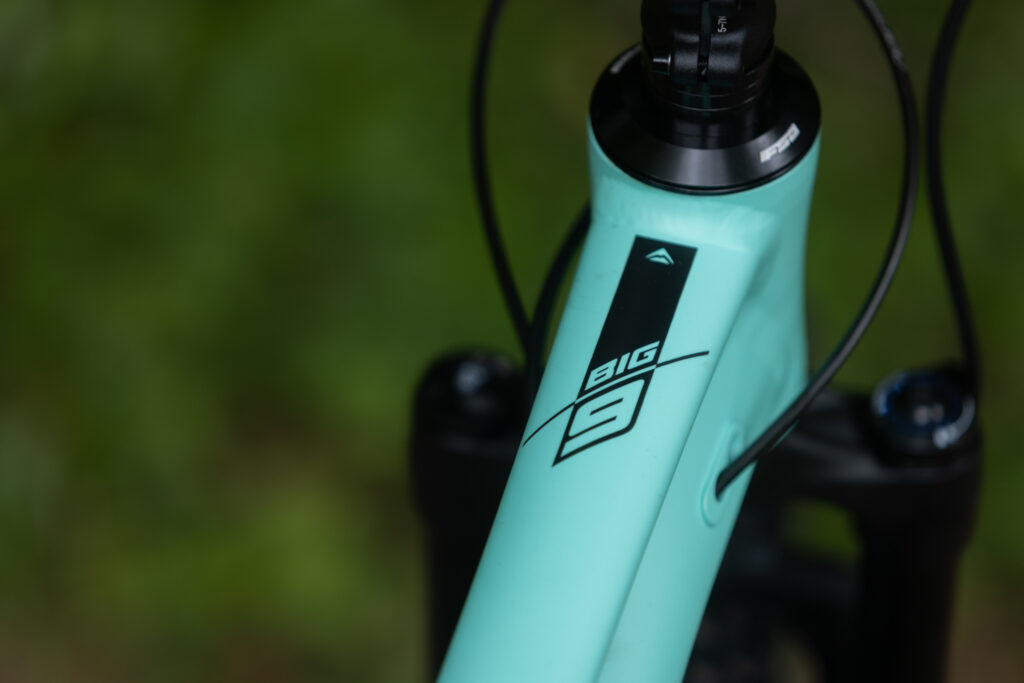
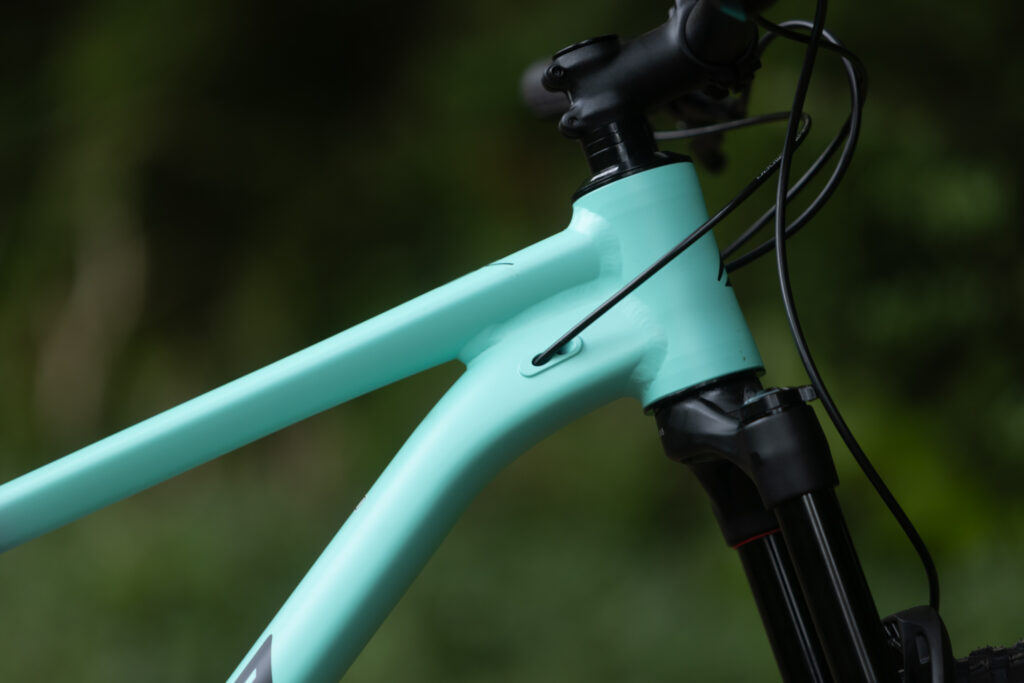
Although its price isn’t astronomical, the Big.Nine 400 dons all of the mod cons. There’s clearance for 2.4-inch tyres, which is plenty for the vast majority of mountain bike scenarios, and there’s internal cable routing that exits before the head tube. That means the bike looks tidy, but riders shouldn’t have to deal with the extra faff and expense of the headset-routed alternative.
Inside the front triangle, there’s space for a bottle cage, and there’s an accessory mount slung under the top tube, handy for carrying extra spares without having to resort to a backpack. There’s then a threaded bottom bracket that boosts ease of maintenance.
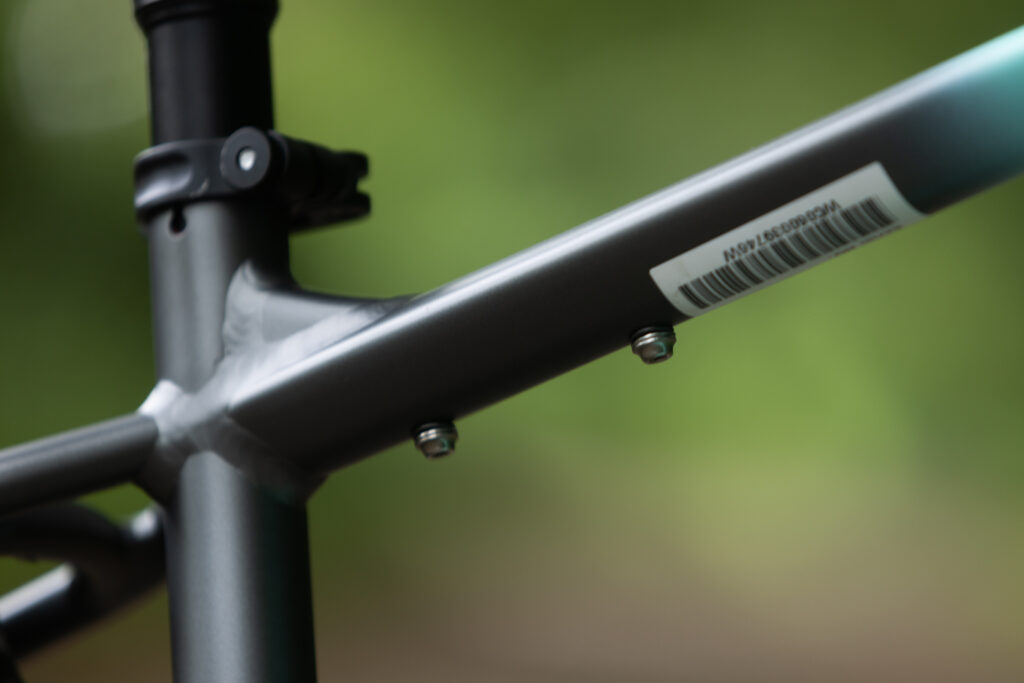
The bike rolls on a pair of 29-inch wheels, although there are Big.Nine models available with smaller wheels for smaller riders. It’s also home to a suspension fork with 120mm of travel.
Merida has finished off the Big.Nine with a handlebar that’s specific to the frame size. So smaller frames benefit from a narrower bar, whereas larger sizes get wider bars.
The Big.Nine 400’s geometry borrows from Merida’s spendier offerings, but it’s a touch more relaxed, which should offer an easier-going, more approachable ride, which at this price point is no bad thing. The large bike I’ve been riding boasts a 430mm reach, whereas all sizes benefit from a 67-degree head angle, a 74-degree seat tube angle and a 460mm chainstay.
Merida Big.Nine 400 – Componentry
Aiming to hit a friendlier price point, Merida has been very wise with the Big.Nine 400’s specification. Up front, a RockShox Judy Gold fork doles out 120mm of travel. It’s equipped with an air spring too, offering easy adjustability for a wide range of rider weights. There’s also a lockout that firms the fork up for a small boost in pedalling efficiency.
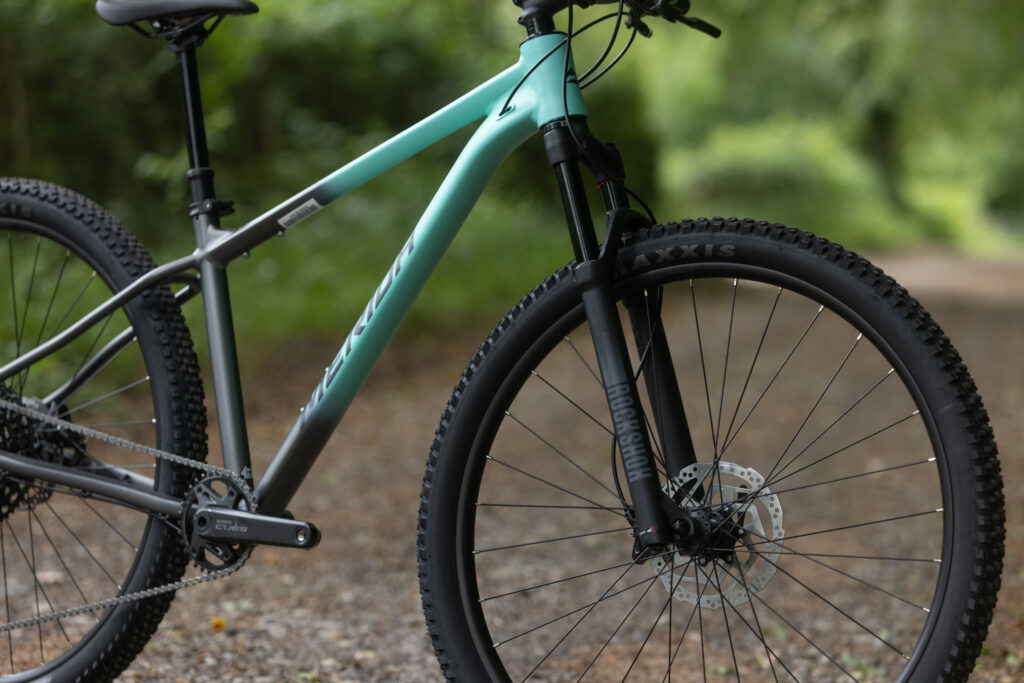
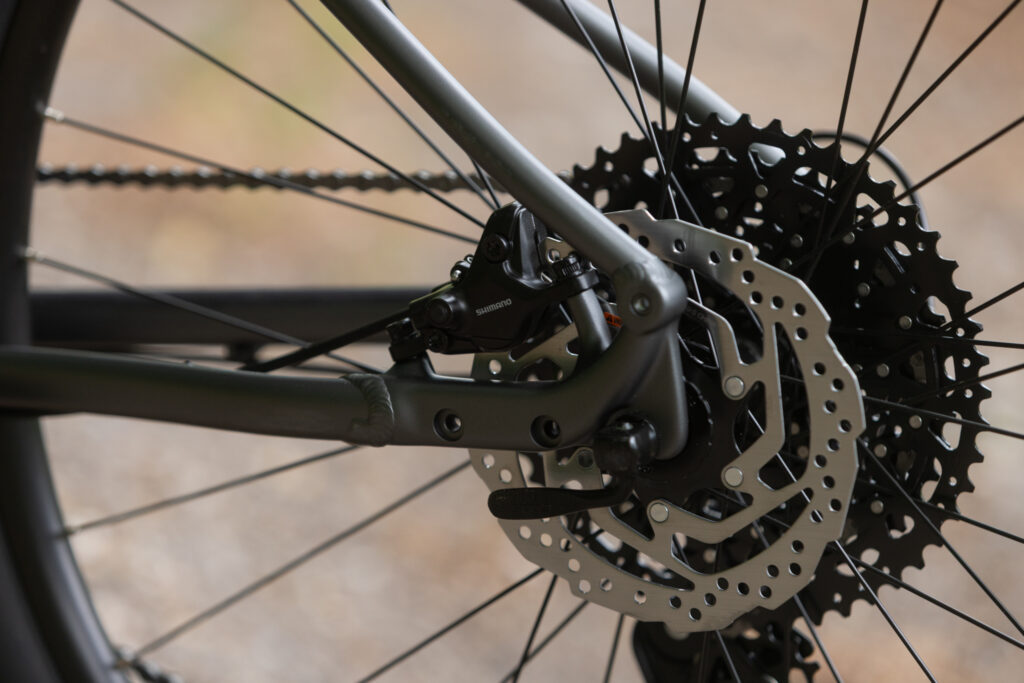
The bike is driven by Shimano’s CUES 11-speed drivetrain, offering a reasonably wide spread of usable gears with an easy-to-maintain single front chainring. Slowing the bike is a pair of Shimano M4100 hydraulic brakes, combined with an 180mm rotor at the front and a 160mm rotor at the rear.
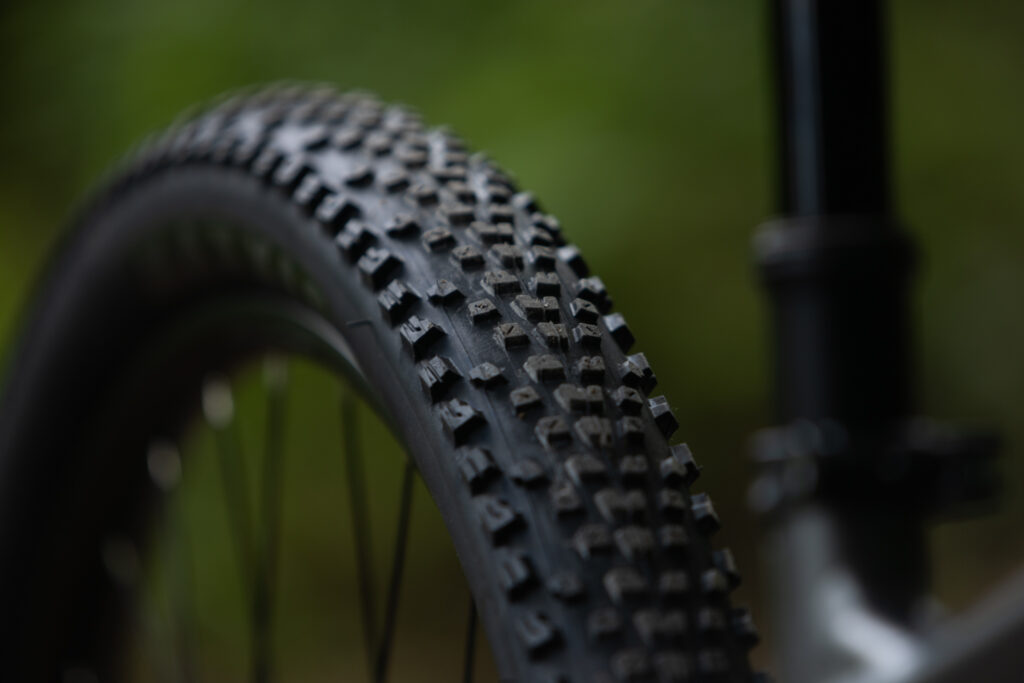
It then rolls on a pair of Merida Comp CC II tubeless-ready rims, sorted with a 25mm internal width, which are laced to Shimano QC300 hubs. Inflated on those are a duo of Maxxis Rekon Race tyres in 2.4-inch widths, and they’re tubeless ready, too, so all it takes is a quick tubeless conversion to ditch some weight and boost some traction.
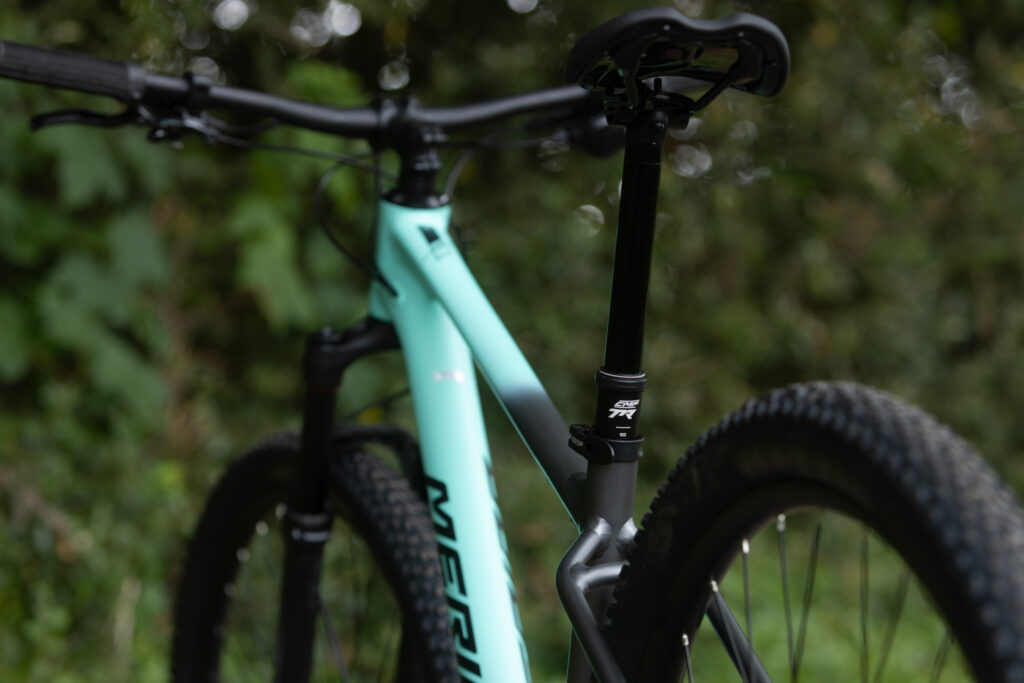
Merida then finishes the bike off with a bunch of its own components, including the handlebar, stem, saddle, and the dropper seatpost, which is a great touch on a bike of this price. That seatpost offers 150mm of travel on this large-sized frame, which is plenty for the types of shenanigans the bike’s poised for.
Merida Big.Nine 400 – Performance
During my time with the Big.Nine 400, I took it out for mellower jaunts between the trees in my local woods, and over tougher-going red trails and trail centres further afield, and I’ve been mighty impressed with what this bike could get up to.
First and foremost, its riding position is pretty darn comfortable. Merida has achieved a solid seated stance over the bike that isn’t too outstretched, nor is it too cramped. But what it does do is place the front wheel firmly underneath the shoulders, which, when combined with its longer-than-usual chainstay, makes for a centred and easy-going ride.
With that, it’s a pretty simple bike to climb. It doesn’t demand drastic weight shifts to keep both wheels planted, so slinging yourself aboard it up a hill is a doddle. Then throw in the shorter reach figure, and it absolutely slays uphill switchbacks. Merely look where you’re going, point the front wheel in the right direction, and it slithers around those trickier uphill corners with ease.
It’s efficient, too, which makes the whole task of pedalling up a hill pretty easy going. It’s a hardtail, so there’s no suspension at the rear to rob energy as you pedal, but throw in the lower-profile tyres and keeping speed high doesn’t take all that much effort.
On the flats, that sentiment remains. It’s a pretty speedy machine if you fancy putting the power down or showing it some local gravel. With that, there’s a real air of versatility looming over the Big.Nine.
But make no mistake, although the tyres aren’t particularly aggressive, I’ve been pleasantly surprised with the traction they conjure, even with inner tubes installed. Even in looser, wetter corners, they manage to hook up pretty damn well.
Speaking of the corners, the Big.Nine’s performance when attacking uphill switchbacks translates rather well when leaned into downhill turns. Admittedly, as the reach is on the shorter side, there can be a bit of twitch in the bike’s front end; the overall length of the thing helps it hold a line. That’s where the chainstay length works its magic as it helps the whole bike stay composed when leaned into a turn, and even at speed.
It means great things for general stability. The Big.Nine 400 is happy to be pushed through more technical trails, both because of its wheelbase and chainstay, but also because the Judy fork is an impressive performer for the price. Not only does it take the sting out of harder hits, but there’s good support to be had, meaning that the bike can be pushed more aggressively into corners and demanding terrain, while remaining comfortable, propped up in its travel, and ready to absorb more impacts.
Merida’s decision to relax the bike’s geometry compared to the higher-end models is a great move too. The slacker head tube angle results in a bike that doesn’t quake in its boots at the sight of a bit of tech. In fact, while I might have ridden a little slower than usual, the Big.Nine 400 is a surprisingly capable bit of kit, ticking off red-grade trails with ease, and without an ounce of nervousness.
Though a bit of a downside lies in the bike’s reliance on quick-release skewers to hold the wheels in place. As their diameters are much narrower than what’s found on burlier thru axles, there is a noticeable twang of flex in the wheels. For the kind of riding that the bike is built for, it’s not too distracting an issue, but they contribute to a level of vagueness that can be felt.
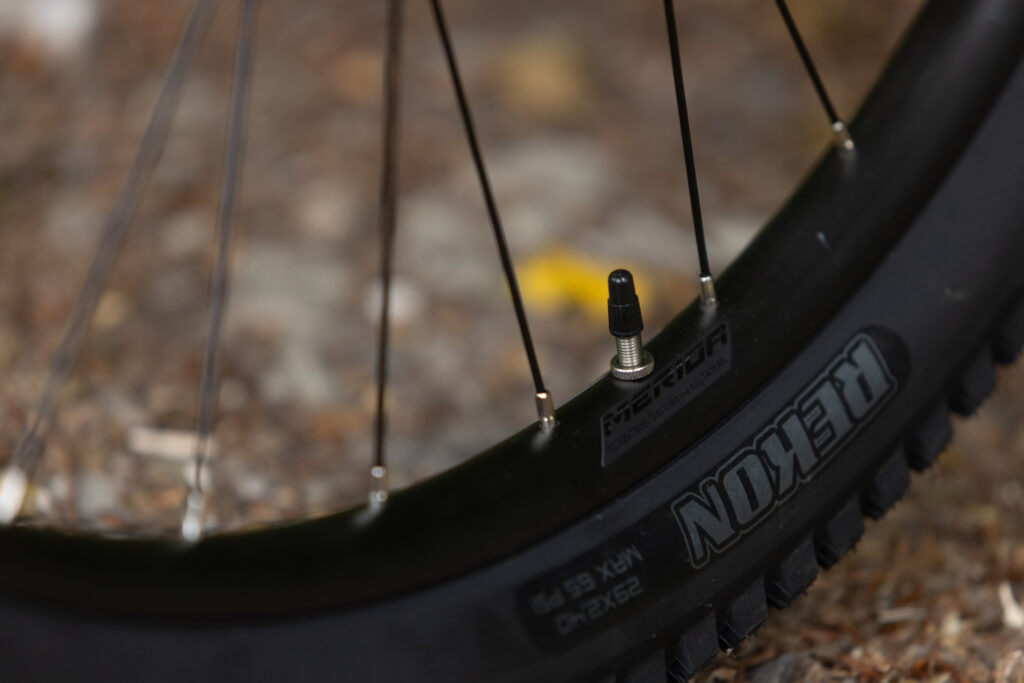
But the main problem that the quick-release skewers pose is their potential to limit upgrades. For example, if you wanted to upgrade the fork, it’s likely that the new fork will come with a thru axle. You’ll need a wheel that can accommodate one and vice versa if you want to upgrade the wheels. Unfortunately, you’re stuck with QR kit for the rear wheel.
Merida Big.Nine 400 – Verdict
Despite Merida’s best intentions, value is where the Big.Nine 400 falls short. For example, Trek’s Marlin 7 Gen 3 will set you back £1,000, and it comes with a very similar build kit, including a RockShox Judy fork, Shimano MT200 brakes and Maxis Rekon 2.4-inch tyres. There’s then a 12-speed SRAM NX drivetrain. However, that fork offers 100mm of travel. It’s a touch more trail-focused, too, with a large frame benefiting from a 470mm reach which’ll offer more stability and a slightly slacker 66.5-degree head tube angle that will make for a more confident, but slightly less responsive ride.
There’s then Giant’s Talon 0 at £999. This one uses Giant’s own suspension fork with 100mm of travel on its M to double XL sizes, and that may not be as appealing as an own-brand product, but it does get a thru axle, so components will be easier to upgrade. Elsewhere, there’s Shimano’s Deore 12-speed shifting, so an extra gear on the Big.Nine, and there are the same Shimano MT200 brakes.
The Giant Talon’s geometry is a little more generous, too, with a large frame receiving a 450mm reach. But there’s a steeper 67.5-degree head tube, so it may not be as confident on the downhills.
Spend an extra £50, and you could step into full suspension territory with Boardman’s MTR 8.6. Its specification is notably more basic, with a 130mm travelled SR Suntour XCR34 fork and Microshift Advent 1×10 shifting. So if it’s all-out value you’re after, the Big.Nine 400 is definitely a more attractive offering here.
If you’re looking at more serious riding, Merida’s own Big.Trail 300 is a better shout. I really liked the Big.trail 600 that tops the range, but here you get a thru-axle at the front and rear, a more aggressive trail-focused geometry and tyres with a taller tread, so more traction over uneven terrain. That bike will set you back £1,100 at full RRP. If you’re up for the riding this bike is built for, the Big.Trail 300 firmly steps on the Big.Nine 400’s toes.
But geometry and thru axles aside, Merida has done well to produce a familiar, easy-going and surprisingly capable ride for the cash that it’s asking. The Big.Nine 400 remains responsive and easy to pedal on the climbs, while balancing plenty of confidence for more technical trail centre descents. The Merida Big.Nine 400 provides a ride that’s more than just the sum of its parts. However, you can get similar or slightly better parts for less money, and at this price point, money talks.
Test Report
What does the manufacturer say about this product?:
Merida says, “Our latest aluminium frame gets updated geometry for more capable off-road handling and, paired with a quality RockShox Judy 120 mm fork, means it’s a whole load of off-road fun.”
Tell us some more about the technical aspects of this product:
TFS frame, RockShox Judy Gold fork, Merida wheels, Maxxis tyres, Shimano CUES drivetrain and MT200 brakes, Merida dropper post.
Any further comments on quality?:
All the good stuff is here. It’s clearly a little more budget-friendly, but it does a solid job.
Any further comments on performance?:
Performance is great for the type of riding its intended for but quick release wheel skewers bring some flex to the ride.
How does the price compare to that of similar products in the market, including ones recently tested?:
Around £250 pricier than similarly specced bikes from Giant and Trek.
List the components used to build up the bike:
TFS frame, RockShox Judy Gold fork, Merida wheels, Maxxis tyres, Shimano CUES drivetrain and MT200 brakes, Merida dropper post.
Tell us what the bike is for and who it’s aimed at. What do the manufacturers say about it?:
Those who are new to mountain biking, want something for mellower riding, or who want good performance at a friendlier price.
Where does this model sit in the range? Tell us briefly about the cheaper options and the more expensive options:
Top end TFS-framed model. More affordable range mates get the same frame but lose mod cons, like a dropper post.
Tell us about the build quality and finish of the frame:
Not as posh as LITE frames, but gets the job done just fine.
Tell us about the materials used in the frame:
TFS aluminium – mechanically formed.
Tell us about the geometry of the frame:
430mm reach, 67-degree head tube angle, 74-degree seat tube angle, 460mm chainstay.
How was the bike in terms of sizing and angles? How did it compare to other bikes of the same stated size and intent?:
Spot on for a wide range of riding scenarios but a little shorter than similar bikes.
How much suspension travel does the fork have?:
120mm
How much suspension travel does the rear end have?:
None
Was the bike comfortable to ride? Tell us how you felt about the ride quality:
Ride quality is good for a bike of this type and price.
Did the bike feel stiff in the right places? Did any part of the bike feel too stiff or too flexible?:
Good frame stiffness but reliance on QR skewers to hold the wheels in place introduces some flex under heavier loads.
How did the bike transfer power? Did it feel efficient?:
Very
How would you describe the steering? Was it lively, neutral or unresponsive?:
Responsive
Tell us some more about the handling. How did the bike feel overall? Did it do particular things well or badly?:
A good balance of front end responsiveness with general stability. Can get a little twitchy in the corners, but it provides a familiar ride that’s easy to get to know.
Which components had the most effect (good or bad) on the bike’s performance? Would you recommend any changes?:
Componentry is generally good, it’s just the quick release skewers that throw a small fly into the ointment.
Any comments on sprinting?:
It’s weightier, but power transfer is efficient.
Any comments on high speed descending?:
Surprisingly good for a bike of this type.
Any comments on technical descending?:
Surprisingly good for a bike of this type.
Any comments on cornering?:
Very responsive but can get a little twitchy.
Any comments on technical climbing?:
Easy to corner with a telepathic feel.
Any comments on climbing efficiency?:
It’s only the weight that can hold it back.
Any comments on agility?:
Very agile.
Any comments on fork performance?:
Not the poshest fork around but I was impressed with its performance.
Any comments on drivetrain performance?:
Smooth and slick shifting
Any comments on tyre performance?:
Plenty of grip for the terrain the bike is built for
Tell us some more about the tyres. Did they work well in the conditions you encountered? Would you change the tyres? If so, why?:
Worked well in dry and wet conditions.
Any comments on brake performance?:
Good enough power for this bike’s intentions
Did you enjoy using the product? Yes
Would you consider buying the product? Yes
Would you recommend the product to a friend? Yes
Use this box to explain your overall score
A great riding bike with a very wisely picked specification, but better value can be found elsewhere.
About the tester
Age: 33
I usually ride: Santa Cruz Bronson
I’ve been riding for: 10-20 yearsI ride: A few times a weekI would class myself as: Experienced
I regularly do the following types of riding: Mountain bike Enduro



1 thought on “Merida Big.Nine 400 mountain bike”
Nowt wrong with quick release axles. Squishy 2.4″ tyres, factory built under-tensioned wheels will flex well before a properly set up QR.