



The Q36.5 SRM X-Power Direct Road Pedals are among the most niche, and most expensive, road pedals I have ever used. They’re for riders who care deeply about stack height, contact area, and shaving every possible millimetre between foot and axle. At £550 – and only compatible with Q36.5’s £550 Unique Pro 4.0 shoes – your pockets will care deeply too.
It’s worth being crystal clear about one thing from the start. Despite the SRM badge and the mortgage payment-level price, these are not power meter pedals. They are standard road pedals with no smart electronics at all. If you want SRM power meter pedals, you are looking at a very different product, and a much bigger bill.
Q36.5 says this pedal/shoe combination delivers a 9.7mm pedal-plus-cleat stack height, 1,653 square millimetres of contact area, a 54mm Q factor, and a 254g total pedal weight. Tested in Gran Canaria, on the winter lanes of Wiltshire, and through plenty of turbo hours, they proved far more than just an extravagant talking point. The ride feel is superb, the platform is impressively stable, and the whole system feels beautifully engineered – even if the price makes it a very hard sell outside the marginal gains crowd.


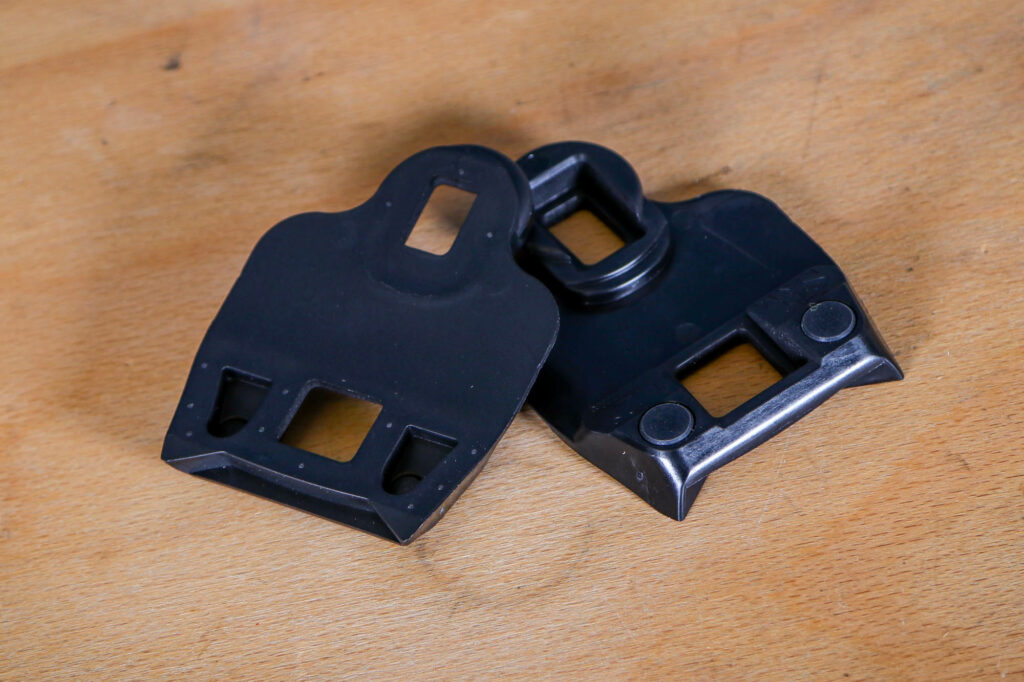
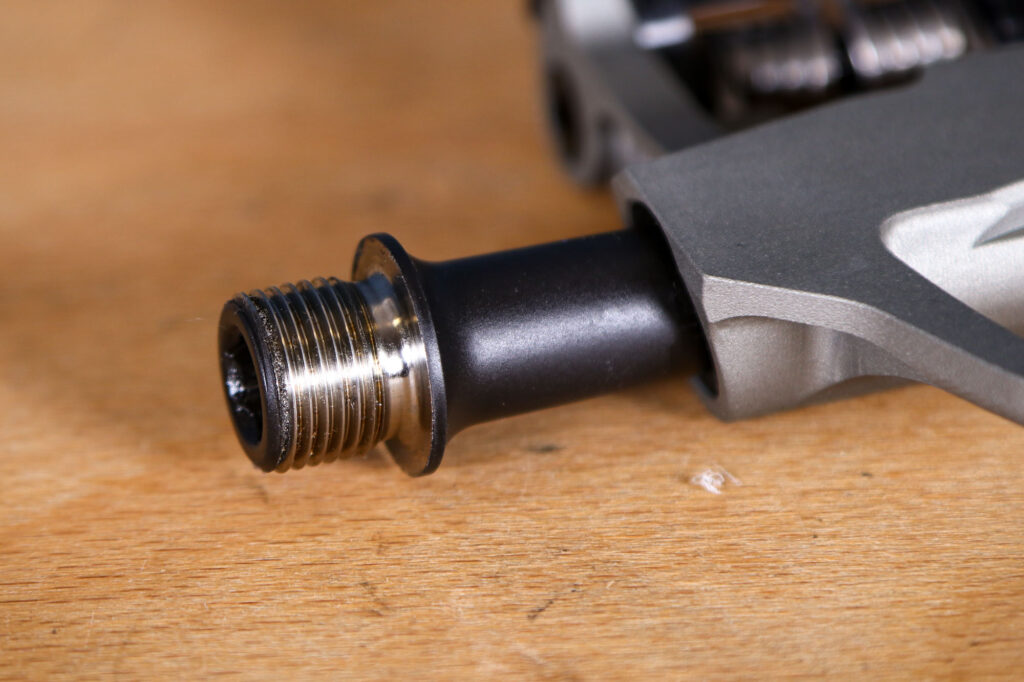

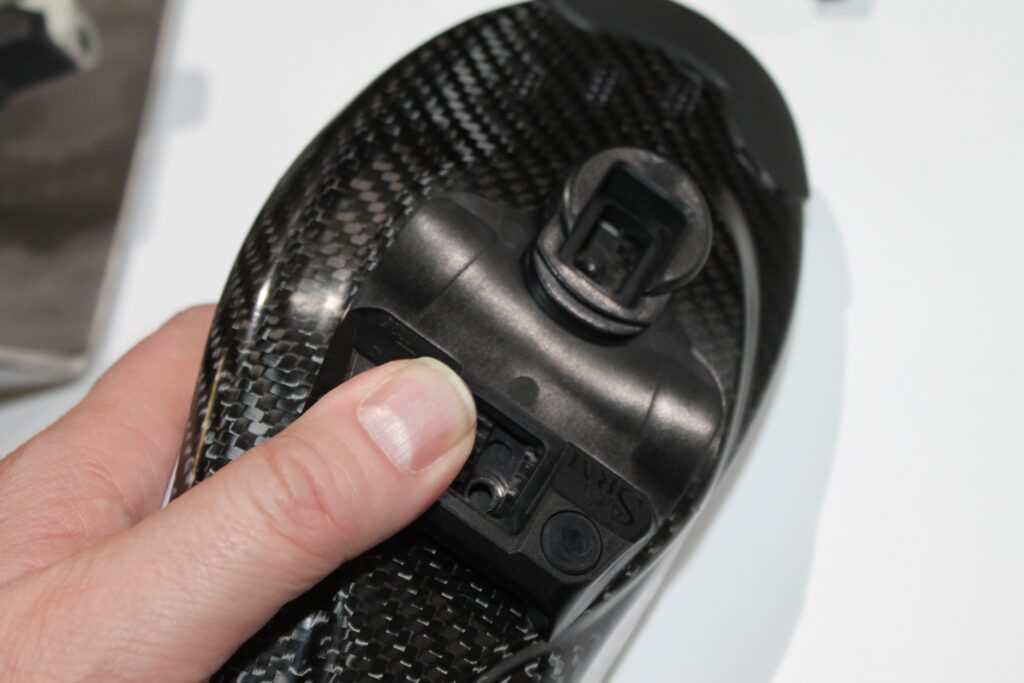

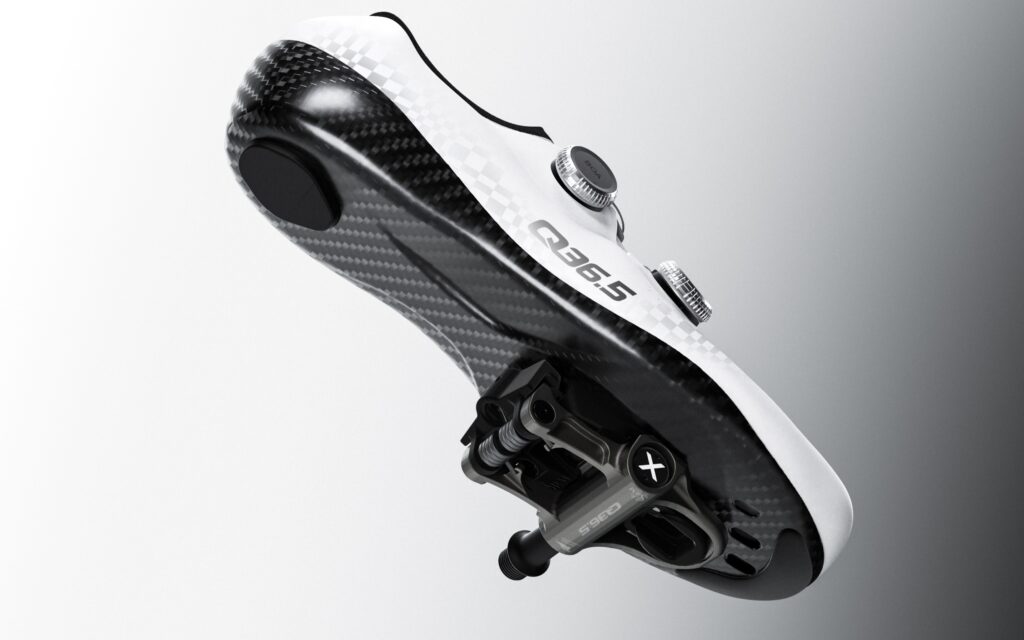
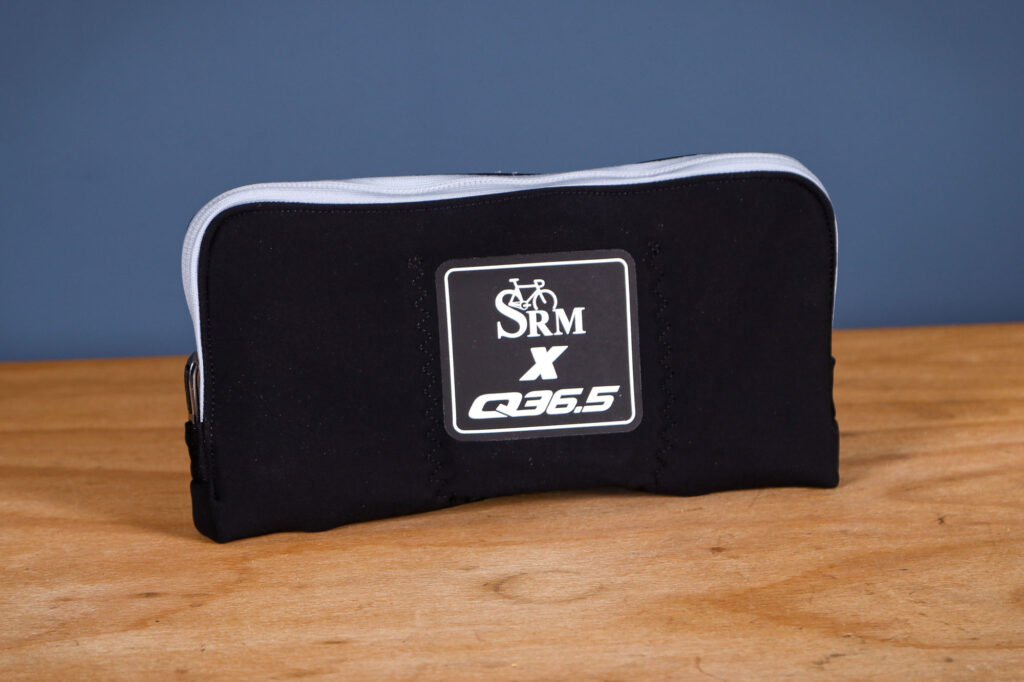
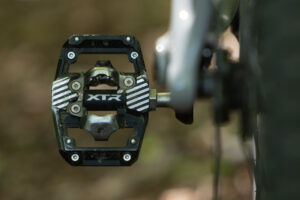
In the hand they feel every bit as premium as the price suggests. The forged, machined body looks superb, with a finish that should stay handsome for a long time (unlike painted pedals, which seem determined to look scruffy after one damp month). They arrive in a neat neoprene case, which is genuinely handy for bike-box travel. Alternatively, you can send your kid to school with the coolest pencil case in the playground.
Installation is pleasingly straightforward. An Allen key is all you need, which makes life easier when travelling and means no pedal spanner rummaging.
Clipping in is also easy, although the weight distribution means the pedals do not always settle with the rear dropping neatly downward.
The supplied cleats were the 1.2° float version, which I found spot on. They gave just enough movement without ever feeling vague or disconnected. Q36.5 also offers a 3° float cleat, and says a 0° version will be available from February 2026. As I’m writing this in May 2026 and they’re still not available, I’ll go out on a limb and say they’re delayed.
A set of cleats is £40, which is a fair jump over the cost of more commonplace Look or Shimano replacements.
The pedals’ release tension is adjustable, and it has a genuinely useful spread between the minimum and maximum settings. You can tune the unclipping feel between an easier exit for day-to-day riding or a firmer, more secure hold for sprinting and hard efforts.
The tighter float and firmer tension options do demand care. If your cleat angle is off, these are not the sort of pedals that will mask it. I found the 1.2° cleats perfect, but I would absolutely recommend taking the time to set them up properly, or your knees may start filing complaints.
The whole system lives or dies on one headline feature: stack height. Q36.5’s official figure is 9.7mm including cleat, which is dramatically lower than mainstream rivals. For context, Wahoo lists the Speedplay Comp at 11.5mm (including base plate), while Favero quotes 10.5mm for the Assioma Pro RS 2. The Shimano Dura Ace at 14.6mm and Look Keo Blade at 14.8mm are higher still.
Best clipless pedals 2026 – the perfect pedalling platform for every type of riding
That is not just a number for spreadsheet obsessives. A lower stack drops the foot closer to the axle, which can lower saddle height and, at least in theory, reduce drag a touch, improve cornering through a slightly lower centre of gravity, and ease hip angle at the top of the pedal stroke. Q36.5 actually advises lowering your saddle by 6mm when fitting these as opposed to Shimano or Look pedals, which underlines that this is not a simple fit and forget change.
If low stack is your holy grail, this system – if two things, pedal and shoe, can be a system – makes a compelling case. If it is not, the price becomes much harder to defend.
Pedalling along with the required Unique Pro 4.0 shoes, the most noticeable characteristic was the huge contact area and the stability that brings. If found no hot spots at all, whether on long rides, hard efforts, or during several hours of turbo use. Power transfer feels very stiff and very immediate, even when sprinting my rather unfeatherlike 90kg self at town signs.
That held true everywhere I used them. Up the Gran Canaria climbs, hammering along Wiltshire winter roads, or sweating through indoor sessions, the platform always felt secure and reassuringly solid. Under the hard efforts these always felt planted and effective rather than flashy or fragile.
They are also impressively quiet. I experienced none of the creaking or ticking that sometimes creeps into other premium pedals, including some Look Blade setups. That silent solidity really adds to the impression that these are exceptionally well made.
The closest mainstream comparison on stack alone is probably Wahoo Speedplay. That system also puts the foot impressively low, but the Q36.5 and SRM setup counters with a much larger contact area, which I found gives a more planted feel under power.
Speedplay remains the benchmark if compactness and weight are key, but it is also more sensitive to dirt ingress and not everyone gets on with the smaller support area. Wahoo quotes 232g per pair for the Speedplay Comp, compared with 254g here.
Against Shimano or Look, the ride feel here is more about directness than comfort. These are not pedals you buy because your current ones are bad; you buy these because you’ve become convinced that stack height really matters, and you want the most integrated expression of that idea currently available.
The catch, beyond the obvious cost of entry, is that ownership costs are also high. The cleats are expensive, the pedals are locked to use with one specific shoe, and replacement parts are not the sort of thing you can casually toss into an online basket with a new chain and some bar tape.

That makes the whole setup feel more like a boutique ecosystem than a generic road pedal. Which is fine, so long as you know that going in.
Value
This is where the romance of engineering collides with reality. At £550 they’re in a completely different pricing universe to mainstream premium pedals. Shimano Dura-Ace pedals are commonly cited at around 228g and are £239.99, while the Look Keo Blade Ceramic Ti pedals are 190g and are £300. You could buy both and still spend less than these Q36.5s cost.
Favero’s Assioma Pro RS 2s are £649, but they offer dual-sided power measurement alongside a 10.5mm stack.
That last comparison is the awkward one. If your main aim is to spend a lot of money on something measurable, the Favero makes a much more rational case. But rationality is not really what these are about. Most buyers will be looking at the broader Q36.5 shoe and pedal system, and through that lens they make more sense. This is not the best value pedal on the market. It is one of the most specialised.
Overall
These pedals are brilliantly made, impressively stable, and genuinely distinctive in how they feel underfoot. The low stack height is not just marketing fluff: the large contact area works, and the whole system feels engineered with an obsession level that teeters between admirable and slightly unhinged.
They are also very expensive, slightly heavier than some rivals, and make no sense unless low stack height is your main objective. If that is you, they are superb. If it is not, there are far cheaper pedals – and even power meter pedals – that are easier to recommend.
Test Report
What does the manufacturer say about this product?:
Q36.5 says: “The greatest innovation in SRM’s new pedal lies in its engthening of the pedal body to reposition the positive element of the cleat and its attending mechanical components behind the direct point of contact between shoe and pedal, allowing for a 6 mm reduction of space between shoe and pedal axle relative to existing marketing leading systems (Shimano) and an increase in contact surface (1.653 mm.) area between shoe and pedal offering the ride both more direct and efficient transfer of power.”
Now you know.
Tell us some more about the technical aspects of this product:
Stack Height: Pedal only: 8.7 mm / Pedal with cleat: 9.7 mm
Q-Factor: 54 mm
Body Material: Anodised aluminium
Spindle: Hardened steel with powder-coated surface
Bearings and Seals: PA6 with 20 percent glass fibre
Weight: 254 g
Please note: The SRM X-Power pedals are only compatible with the Q36.5 Unique Pro 4.0 Shoes and are designed to work as an integrated system.
Any further comments on quality?:
Exquisite engineering and design.
How does the price compare to that of similar products in the market, including ones recently tested?:
More than double the cost of other top-tier offerings from Look or Shimano.
Did you enjoy using the product? Yes
Would you consider buying the product?
No (purely due to price)
Would you recommend the product to a friend?
Yes if they had all the money
Use this box to explain your overall score
An incredible set of pedals made impeccably well with performance to match, but at double the cost for a marginal performance gains, it’s a tough justification to buy them.
About the tester
Age: 35Height: 190cmWeight: 92kg
I usually ride: Santa Cruz StigmataMy best bike is: Specialized Tarmac
I’ve been riding for: 10-20 yearsI ride: Most daysI would class myself as: Expert
I regularly do the following types of riding: Road racing, Time trialling, Cyclocross, Gravel riding, Indoor riding, Bikepacking

12 thoughts on “Q36.5 SRM X-Power Direct Road Pedals”
just when I think nothing else would surprise me as regards ridiculously expensive niche cycling stuff something else comes along and takes it to the next level.
And it’s not their last word for sure!
Stack height is an interesting one, Time (sram) upper their pedals from the icpnoc 13.5mm to 14.5 orso to match spd-sl that said, Shimano have a new pedal out with, a lower stack BUT aren’t cross usable with existing road pedals, Look & Wahoo are another story entirely 😁
The funny thing is, I could bet any money people would never actually feel the 1-mm difference in a blind test. What’s more, it does not translate in any way to efficiency or cycling performance.
Still, somehow that difference makes it the unique selling point of a given model!
Fingers crossed Q36.5 continue to produce their Unique Pro 4.0 shoes for the next decade or so
Quite…some of us are old enough to remember Betamax and LaserDisc!
How is the pedal-to-cleat contact area going to affect the feeling, when the cleat is attached to an essentially unbending, super stiff carbon sole?
The sole is transferring the load, and there should be no local bending in a carbon sole that would allow one’s foot to detect a difference in the pedal-to-cleat contact area. Indeed, I doubt even nylon sole would allow this to be detected (I have a cheap Chinese aliexpress nylon soled shoe for commuting… and I do *not* suddenly feel the shape of my speedplay pavé clone [even smaller than normal speedplay!) through the sole with my feet!).
Further, while a Speedplay pedal is indeed small, the speedplay cleat is much larger in area in terms of the contact area with the sole – larger than Look and SPD-SL, and, eyeballing the photos here, no doubt larger than this Q36.5 cleat. The Speedplay pedal engages with the cleat, and it is the cleat that transfers the force to the shoe, spreading the force – not the pedal! So, just another level of bullshit here.
I’m sorry, but I’m extremely dubious about this claim that the contact area makes a difference, for any kind of cycling shoe that might be used. Flip-flops, sure, you’d feel it, but… I don’t see anyone in the target market for this cycling in cleated flip-flops.
Sorry, this is just bullshit.
Yeah, but no.
You’re arguably focusing on the wrong thing. It’s not contact area dissipating load to avoid feeling the pedal through the shoe. It’s about bend points, torque, and how securely the shoe stays in position / alignment with the pedal surface.
For an example of what I’m talking about, try rattling a shoe using worn look cleats when clipped into the pedal. The shoe will likely move around a lot.
If you have good feet, you’ll never notice this. However most of us don’t have perfect feet, and this movement can cause pressure build up, which most acutely shows itself in pain, but also in lost power transfer – you’ll push harder if you are comfortable doing so and spending less effort controlling shoe movement.
So a big contact area (front and back, side to side) provides better show / pedal stability and with it increased performance.
In these pedals, I don’t know if the contact area achieves any additional support or not, but that’ll be the theory.
Low stack height works differently, but achieves the same thing. Reducing the gap between the centre of the pedal minimises the variation of foot position over the pedal spindle when pointing toes down or up. This, in theory will make you more efficient, and able to push harder on the pedals in more comfort.
Again, if your foot angle doesn’t change over the course of a pedal stroke, stack height is pretty much irrelevant, but most of us will ankle to a degree, so will indeed benefit from reducing stack height
I’ve used Look in the past, I know what you mean about worn Look cleats. It’s terrible – and Look cleats get chewed up quite quickly.
The article however is claiming that the size of the *pedals* somehow translates into better stability and reduced tendency to suffer from a “hotspot”, with specific comparison to Speedplay – which has a smaller pedal:
“Speedplay remains the benchmark if compactness and weight are key, but it is also more sensitive to dirt ingress and not everyone gets on with the smaller support area.”
This is just *bullshit*.
Again, the Speedplay pedal itself may be smaller, but it engages with a cleat which is larger than Look (and I think perhaps this Q36.5) and distributes the load *more widely* over the shoe than a Look cleat!
Even if it did *not* do so, even if somehow the pedal itself was applying the force to the shoe (which it does not), most users of pedals like this or Speedplay will have shoes with very stiff soles.
It’s just bullshit.
On stack, perhaps there is a benefit, I don’t know. Speedplay already has a fairly minimal stack height. The difference between this Q35.5 and Speedplay is 1.8mm, and the difference going from Look Keo to Speedplay is 3.3mm (by the figures in this article). I have to say, I can’t say I noticed major differences from the stack height reduction when I switched Look -> Speedplay. (I like Speedplay for the excellent float it has – which it achieves without compromising rigidity; Look high-float cleats never felt as secure, while having less float; and I like how Speedplay maintains the clipped feel, even with wear – Look cleats just get more and more loose in the pedalling plane as they wear).
And to be clear, the article is not claiming Look and/or Q36.5 have better stability characteristics over time because of how they wear. But even if it did, as your comment does, it’s NOT TRUE. Speedplay has much much better wearing characteristics than Look – the wear interfaces are *steel*.
It amazes me that with all the other changes and updates to bikes over the last decade or so, pedals have largely remained the same from the big producers. Look Keo and SPS-SL are ancient in cycling terms and Speedplay and Time Xpresso not much younger. Im happy to see a more modern innovative system. Hopefully it will eventually become affordable mind.
So this thing gets the same rating as the Ortlieb Velo-Sling Flex bag.
Bonkers.