The PINND Analog cranks are beautifully machined from solid aluminium, and they’re a great mix of stiff and strong without ever feeling harsh. While they’re not the lightest cranks you can buy, they’re rated for everything up to full-on enduro racing, and the price is good too.
These make a great upgrade for those looking to add some subtle bling to their bikes. Although some of the anodising inevitably wears with pedalling, you may like the resulting patina – and if you don’t, there’s a natural finish that will show far less wear. These cranks bring plenty of stiffness for trail through to enduro riding, and the price is competitive too. If you don’t mind the weight penalty, they’re a tough and stylish choice.
PINND Analog Cranks – Technical details
The Analog Cranks are CNC-machined from 7075 T651 aluminium to the relevant European safety standards – in this case EN17406’s Category 4 – which makes them eligible for enduro use. Even if you don’t plan to race, you’ll know these things can cope with some serious trail and enduro-style abuse.
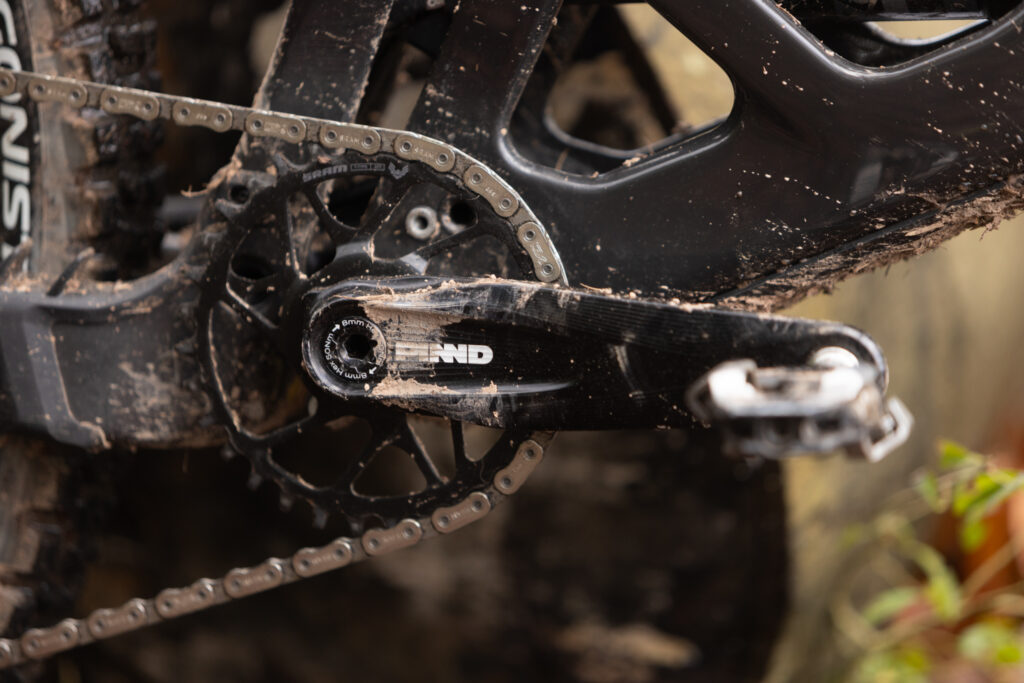
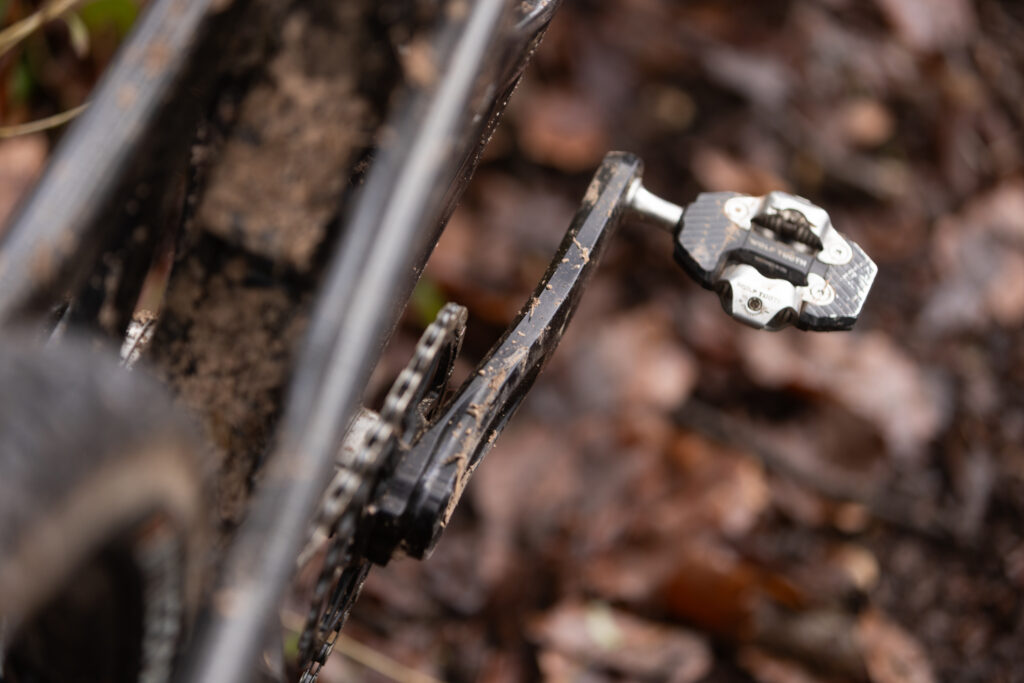
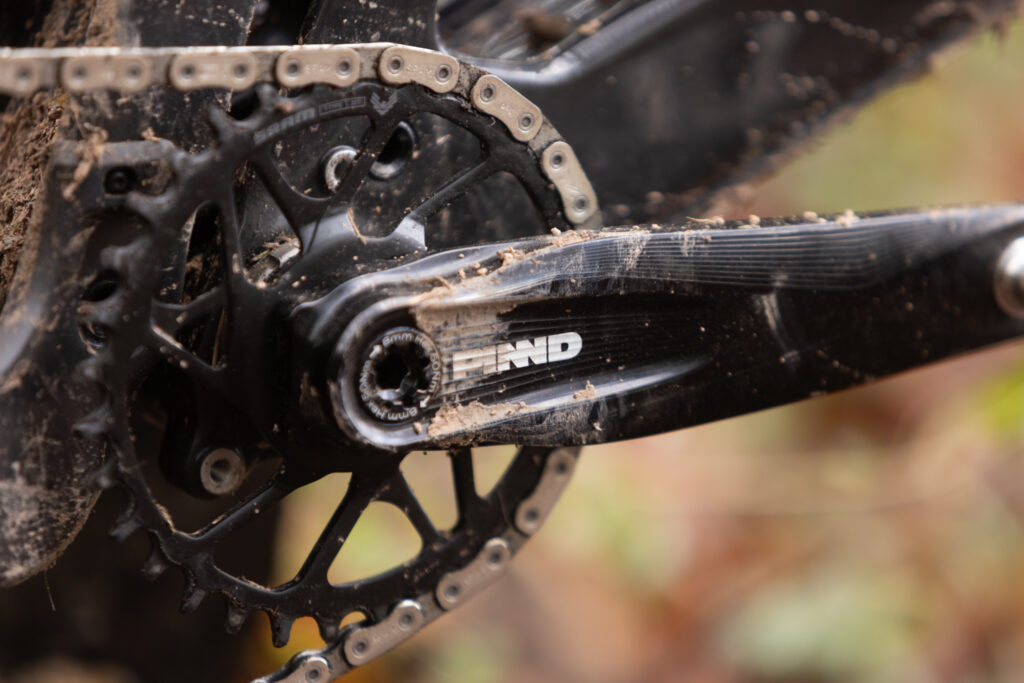
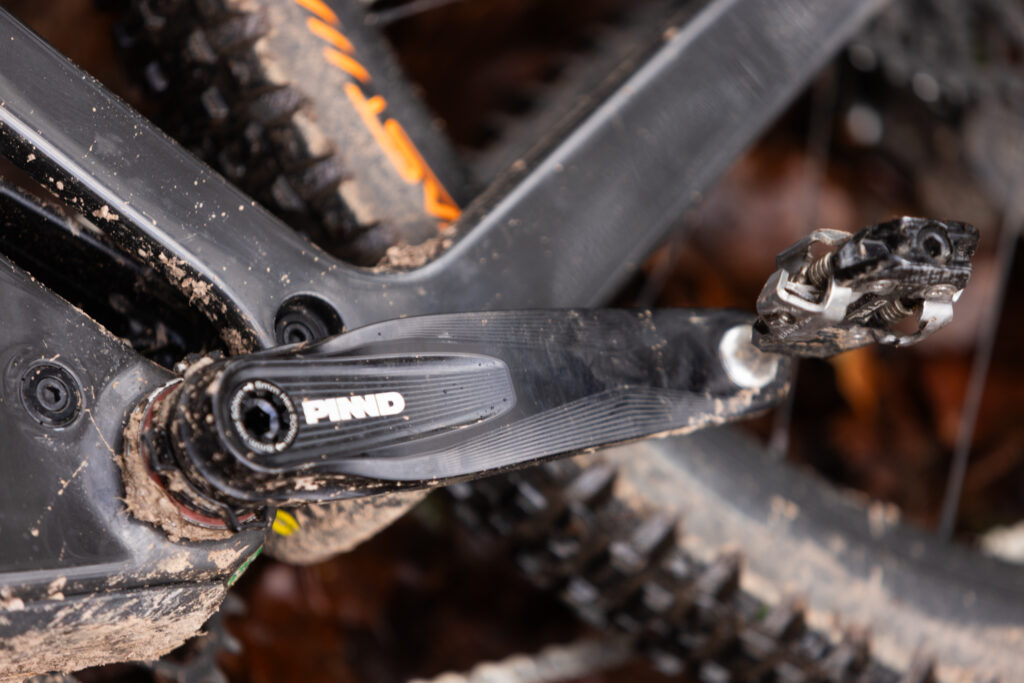
They’re of a three-piece construction – each arm bolts to the axle with a self-extracting design – and are available in an impressive range of lengths from 155mm to 170mm. All use readily available three-bolt chainrings.
They also come in five DUB axle standards, even DUB Fat for fat bikes. If you’re wondering, DUB stands for Durable Unifying Bottom Bracket and was created by SRAM to fit any BB shell on any bike via adaptors, and as such, make all our lives simpler. This standard uses a 28.99mm axle every time, so the different types are just variations in axle length.
The Analog Cranks are also available in DUB standard, Wide, SB+ and DH widths.
If you’re keen to add a dash of colour, PINND offers eight options – everything from black or blue to pink or red – for the captive nut and crank bolt. It’s an extra £9 and £5 respectively, though.
I’ve got the DUB Wide model on test with 160mm arms. PINND says the 160mm model is 614g, and while I weighed mine at 622g, the difference could be the Wide axle, assuming the company measured the standard version.
PINND offers a Cranks For Life Warranty that covers material and workmanship defects, meaning that if a crank should fail, the brand will send out a fresh set free of charge. That doesn’t cover crash damage or incorrect installation, however. If that’s the case, PINND will offer to replace your crank for half price.
PINND Analog Cranks – Performance
With a slew of CNC-machined cranks on the market, it takes a lot to stand out, but I reckon PINND has managed it, all while staying fairly subtle. Where others shave off the rough early passes of the CNC tools, the Analog uses them as sculptural lines and wears them like a badge of honour. It’s a great-looking crank.
The black anodising is showing some wear where my heels rub. It’s inevitable unless you fit some kind of protection, as anodising will wear, but if it’s something that concerns you enough, there’s that natural-coloured option instead.
While this is a stiff crank, it’s not harsh, and I’ve been able to confidently ride it like any other. It simply gets on with its job while looking rather nice. The only downside I’ve found is that it’s weightier than its rivals, with Hope’s Evo Crankset weighing 560g even with longer 170mm arms, and e*thirteen’s Helix Race weighing 547g with 160mm arms.
PINND Analog Cranks – Verdict
Though they’re both lighter, they’re more expensive than the Analogs at £245. Those Hope Evo Cranks will set you back £285, and the e*thirteen Helix Race is £254.95. There’s not a huge amount in it, then, but the PINND offering is certainly competitive.
These look and feel like a serious bit of kit, and while they’re not the lightest option, some may find the extra heft reassuring for hard riding. The wide range of bottom bracket and arm length options is good to see too, and when you throw in the subtly pretty styling and a competitive price tag, it looks like PINND is onto a bit of a winner.
Test Report
What does the manufacturer say about this product?:
PINND says: “Made in Scotland from 7075 T651 anodised aluminium and certified for Enduro (Cat 4) use, our Analog Cranks are available in 155, 160, 165 and 170mm lengths.”
Tell us some more about the technical aspects of this product:
Made from 7075 T651 aluminium; 155, 160, 165, 170mm lengths; all DUB bottom bracket standards.
Any further comments on quality?:
Excellent build quality.
Any further comments on performance?:
No problems at all.
How does the price compare to that of similar products in the market, including ones recently tested?:
While there are cheaper cranks around, these are well priced for CNC-machined ones.
Did you enjoy using the product? Yes
Would you consider buying the product? Yes
Would you recommend the product to a friend? Yes
Use this box to explain your overall score
While these could be lighter, there’s little else to complain about. They’re stiff, strong, good looking and well priced.
About the tester
Age: 33Height: cmWeight: kg
I usually ride: Santa Cruz BronsonMy best bike is:
I’ve been riding for: 10-20 yearsI ride: A few times a weekI would class myself as: Experienced
I regularly do the following types of riding: Mountain bike Enduro