



With the Cateye AMPP 1300 the Japanese manufacturer has finally embraced faster USB-C charging. The 1300 also features Cateye’s usual sturdy construction quality and solid mount, it has a good runtime in its medium setting and excellent visibility from the side. It’s also bright enough for unlit lanes as well as road riding, but at full power the runtime is a little disappointing and the IPX4 water-resistance rating is much less than you’ll find in a lot of the competition’s lights.
The Cateye AMPP 1300 puts out – you won’t be surprised to hear – 1,300 lumens at its maximum power, the sort of illumination that really only makes sense for darkest rides in the most dismal conditions.
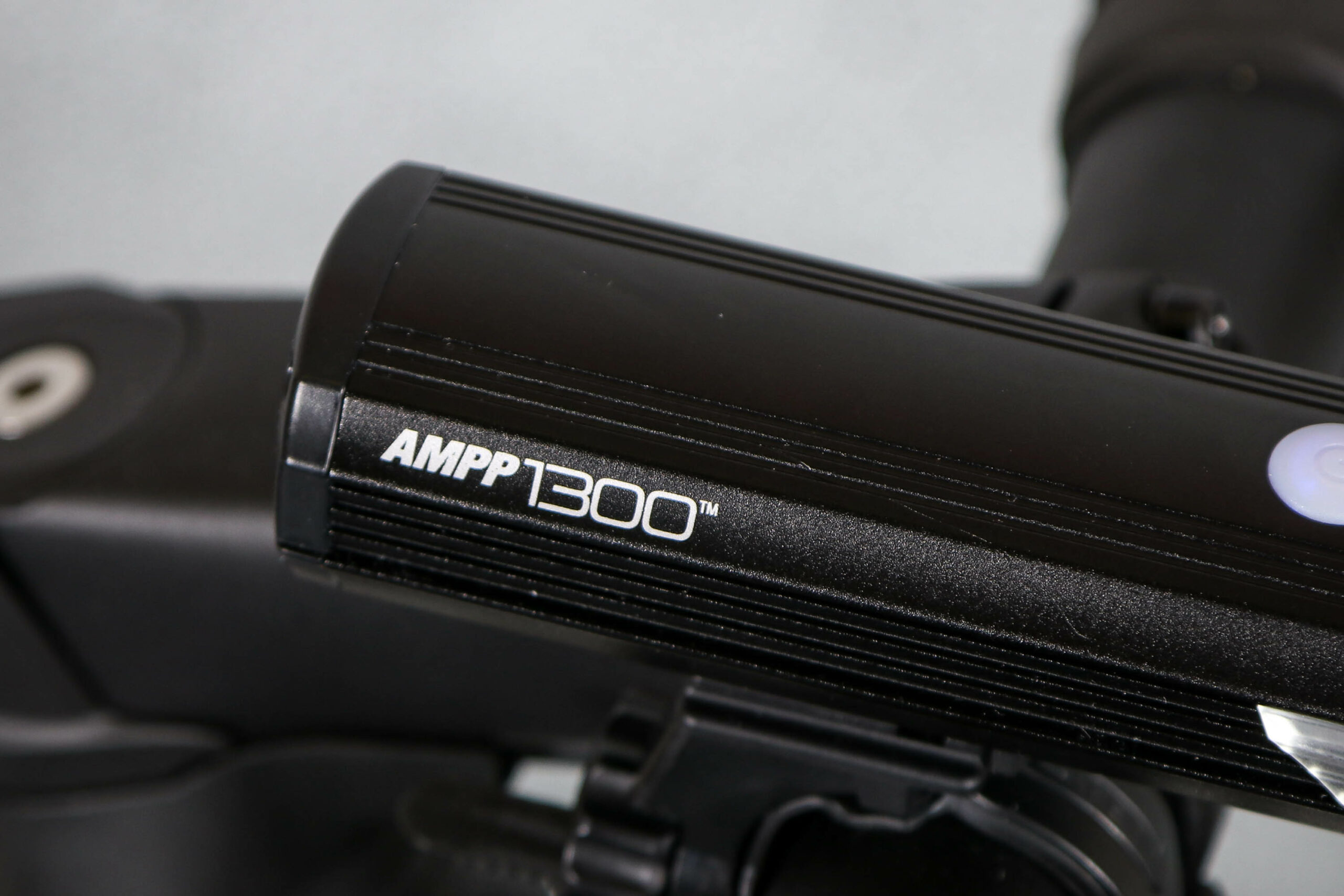
But while Cateye claims that you get two hours at its highest setting, in practice I got nearer 90-100 minutes before it was lights-out time, the indicator light shifting from orange to red in quick succession. The output is very intense, though, with a good range of coverage. And it’s worth saying that runtimes do depend on factors such as temperature, so during the warmer parts of the year that two-hour runtime could well be achievable.
I was more impressed with the light’s middle setting, which some of the higher-power Cateye lights don’t seem to provide. This will give you 600 lumens for three and a half hours, which would be sufficient for five days of 40-minute commutes.
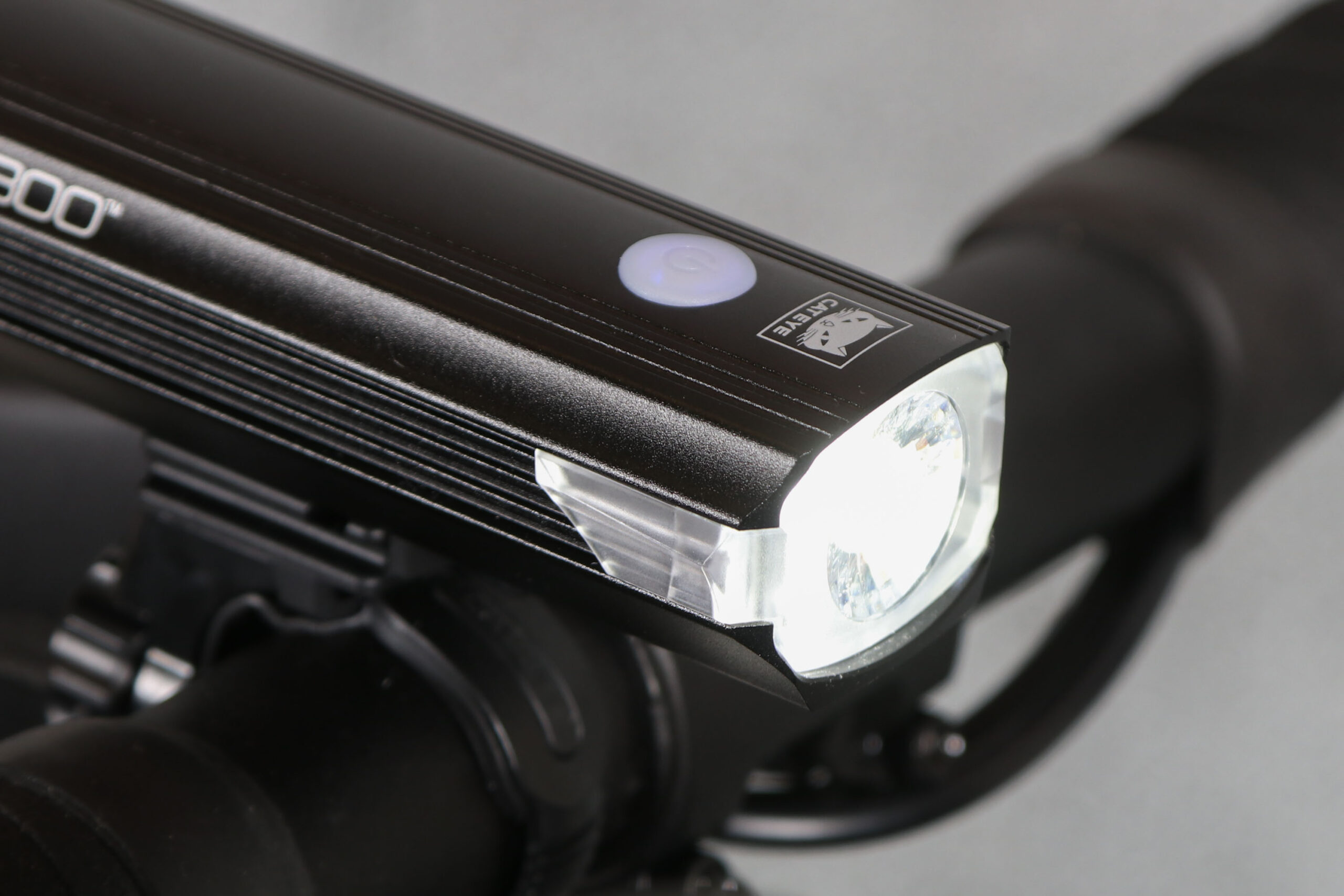
I also found this setting bright enough for most of the riding that I tackle, including night rides on unlit lanes. It doesn’t provide the clarity of beam for technical off-road forays, however, should your gravelly ways tempt you onto bridleways after dark.
Cateye says the final constant option gives you seven and a half hours at 300 lumens, and over the course of various rides I reckon this time is about right. Though as always, I’d err on the side of caution as the battery indicator lights seems to move quickly from orange to red to dead, and you don’t want to be left scrambling for your phone torch…
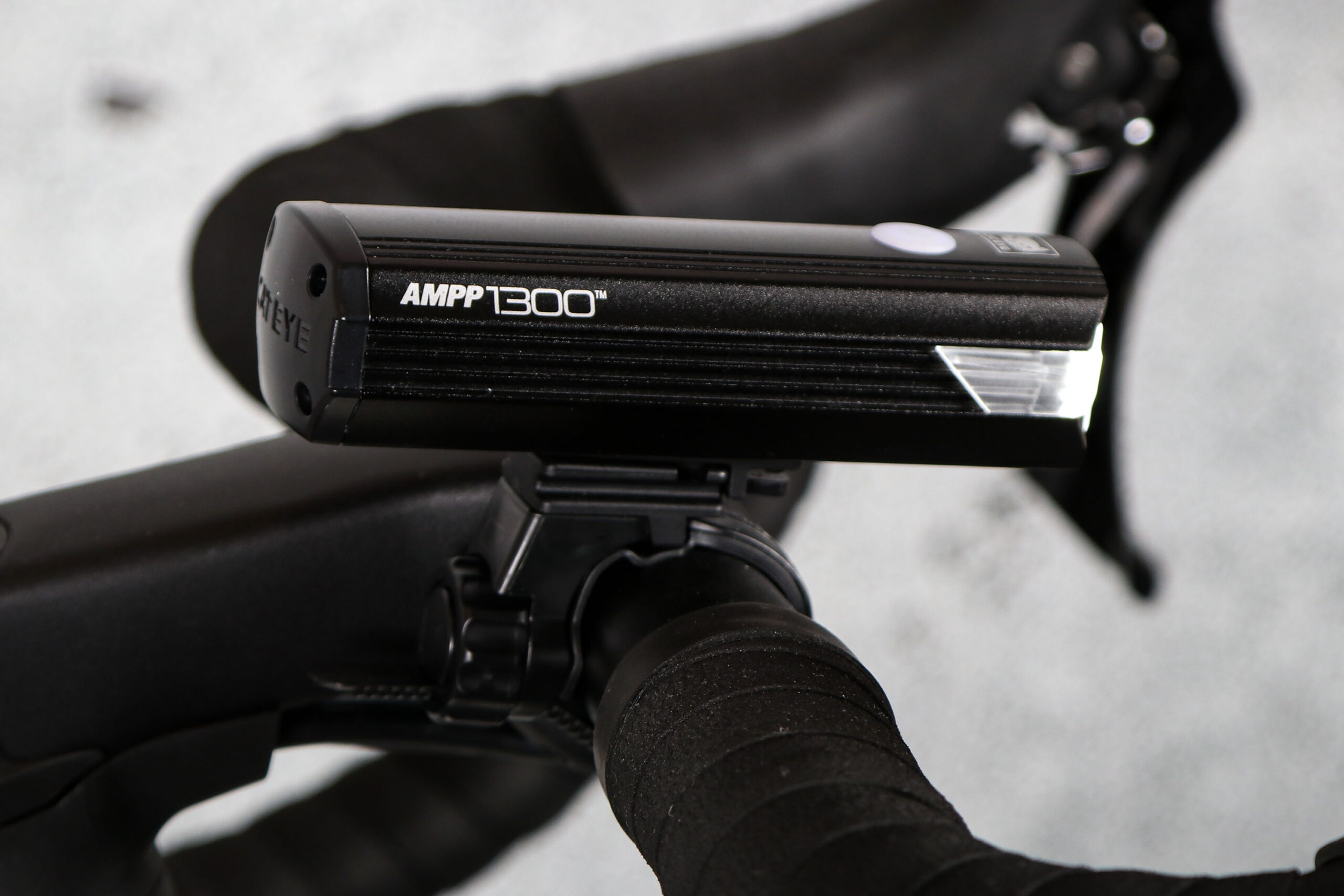
I found this low setting perfect for urban riding on lit city streets, where the AMPP 1300 is bright enough to highlight road imperfections , as well as providing good visibility for road users both to the front and the side – the latter made more effective by what Cateye calls the ‘Opticube lens’.
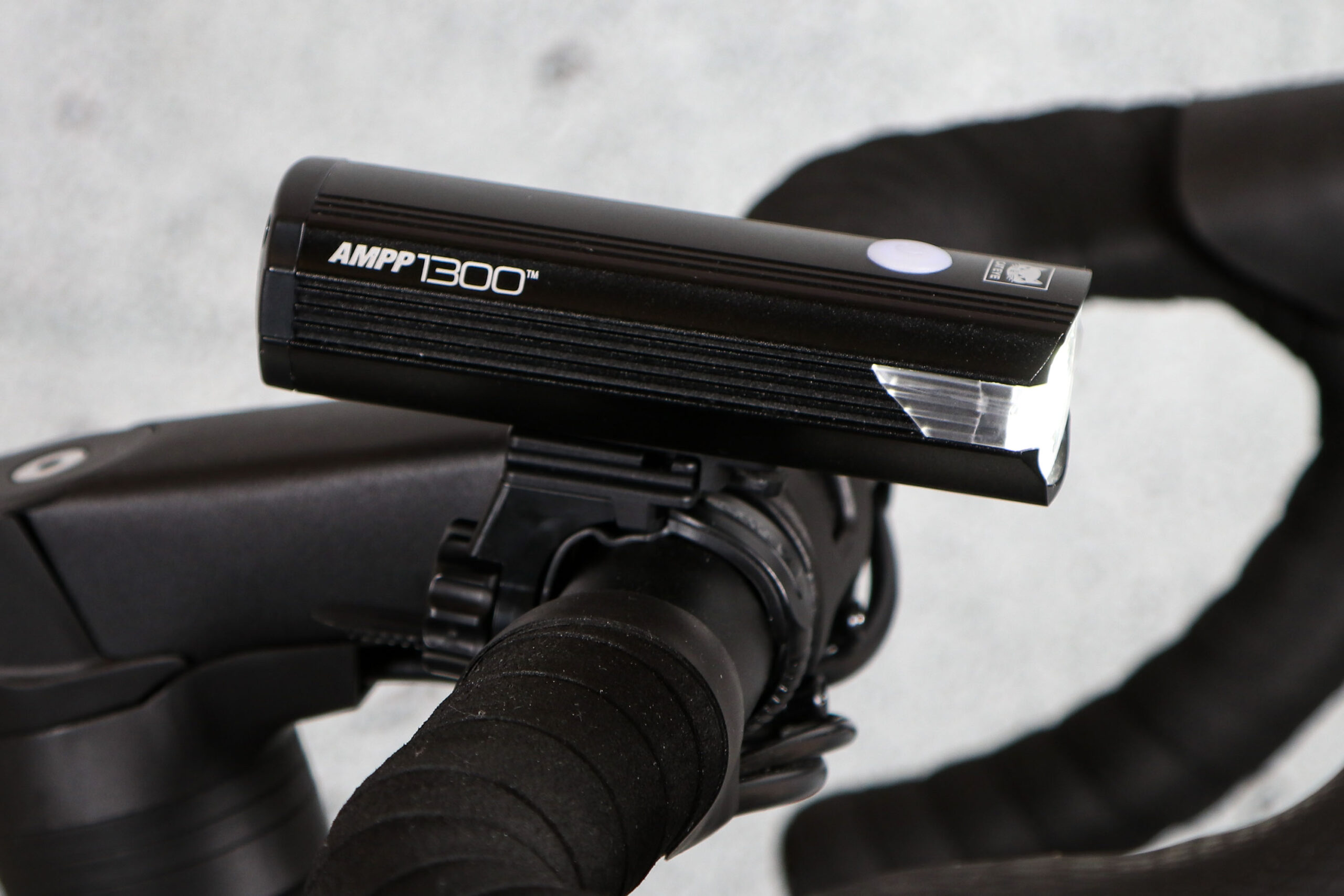
There are two flashing options: a flashing mode that gives you a hefty 50 hours with a pretty bright 200-lumen flash, which should give you weeks of illumination; and what Cateye calls Daytime HyperConstant mode, which has a constant 200-lumen output combined with super-bright 1,300-lumen flashes.
This is pretty aggressive, but will help you be seen by driver and pedestrian alike, and it has a 6.5-hour runtime.
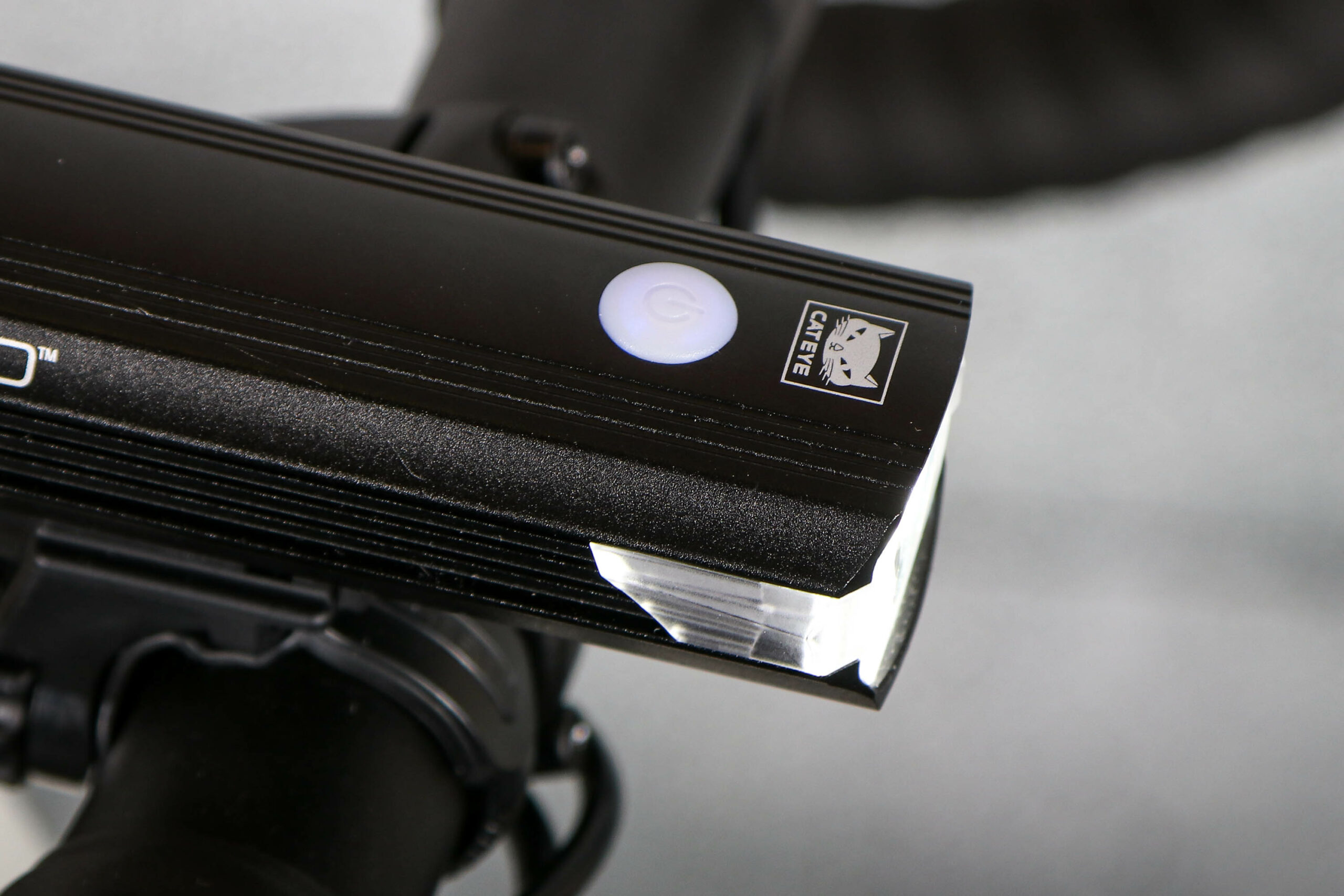
I think given these settings and runtimes the Cateye AMPP 1300 feels more designed for use on the road, and unlit lanes, rather than night rides on murky trails.
The AMPP 1300’s casing is rigid aluminium and typical of Cateye, it feels like it will go the distance. And while in the past, I’ve seen other Cateye lights fail due to their batteries giving up the ghost, my hope is that the new USB-C charging and the updated 5000mAh LiPo updated power supply will ensure this won’t happen with today’s models.
Cateye AMPP 1300: Mounting
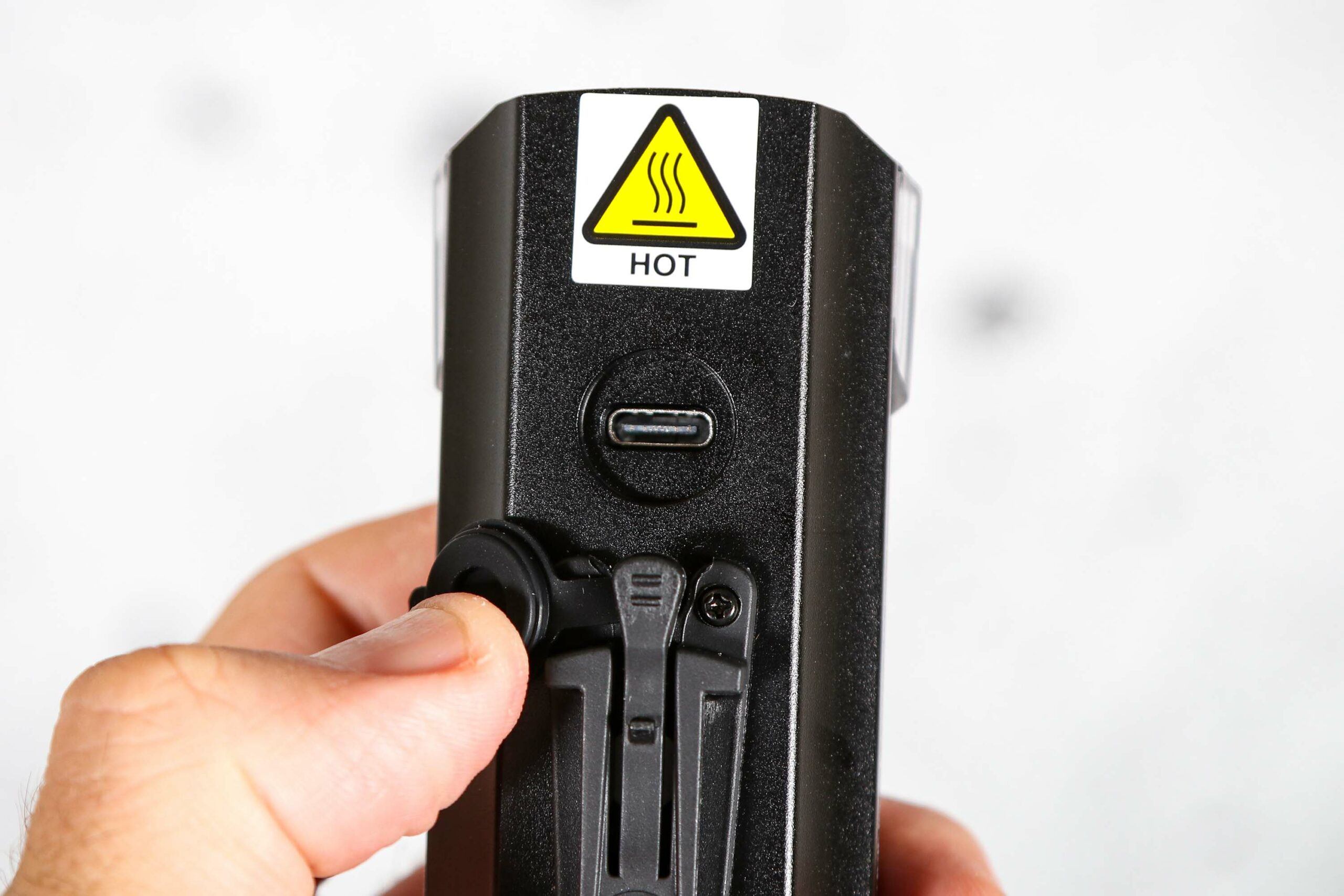
The classic Cateye mounting system is very reliable and has the advantage that you can remove the light single-handedly if you’re popping into the shops or leaving your bike locked-up.
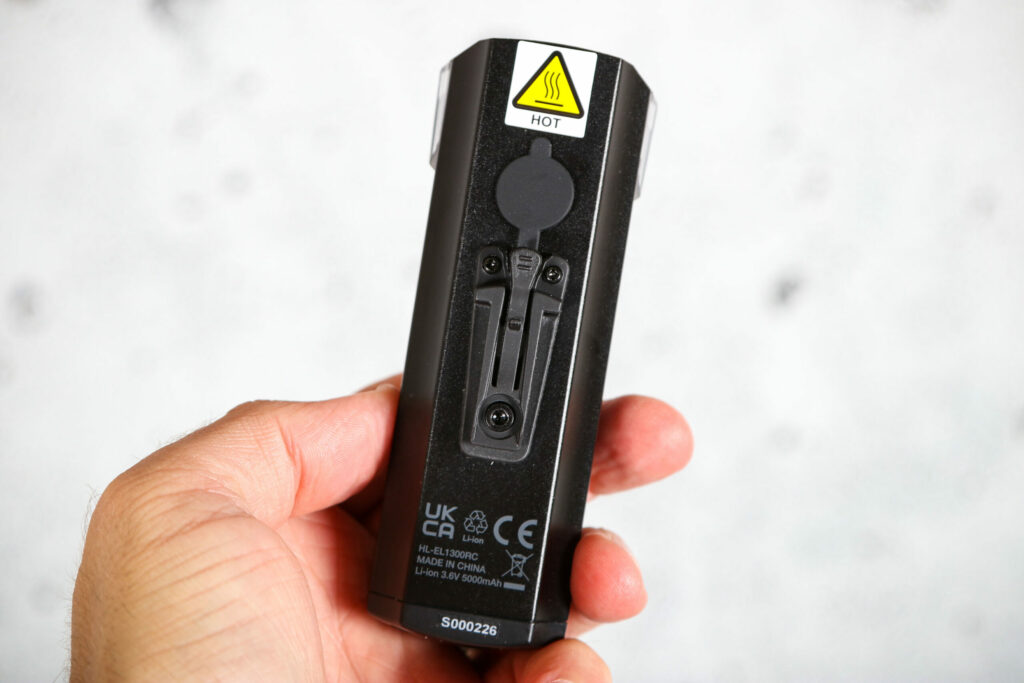
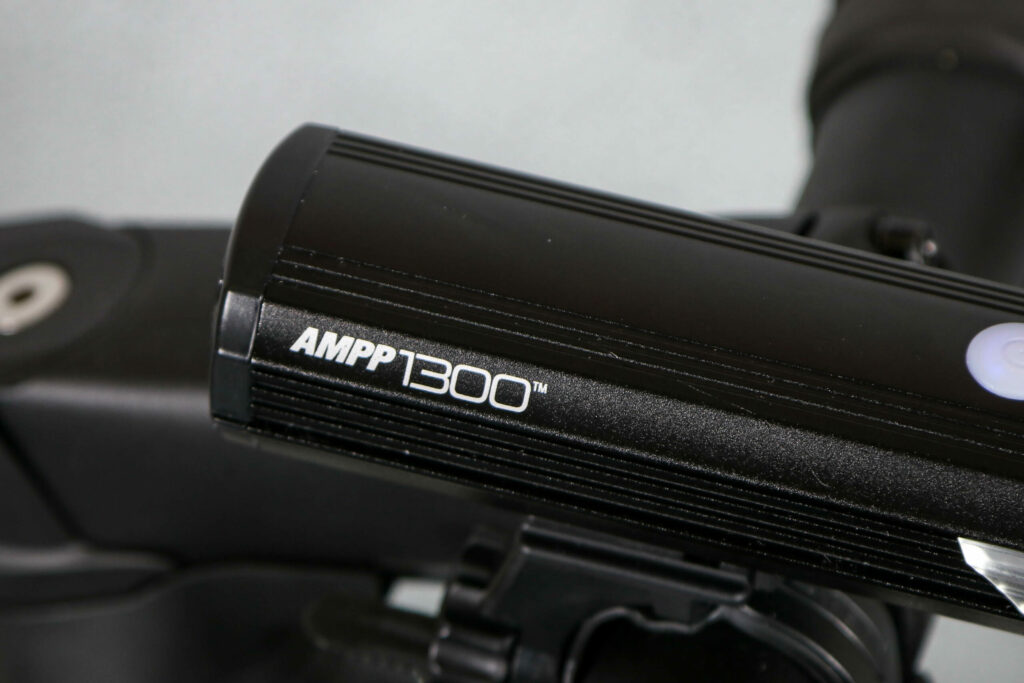
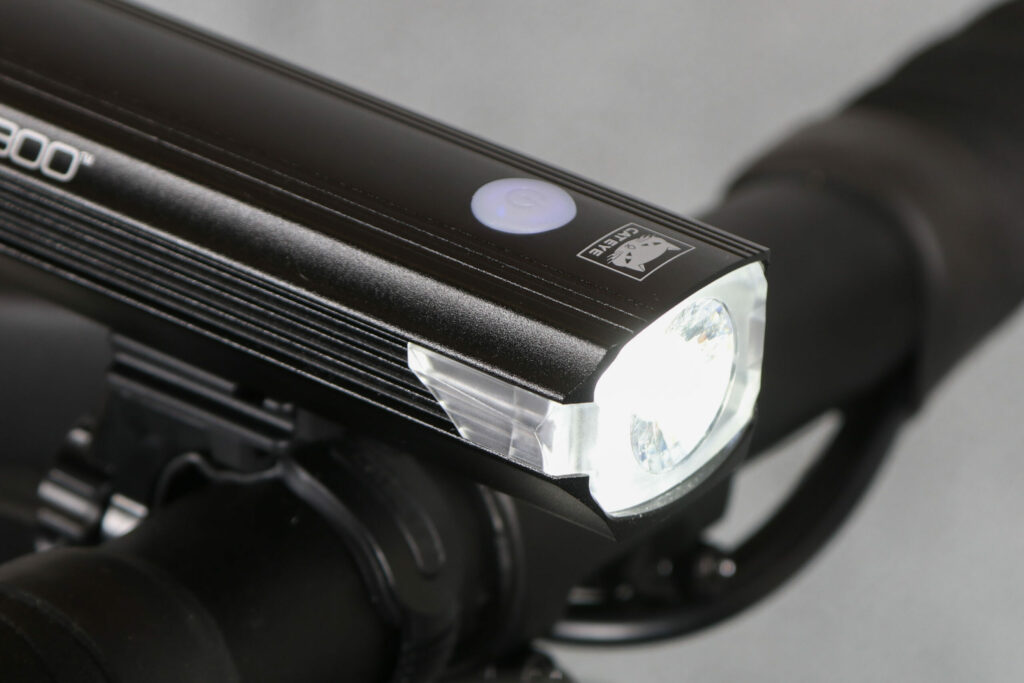
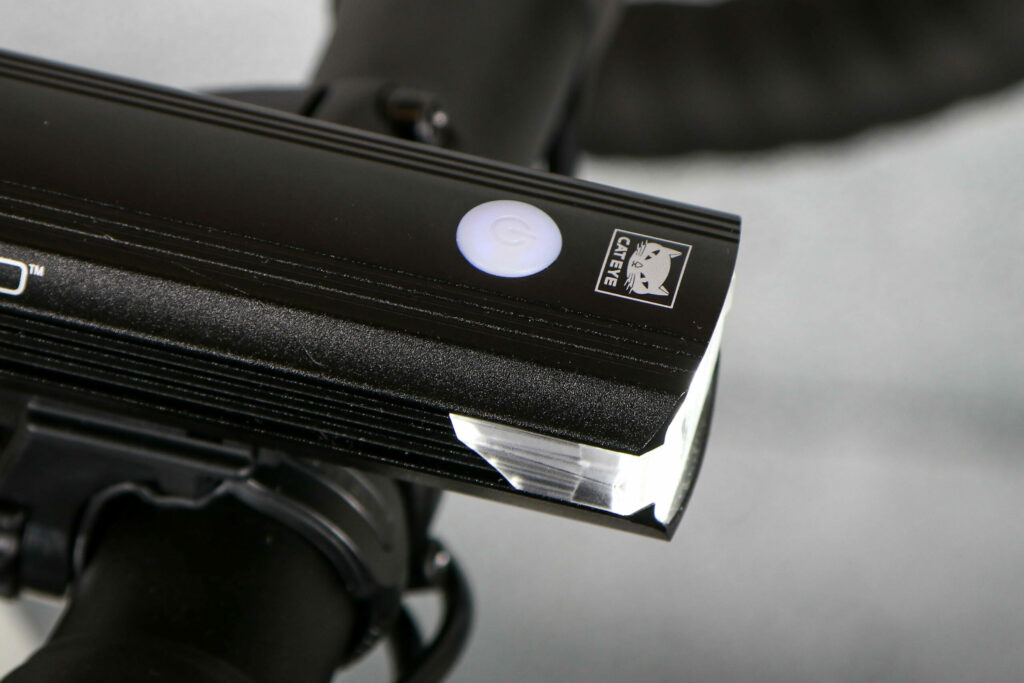
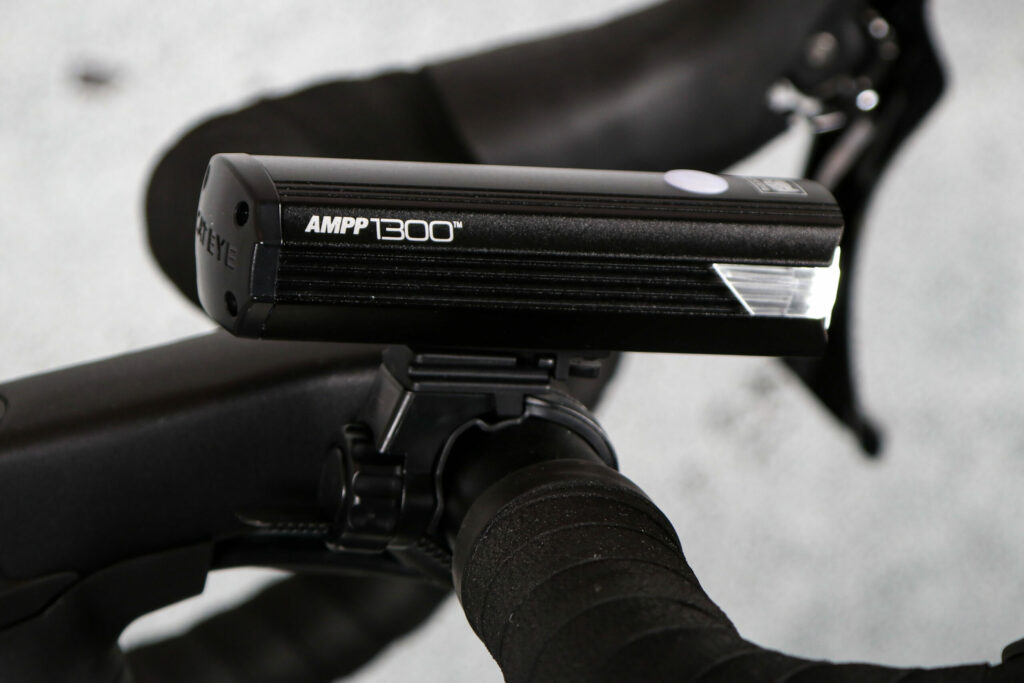
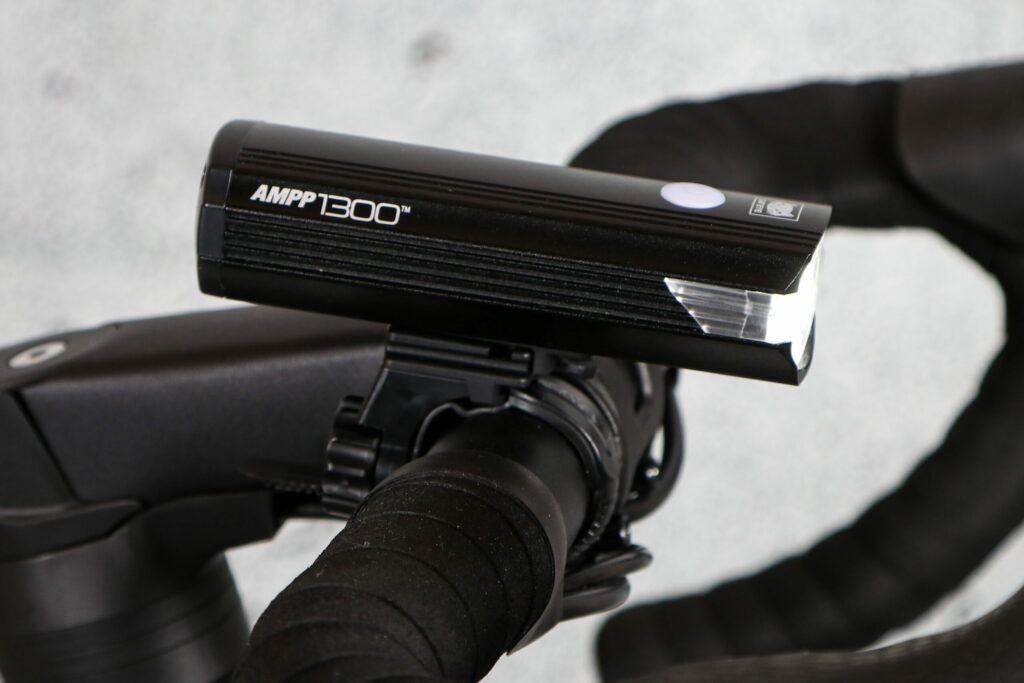
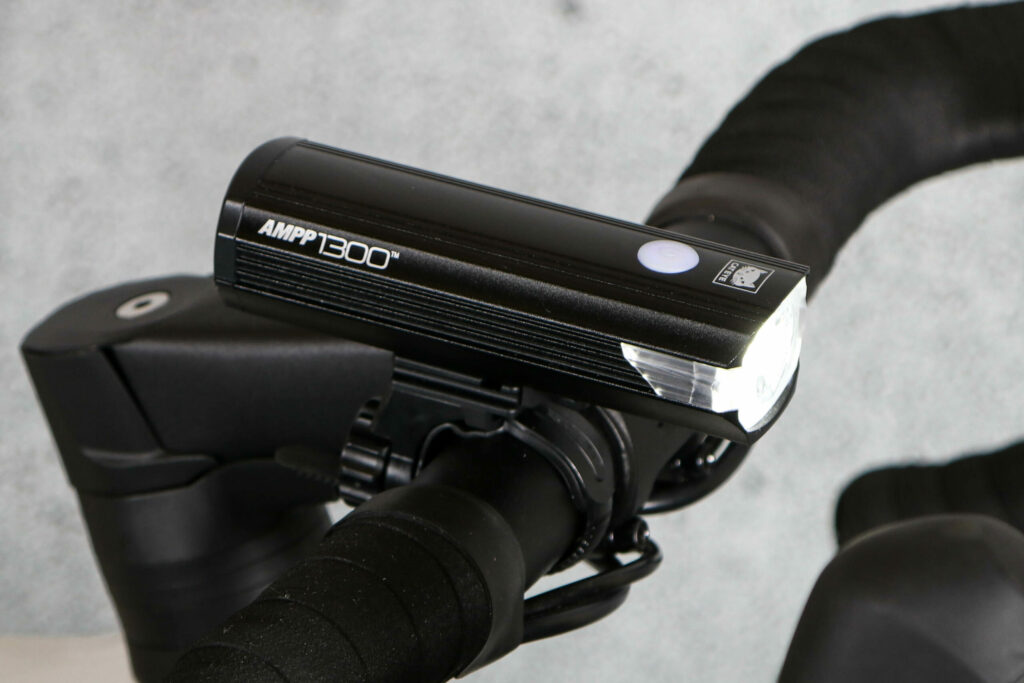
Cateye sells brackets separately, which is very useful if you’re swapping it between bikes. And should you lose the bracket dial, this is also available as a spare from Cateye.
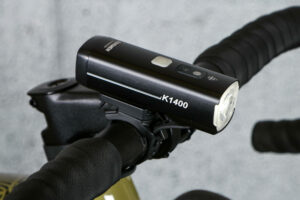
The light itself is both long and pretty bulky, weighing in at 210g, which is approaching half a pound. That’ll be down to the larger-capacity battery and the light being its own heat sink, in order to stop it turning into a smouldering beacon on your handlebar.
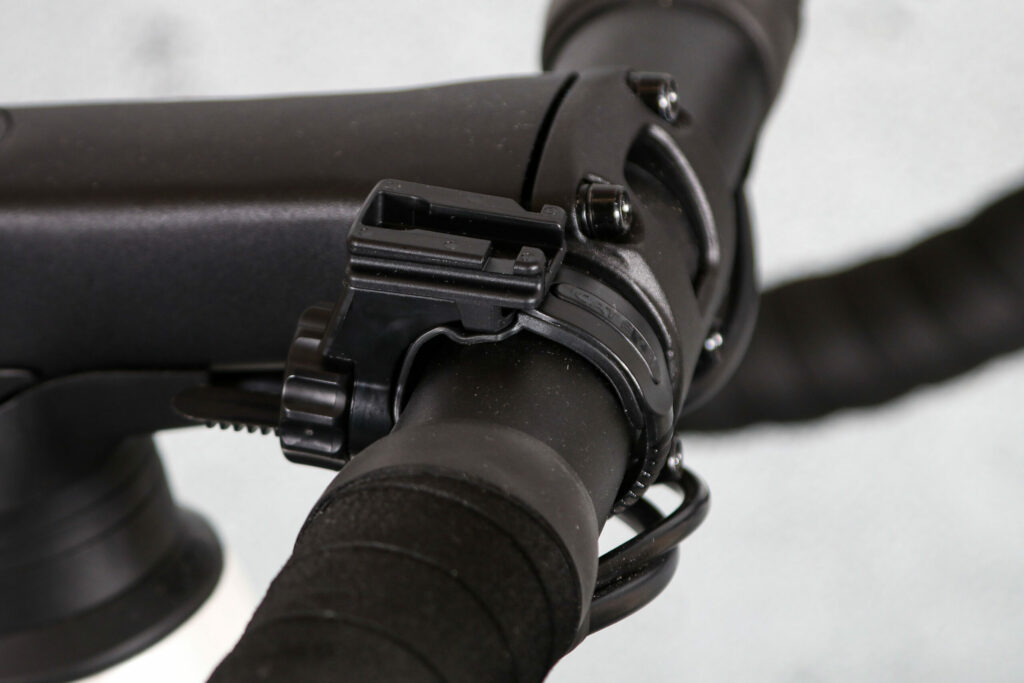
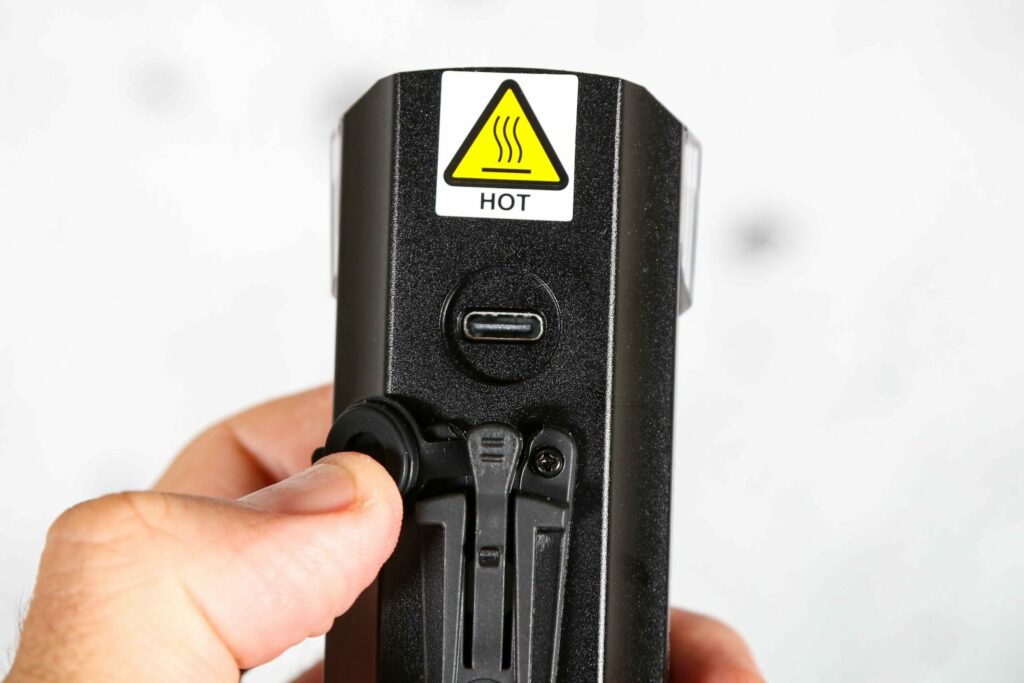
That said, there is a sticker underneath to warn you about heat build-up, and after 20 minutes or so running it at full power, you will start to feel the body getting much warmer, so you do need to be moving for a cooling flow of air.
Cateye claims a charge time of four hours and I found this pretty much bang on.
One area that is slightly disappointing is the light’s IPX4 water-resistance rating. This means it’s resistant to showers (and I should say I had no issues while using it) whereas a lot of today’s lights have much higher IPX6 and IPX7 ratings, which equate respectively to resisting high-pressure jets of water or being submerged.
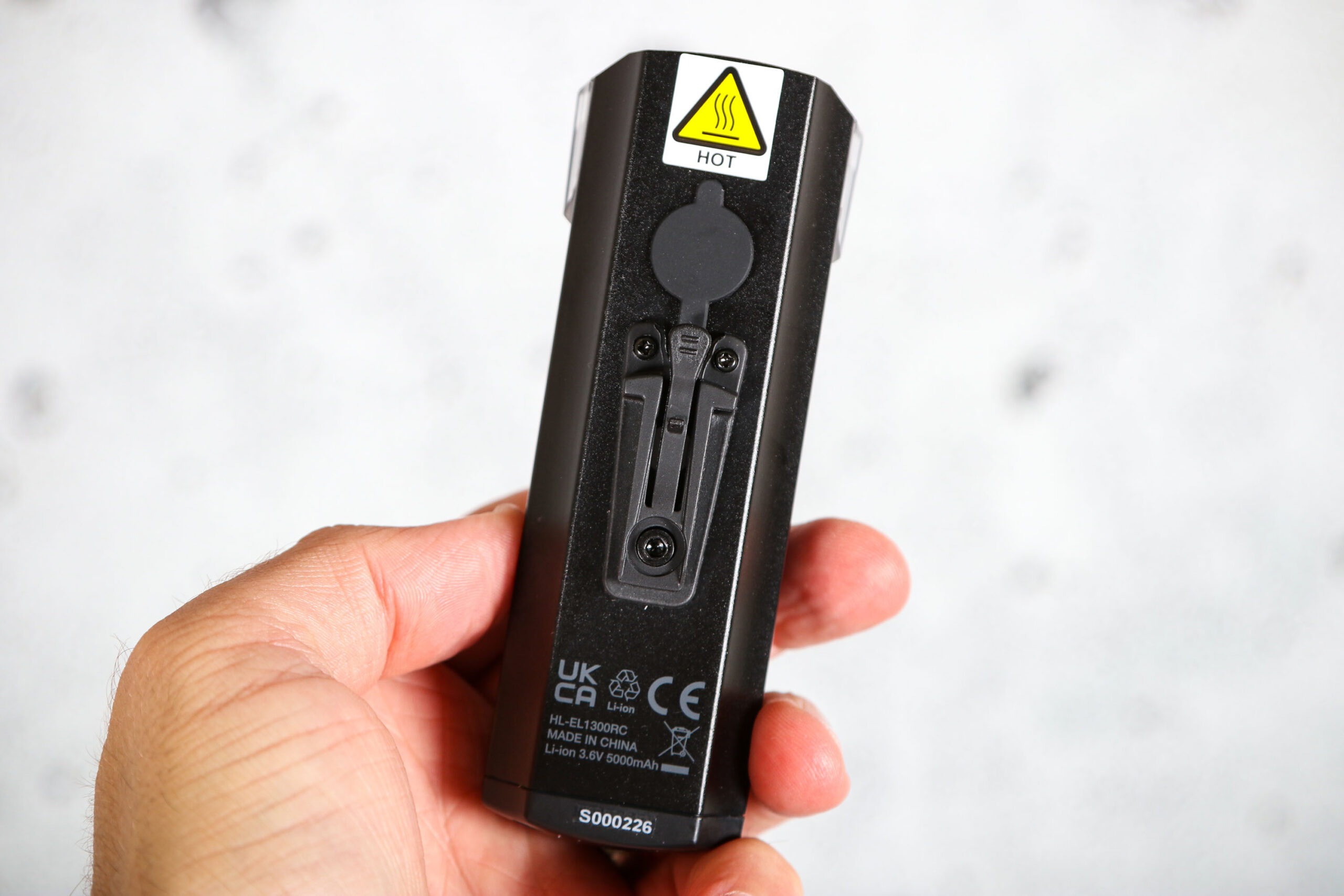
More positive is the availability of spare parts, though with its 5000mAh battery and USB-C compatibility I do wonder if there is room for Cateye to introduce charging the light while it’s in use, which would make the most of the well-engineered lens and beam that Cateye has developed for its AMPP lights.
Value
There are a fair number of lights at similar prices to the Cateye AMPP 1300 that deliver comparable or even more powerful outputs.
The Ravemen K1800 not only puts out 1,800 lumens while coming in at a penny under £100, it also offers a much higher IPX7 water-resistance rating. You can charge it on the go and its runtime is longer than the Cateye’s.
The recently tested CETUS-1700 is sold direct from Gaciron or via AliExpress, which means any import duties or VAT are your responsibility responsibility. But it presently costs only £60 or so.
The 1,500-lumen Moon Rigel Max costs £79.99 while the Magicshine Allty 1500 is a tenner dearer at £89.99.
Check out our best front lights buyer’s guide for more choices.
Verdict
The light is a very good choice for commuting even on unlit routes, though not so much for challenging off-road conditions. It’s tough, well made and puts out a good beam that’s also visible from the side, and Cateye’s mounting system is secure, easy to use and spares are available. But while the Cateye 1300 AMPP’s runtime in the medium setting is good, I’d have liked a longer runtime at maximum power and greater resistance to the elements.
road.cc test report
What does the manufacturer say about this product?:
Cateye says: “Upgrade your ride for longer evenings, gravel adventures or early-morning commutes. The AMPP 1300 delivers a powerful 1,300-lumen beam with wide side-visibility thanks to CatEye’s OptiCube™ lens.”
I found it a sturdy and reliable high-powered light that will keep most of us happy both on road and on unlit lanes. It delivers a decent beam in its medium-power setting and a fair amount of life in the battery when used at lower settings, which makes it a reliable bit of kit to ensure you keep on both seeing and being seen.
Tell us some more about the technical aspects of this product:
It’s CNC machined and has a pleasingly simple interface – the single button top button that lets you cycle through the basic settings.
The button doubles up as a battery indicator, which is charged by a USB-C port on the underside.
The IPX4 rating is quite modest for a high-end light these days. It means it’ll be okay in most showers but if you’re caught in a deluge or an accidental plunge, it might be a case of literally lights out.
I’ve always found the Cateye bracket not only sturdy but easy and quick to use.
Modes below
High – 2hr @ 1300lumens
Middle – 3.5hr @ 600lumens
Low – 7.5hr @ 300lumens
Daytime HyperConstant – 6.5hr @ 1300/200lumens
Flashing – 50h @ 200lumens
Any further comments on quality?:
Solid CNC construction with heat sink features built into design, which will help to avoid overheating.
The flimsy, loose-fitting USB-C cover feels slightly under-built in comparison, though at least Cateye has joined the rest of the cycling world in finally embracing USB-C…
Any further comments on performance?:
The light has a decent beam and is great for illuminating dark lanes, and I found the medium setting fine for most riding on the road.
How does the price compare to that of similar products in the market, including ones recently tested?:
There are number of lights costing from £90-£120 and which putting out similar outputs. Some have better runtimes though they may lack the robustness of the Cateye.
The £99.99 Ravemen K1800 offers an excellent IPX7 water resistance, you can charge it while it’s in use and its runtime is longer than the Cateye’s.
For just £20 more you can get the 2500-lumen Magicshine Allty 2500s , which is more powerful and well built but is unfortunately prone to overheating.
Any further comments on design and usability?:
The design is very straightforward, though the Cateye is a little larger than other lights with a similar output.
The single-button design is very easy to follow, and the double-click option to employ the high beam is very handy.
Any further comments on the clamp?:
The familiar Cateye dialled bracket is easy to do up without gloves, though removing the light from bracket can be fiddly with gloves on. Otherwise it’s straightforward to use and you can easily slide the light out easily. Both the mount and dial are available as replacements.
Does the light have a waterproofing rating? If so, what is it?:
IPX4
Any further comments on waterproofing?:
While I rode this in different weather conditions and was confident that the light would hold up to rain and heavy showers, I wouldn’t be entirely confident if I was using it for an extended ride in a proper deluge. Its IPX4 rating equates to ‘splash-proof’, and is well under the IPX6 and IPX7 ratings (protection against water jets and surviving being submerged respectively) of many of its competitors.
Any further comments on battery life and recharging?:
Quick to charge but the runtime at full power is a little disappointing.
It has a 5000mAh battery, and I found Cateye’s claimed charge time of around four hours pretty accurate.
Cateye lists a 2-hour runtime at full power, but I found it came up a little less than this, getting closer to 100 minutes, though this can vary depending on factors such as temperature, with batteries typically having shorter runtimes when it’s cold.
Any issues with durability?:
Tough and well constructed from CNCed aluminium, so you don’t need to worry about it getting damaged. Its modest water resistance is the only issue for me.
Any further comments on weight?:
It’s pretty chunky, and you certainly notice its bulk when it’s on the bar – especially if you’re trying to squeeze it on with a computer, phone and bell at the same time. But that extra weight does come with the benefit of increased durability.
Did you enjoy using the product? Yes
Would you consider buying the product? No
Would you recommend the product to a friend? No
Use this box to explain your overall score
While it’s a tough light with an excellent beam pattern and a secure mount, and Cateye has finally embraced USB-C, I’d have liked a better runtime on full power and greater resistance to the elements.
The runtime is better in the medium-power setting, which I feel makes this a good call for commuting and evening loops, saving the higher power for unlit lanes.

4 thoughts on “Cateye AMPP 1300”
“And it’s worth saying that runtimes do depend on factors such as temperature, so during the warmer parts of the year that two-hour runtime could well be achievable.” which is the opposite of what you need as warmer times tend to coincide with longer days when you don’t need the light to be on as long if at all.
Id say its more of a preference for when its dark, as THATS when the light really comes into its own.
Riding into the night in the summer is a real treat, and to have the promise of good illumination is very welcome indeed.
Lack of usb-c has put me off buying cateye lights, so its inclusion is a welcome change.
Yeah its a real plus, and long overdue.