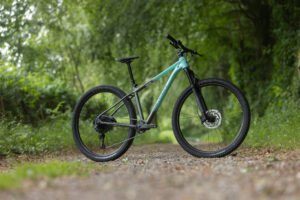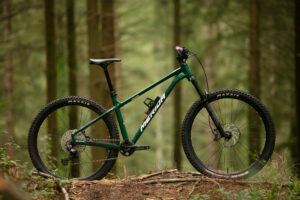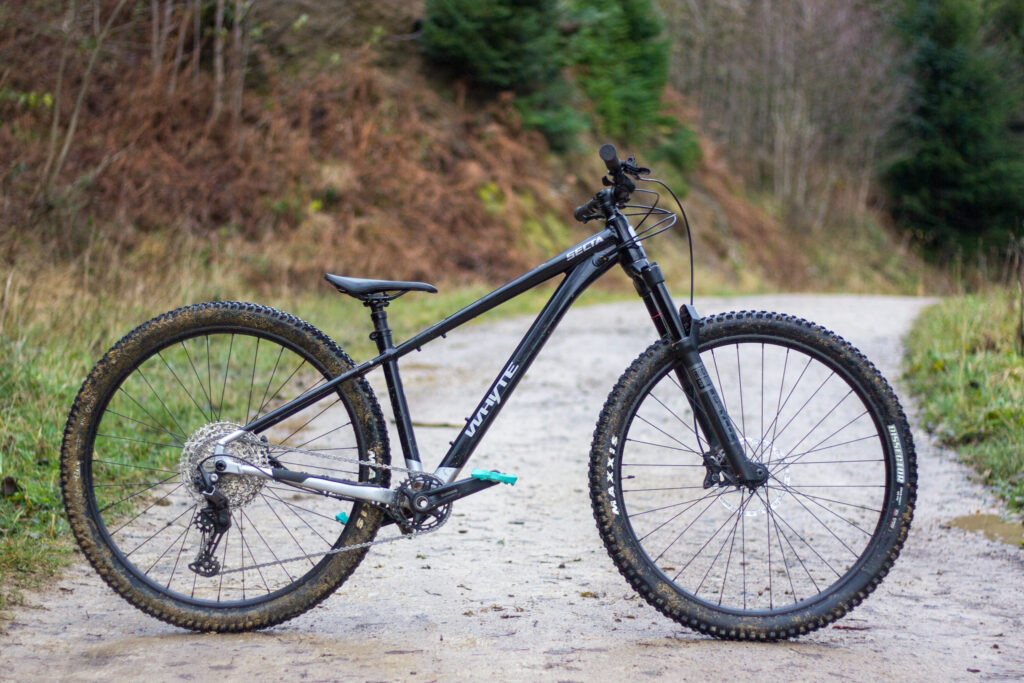

Whyte’s Secta RS is a nifty hardtail and performs well beyond its price tag. It’s not going to take you to Red Bull Hardline, but there’s not much else it won’t conquer… with the right rider atop it, of course.
- Best hardtail mountain bikes 2025 – great hardtails for every budget
- Is the hardtail the best winter mountain bike
- Sonder Falco Eagle 70 mountain bike
Whyte Secta RS – Technical details
In recent years, and following a couple of investment changes, Whyte has really honed its portfolio. It’s gone from offering every type of mountain bike under the sun to focusing on not just the big earners, but what the brand thinks its audience wants.
One of the results of this renewed focus is the Whyte Secta hardtail range. It replaces the old 900 series, and is comprised of three adult-sized bikes, and the Secta 26, which, as the name suggests, runs 26in wheels for youth riders. Prices for the Secta (adult bikes) start at £899, and go up to £1,499 for the Secta RS, which is the bike reviewed here.
And although still affordable, it offers a lot for the money, including confidence on a multitude of trails. It comes with a full 29-inch setup, with room for up to a 2.6in rear tyre. Up front, there’s 130mm of travel, putting it firmly within the ‘trail’ category. I wouldn’t be flinging it down Dyfi, but for a solid day’s play at Guisborough, you don’t need to ask for much more. Plus, it could be argued that this travel helps the bike retain its geometry a little better as the fork compresses.
The Secta RS is constructed of a 6061-T6 aluminium frame, with multi-shaped and formed main-frame tubing. It’s built to run a single chainring up front and external cable routing to make maintenance that much easier. Whyte doesn’t forget the weatherproofing, though, and has weather-sealed cable ports and a sealed seat post collar.
You’ll also find a chainstay protector to silence chain slap and protect the frame from damage. It’s up to date with UDH dropout compatibility and 12mm x 148mm Boost rear hub spacing.
Things like balance and centre of gravity don’t often get that much concern at the cheaper end of the scale, but the Secta RS has the luxury of lower down bottle cage bosses, and a compact seat tube with a decent standover for a longer dropper post means you can really move your weight where you want to on the bike.
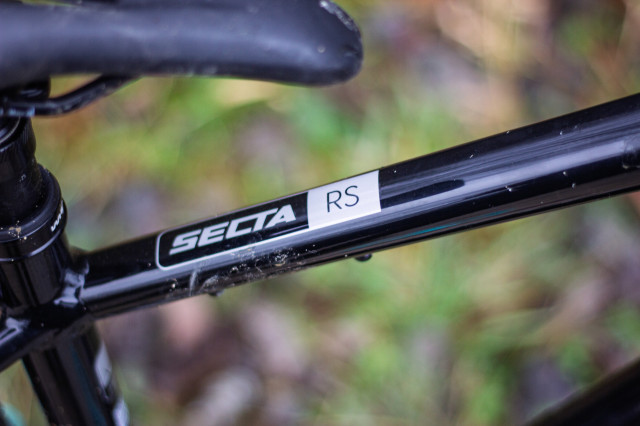
I tested the size small, although if I’m being brutally honest, I think I might have benefited more from a medium. For reference, I’m 5’5″ but have a relatively long inseam, and I’m so used to riding mountain bikes with probably way-too-long reach that the small seemed really… small.
The reach is 420mm, which isn’t particularly short, and the seat angle is 75.5 degrees (76 degrees and above for larger sizes). The head angle is 63.5 degrees throughout the sizes, which is on par with modern, slacker angles – which is what Whyte is famous for.
There are four sizes to choose from, S-XL, and the S is recommended for riders between 5’3″ and 5’6″.
Whyte Secta RS – Componentry
For £1,499, you probably don’t think you get much bang for your buck these days. Maybe a mechanical disc brake setup, cheap rotors, a fork that offers the same damping as my Peugeot 205 when the coilover snapped, and a very heavy set of wheels.
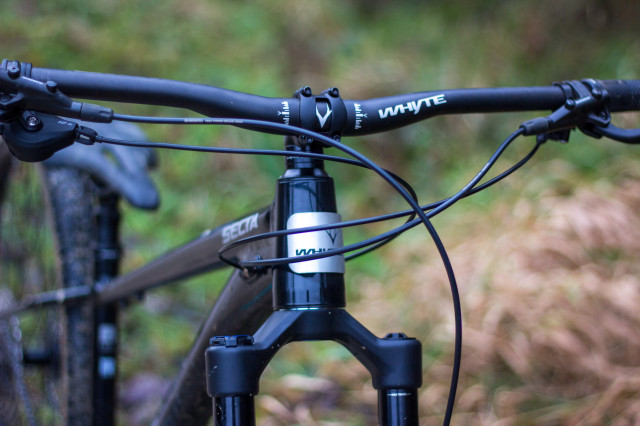
Whyte’s Secta range is pleasantly surprising in this aspect, as it’s really well kitted out for the price. Bearing in mind the RS is the top-end model of the range, I was still surprised at the quality of components given the price tag.
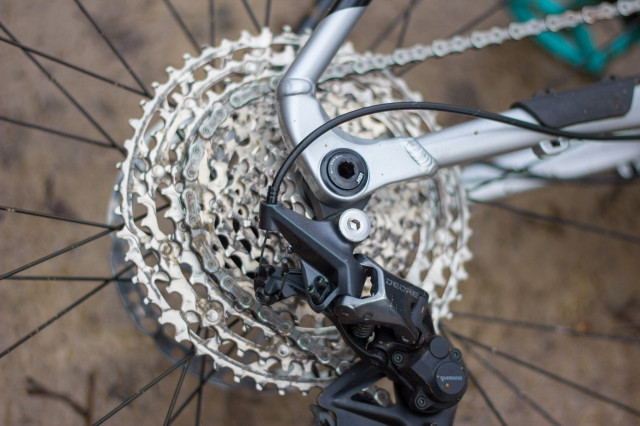
Starting with the drivetrain, you get Shimano’s 12-speed 1x Deore groupset with a 32T chainring and 10-51 cassette. That’s plenty of range for most terrain you’ll encounter in the UK. Interestingly, it’s a 170mm crankset on the small, when I’d have preferred a 165mm or maybe even shorter.
Braking is powered by Shimano’s MT420 four-piston brakes with 180mm rotors front and rear. I felt these were more than adequate for what I was riding, and sometimes I struggled to get things up to temperature, such is the short and sharp undulating terrain of the North Yorkshire Moors.
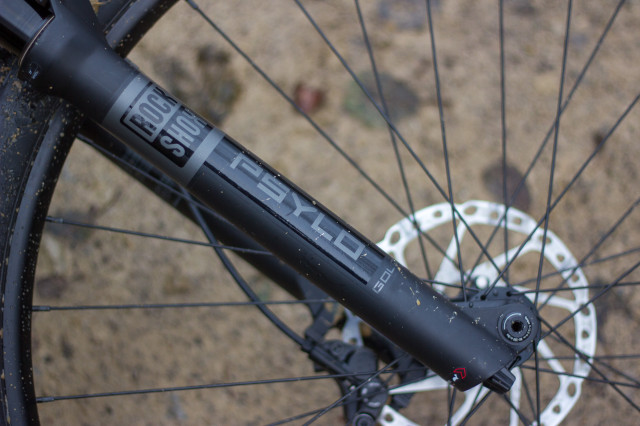
Up front is where the value really comes into play: a RockShox Psylo Gold RC with 130mm travel. It offers adjustable compression and rebound, and given it’s a £600 fork, honestly, I don’t think you could get this value anywhere else. Plus, 130mm is more than enough to play with on a trail-oriented hardtail.
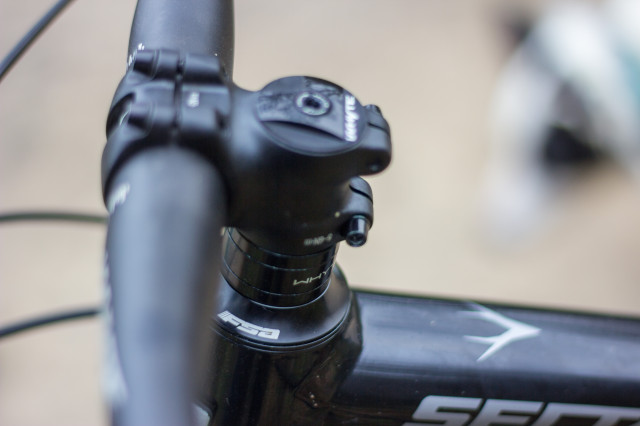
The cockpit consists of a Whyte-branded alloy 15mm rise bar, at 780mm wide in the small. That was perfect for me, although I recognise some prefer to run wider bars. The stem is also Whyte-branded and alloy, and 35mm in length across all sizes.
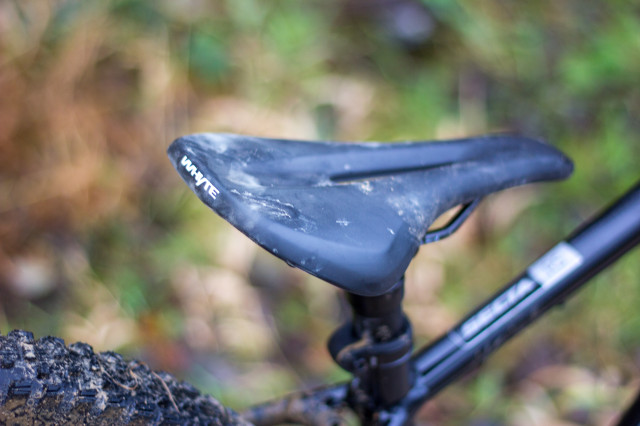
The dropper post on the small size is 150mm, 170mm for the medium and 200mm for the L/XL. My own personal bike is a Whyte S-150 from back in the day. I only recently swapped the short dropper out for a 150mm length one, and I’d love it if this became the standard on small frames.
Perhaps the only place where Whyte has scrimped a bit is in the wheels. They’re unbranded alloy rims with 30mm internal width and double sealed bearing hubs. Adorning those rims is a set of Maxxis tyres, with the Dissector EXO 2.4in up front and Rekon EXO 2.4in at the rear.
Whyte Secta RS – Performance
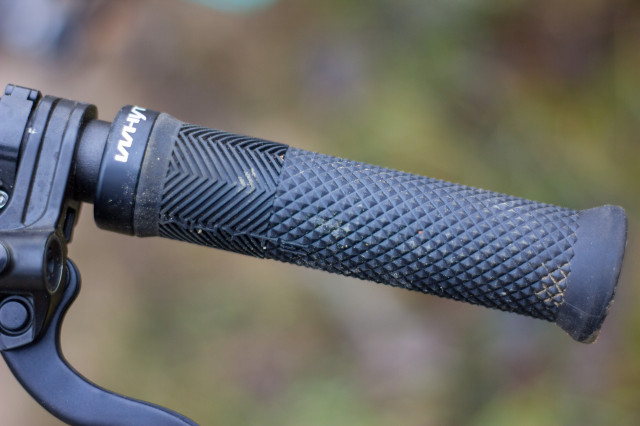
Setting the bike up was super easy. I’m pretty familiar with what numbers I need to run on a RockShox fork, and after some light adjustment, moving the brake and gear levers towards the bar and closer to the grip, we were ready to go.
I mainly rode the Secta in the North Yorkshire Moors and Guisborough woods. Both are rideable from my house, and there are mile upon mile of untamed bridleways as well as slightly more refined tracks in the woods.
Not having ridden a hardtail for a little while, it was refreshing to ride something that really feels connected to the trail in a way that a full-suspension bike just doesn’t. The shorter reach did take a little getting used to, and I sometimes felt a little unconfident because of how low the front end is.
I suspect that’s because I’m used to riding bigger, enduro bikes – and the same thing happened when I rode the Specialized Epic for the first time. It takes a bit of getting used to, but this more aggressive position does lend itself to handling as it throws more weight onto the front end, which can make front wheel traction a little easier to come by. Of course, that isn’t the case for all types of riding, but for fast descents or long, flat sections, it can be of benefit.
Alas, after a few rides, that all melted away, and I really began to enjoy how nimble and adaptable the Secta is. The bike really came alive when you started to throw it at loamy, bermy, jumpy trails – and although I feel like I rarely had a dry ride on it, the bike was confidence-inspiring. Why? I hear you (and my editor) ask. Because it’s easy to move around. Even I, a self-proclaimed weakling, managed to not just get both wheels off the ground, but actually really started leaning into corners properly and not feeling like I was overcooking it. In fact, at some stages, I even found *flow*.
The tyres and wheels I’d probably change if I were to buy it myself, but I can’t fault the rest of the spec. I found that the wheels are a little heavy, and I’d have liked a more aggressive tread on the tyres as the Rekon and Dissector pair aren’t exactly up to scratch when riding in the wet. When climbing, the steep seat tube angle helped to keep my weight where I needed it on steeper ascents, and contrarily, the 150mm dropper was superb in helping me get my weight a little further back (but not entirely over the back wheel, don’t worry coach Pete if you’re reading this…) on the descents, when dropped, of course.
As an aluminium frame, the Secta felt quite stiff but without compromising too much comfort. It’s so well designed that it feels like a much more expensive bike in terms of efficiency, and by that I mean it offered a similar feel to that of a carbon-framed bike. Once I’d got my pedal setup right and stuck some clipless ones on there, the power transfer was seamless.
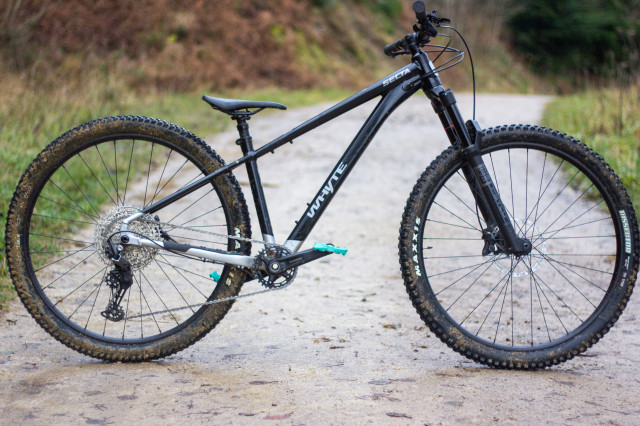
Hardtails can be quite lively on descents, partially because they haven’t got as much suspension travel as burlier bikes, but also because some brands seem stuck in the noughties with steep geometry angles. Whyte practically invented long and slack, and that’s not changed with the Secta. Even for a hardtail, it felt planted on the descents, and I’d say that’s where it really comes alive – not too technical but think rooty or rock garden sections that sometimes require a creative line choice.
But what I really enjoyed about the bike was how it helped me improve my riding skills. I think I’ve been quite open about the fact I’m not a pro-level rider by any stretch of the imagination, and most features above a ‘red’ grade scare the bejeesus out of me. But having a hardtail to really hone your handling skills on is crucial. The Secta is nimble enough that, say, if I make a mistake going into a technical section, I can easily adjust it without having to use Hulk Force to get me back on the right line.
I even managed to pop over a few roots once I’d gained enough confidence. Is it Instagram reel-worthy stuff? No. But it’s progress, and a bike that gives you that push to try something out of your comfort zone and really understand how to get the most out of mountain biking is one worth riding.
Verdict
It’s hard to say anything too negative about the Secta RS. It’s specced well, it rides great, and inspires confidence. I think the only obvious area Whyte has made compromises on to fit the price bracket is the wheels/tyres. Otherwise, it’s hard to beat at £1,499.
Looking at other options, however, the Sonder Falco Eagle 70 that Ty reviewed a few months ago costs the same but comes without a dropper post as standard, and a far more basic fork than what’s on the Secta.
For a bit more money, there is the Merida Big.Trail 600 at £2,000. It comes with the same drivetrain setup but an upgraded fork, the RockShox Pike. It also uses better rubber, but whether that’s worth an extra £500 will be a personal opinion.
From easy maintenance to future-proofing with UDH compatibility, the Whyte Secta RS is an astounding hardtail for the money. It’s got more than enough tyre clearance, the geometry is typical Whyte in that it’s slack, but it still manages to climb well and doesn’t lose the agility a hardtail should have. If I were in the market for a hardtail, I’d likely choose from the Secta range, not just because it’s accessibly priced, but because the RS was an incredibly fun bike to ride and well-suited to the type of terrain I like.
You may also like:
- Types of mountain bikes: every MTB category explained
- Best mountain bikes 2025 – top options from cross-country to Enduro
- Best way to transport mountain bikes
About the bike
Tell us what the bike is for, and who it’s aimed at. What do the manufacturers say about it? How does that compare to your own :
State the frame material and method of construction. List the components used to build up the bike.:
6061 T6 precision formed aluminium frame, RockShox Psylo Gold RC 130mm suspension fork, Shimano Deore 1×12 transmission, Shimano hydraulic disc brakes, TransX RAD dropper post, 29in wheels with Maxxis tyres.
Frame & Fork
How much suspension travel does the fork have?:
Was the bike comfortable to ride? Tell us how you felt about the ride quality.:
How was the bike in terms of sizing and angles? How did it compare to other bikes of the same stated size and intent?:
Overall rating for frame
How much suspension travel does the rear end have?:
Did the bike feel stiff in the right places? Did any part of the bike feel too stiff or too flexible?:
Tell us about the build quality and finish of the frame:
Tell us about the geometry of the frame:
Tell us about the materials used in the frame:
Riding
How did the bike transfer power? Did it feel efficient?:
How would you describe the steering? Was it lively, neutral or unresponsive?:
Tell us some more about the handling. How did the bike feel overall? Did it do particular things well or badly?:
Rate the bike for sprinting:
Rate the bike for high speed descending
Rate the bike for technical descending:
Rate the bike for flat cornering:
Rate the bike for technical climbing:
Rate the bike for climbing efficiency:
Rate the bike for agility:
Suspension
Rate the fork for performance:
Rate the fork for durability:
Rate the fork for efficiency:
Rate the fork for value:
Tell us some more about the fork. Anything you particularly did or didn’t like? Any features which didn’t work well together?:
Drivetrain
Rate the drivetrain for performance:
Rate the drivetrain for durability:
Rate the drivetrain for weight:
Tell us some more about the drivetrain. Anything you particularly did or didn’t like? Any components which didn’t work well to:
Rate the drivetrain for value:
Wheels & tyres
Rate the wheels for performance:
Rate the wheels for durability:
Rate the wheels for weight:
Rate the wheels for comfort:
Rate the wheels for value:
Tell us some more about the wheels.Did they work well in the conditions you encountered? Would you change the wheels? If so, wha:
Rate the tyres for performance:
Rate the tyres for durability:
Rate the tyres for weight:
Rate the tyres for value:
Tell us some more about the tyres. Did they work well in the conditions you encountered? Would you change the tyres? If so, what:
Controls
Rate the controls for performance:
Rate the controls for durability:
Rate the controls for weight:
Rate the controls for comfort:
Rate the controls for value:
Tell us some more about the controls. Any particularly good or bad components?:
Summary
Did you enjoy riding the bike?:
Would you consider buying the bike?:
Which components had the most effect (good or bad) on the bike’s performance? would you recommend any changes?:
Would you recommend the bike to a friend?:
Rate the bike overall for performance:
Rate the bike overall for value:
Use this box to explain your score:
All the deals displayed on our review pages are pulled from a constantly updating database feed of the best affiliate deals available. The criteria for deciding on what are the best deals is who is offering the lowest, delivered price. In most cases we will be showing the very best deal available online, but sometimes you may be able to find an item cheaper. If you can please feel free to post a link in the comments box below. To find out more about affiliate links on road.cc click here.