



Winning the Highlight of the Show award at DT Swiss’ 2025 Craft Bike Days, the Mason Exposure Primitiva Concept is a striking concept gravel/adventure bike that combines UK design, Italian hand-built steel, gravel suspension, and internal cable routing.
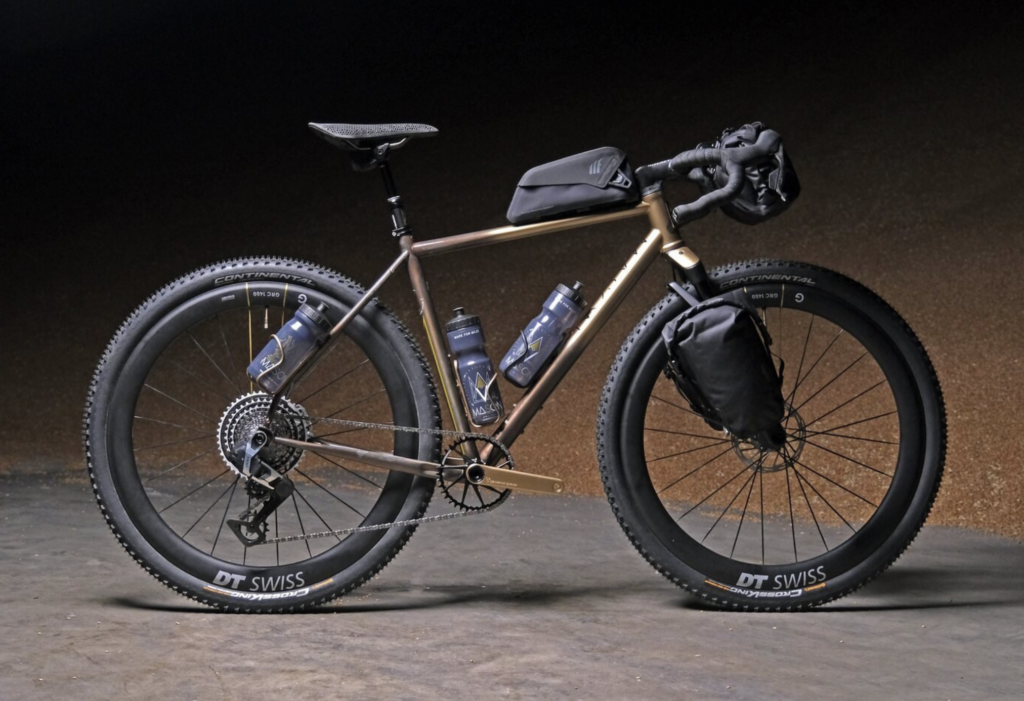
DT Swiss invited Mason Cycles to create something different for Craft Bike Days, held last week in Germany. Dom Mason, founder and designer at Mason Cycles, worked with Cicli Barco, a family-run Italian workshop founded in 1947 and known for hand-built steel and stainless steel frames, to produce the Mason x Barco Exposure Primitiva Concept.
Dom Mason on the Exposure Primitiva says, “New trends and technologies arrive fast in our industry. My job is to listen to our riders’ needs and decide which innovations genuinely help them on their adventures. To determine new directions, it’s good to ask: What if?
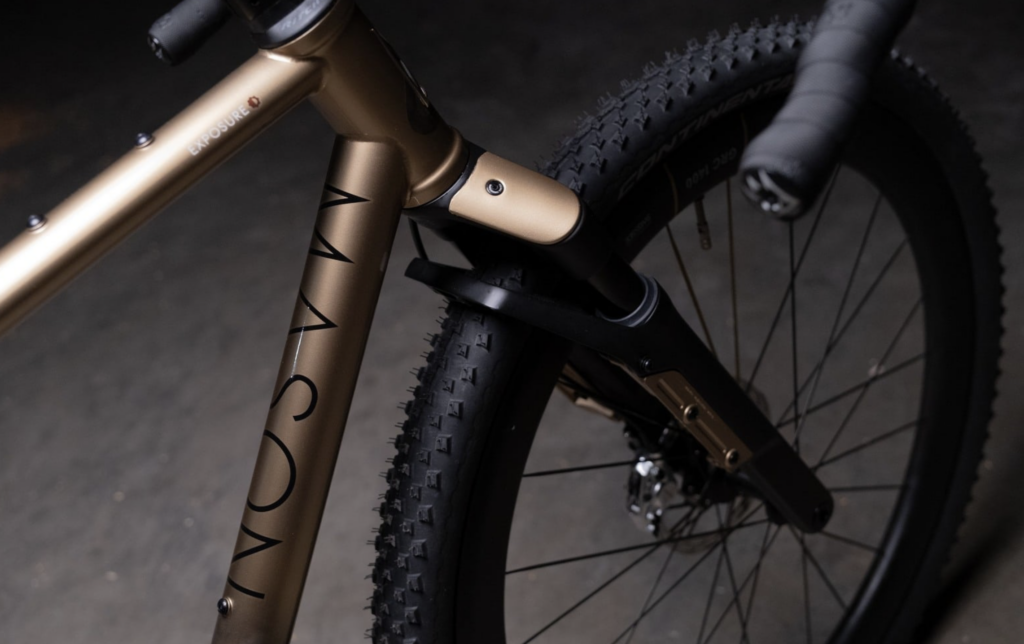
Working with Barco on the Exposure Primitiva allowed us to test ideas and to learn. The DT Swiss gravel fork is exciting in its own right, but some of Barco’s touches really brought this project to life. That Zero head tube, for example, is machined to a precise length after welding, leaving no extension above or beneath. It gives us a large weld area and great strength, but takes real craft to achieve.”
The Primitiva is based on Mason’s Exposure platform, a steel gravel adventure bike designed for “fast, long-distance and multi-month adventure touring over very variable and unpredictable terrain.”
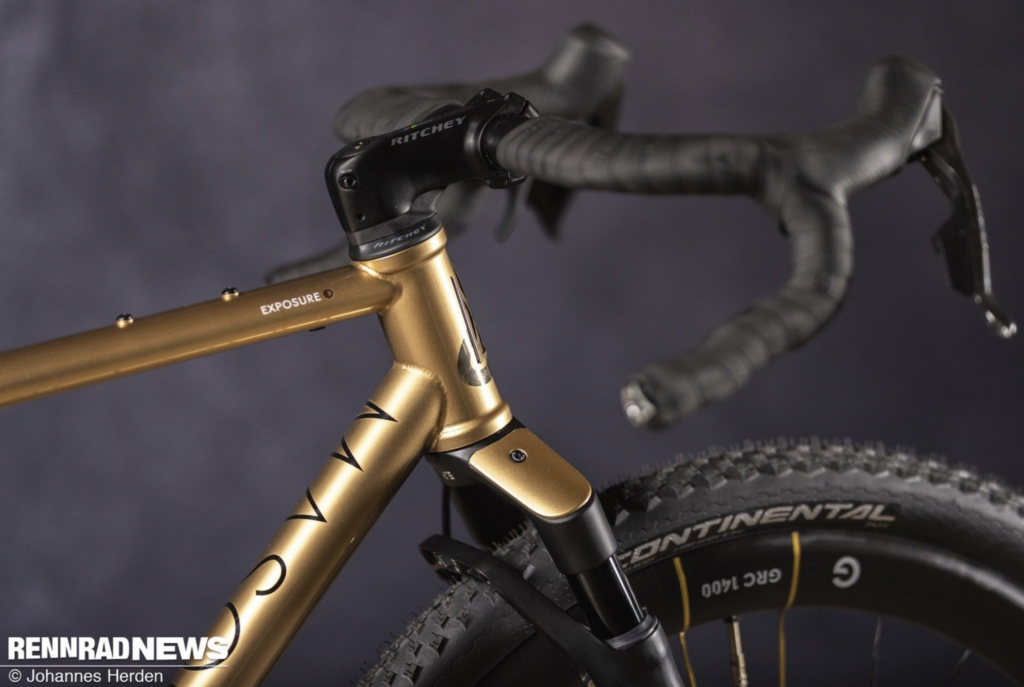
The Primitiva introduces a range of innovations designed to “elevate the platform”, including a DT Swiss F 132 One 40mm suspension fork (also seen on the Canyon Grail CFR RIFT gravel bike) and Barco’s Zero head tube, machined to a precise length for low stack height, large weld area, and space for fully integrated cable routing, a first on a Mason steel frame.
Suspension on gravel bikes remains a hotly debated topic – some see it as old school mountain bikes with curly bars, while others view it as the future of comfortable, capable gravel riding. Could this be a nod to the future of Mason’s gravel bikes, or perhaps gravel bikes in general?
The geometry of the Primitiva has also been tuned specifically for the F 132 fork, while retaining the Exposure’s signature comfort and lively handling, according to the brand.
Like the standard Exposure, the Primitiva is also a practical adventure bike: it features full mudguard mounts, multiple attachment points for accessories and racks, and ample provisions for extra fluids.
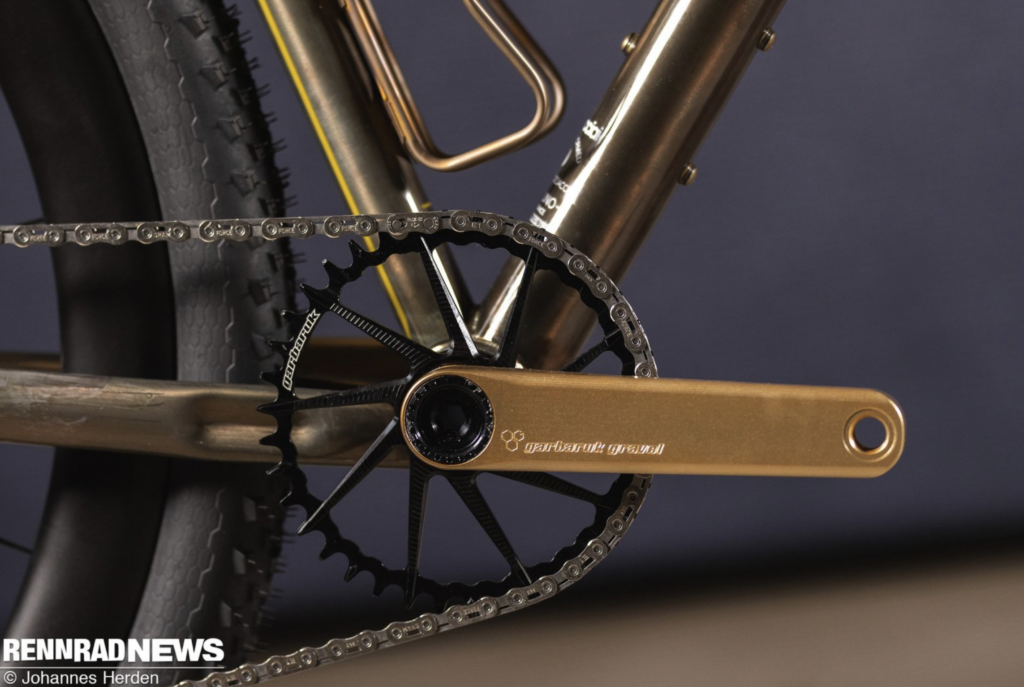
The Primitiva is finished very nicely with a Barco ‘Primitiva’ finish, combined with Mason’s brass fade, differing from the brand’s usual method of applying multiple layers of paint. There’s also some subtle co-branding to celebrate the collaboration.
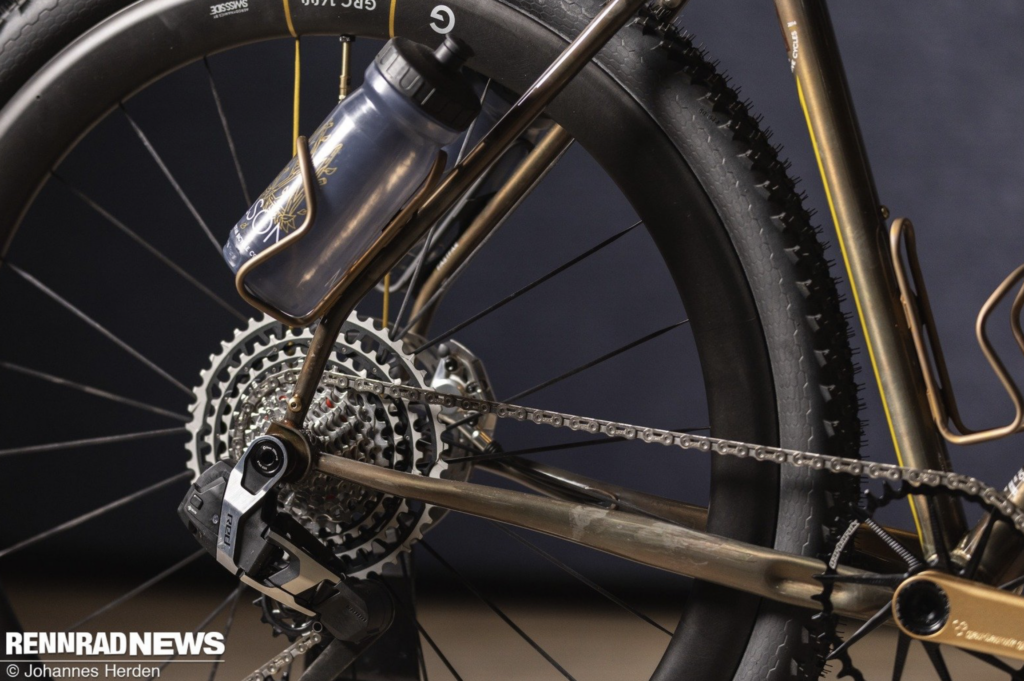
The concept build is fitted with a SRAM Red XPLR groupset, paired with a Gabaruk 1x chainring and crankset which is “engineered for unmatched stiffness, weight savings, and pure aesthetic pleasure”. The gravel crankset is highly customisable, with a choice of two crank arm lengths and eight colour options each for both the crankarms and chainring – this one has been finished to match the frame.
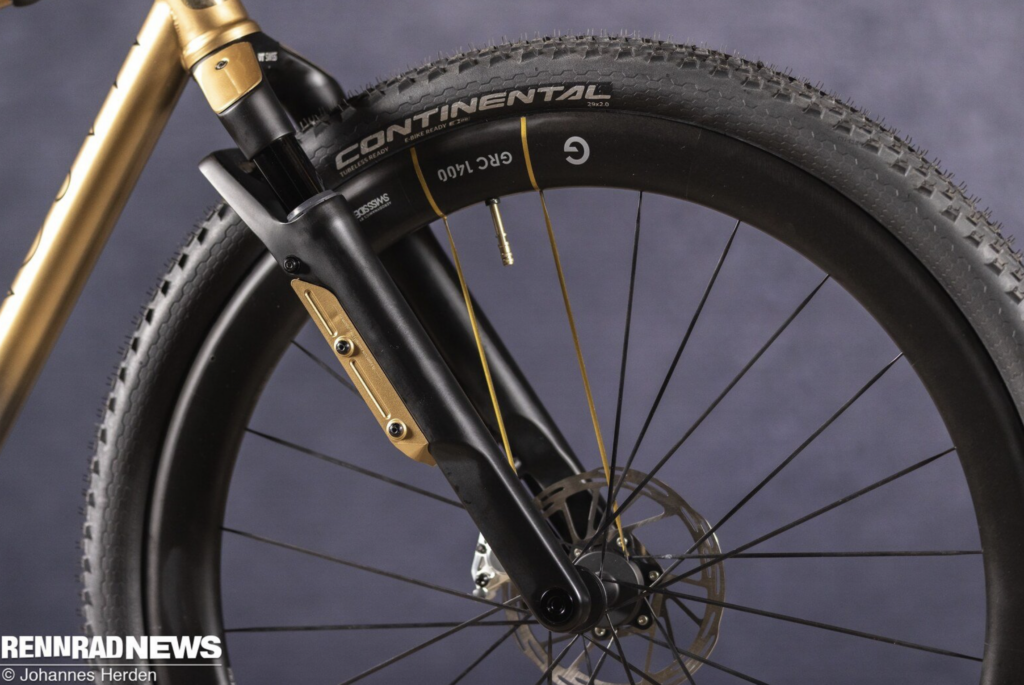
The wheels are specially detailed DT Swiss GRC 1400, which feature a 50mm deep rim and a 24mm internal width – chosen to balance aerodynamics and tyre performance for gravel riding, according to DT Swiss. They’re optimised for gravel tyres up to 40mm wide, and the Primitiva is fitted with Continental Cross King tyres.
The handlebars are Ritchey Superlogic Venturemax which feature a short reach, shallow drop and 24° flare. You can also see a DT Swiss L1 Drop Bar Remote Lever which is to lock and unlock the F 132 gravel fork.
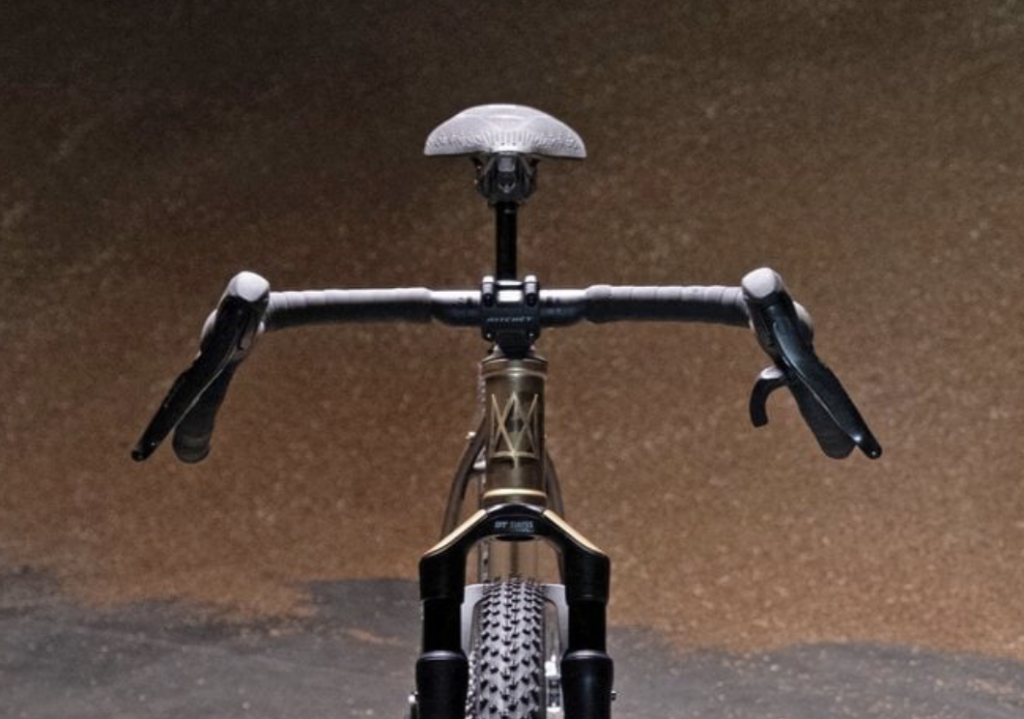
The Exposure Primitiva is strictly an experimental project and not for sale. It was “a chance to create something very special with Barco and to use it for ride testing and development”, says Mason Cycles.
You can, however, buy Mason’s standard Exposure gravel bike, with framesets starting at £2,150 and complete builds from £3,750.



16 thoughts on “The future of practical, do-it-all adventure bikes? Check out the Exposure Primitiva Concept with a steel frame, suspension fork and full internal cable routing”
There’s nothing practical
There’s nothing practical about full internal cable routing.
RayG wrote:
I don’t see the problem with it – with hydraulic brakes and electronic shifting (wired or wireless), those cables and hoses don’t need to be exposed, they’re better off shielded from the risk of any potential damage. I’ve never had the need to replace a hydraulic hose or Di2 cable. The bike shown here has hydraulic brake hoses and a wireless drivetrain.
Agree there’s a practical maintenance advantage of external cabling for mechanical shifting and braking, but that’s not what this bike has.
mark1a wrote:
Great if you want to run Di2, AXS or any other electronic shifting. Personally I don’t and external routing will always provide easy quick access to cables. How often has an externally routed cable been damaged? How easy is it to repair if it has happened?
Read my second paragraph…
Read my second paragraph…
The Mason Cycles website says
The Mason Cycles website says “This lovingly crafted bicycle is developed for fast, long-distance, and multi-month adventure touring”.
So Di2 would be just as impractical. Break an internally routed cable in a remote area and you better have brought along headset and bottom bracket tools in your light weight touring kit.
RayG wrote:
I would argue that it’s very unlikely that an internally routed hose would break, regardless of how remote the area. It’s more likely that a externally one would. You mention Di2, this bike has SRAM AXS which has no cables.
I’ll mark you down for the standard model that you can actually buy then, it has semi-external routing.
I’ll mark you down for not
I’ll mark you down for not noting that the SRAM also has batteries.
RayG wrote:
What’s that got to do with whether cables are internally or externally routed?
It is possible to charge
It is possible to charge batteries whilst touring. Maybe if you’re entirely avoiding civilisation for months at a time, electronic is not a good idea, but that’s very rarely the case. And charging aside, electronic groupsets are arguably more reliable and consistent than mechanical ones, with no cables to stretch or snap.
Sofiane Sehilis deliberately chose Di2 for his ill-fated record attempt: https://road.cc/content/feature/sofiane-sehilis-ti-bombtrack-his-eurasian-record-bid-316711
It’s only the hydro lines and
It’s only the hydro lines and maybe the dropper, although that could be wireless.
What’s the issue?
See my other reply.
See my other reply.
What a stunning bikepacking
What a stunning bikepacking bike! But practical, maybe not so much. According to this armchair expert, those deep section wheels, dubious aero gains notwithstanding, look cool but are prone to rock strikes. The bottles will fly out of those seatstay cages at the first sight of rough terrain. The ritchey venturemax handlebars are bizarre torture devices from the Middle Ages. I had one and was thoroughly confused. The dropper post will result in a super stiff rear end unless there’s some sort of built in flex in the rear triangle, which there isn’t. Alas, they should have lent me the bike first 🙂
Fortunately, we still have
Fortunately, we still have the 853 Fairlight Secan GRX x2, admittedly made in Taiwan but that’s not worse than made in Italy, with a lot of external cabling which I have in mind for next year
Practical and do-it-all? You
Practical and do-it-all? You had me until full internal cable routing. Still, it’s a handsome bike.
I’ve got a very similar bike
I’ve got a very similar bike to that hanging up in my garage, I bought it in 1990, if I remember correctly it was called an mtb
That chainring is giving me
That chainring is giving me pure aesthetic pleasure…