


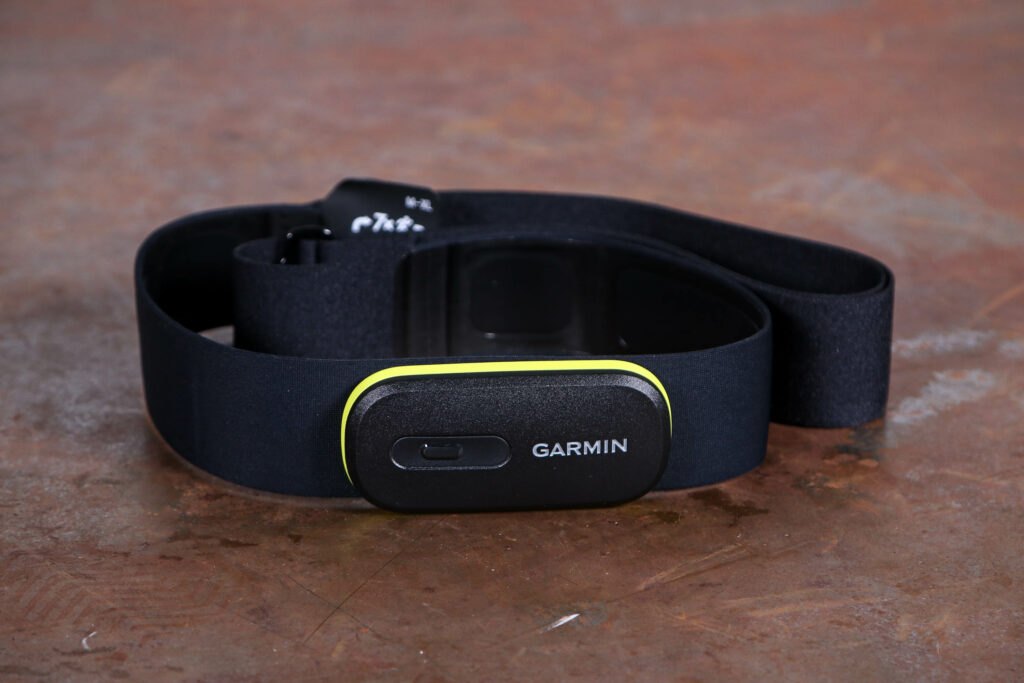

The Garmin HRM 600 has taken the proven accuracy of its previous Pro Plus strap and given it a thoroughly modern refresh. The headline features are a rechargeable battery (no more coin-cell batteries!), and the promise of multi-sport data that will please runners, triathletes and swimmers.
Battery life and sustainability
The biggest update here is the rechargeable battery. Garmin claims 60 hours of use per charge, and in my testing it comfortably exceeded that, lasting several weeks of daily riding and the odd run before I even thought about topping it up.
It is also more convenient than cracking open a pod to swap out a coin cell, and kinder to the environment too. If you have ever juggled CR2032 batteries or cursed a dying strap mid-ride, the move to rechargeability feels like a genuine upgrade.
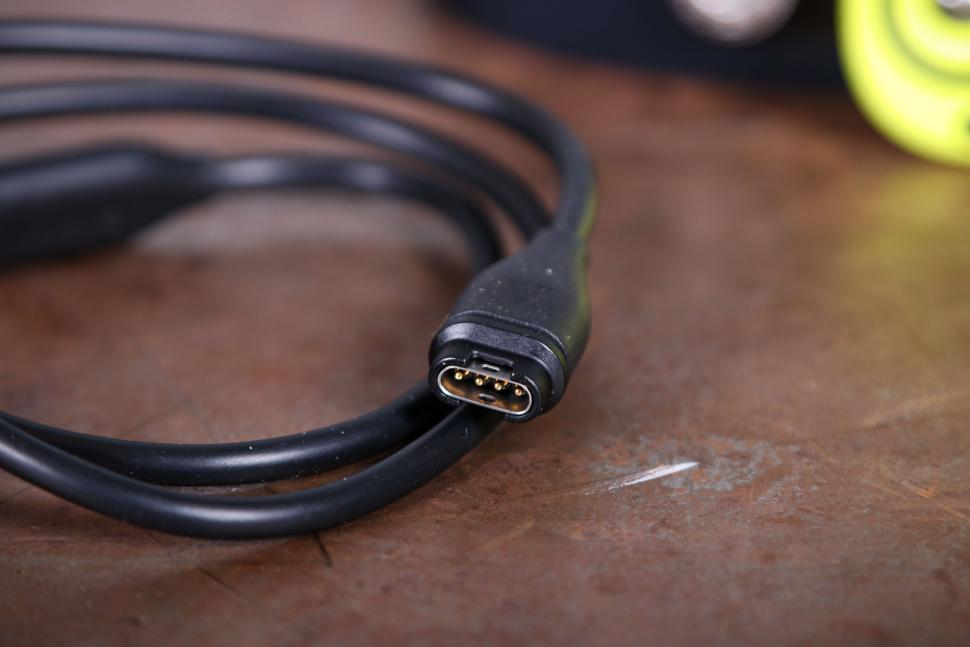
Charging is straightforward, with the pod using the same connector as my Garmin Forerunner 955, which means one cable fewer to keep track of.
Fit and comfort
Chest straps live or die by how comfortable they are over the long haul – and the HRM 600 passed with flying colours. The strap itself is soft and remained perfectly in place on long base rides and high-intensity sessions alike, without slipping or chafing. After several hours in the saddle, I simply forgot it was there, which is the highest compliment you can pay to a heart rate strap.
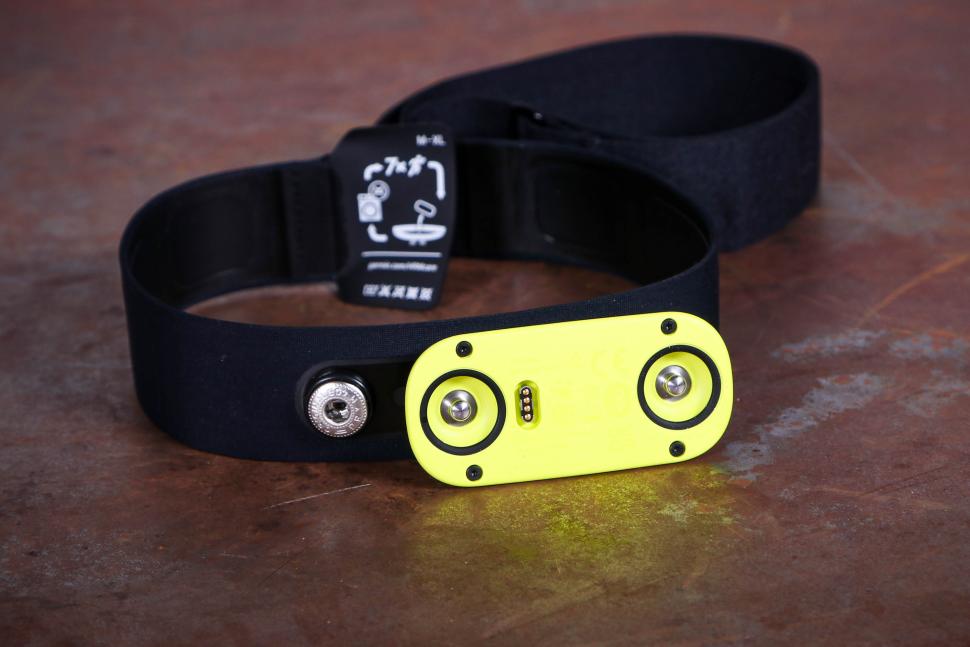
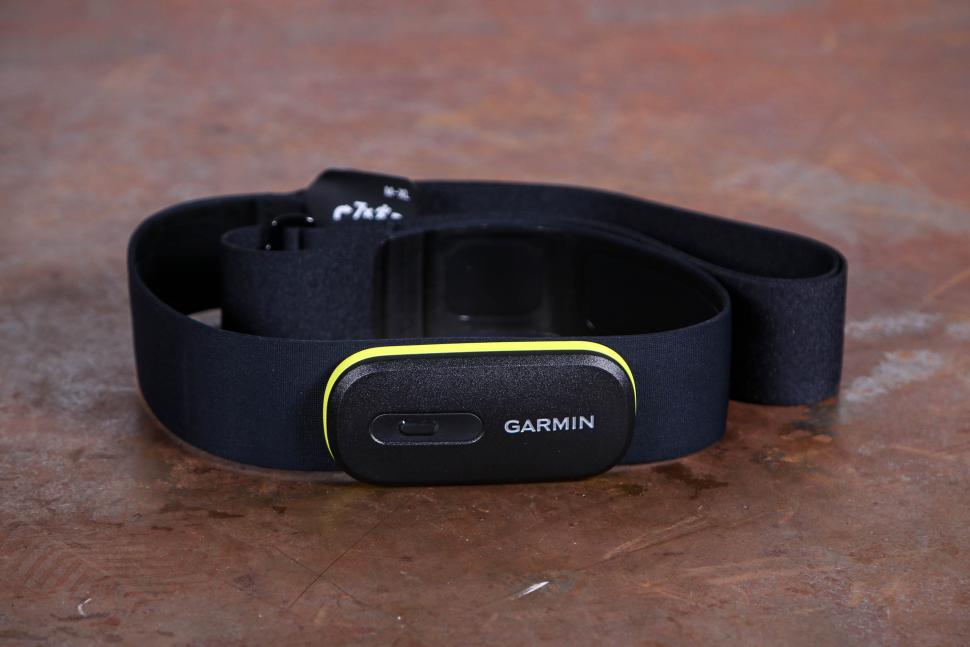
The strap is fully washable thanks to its detachable pod, which makes cleaning easy if you are putting in sweaty hours on the turbo.
Accuracy and connectivity
On the bike, the HRM 600 delivered rock-solid data. Across steady Zone 2 base rides, long hilly days in Wales and lung-busting paceline efforts, heart rate readings were consistent and free of dropouts, spikes or irregular jumps. It was more stable than some older straps I have used, particularly in Zwift sessions on Apple TV, where it paired instantly and broadcasted smoothly.
Connectivity is strong too. The HRM 600 supports ANT+ and Bluetooth simultaneously, and I had no issues pairing it with my Garmin Edge 830 head unit, Forerunner 955 watch and Zwift at the same time. Multiple Bluetooth connections mean you can feed several devices at once, handy if you mix platforms.
Features beyond cycling
Here is the catch for cyclists: the HRM 600 is packed with multi-sport features you may never use. It records running dynamics like stride length, ground contact time, and vertical oscillation, along with the ability to log swim workouts without a watch.
For triathletes, this makes it a brilliant do-it-all strap. But for pure cyclists, those metrics are essentially wasted. You are likely always riding with a head unit or smartwatch, so the HRM 600’s offline recording and Garmin Connect app control are not really game-changers.
Durability and build quality
Garmin pitches the HRM 600 as built to last – and it feels like it. The strap and pod system is sturdily made, and the washable design should extend its usable life far beyond fixed-pod competitors. The rechargeable cell means no fiddly screws or fragile seals, and the multiple-seal system with water-resistant grease ensures protection against rain and sweat. After several weeks of use, mine shows no signs of wear, and I would expect it to hold up well to years of regular riding.
Value
At £129, the HRM 600 sits at the premium end of the heart rate monitor market.
The Polar H10 costs £86.50 and we found it accurate and comfortable, though it uses coin cells.
The £80 Wahoo Trackr has a similar strap feel, a coin-cell battery and is more than a third cheaper.
The entry-level Garmin HRM 200 is a penny cheaper than the Wahoo and offers solid heart rate data without the extras.
If you’re a cyclist and you only want accurate heart rate data, those cheaper straps make a lot more sense. The HRM 600’s extras simply will not get used. Where it does justify its price is for triathletes, runners, or multi-sport Garmin ecosystem users who will actually tap into the advanced metrics and app integration.
For further choices, check out our best heart rate monitors buyer’s guide.
Conclusion
The Garmin HRM 600 is a seriously well-built, accurate, and comfortable strap that modernises the chest HRM with its rechargeable pod and washable strap. For multi-sport athletes, it is the obvious pick of Garmin’s lineup, pairing effortlessly with watches, head units, and apps while unlocking advanced running and swim metrics. For pure cyclists, though, it is harder to justify.
If you want a set-and-forget strap that outlasts Garmin’s claims, charges via the same lead as your watch, and feels invisible on long rides, the HRM 600 delivers. But if you are not planning to lace up your trainers or dive into a pool anytime soon, your wallet might thank you for looking elsewhere.
Verdict
Accurate, comfortable and rechargeable, this is great for multi-sport athletes – but overkill for pure cyclists
All the deals displayed on our review pages are pulled from a constantly updating database feed of the best affiliate deals available. The criteria for deciding on what are the best deals is who is offering the lowest, delivered price. In most cases we will be showing the very best deal available online, but sometimes you may be able to find an item cheaper. If you can please feel free to post a link in the comments box below. To find out more about affiliate links on road.cc click here.
road.cc test report
Make and model: Garmin HRM 600
Size tested: M-XL
Tell us what the product is for and who it’s aimed at. What do the manufacturers say about it? How does that compare to your own feelings about it?
Garmin says:
The HRM 600 premium heart rate monitor is built for data-driven performance athletes looking for accurate heart rate and HRV data, plus running dynamics.
Sends real-time heart rate and HRV data to compatible devices and apps
Up to 2 months of battery life with a rechargeable battery
Running dynamics when paired with your compatible smartwatch
Record activities and sync to the Garmin Connect™ smartphone app without a watch
Comfortable, machine-washable strap available in two sizes
Durable and versatile with a 5 ATM water rating
Tell us some more about the technical aspects of the product?
Garmin website says:
Module size: 68.0 x 31.6 x 10.0mm (2.7in W x 1.2in H x 0.4in D)
Size range: XS-S: Strap length: 56–72cm (22in–28in)
Fits chest size 60–85cm (23.5–33.5in)
M-XL: Strap length: 72–106cm (28–42in)
Fits chest size 80–119cm (31.5–47in)
Weight With M-XL Strap: 61g (2.2oz)
Module Only: 18g (0.65oz)
Typical Garmin, well made and well finished with soft non-irritating material.
Easy pairing and rock-solid, and it delivers consistent heart rate data.
No issues while testing.
The Garmin weighs 62g, the Polar H10 60g – I’m not sure that’s enough for an excuse to being slow up hills….
Soft and comfortable strap, which is make or break for me when it comes to a heart rate monitor.
Substantially more than other more basic HRMs on the market, and I think it most likely to be worthwhile for multi-sport athletes who will benefit from utilising the extra run dynamics features.
Tell us how the product performed overall when used for its designed purpose
Overall performance was great with no discomfort or irritation while either cycling or running.
HR data was consistent with no dropouts throughout testing.
Tell us what you particularly liked about the product
Soft, comfortable strap and being able to recharge without the headache of hunting for coin batteries.
Tell us what you particularly disliked about the product
The run data was quite overwhelming when you don’t know how to understand it – for example features such as ‘step speed loss’, which is how much you slow down when your foot hits the ground…
How does the price compare to that of similar products in the market, including ones recently tested on road.cc?
Significantly more expensive than other offerings covers in the https://road.cc/buyers-guide/best-heart-rate-monitors
Did you enjoy using the product? Yes
Would you consider buying the product? No
Would you recommend the product to a friend? Perhaps – if they were super-keen runner
Use this box to explain your overall score
I thoroughly enjoyed using the Garmin HRM600. As far as I’m concerned, heart rate monitors have two primary functions: 1) To be comfortable; 2) to broadcast accurate and reliable HR data.
And the Garmin nails both of these.
As a bonus it’s rechargeable, so no more hunting for coin-cell batteries, and it also offers a wealth of running data metrics. However, these bonus features come at a hefty price, which ultimately only a few of the keenest multi-sport athletes will benefit from.
About the tester
Age: 33 Height: 190cm Weight: 94kg
I usually ride: Santa Cruz Stigmata My best bike is: Factor One Disc
I’ve been riding for: 10-20 years I ride: Most days I would class myself as: Expert
I regularly do the following types of riding: road racing, time trialling, cyclo cross, touring, club rides, general fitness riding, Gravel, Track and Zwifting


8 thoughts on “Garmin HRM 600”
I’ve got a coospoo takes a
I’ve got a coospoo takes a 2032 battery is @ 86% which I’ve used for 3 months – 25 quid ?
leedorney wrote:
…and I’m sure you’re very happy but you’re also comparing an apple to an orange, the Garmin one reviewed here does much more than just measure and broadcast HR.
…but for cycling you don’t
…but for cycling you don’t need all the running stuff, and CR2032 batteries last for years in an HRM strap that doesn’t have it. The rechargeable battery is kind of a disadvantage, especially as they’ve used the watch connector that has a limited lifetime, and will likely go wrong before a CR2032. Over-engineered for cyclists.
Pub bike wrote:
I already know this because I read the review. Hence pointing out that it’s not worth comparing with a heart strap that has no running metrics and uses a replaceable cell.
I can’t find anywhere in the
I can’t find anywhere in the review that says anything about the longevity of the watch connector.
Pub bike wrote:
That’s because there isn’t – I was referring to “the running stuff”
I have an H10, and it’s very
I have an H10, and it’s very good. If I was buying one now I would get the HRM 600- for an apparently trivial reason. A watch on the wrist can’t cope with step counting when you use walking poles, and records only 1/3 to 1/2 of your actual steps, which is annoying, particularly if it’s a hard walk up mountains with a big sack. They say the 600 can cope, although I don’t fully believe that without trying it out. In the end, I just bought the much cheaper Avtrek pedometer via Amazon because I don’t need the running statistics. It appears to be good and accurate
This review is unfair. Giving
This review is unfair. Giving Garmin 3/5 because it’s not for people who only do cycling is like giving knobbly tyres a low score because they’re not so good on tarmac, or a hammer a bad review because it doesn’t work well on screws.