



For the Merida Speeder 300, the company couldn’t have come up with a more apt name. It’s nippy, feels lighter than the scales would have you believe, and the relatively upright riding position allows you to dart about in amongst the traffic with uninterrupted sightlines. Whether you are looking at a new bike for fitness or commuting, the Speeder 300 is a well-equipped and quick flat bar alternative to a road race machine.
Merida Speeder 300: Ride
The Speeder is part of Merida’s Fitness line-up, a range of hybrid style bikes that focus on speed and efficiency, while giving an endurance-style riding position that works on pretty much any hardpacked surface.

This model sits second from the top of the range, and only weighs in at just over 10kg on our scales (even the entry-level model only has a claimed weight of 11kg), so it’s no slouch when you put some power through the pedals.
In fact, bombing around the city on it I was surprised with how sprightly it was when pulling away from the lights or filtering through busy traffic. The constant stops and starts of urban riding didn’t feel a chore, and the hilly nature of Bath didn’t feel too much of a slog, helped by the wide range of gears.
Those efforts are met with a tight frame and fork, so you don’t need to worry about unwanted flex when you are climbing or accelerating hard out of the saddle.

The only thing that hampers performance a touch is the tyres, so if speed is your main aim, those could be updated at some point. That said, they’re not so bad that they take the fun out of the ride.
The riding position is well balanced: taller than that of a similarly sized road bike, but not to the point that it feels as though you are sitting too upright. If you are a cycle commuter, this gives you great views above cars and allows for a relaxed position when moving through busy streets.
If you are after a bike for riding in the lanes for a bit of fitness and fresh air then the position works here too. The front end is tall enough that you aren’t putting a huge amount of weight on your wrists (important when you only have one hand position on offer), and your neck and lower back will be under a lot less stress too.
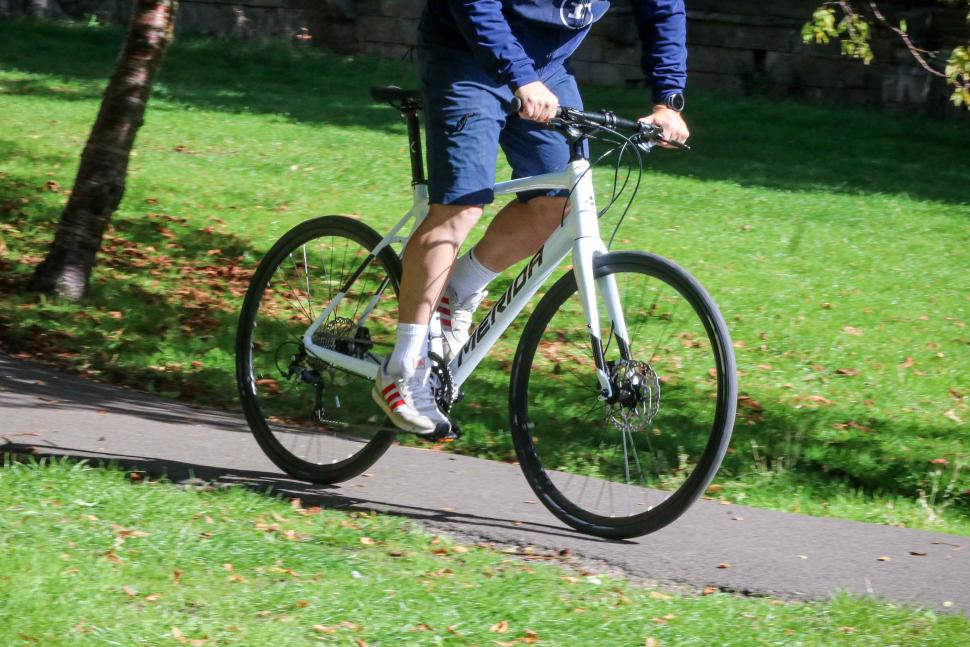
The ride quality from the frame and fork is very good, and the geometry gives you predictable handling in the wet or dry. I found it a very easy bike to ride, perfect for all abilities of cyclist, and the Speeder ain’t shy when it comes to tackling descents at a decent speed.
Efficient is how I’d describe the Speeder 300 in terms of the ride.
Merida Speeder 300: Frame & fork
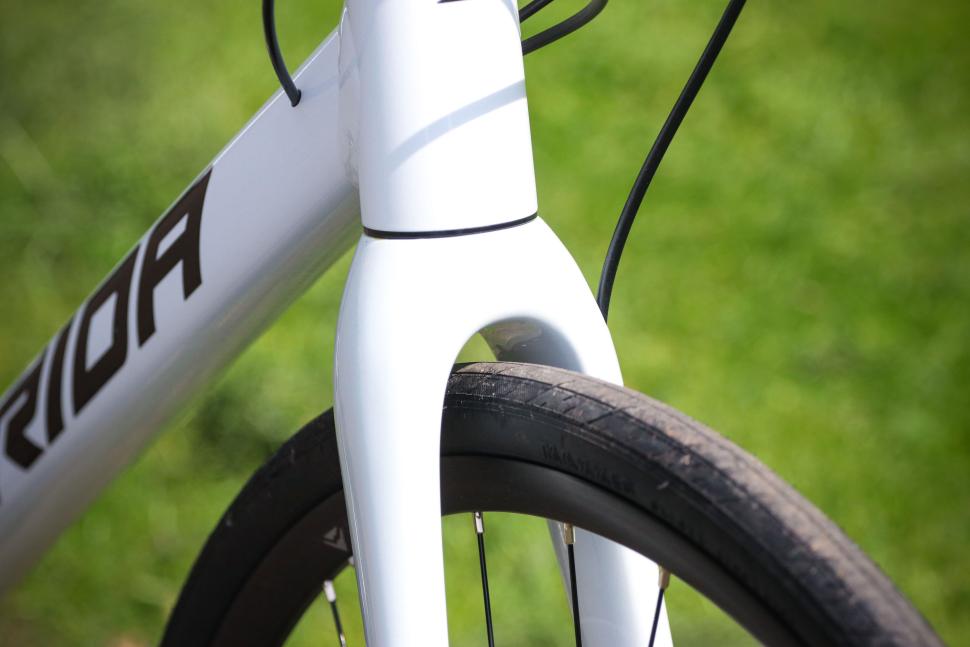
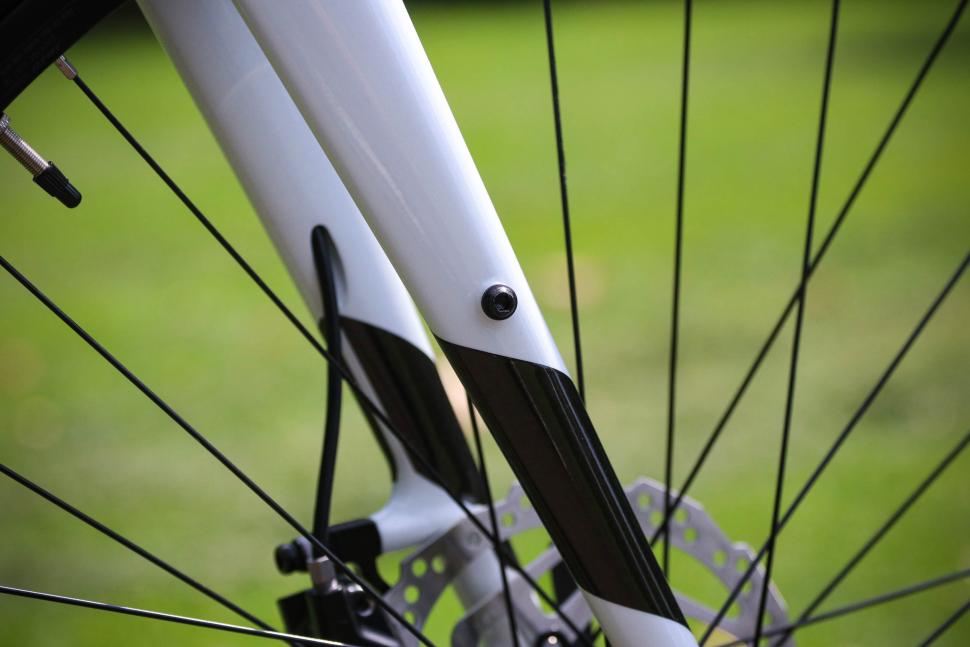
The 300 uses Merida’s Speeder Lite III alloy frame mated to a full carbon fibre Speeder CF2 fork.

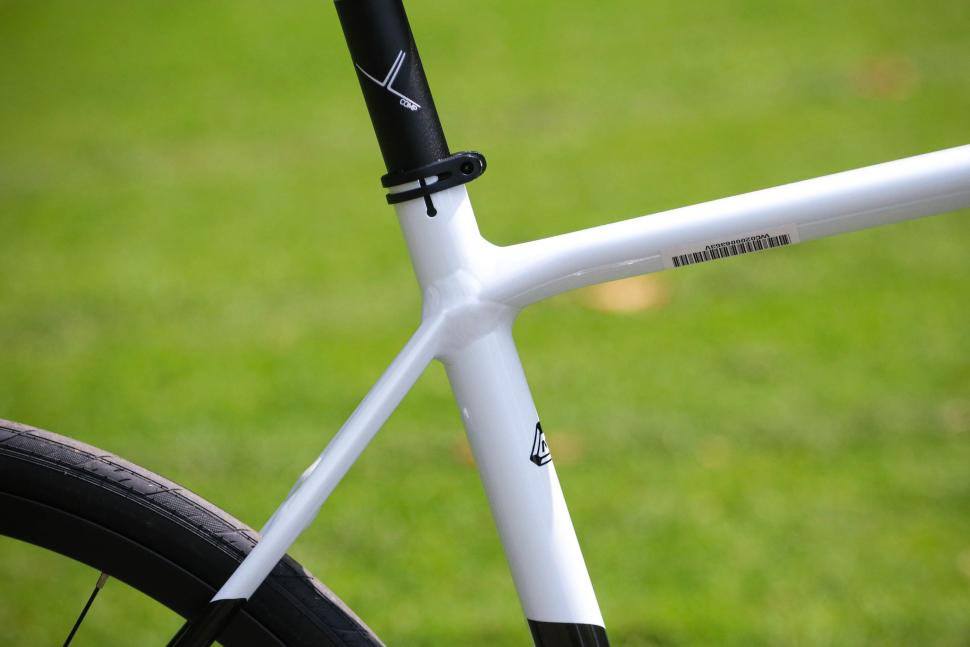
The Lite III frame is created from 6066 grade aluminium alloy, which Merida says works well with hydroforming, allowing the swoopy tube shapes you can see on the Speeder. This, along with triple butting (variable wall thicknesses along the length of the tube), has a big effect on how the frame feels in terms of stiffness and comfort.

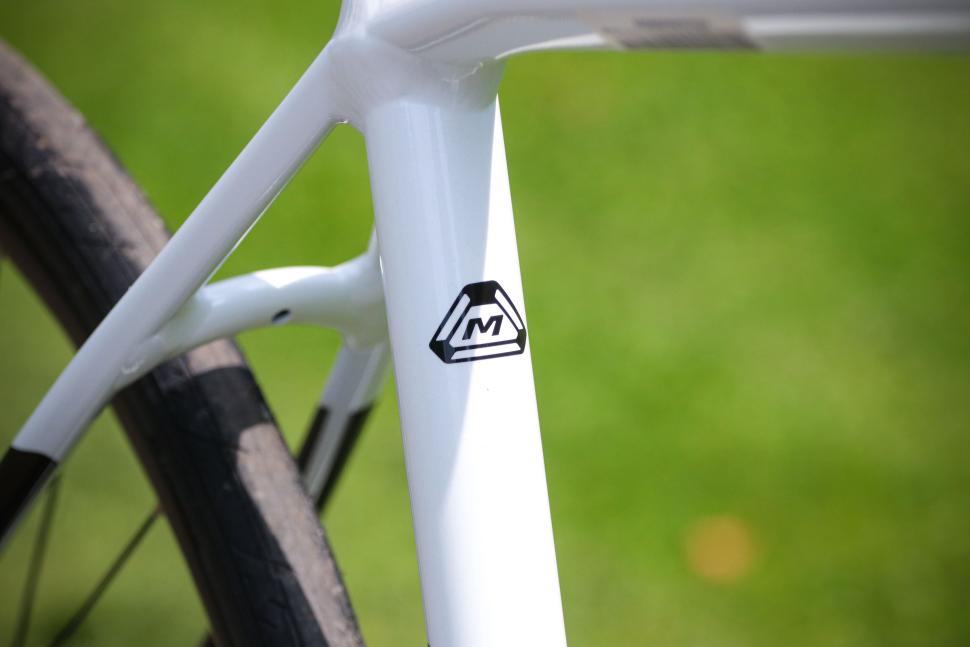
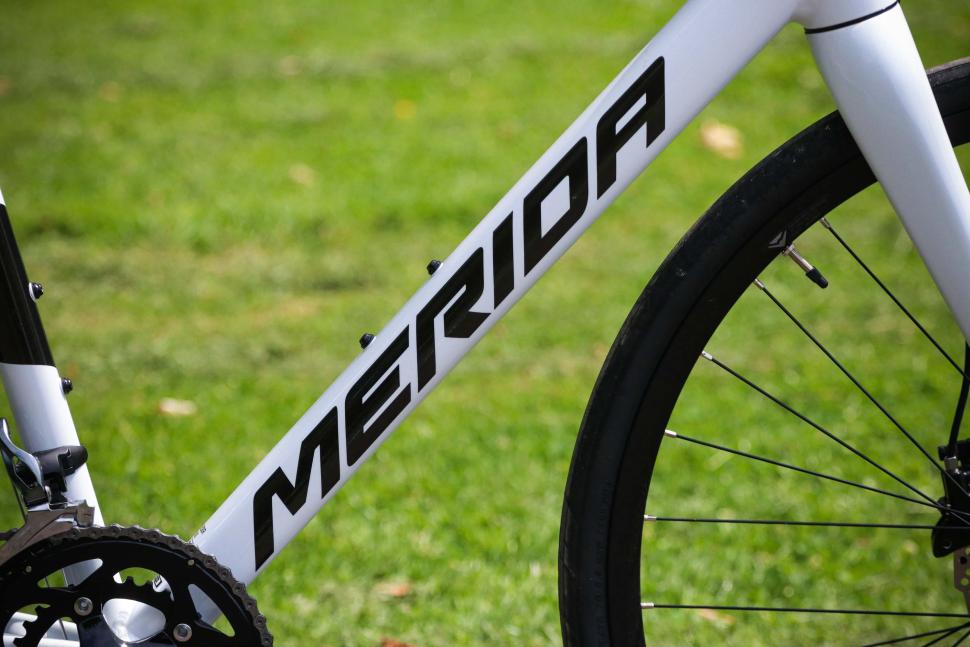
For the money we’re talking here, the welding looks neat and tidy, as in there hasn’t been any added expense of filing and sanding the welds. I’m a big fan of the paintjob, with the high gloss white giving a premium look to the frame. It also comes in a solid blue, with understated graphics, tan wall tyres and tan saddles and bar grips.
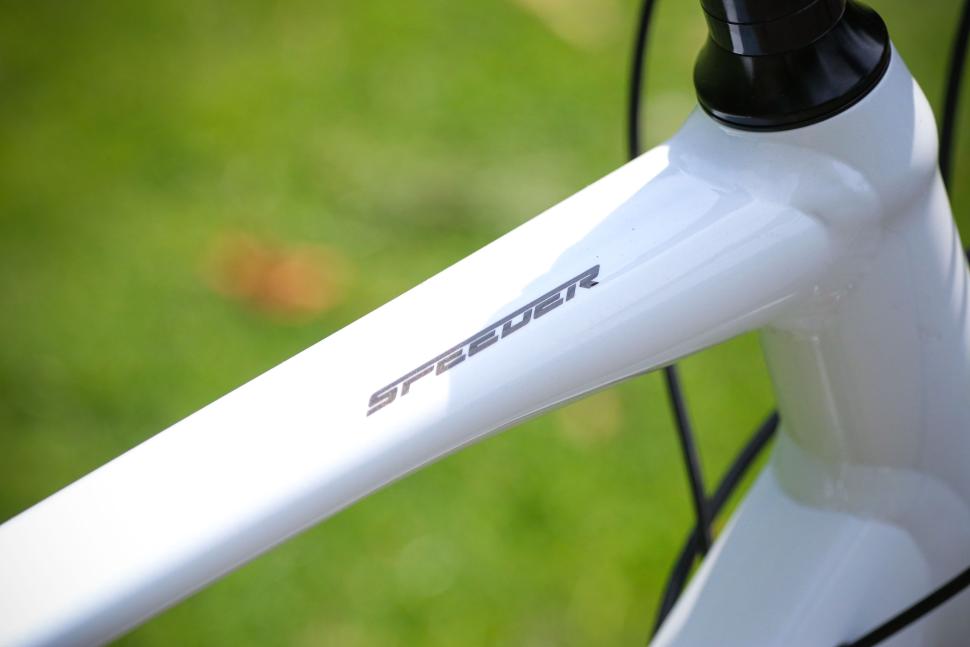
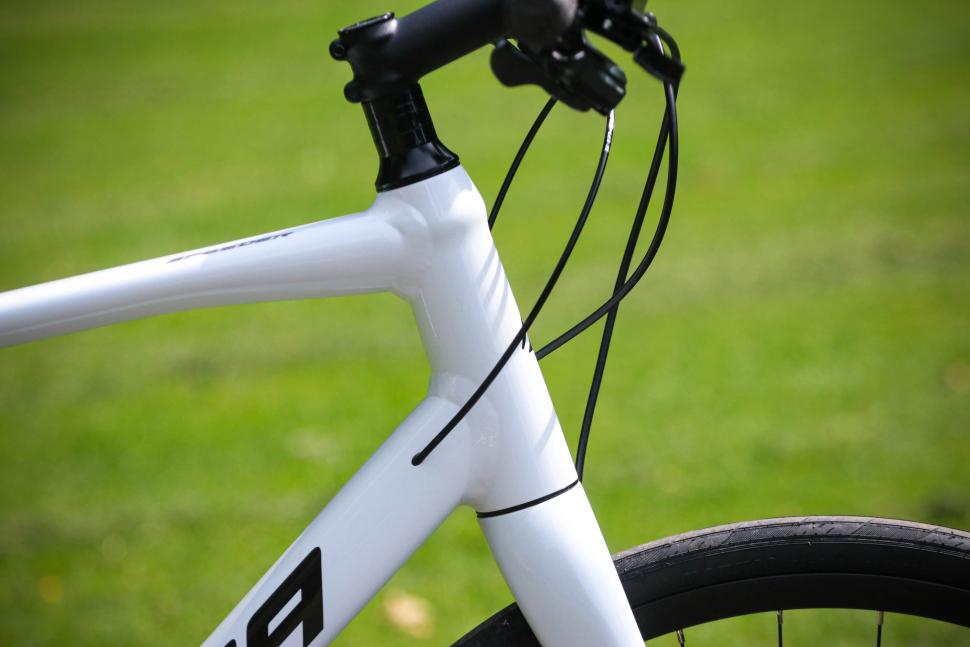
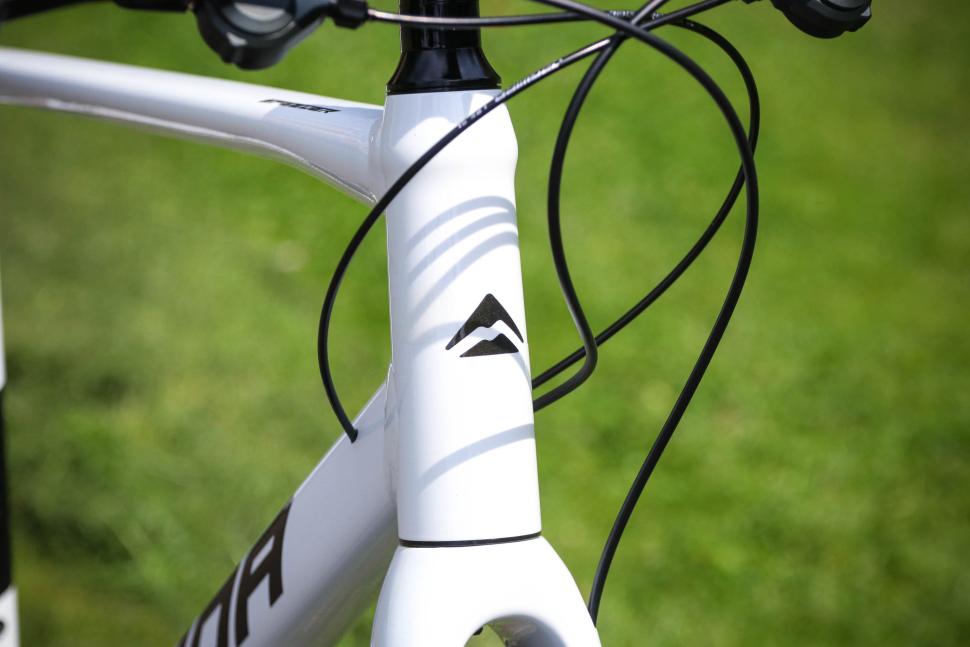
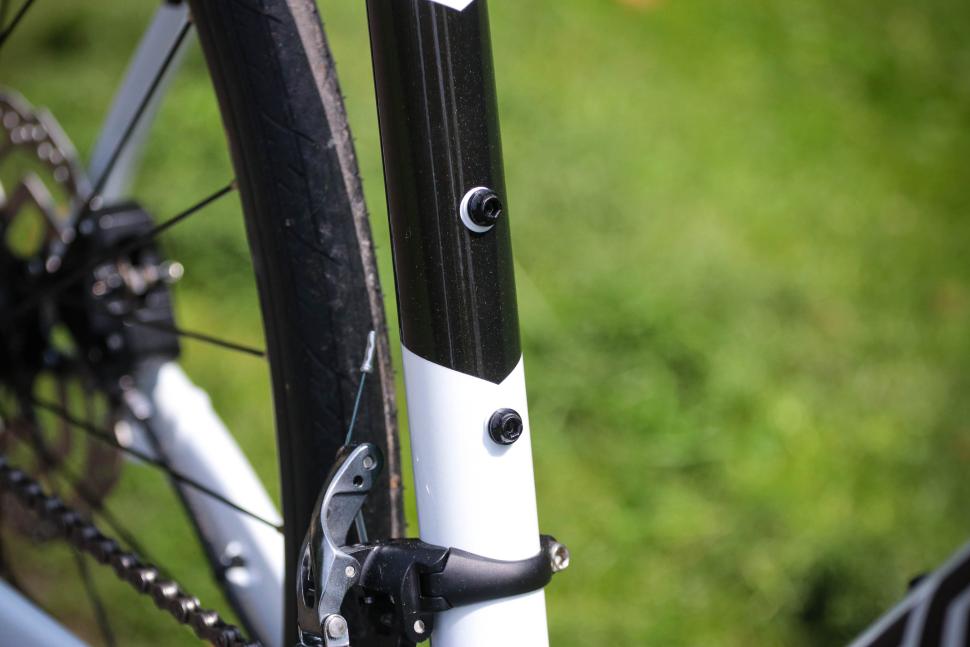
With internal hose and cable routing, the 300 is a clean-looking bike and Merida has included neat touches like full mudguard mounts and positions for two bottle cages.
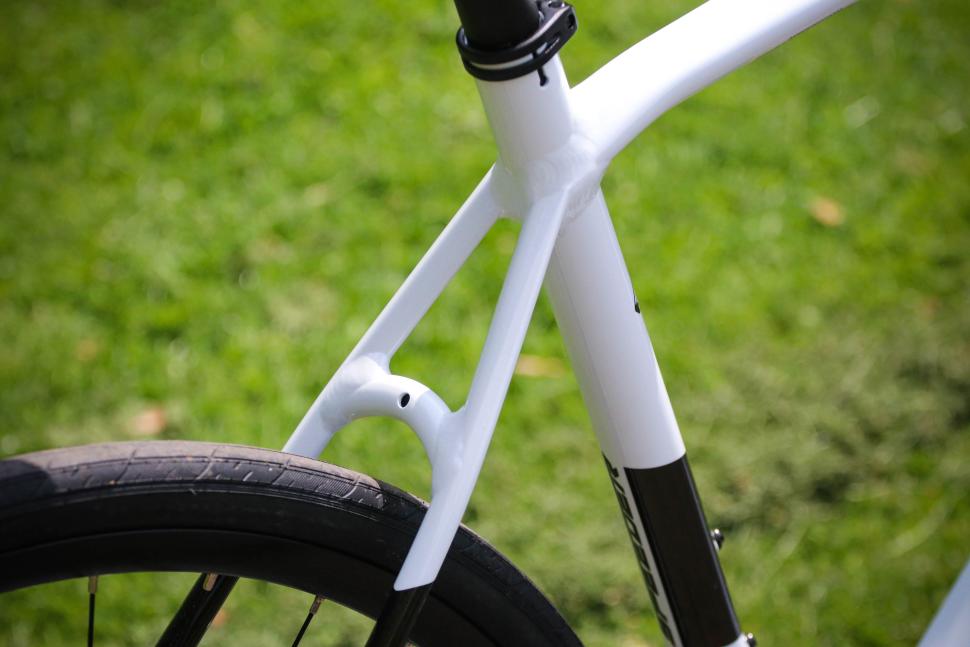
The website mentions the fitting of a rear rack is possible thanks to C-mounts, but you’ll not find any mounting points on the upper seatstays in the traditional sense. This means you’ll need to use a rack that mounts to the seatpost, seatpost clamp or seatstay bridge – or one that fits directly to the rear mudguard.
Tyre clearance is a decent 35mm for both the frame and fork, and the bike is rated for a max weight limit of 130kg.
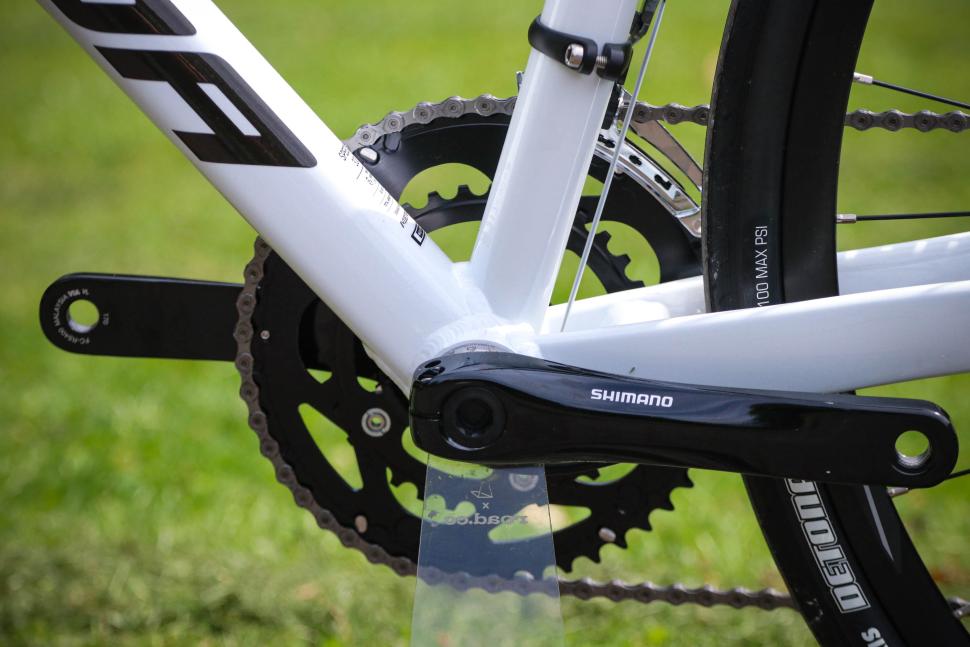
The Speeder also uses a BSA threaded bottom bracket which makes home maintenance easy.
The only slight backwards step is that the frame and fork still use quick releases rather than thru-axles. Not a major problem, but I prefer the security of the front wheel at least being secured by a thru-axle. Thankfully, should you wish to upgrade the wheels, many brands offer adaptors to run their models via quick release.
The Speeder is available in six sizes, with top tube lengths ranging from 555mm to 610mm. If you are used to road bike sizing than that 555mm might look quite long for an XXS, but the Speeders have a tall head tube and slack head angle which shortens the reach, plus the Speeders generally run a shorter stem length than a road bike, by 10mm to 20mm. Also, the fork length is 15mm longer than that used on Merida’s Scultura Endurance road bike.
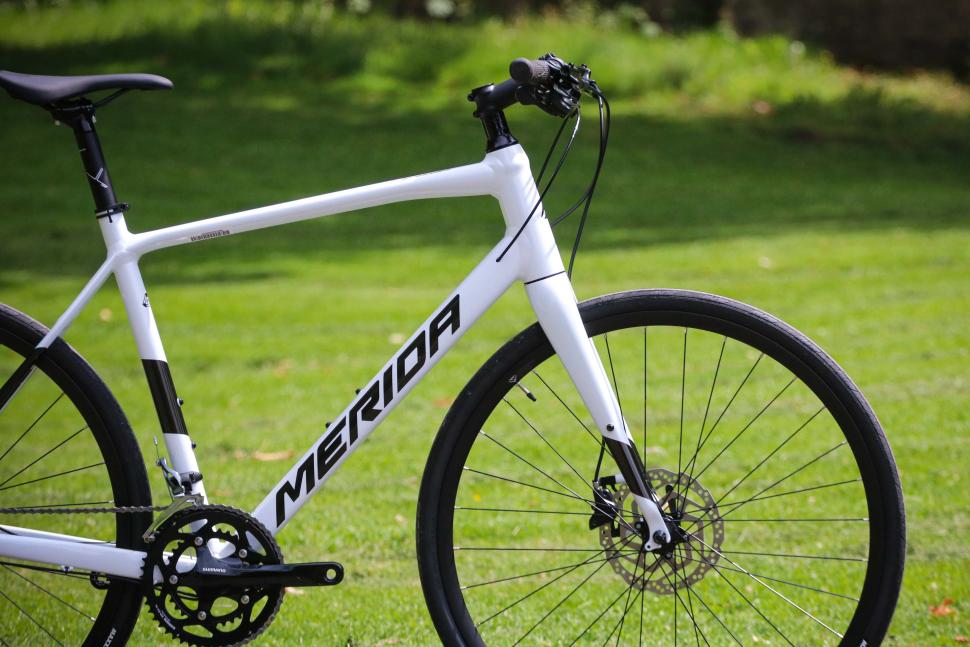
The medium I’ve been riding has a top tube of 583mm and a 190mm head tube. The head angle is 71.5 degrees, which all gives a reach of 404mm and a stack of 606mm. The stem length is 100mm. Basically, it’s not as stretched out as the numbers might suggest.
Other figures that might be of interest are a 73.5-degree seat angle, 1,066mm wheelbase and a 65mm bottom bracket drop.
If some of the terms used here aren’t familiar to you, our A-Z of cycling jargon might help.
Merida Speeder 300: Groupset
The Speeder 300 uses Shimano components to make up the groupset; it’s a bit of a mish-mash of kit – but one that works well.
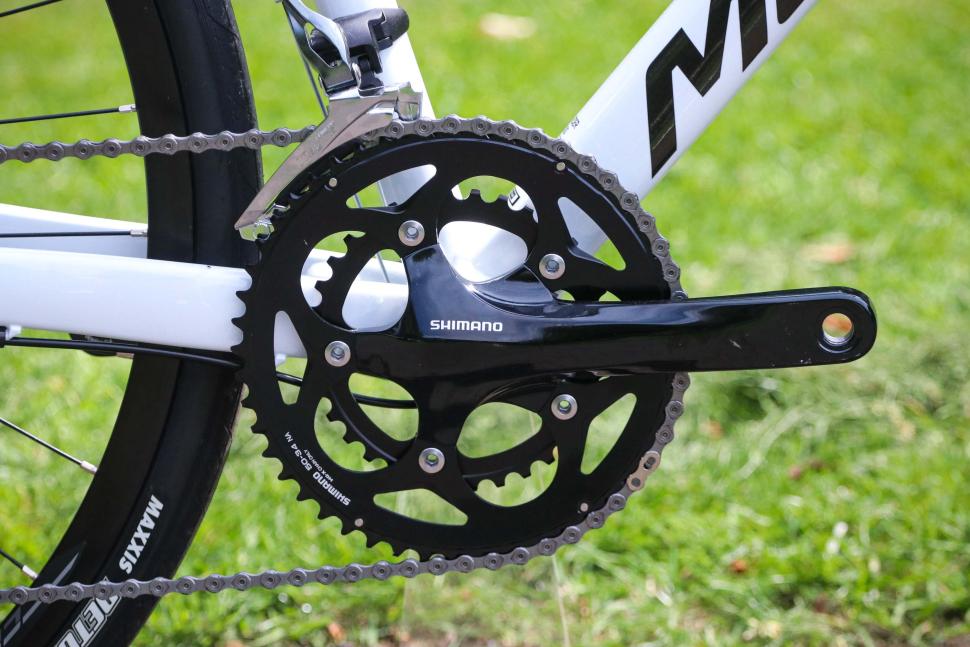
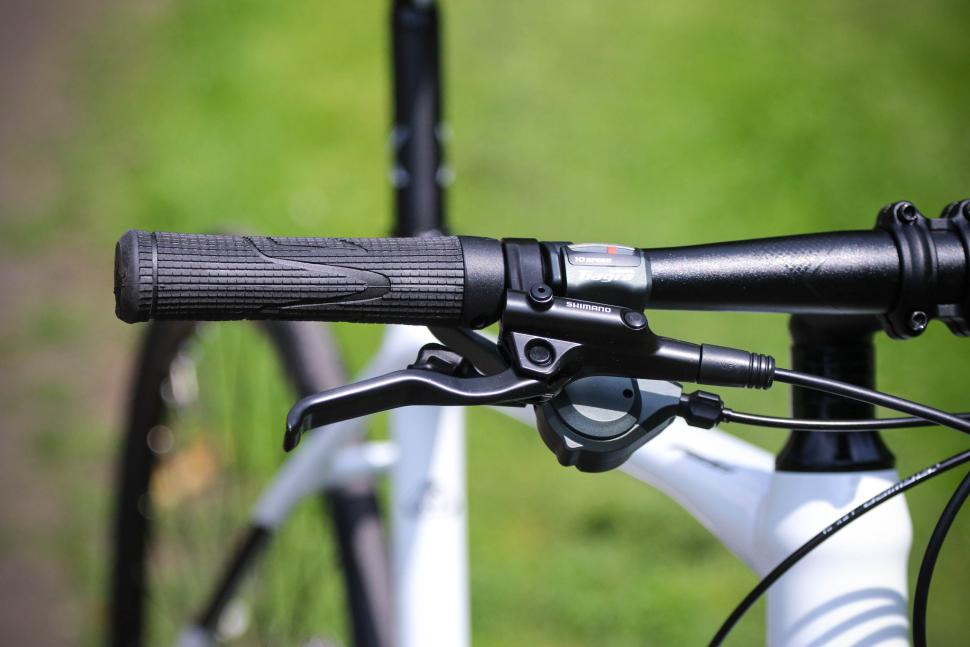
It’s a 2x 10-speed setup with Shimano Tiagra flat-bar shifters and front and rear derailleurs, but a non-series RS400 crankset, GRX HG500 cassette and MT200 brakes, and a KMC chain.

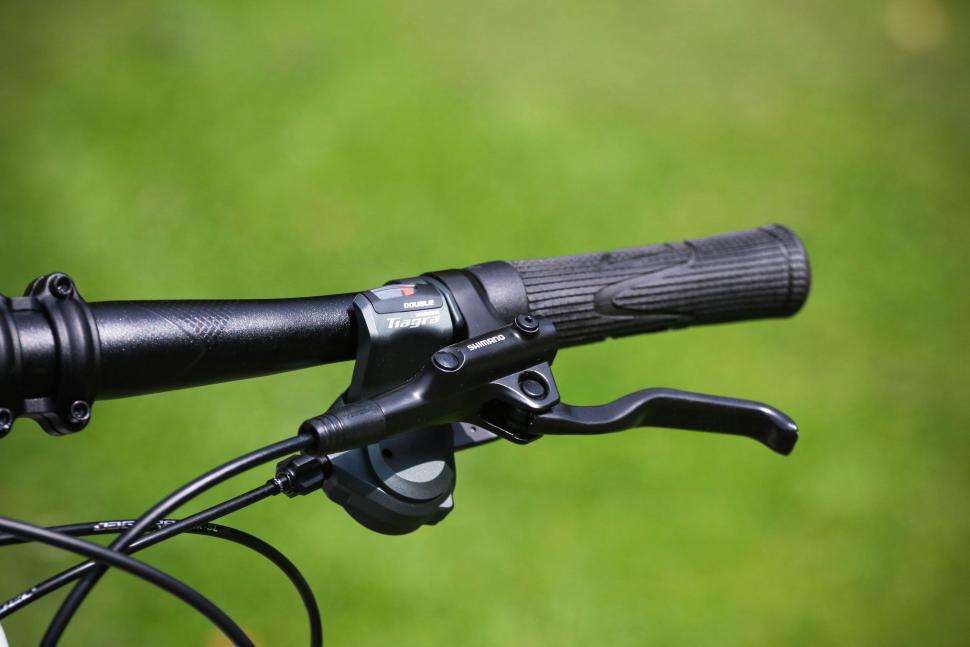
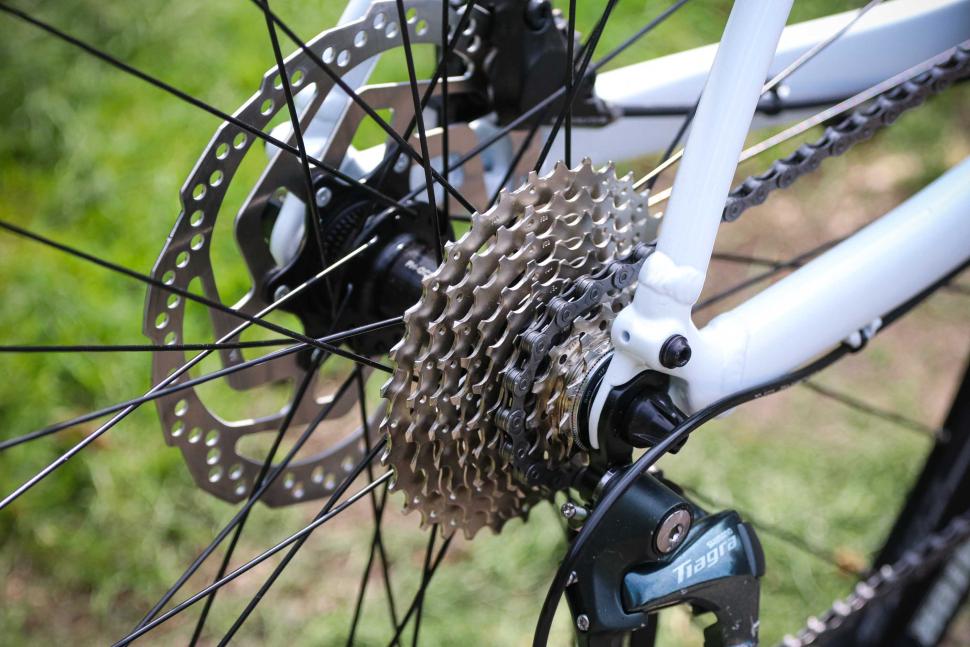

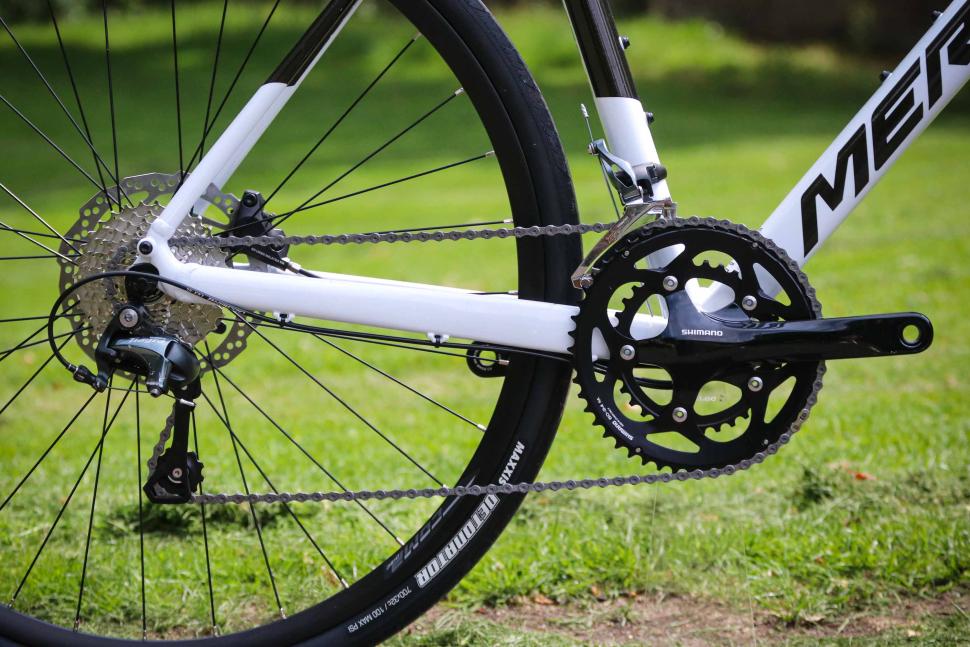

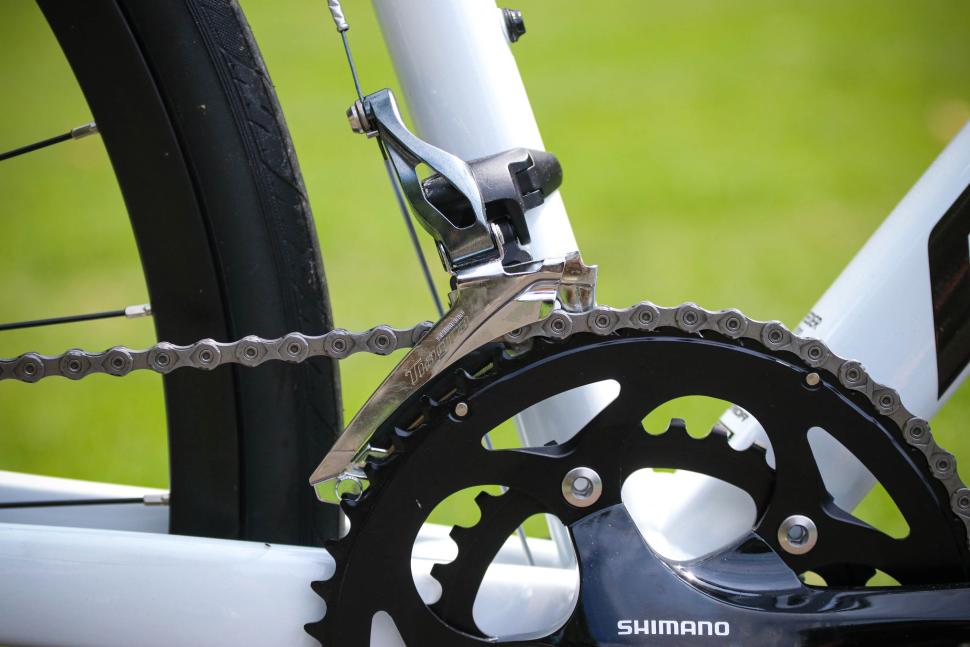

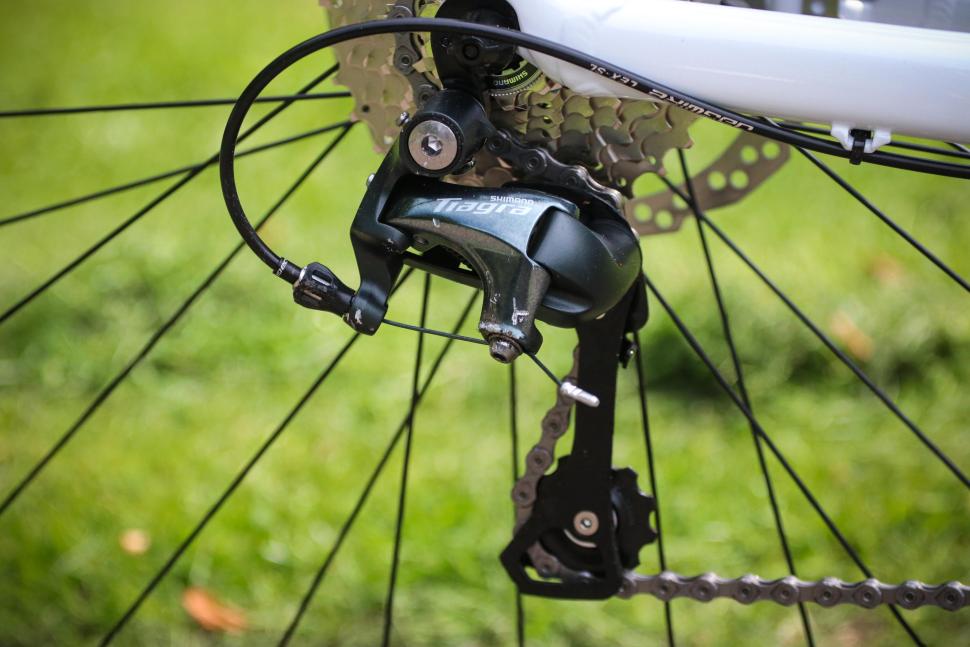



The 50/34-tooth chainset is paired with an 11-32T cassette and gives a decent, if sporting gear ratio range. As a seasoned rider it worked well for me, but if you are new to cycling, or working on your fitness, you might find it a little overgeared if you ride in a hilly area.
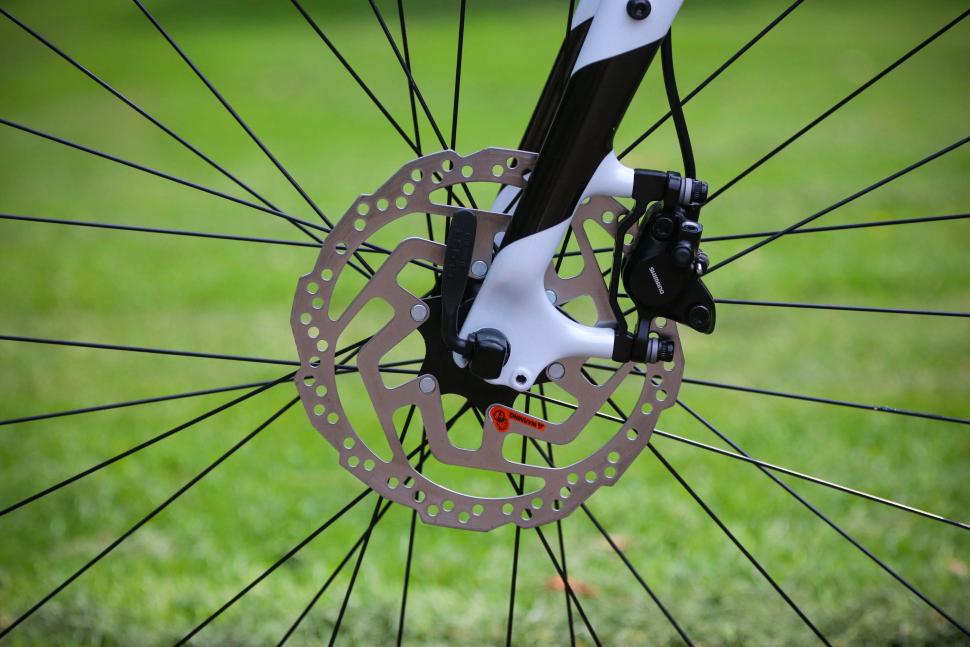
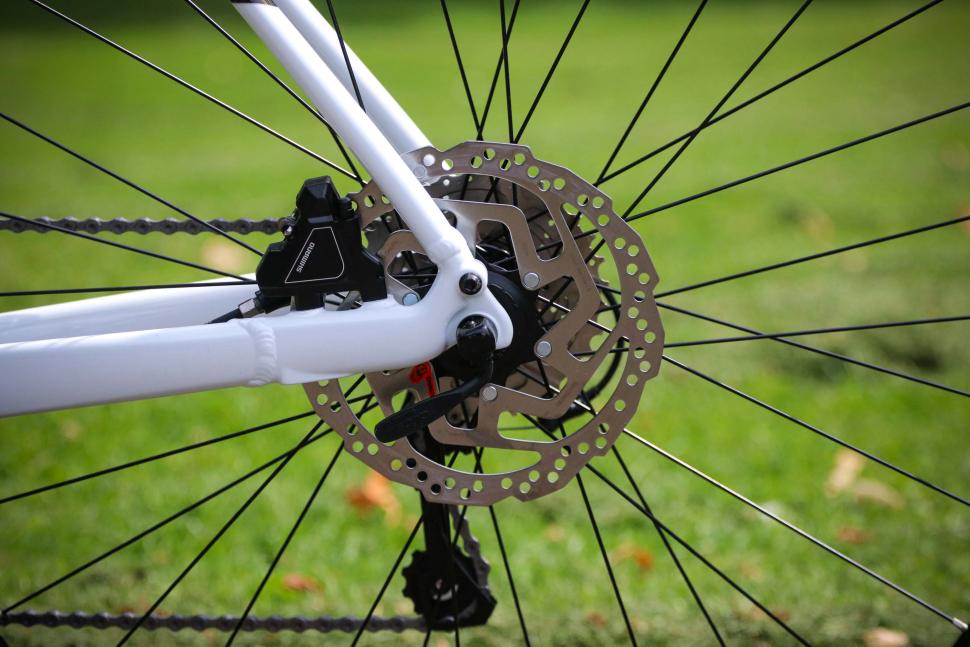
That said, the shifting is crisp and clean, and the fact that you are getting hydraulic brakes at this price point is a big bonus.
The 300 gets 180mm rotors front and rear so there is loads of stopping power on offer.
Merida Speeder 300: Finishing kit
As for the finishing kit, it’s all Merida branded and is functional and comfortable.
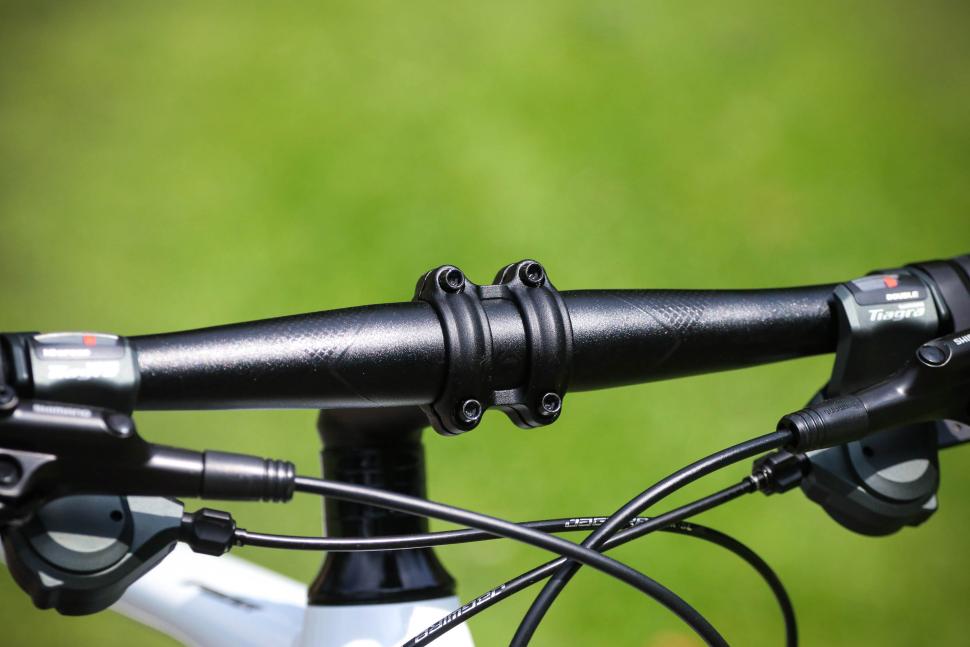
The alloy Expert CC handlebar is 600mm wide and offers a gentle sweep back at the ends, while the identically named stem is, erm, a stem and does what a stem does.
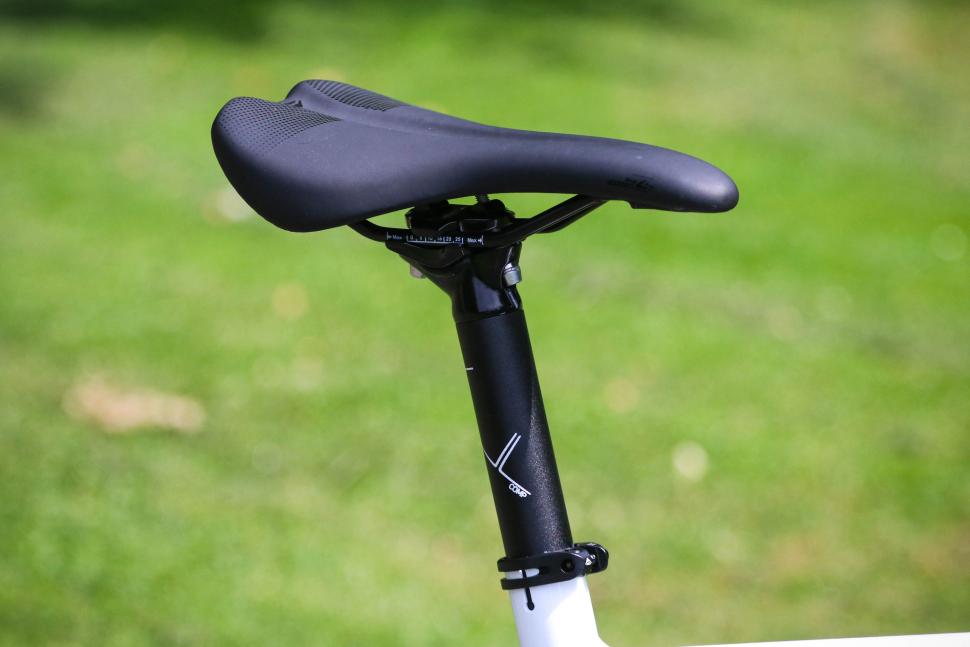
The Comp seatpost has a 30.9mm diameter and 5mm setback, while the saddle attached to it is Merida’s Comp SL, which is made from 28 per cent recycled material. With its slender style it’s quite a racy saddle but it works well with the performance on offer from the Speeder.
Merida Speeder 300: Wheels & tyres
The Comp SL rims make up part of the wheel build, paired with Shimano hubs. The rims are 22mm deep with an inner width of 17mm and are tubeless ready, you’ll just need to add tape and valves as they come set up with inner tubes.
They are decent wheels, reliable thanks in part to the use of 32 spokes front and rear, and I had no issues with them after using the Speeder on country lanes, hardpacked byways and canal paths. They are a bit on the weighty side, though, and an upgrade would definitely transform the Speeder if you wanted some extra speed for warm sunny rides.
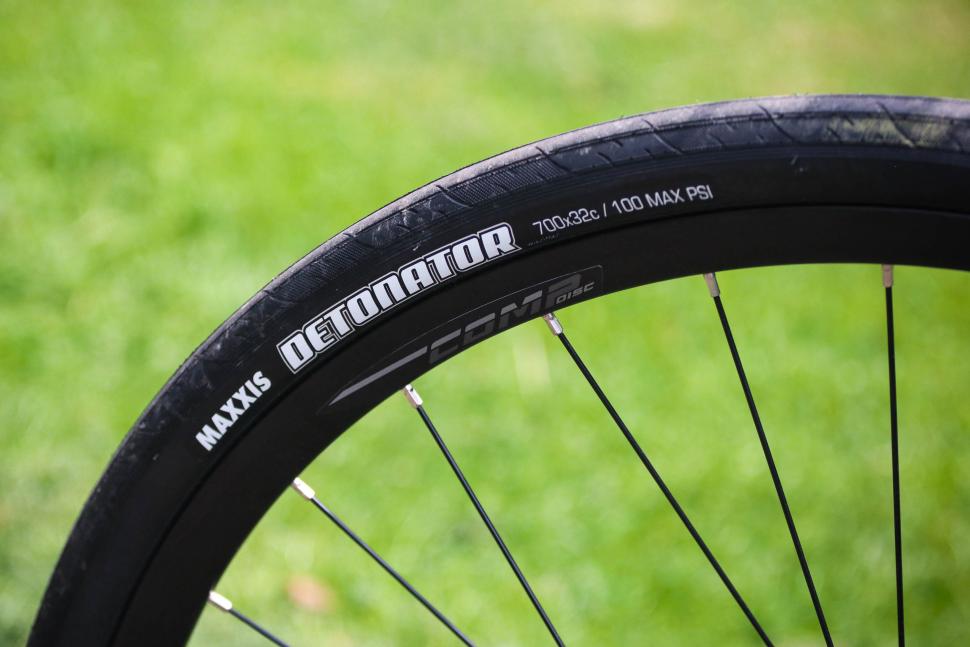
The same can be said for the tyres. Merida tends to use Maxxis tyres on a lot of its lower spec bikes, and I’m not generally a fan as I find them quite dead feeling, and unfortunately the 32mm Detonators used here are no different.
They do make sense as we head into winter, thanks to decent reliability against punctures, but again for the drier months I’d be switching them out for something faster rolling. Something like the Continental’s Grand Prix TRs (£54.95) or Michelin’s Lithion 4 (£29.99) if your budget is tighter, and you are happy to stick with clinchers. Both are available in 32mm widths.
Merida Speeder 300: Value
The Speeder 300 sits one from the top of the four-model Speeder range, which kicks off at a very affordable £700 and tops out at £1,300. At £1,000, it’s a lot of bike for the money, and compares well with some rivals.
Specialized’s Sirrus bikes, for example. We’ve reviewed both aluminium and carbon models, and there’s the X range if you want something a little more ‘gravelly’, but for predominantly the same build as the Speeder 300, the Sirrus 4.0 is much more expensive at £1,700. That’s with an alloy frame, carbon fork, Tiagra bits and bobs, plus the same MT200 brakes.
We haven’t reviewed any of Giant’s new FastRoad ‘fitness’ bikes yet, but the AR 2 is a quid cheaper than the Merida at £999. It has an aluminium frame and carbon fork, and 12mm thru-axles, and will take huge 42mm-wide tyres. But it uses a 1x Shimano Cues 9-speed groupset, which I don’t think suits this sort of bike as well as a 2x setup.
A few years back we reviewed the Boardman HYB 8.8, which is still in the range at the same price of £850. For that you get a triple-butted aluminium frame and carbon fork, and the same MT200 brakes as the Merida, but again a 1x groupset, in this case 10-speed Shimano Deore.
For more options, check out our guide to the best hybrid bikes.
Merida Speeder 300: Conclusion
I was very pleasantly surprised by the Speeder. It felt way quicker than I was expecting and offers plenty of performance for those who don’t want drop handlebars. It’s versatile, too, covering everything from commuting to fitness rides and even some light touring. Merida has done well on the budget too, especially when many other brands are offering 1x whereas I think the 2x option better suits this style of bike – the fast hybrid.
Verdict
The Speeder lives up to its name – a nimble, flat-barred commuter, urban runabout or back lane blaster
All the deals displayed on our review pages are pulled from a constantly updating database feed of the best affiliate deals available. The criteria for deciding on what are the best deals is who is offering the lowest, delivered price. In most cases we will be showing the very best deal available online, but sometimes you may be able to find an item cheaper. If you can please feel free to post a link in the comments box below. To find out more about affiliate links on road.cc click here.
road.cc test report
Make and model: Merida Speeder 300
Size tested: Medium, 583mm
About the bike
List the components used to build up the bike.
Rims: MERIDA COMP SL
Hubs: Shimano HB-QC300 / Shimano FH-QC300-HM
Tyres: Maxxis Detonator 32mm
Crankset: Shimano RS400
Bottom Bracket: Shimano BB-RS500 BSA
Cassette: Shimano GRX HG500, 11-32T, 10 speed
Chain: KMC X10
Shifters: Shimano Tiagra
Front Derailleur: Shimano Tiagra
Rear Derailleur: Shimano Tiagra
Brake Levers: Shimano MT200
Brake Calipers: Shimano MT200
Rotors: Shimano RT10, 180mm
Headset: MERIDA M2331 Neck
Stem: MERIDA EXPERT CC
Handlebar: MERIDA EXPERT CC
Grips: MERIDA COMP EC
Seatpost: MERIDA COMP CC, 30.9mm Dia, 5mm setback
Saddle: MERIDA COMP SL
Seat Clamp: MERIDA EXPERT
Pedal: VP VPE-891
Tell us what the bike is for and who it’s aimed at. What do the manufacturers say about it? How does that compare to your own feelings about the bike?
Merida says, “A sleek and stylish fitness bike with quality components that deliver smooth and accurate action at a sensible price. The triple butted aluminium frame paired with the full carbon fork keeps weight down, while the straight handlebar setup creates a more upright and, therefore, comfortable riding position and improves the visibility of what lies ahead. Multiple fixing points enhance the day to day usability.”
The Speeder 300 is a fast-paced hybrid/fitness bike with plenty of versatility.
Where does this model sit in the range? Tell us briefly about the cheaper options and the more expensive options
This model sits second in line to the range-topping Speeder 500 at £1,300. Below those are the Speeder 100 (£850) and the Speeder 60 at £700.
Frame and fork
Tell us about the build quality and finish of the frame and fork?
A smart-looking frame that’s well finished, as is the full carbon fibre fork.
Tell us about the materials used in the frame and fork?
The frame is created from 6066 aluminium alloy while the fork is carbon fibre.
Tell us about the geometry of the frame and fork?
The geometry numbers make the riding position sound quite long, but in reality it is a compact frame with a tallish front end – ideal for the style of riding intended.
How was the bike in terms of height and reach? How did it compare to other bikes of the same stated size?
For this type of bike, everything is in proportion.
Riding the bike
Was the bike comfortable to ride? Tell us how you felt about the ride quality.
The ride quality is very good thanks in part to the hydroformed shapes and triple butted tubing of the frame.
Did the bike feel stiff in the right places? Did any part of the bike feel too stiff or too flexible?
The Speeder is stiff enough for the type of riding intended. It felt tight where it needed to for efforts out of the saddle.
How did the bike transfer power? Did it feel efficient?
The tyres are a bit sluggish, but overall it is an efficient bike.
Was there any toe-clip overlap with the front wheel? If so was it a problem?
No.
How would you describe the steering? Was it lively neutral or unresponsive? Neutral.
Tell us some more about the handling. How did the bike feel overall? Did it do particular things well or badly?
The Speeder is easy to ride, with quick enough steering to cope with speedy descending or the other end of the spectrum – feeding your way through busy traffic.
Which components had the most effect (good or bad) on the bike’s comfort? would you recommend any changes?
The saddle is on the racier style of things, but it works well. More supple tyres would benefit the overall ride quality, though.
Which components had the most effect (good or bad) on the bike’s stiffness? would you recommend any changes?
The wheels showed decent lateral stiffness, and the handlebar was stiff enough for out-of-the-saddle efforts. I wouldn’t change anything from a stiffness point of view.
Which components had the most effect (good or bad) on the bike’s efficiency? would you recommend any changes?
As I’ve said above, the tyres hamper efficiency, and maybe some lower gears would be required if you live in a hilly area.
The drivetrain
Tell us some more about the drivetrain. Anything you particularly did or didn’t like? Any components which didn’t work well together?
A mish-mash of kit but it all works well together.
Wheels and tyres
Tell us some more about the wheels.Did they work well in the conditions you encountered? Would you change the wheels? If so what for?
Solid wheels, but more workhorse than racehorse.
Tell us some more about the tyres. Did they work well in the conditions you encountered? Would you change the tyres? If so what for?
The Maxxis Detonators can feel a little lifeless on the road and don’t offer a whole lot of zing, so I would be changing them for something faster rolling when they wear out.
Controls
Tell us some more about the controls. Any particularly good or bad components? How would the controls work for larger or smaller riders?
Simple but solid performing kit throughout.
Your summary
Did you enjoy riding the bike? Yes
Would you consider buying the bike? Yes
Would you recommend the bike to a friend? Yes
How does the price compare to that of similar bikes in the market, including ones recently tested on road.cc?
It’s well priced against the equivalent Specialized Sirrus, and on a par with Giant’s new FastRoad AR 2, while the Boardman HYB 8.8 is still a very good value option at £850. Generally, the Merida has a good spec and build for the money – and has the benefit of a 2x groupset rather than the 1x favoured by rivals but less suited for this sort of bike, in my opinion.
Use this box to explain your overall score
It’s an impressive bike – quick and nippy on the road while also being just as easy to ride into town or on the commute. Overall, taking into account the build spec and the way it rides, it’s a solid 8, ‘very good’.
About the tester
Age: 46 Height: 180cm Weight: 76kg
I usually ride: This month’s test bike My best bike is: B’Twin Ultra CF draped in the latest bling test components
I’ve been riding for: Over 20 years I ride: Every day I would class myself as: Expert
I regularly do the following types of riding: time trialling, commuting, club rides, sportives, fixed/singlespeed,


