Old man shouts at clouds

  • This topic has 27 replies, 18 voices, and was last updated 4 years ago by matthewn5.
  • Creator
    Topic
  • #32046
    peted76

    This past week I’ve felt like that old man who shouts at clouds.. so I thought I’ve have a moan and waffle on here and see if I’m an idiot or luddite or just maybe someone else has had a similar experience.

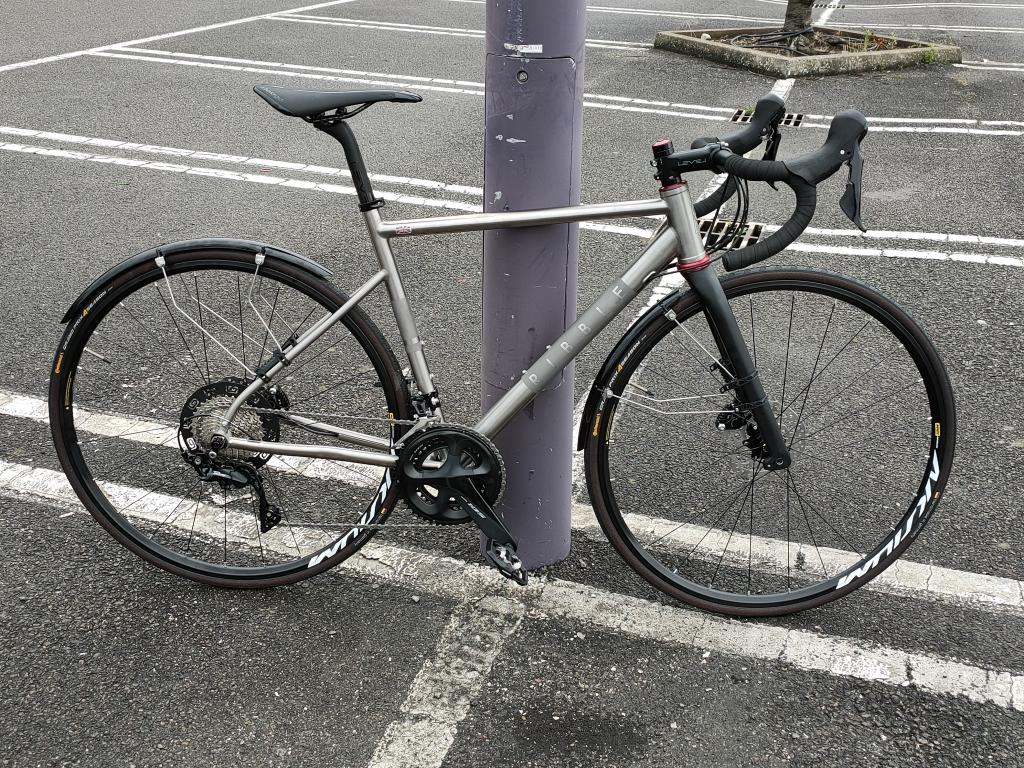
    I’m a proud owner of a beautiful Mason Definition.. being honest it hardly gets any miles in as I spend most of my time riding my other bike..  still, it’s a beauty and it sits in the garage, in winter on the turbo, but usually is dressed in knobbly tyres for off-road rides (gravelly type stuff). Since I’ve had it, I’ve changed the disc brakes twice and swapped a couple of chains out.. but nothing out of the ordinary.. 

    I’ve just come back from the new forest, I threw the bike in the car fully in the knowledge that I had only one working disc brake, ‘but it’d be okay’ I’d borrowed a bleed kit from a mate and had brought some some mineral oil from my LBS.  I’ll sort it when I’m down there..  or so I thought. Firstly, the instructions with the commonly found bleed kit were very hard to understand (lack of terminology understanding on my part), you tube it is then.. (which helped). Secondly, the bleed kit needed a ‘not included’ adaptor to attach the ‘pot’ to the levers for ‘roadies’ .. (very unhelpful). This then became a two man job as my dad and myself tried to bodge the pot in place.. (which turned into a fail with a third of the bottle of mineral oil all over my hands, the rims/tyres and the floor. So.. a quick google seemed to show the ‘adaptor required’ as a pretty common part, the next day a few calls to the numberous LBS in the forest would prove otherwise.. however ‘Bike Jacks’ LBS in Lymington proved very helpful, “Pop it down and we’ll get you running” they said, “Brilliant” I replied! So I popped down to Bike Jacks and watched as he fettled, ingected and squeezed my front brake back into action.. it probably took 25 mins for the expert to get it working. So armed with two working brakes and a warning about tipping a bike upside down and air bubbles I drove back to base and had a lovely couple of days bumbling about the new forest.

    My shouting at clouds moment is simple.. why and how are disc brakes so bloody complicated!! Don’t depress the lever when the wheel isn’t in.. don’t tip your bike upside down, don’t worry about the rubbing, don’t spray soap on the discs, don’t mind the screeeeeeaching.

    Now I am fully aware that this is all ‘knowledge which is to be treasured and learned from but after seeing Bike Jacks wrestle and squeeze with just one brake I’m wondering how the hell do other people manage? For the record, I’m usually quite happy with ‘new stuff’ I’ve been running tubeless on road for ever, I’ve happily made every mistake along the way and have experimented galore to arive ay my current set up… but I can’t see me wanting to ‘try to fix’ my brakes again anytime soon. 

Viewing 12 replies - 16 through 27 (of 27 total)
  • Author
    Replies
  • #991273
    0
    TotalLoss

    I’m amazed by the complexity
    I’m amazed by the complexity they have introduced. I’ve had hydraulic brakes on all my motorcycles and there really should be no need for syringes and the like – it’s poor design.

    #991271
    0
    IanMSpencer

    This is a good example of the
    This is a good example of the design problems. The SRAM system for bleeding had depressurising the reservoir by pulling on the syringe as the final step. This was to get the air bubbles to float out into the syringe. But that meant you had a completely full reservoir to make it work. If you then closed the reservoir you had too much fluid and the brake setting mechanism wouldn’t work – it relies on a certain amount of piston travel being sealed to suck the pads back before opening the reservoir to release excess pressure or accept more fluid. I think Hope resolved this by having a rubber cap that allowed for an expansion chamber, but SRAM you have it full or a bubble of air shaking around. Shimano didn’t need tricks to suck out bubbles, you just pushed fluid up from the bottom into the cup until no bubbles – though not sure how they resolve the air gap, been a while since I fiddled.

    #991269
    0
    Bungle_52

    Doesn’t there need to be air

    Doesn’t there need to be air in the resevoir to allow for expansion of the brake fluid in hot weather or etended use?

    #991267
    0
    dolly

    If the brakes have been bled

    If the brakes have been bled fully  there will be no air bubbles and the orientation of the bike will be irrelevant.

    In my limited experience of building my last bike it was the bleed kit that was not up to scratch. It was letting air in which made bleeding endless, until I worked out what was going on.   

    #991265
    0
    IanMSpencer

    In my bike mechanicing days,

    In my bike mechanicing days, there were many aspects of bike design that could have me in dispair of why someone had decided that this is How Things Must Be. Like why didn’t the manufacturers realise that the sensible thing to re-routing gear cables through 90 degrees to put them under bar tape meant that it would be sensible to rotate the lever mechanism by 90 degrees rather than having the cable follow some tortuous route that is nearly impossible to re-cable without wasting at least one cable unravelling due to the experience, and that’s before you’ve had the “how to get a wire mushroom out of a gear change when it has snapped at the same point that all modern cables fail at – the tortuous bend”.

    If you buy the (correct) manufacturer’s bleed kit, then you shouldn’t have adapter problems, but of course, buying the right kit is not necessarily trivial. 3rd party kits are another kettel of fish, as they are trying to cover multiple manufacturers and bikes being what they are, the different makers do love, erm, differentiating their designs.

    Having said that, getting a good bleed does require experience and patience. There are lots of tricks, and depending on the design, some bikes do require things to be done in just the right way to pursuade air out of the system. Shimano have put a lot of design effort into simplifying their bleed systems to the extend that now you can bleed in situ – that is generally about designing where the ports need to be and shaping the cylinders to avoid nasty little hiding holes for the air. The worst to bleed I found were the SRAM systems which not only needed a complex system of stage by stage bleeding, but also needed to be filled to the exact amount, especially on their cheaper systems lacking adjustments… the difference between a binding brake and one where the lever hit the bar with no resistance seemed to be about 2 drops of brake fluid.

    So, I sympathise – the reason that brakes are hard to bleed is poor design. The requirements are not hidden from manufacturers. As for the list of grizzles, I think the don’ts on brakes are exaggerated – brakes get sprayed with crap on the roads all the time so you cannot avoid them getting contaminated, ride in the rain they will squeal as you can’t avoid getting muck in them, they clean up and quieten down with use. However, the same applies to rim brakes, rims get covered in muck and they may not squeal, but they more likely may not stop (and if anyone remembers the joy of steel rims in the wet…).

    #991263
    0
    hawkinspeter

    Bleeding the brakes shouldn’t

    Bleeding the brakes shouldn’t take more than five minutes if you’ve got the right tools and have done it before. If you get the right bleed kit, it’ll come with the little screw-in pot for road levers and then it’s really easy to use. I don’t know why it would take someone 25 minutes to fix – that sounds like the time to replace a hose.

    #991261
    0
    Steve K
    hawkinspeter wrote:
    Steve K wrote:
    Serious question – how much of an issue is turning a bike upside down from the point of view of creating air bubbles?

    Unlikely to cause much of an issue depending on how long the bike’s upside down and how much fettling is going on. If an air bubble starts floating up (down) the hose, then it’ll likely float back down (up) when the bike is righted. If you’re really worried, you could try putting a rubber band or bit of tape to keep the levers depressed before turning it upside down as that should make it a closed system.

    Thanks.  Though the rubber band tip won’t work as the only reason I turn the bike upside down is for a roadside puncture repair.

    #991259
    0
    hawkinspeter
    Steve K wrote:
    Serious question – how much of an issue is turning a bike upside down from the point of view of creating air bubbles?

    Unlikely to cause much of an issue depending on how long the bike’s upside down and how much fettling is going on. If an air bubble starts floating up (down) the hose, then it’ll likely float back down (up) when the bike is righted. If you’re really worried, you could try putting a rubber band or bit of tape to keep the levers depressed before turning it upside down as that should make it a closed system.

    #991257
    0
    ktache

    Air bubbles in the reservoir

    Air bubbles in the reservoir don’t matter, when turned upside down they might move up to the pistons where they make a difference.  Maybe…

    #991255
    0
    Steve K

    Serious question – how much

    Serious question – how much of an issue is turning a bike upside down from the point of view of creating air bubbles?

    #991253
    0
    ktache

    I see it as a learning

    I see it as a learning experience. A journey if you will.

    It took me a decade to figure out how to easily set up my cantilevers (curve) so as to really get the best out of them. Just the doing. Vs were sooo easy.

    I think the faff is very much worth it though, such power and control. I’m draining and replacing the fluid this weekend, better at doing it this time than a year ago.  And servicing the pistons. Did a bit of looking into, got the brand specific bleed kit and a recommended tool, that I don’t really need because I got a prison press (highly recommended by me). Will bleed in a couple of weeks too, just to get my incompetent self’s tiny air bubbles out.

    If I was travelling lots I’d get some of those travel piston keepers, though I hear that folded cardboard will suffice.

    #991251
    0
    Owd Big 'Ead

    As my ex-commanding officer
    As my ex-commanding officer used to say “prior preparation prevents piss poor performance”.

    Perhaps in future you should check that everything is present and correct in advance of your journey rather than rocking up and expecting everything to go to plan.

Viewing 12 replies - 16 through 27 (of 27 total)
  • You must be logged in to reply to this topic.