



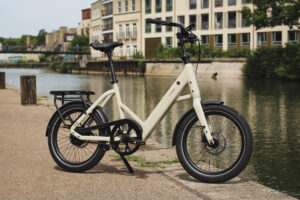
The ADO Air One Pro is billed as “a modular urban mobility platform.” That’s a little highfalutin. It’s a utility e-bike, basically – a low maintenance, easy-to-live-with, daily runaround that you can set up to carry a bit of stuff. It’s got its limitations, but its fundamentals are sound and it certainly doesn’t cost the earth.
I don’t want to tell people what to call their bikes, but this is the third Air I’ve reviewed in a row after the Tenways AGO Air and ADO’s own Air 30 Ultra. The word suggests a certain featherweight quality, but all three have been significantly heavier than a fourth Air we’ve tested – Engwe’s 18.1kg Mapfour N1 Air.
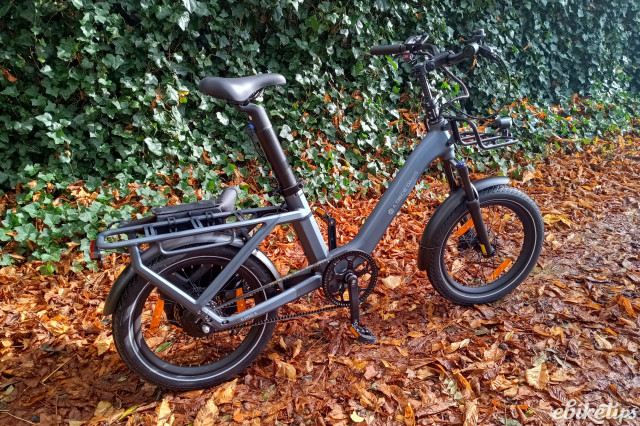
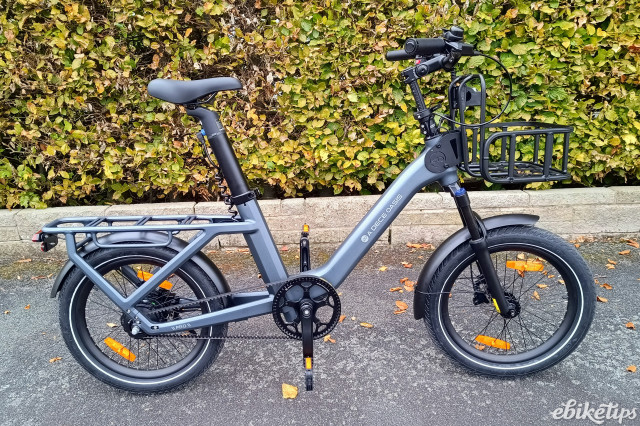
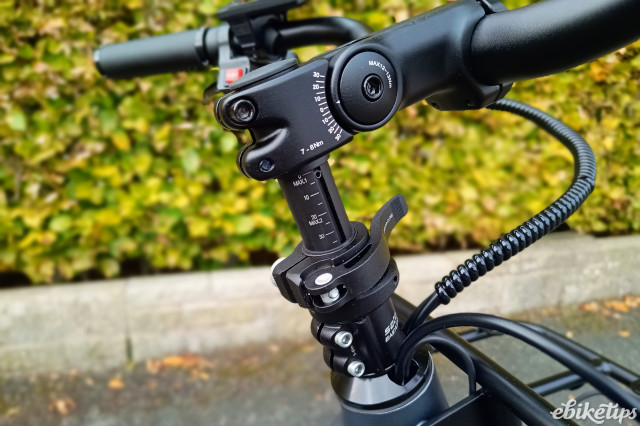
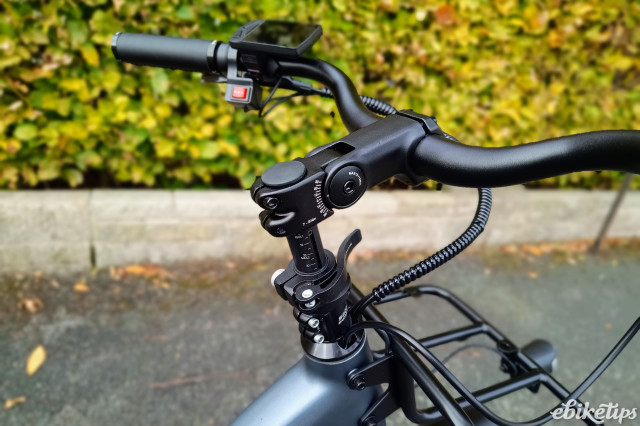
The Air One Pro looks like a compact bike and with 20in wheels, I suppose it is. As is so often the case though, it’s not that compact. It’s 1.72m long – although you can turn the handlebar 90 degrees to line up with the wheel which helps it take up a smidge less space. For reference, it’s much the same size as the Tern Quick Haul – although unlike that bike, you alas can’t store it on its end. At 26kg with the front rack on, it’s also heavier.
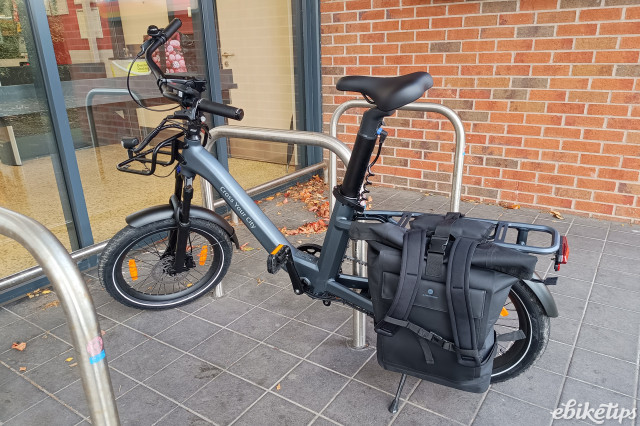
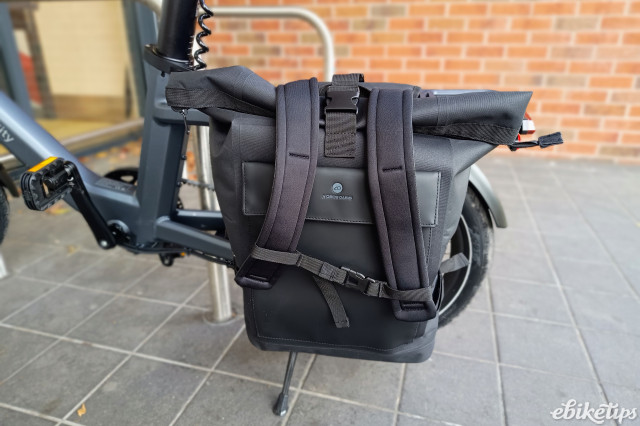
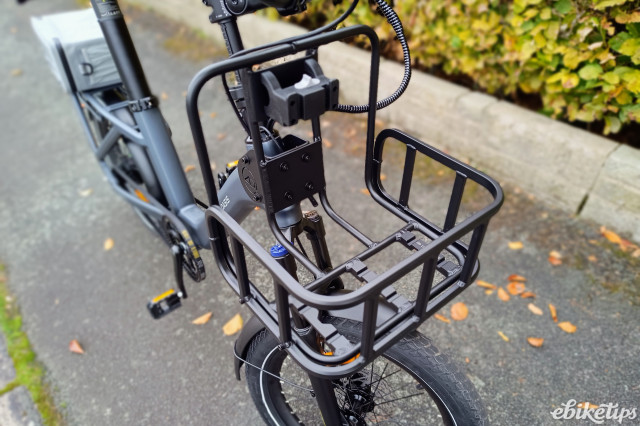
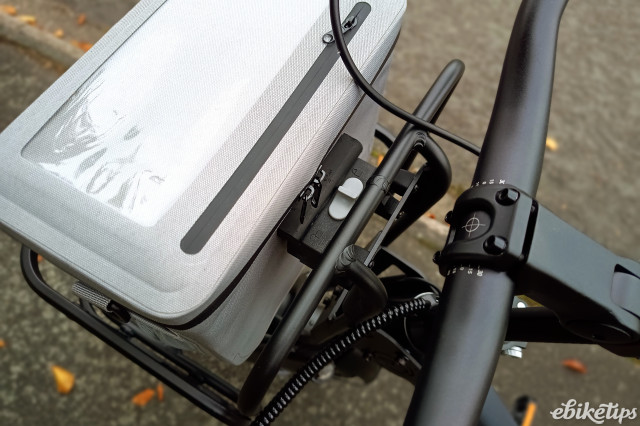
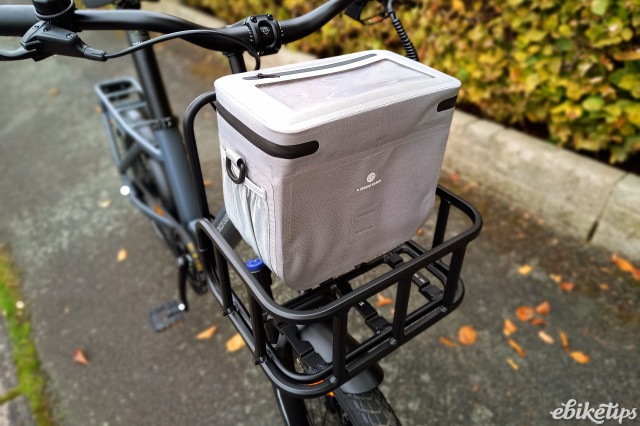
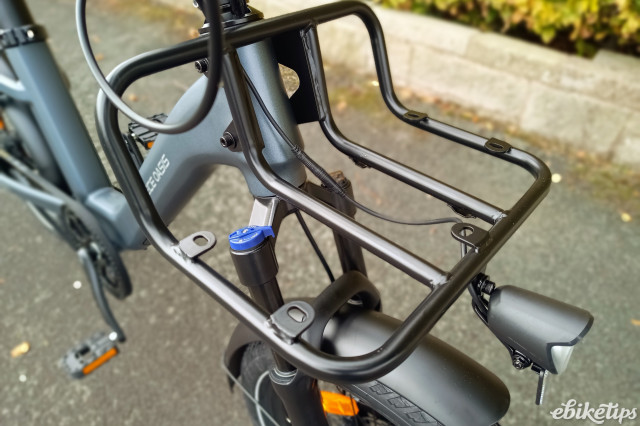
The £1,699 base model of the Air One Pro, the Classic, (currently selling for £1,499) features a rear rack with a front rack listed as a ‘free gift’. There are however a number of other cargo carrying accessories available. These include a deeper carrier to replace the front rack (£99) and various bags, one of which – a rucksack – clips onto the rear rack as a sort of quasi-pannier. You can also get a water bottle style 200Wh range extender.
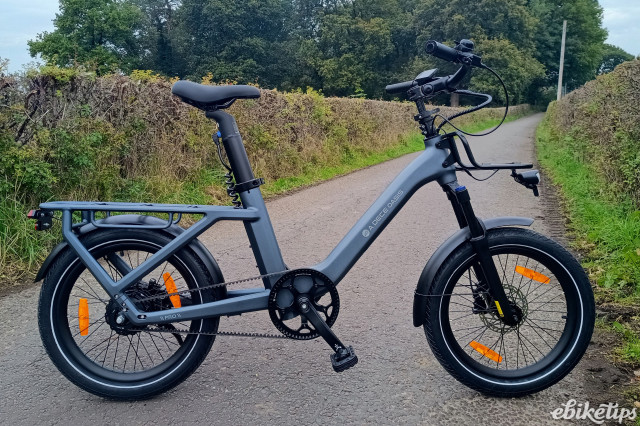
I’m told that further accessory options are currently being tested, so it’s likely we’ll see additions to this list.
First impressions
ADO is a Chinese direct to consumer brand, so the Air One Pro arrives boxed from the firm’s UK warehouse and you have to put it together yourself.
This involves attaching the front mudguard, front wheel, handlebar and front rack, before affixing the front light to the rack and putting the pedals on.
The box also contained a firmer-looking double kickstand, but the plentiful tools provided didn’t include a hex key large enough for this and the normal side kickstand was fine for me anyway, so I didn’t bother with it.
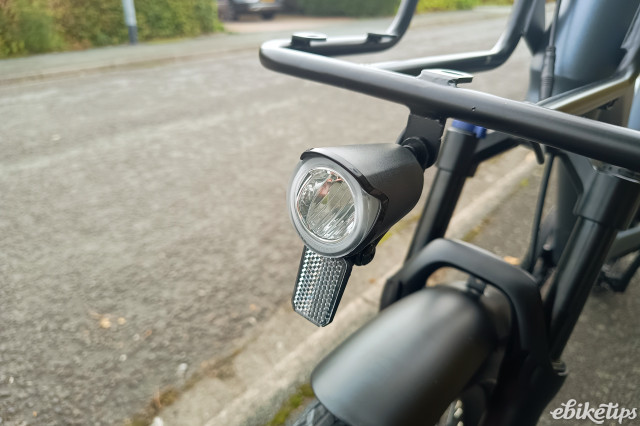
After a couple of rides, I was keen to switch the front rack to the Transport Carrier – a version of the front rack with sides. However, this one lacked a fitting to attach the front light.
I figured I’d attach the light at the mudguard mount point instead, which is where it appears in many of the images on the website. Alas, the mudguard bolt was too short to accommodate the light’s fixing and being as you screw into the mount but not through it, the bolt that came with the light was too long. After much Goldilocks-esque rummaging around the garage, I decided I’d just do without a front light while the Transport Carrier was fitted.
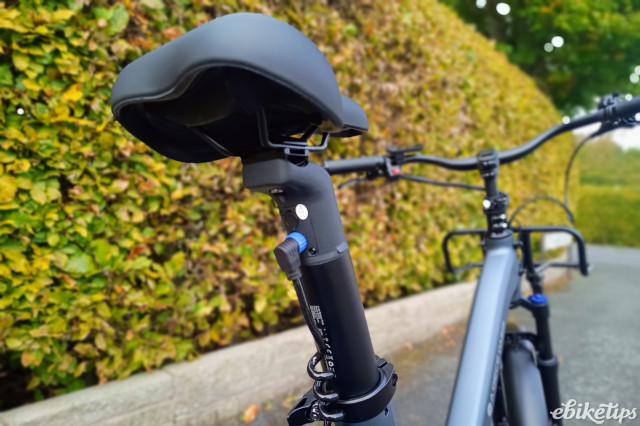
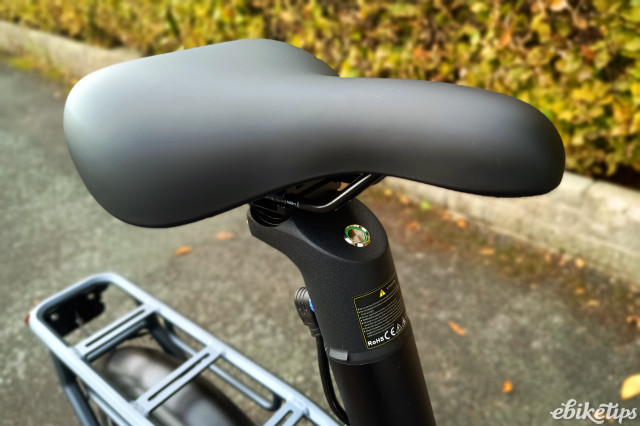
The Air One Pro uses a 370Wh seatpost battery, which can be removed for charging – although you will of course have to set your saddle height again each time you put it back in. I struggled to find the optimal tightness for the quick release. Initially, it slid down under my weight while riding, but then, after correcting for that, it became quite tricky to extract even with the quick release open.
You need a key to undo the saddle/battery security catch, so you’ll need to have this with you if you need to tweak saddle height while you’re out and about.
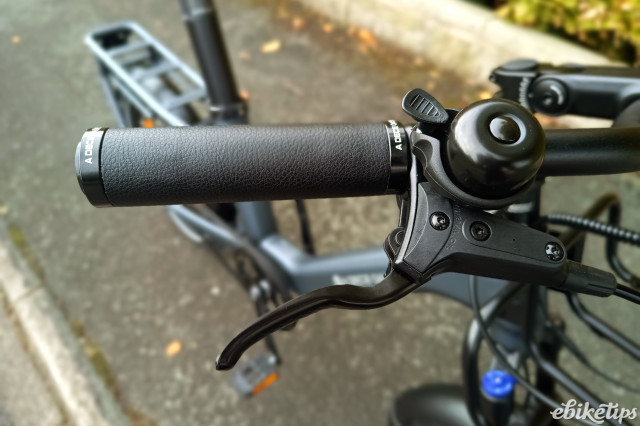
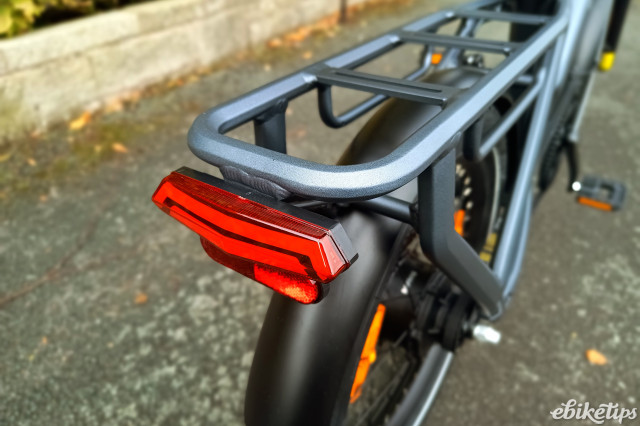
The rear light comes affixed to the rear rack. As with the Air 30 Ultra, it features indicators controlled via a switch on the handlebars. I don’t feel this feature adds anything to the bike, but it’s easy enough to ignore.
The ride
ADO’s slogan ‘cross your city’ gives a strong indication of its target market. Its bikes aren’t for long leisure rides off road. They’re for day-to-day use: getting to work and running errands.
The Air One Pro is the third ADO e-bike I’ve tested and I wouldn’t say any of them have excelled uphill. But that’s not really what they’re built for. They go well enough up moderate gradients, but they’re chiefly for nipping about over unremarkable terrain.
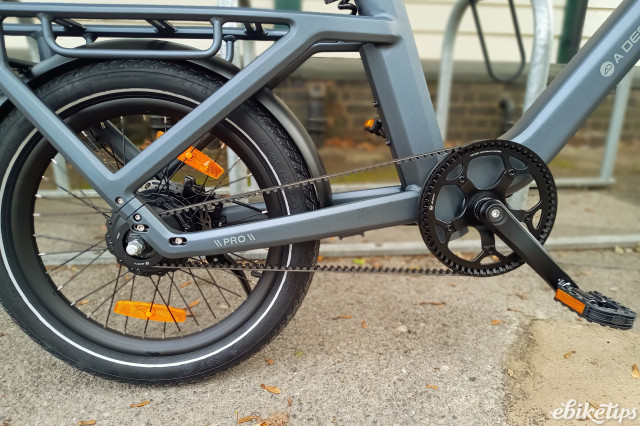
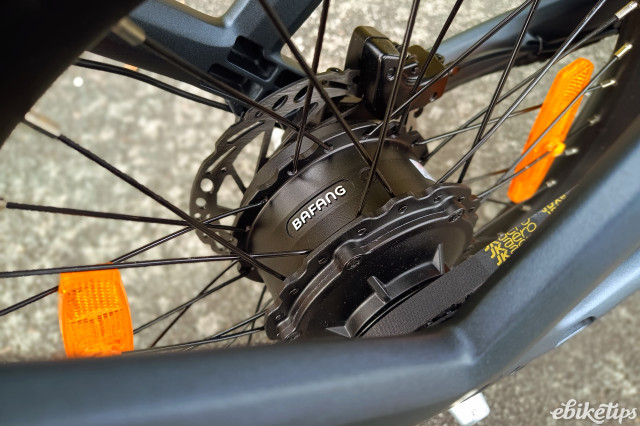
Bafang’s H700 dual-speed hub motor is, in my opinion, pretty much ideal for this sort of riding. There’s one gear to get you up to speed and another for cruising near the assistance limit, which is where you’re likely to spend the majority of your time when riding an e-bike.
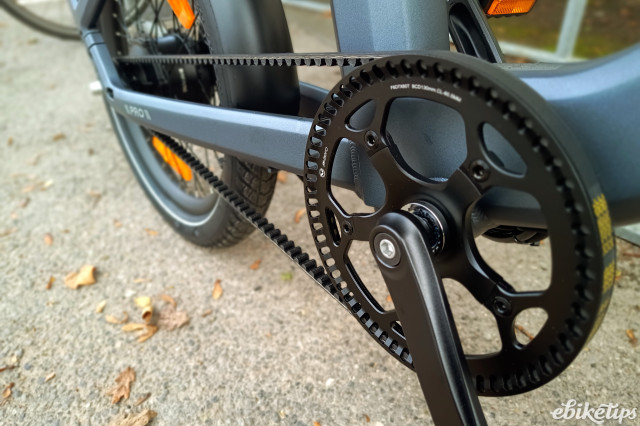
It’s easy and it works and it also allows for a belt drive, which is more durable than a chain and easier to clean and maintain.
The system automatically shifts up to the higher gear at about 19km/h and will change down again easily enough if you pause pedalling for a moment while moving slower.
There are limits to a hub motor, however – particularly when you’ve only got two gears. Bafang’s website somewhat confusingly lists the maximum torque as both 40Nm and 50Nm on the same product page. The exact number doesn’t much matter though. What matters is it’s adequate for moderate inclines, but if you’re heading up something steeper, it’ll wilt a bit as your speed drops.
This may or may not be a problem to you. With this kind of utility errand bike, you probably already know almost all of the roads you’re likely to be riding. If all your local gradients are unspectacular, you’ll be fine, but the steeper the hill, the heavier you are (including any cargo) and the closer the battery is to empty, the more this motor’s limitations will become apparent.
Speaking of the battery: in terms of range, after 45km and around 200m of climbing, I was into the red (the battery icon literally turns red). That’s fairly typical for a battery of this size on a bike like this.
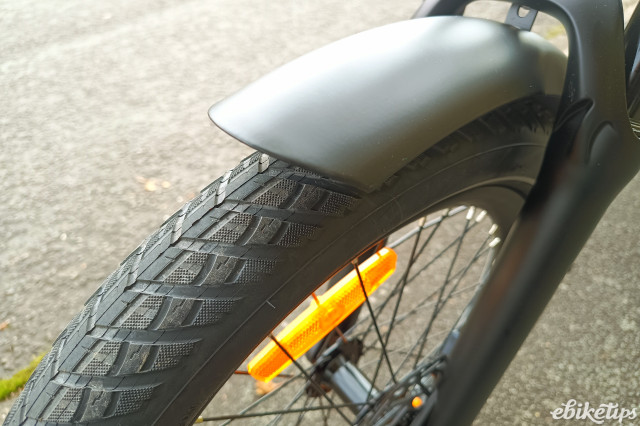
A little less typical on an urban bike are the 2.4in tyres, which combined with the 20in wheels make for a very stable ride.
The back route to our nearest supermarket includes a restricted byway that drops down to a stream and back up again. One slope has been ‘surfaced’ with a load of loose stones on which the wider tyres of the Air One felt very reassuring compared to most bikes.
Is the Air One Pro a cargo bike?
Well any bike’s a cargo bike really. It’s just that some are more obviously built for carrying loads than others.
The Air One Pro is a funny one because with its dual racks it’s clearly being pitched as a practical bike for carrying stuff and the rear rack in particular is rated for up to 60kg.
I wouldn’t recommend overburdening it though. A bag or two of shopping will be fine, but this is not a full-on cargo bike.
I rather liked the Luca backpack (£79) which can hold a good chunk of stuff and clicks onto the rear rack. Another bag and the odd item bungee-corded to the front rack would be an appropriate load, I’d say. You wouldn’t want to load the bike with a full weekly shop for a family of four.
Value
The ADO Air One Pro is an enticing package at £1,699 (and even more so at £1,499). There are certainly a few urban e-bikes around at that sort of price, but you wouldn’t necessarily be comparing like with like.
The Estarli e28.X, for example, uses the same motor and the same size battery, but it’s a different sort of bike and costs £1,940 by the time you’ve added a pannier rack.
The MiRiDER 24 has a little more in common with the Air One Pro, but even with its current discount, it’ll cost £1,995 if you opt for front and rear racks. At this price it’s a single-speed. It becomes quite a bit more expensive if you opt for gears.
The Raleigh Modum might entice while it’s discounted to £1,999 on the brand’s own website. With a mid-motor, a 500Wh battery and hub gears, this is a far more capable e-bike if you live somewhere hillier. It doesn’t have a front rack though and it’s unclear how long that price (or stock) will last.
For greater cargo capacity, you could try the Engwe LE20, which is £1,499 in its standard build that Dave deemed “neither fish nor fowl”. The LE20 is a significantly bigger bike – you’ll need space to store it – and you’ll have to think carefully about how you’re going to carry stuff and buy accessories accordingly.
It’s worth pointing out that the likes of Estarli, MiRiDER and Raleigh are UK brands and this brings some benefits in terms of after-sales service – although ADO is clearly making an effort to develop of a presence on these shores. The brand’s website now lists a handful of reps and dealers in the South-East, which should offer a degree of reassurance in the event of technical issues.
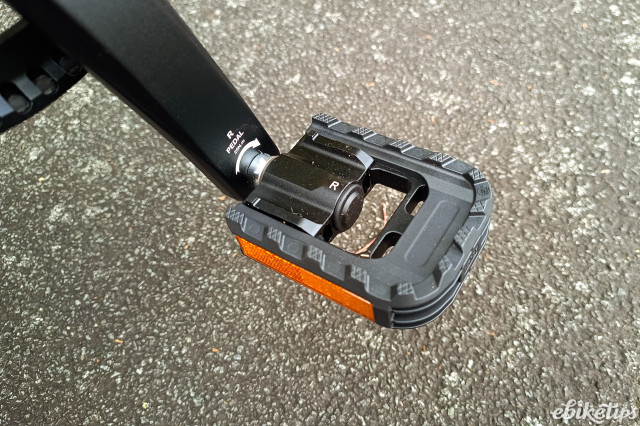
One of the folding pedals on my test bike developed a slight intermittent click, for example. I assume I could have got a replacement quite quickly, had I asked for one.
Were you to suffer a more significant issue, ADO told me the standard process would be to contact customer support and if the problem cannot be resolved online, they will arrange for the bike to be collected and taken to one of these repair centres. The timespan for it to be returned would vary according to the issue.
Conclusion
While it isn’t quite as compact or lightweight as you’d ideally want, the belt drive and dual-speed motor make the ADO Air One Pro really user-friendly and there are multiple ways you can set it up to carry cargo.
The flipside of this kind of motor is that it brings limitations when tackling steeper hills or when fully loaded, but if your local terrain and usage don’t together breach its thresholds, the Air One Pro offers really solid value for money.
All the deals displayed on our review pages are pulled from a constantly updating database feed of the best affiliate deals available. The criteria for deciding on what are the best deals is who is offering the lowest, delivered price. In most cases we will be showing the very best deal available online, but sometimes you may be able to find an item cheaper. If you can please feel free to post a link in the comments box below. To find out more about affiliate links on road.cc click here.

1 thought on “ADO Air One Pro”
Great write-up! The smooth torque sensor really makes this bike. So many budget e-bikes feel jerky, but ADO nailed it. I actually have a question about how these sensors hold up long-term. How did you find the real-world range?