


- This topic has 4 replies, 5 voices, and was last updated 1 year, 1 month ago by
 .
.
-
Topic
-

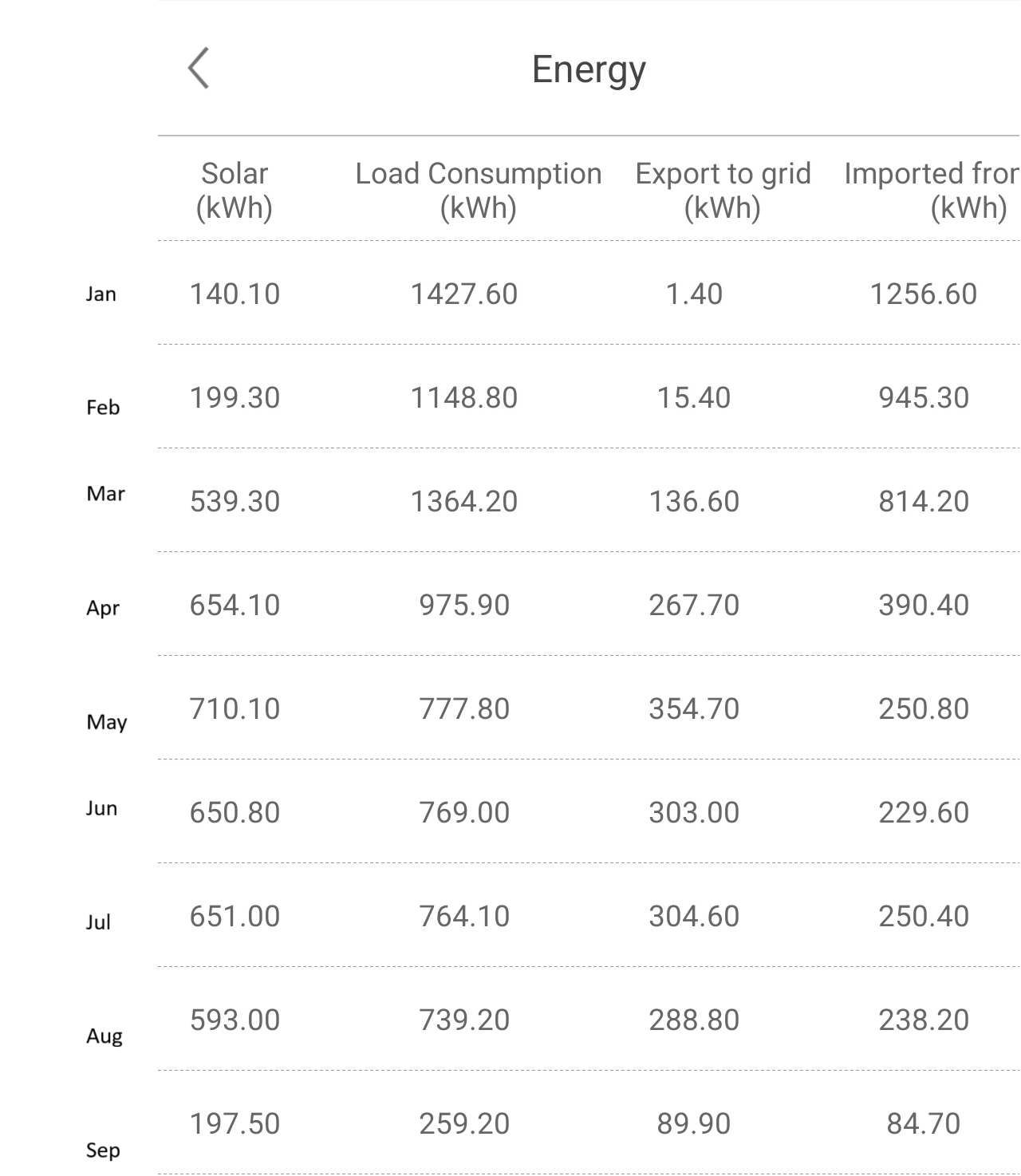
I’ve looked at the 5 months from which the sun came out on 1 April to the end of August 2025 when it finally went in here in the south.
We’ve spent £23 on buying electricity in the period. Most of that is down to the slight inefficiency of the inverter and battery, about 80 kWh – the battery also seems to do a little bit of independent trading back and forth with the grid. Anyway, given our consumption from the panels (and via the battery) that’s about £325 we didn’t have to spend on electricity supply.
We had enough electricity to heat hot water, so we didn’t use any gas, so I reckon that’s a further £185 of gas supply costs saved there. We exported around 2000 kWh, which nets us £320 cashback.
I make that £830 saved or recouped from our most productive months. That should get to around £1000 for the year. Obviously, both sets of standing charges carry on year round at 90p a day together, so £325 each year. That makes having a gas connection quite a costly proposition as we barely use it for 6 months in the year and gas supply is no longer the cheap item it was just a few years ago.
As September progresses, of course solar output falls, we start having to use gas for hot water again (the panels face west so don’t start generating ’til mid morning) and probably from October have the gas central heating on. November to January are the “every little helps” months – we got around 250 kWhs in the last period, so about £70 saved on electricity supply, depending on the tariff. You generate more when the sun is in the sky, facing your panels and there’s little cloud. Sometimes a layer of thin cloud usefully diffuses the sun so you can get decent output before it hits the panels directly.
That’s a payback period of about nine years for the cost of the install. That’s quite a gamble that we won’t need to spend anything on fixing the system in all that time.
In a year, we produce about double what we use. The solar panels (one of the cheapest bits of the system) have a maximum output of 5 kWh. We just fitted as many as we reasonably could on the roof. The battery, (which was about half the cost of the cost of the install) is also 5 kw capacity, so gives you 2-3 hours’ supply in the evening after generating has stopped. Its maximum charging / discharging rate is about 2.5 kWh.
Doing washing / drying / dishwasher / hot water and if possible cooking while you’re generating during daylight (afternoon in our case) makes a difference as to how long your battery will keep you going in the evening – the idea is for it to last out until generating starts the next day.
Both items are getting better and cheaper with time. If there’s a power cut, the system shuts down just like with everyone else. Islanding, i.e. being able to use solar energy in isolation from the grid is next-level complicated, apparently.
Installation requires scaffolding for the roof you’re installing on, some spare wall space for the equipment (a garage is ideal), ideally near your consumer unit. Survey work is done via Google Earth and phtotos you supply. Our install was a day’s work for three guys with the power off for less than an hour.



- You must be logged in to reply to this topic.