


- This topic has 19 replies, 10 voices, and was last updated 4 years, 6 months ago by
Slartibartfast.
-
CreatorTopic
-
March 15, 2022 at 6:14 pm #31998
Arthur B Vale
Hey friends, I am suffering from astigmatism. My vision is blurry, and I can’t ride my bike without glasses. At the time, one of my cousins advised me to have Lasik eye surgery. In his opinion, after LASIK, I can see everything clearly without the help of specs. At the same time, I am really worried about my riding future. Riding is my passion. I can’t imagine life without riding. Is there anyone who has undergone LASIK? Please help me. Please share your experience after LASIK. Is there any chance that this will have an impact on my riding career?
-
CreatorTopic
-
AuthorReplies
-
And if you pay for the top
And if you pay for the top tier mapping stuff it goes down to .1% chance of issues or something. The surgeon was very clear about the risks, it was pretty terrifying, but he had also never ever had an issue in 1000s of procedures so I felt safe enough. I did it through optical express, surgery in meadowhall. By far the worst part was the journey home on a very sunny day.Gm_Crop
That is old data Ian, modern
That is old data Ian, modern clinics have retreatment and complication rates down to 2-4%.Overall patient satisfaction rates are extremely high, yes there are always outliers, but I’ve seen plenty of contact lens related infections as well as injuries from damaged spectacles. There’s nothing risk free in life.
IanMSpencer
I would say if the OP is
I would say if the OP is considering the risks minute then they haven’t understood the risks. I would not characterise the risks as minute. 10% of patients need further treatment to deal will pain or vision problems according to the NHS. While the risks of permanent damage are small, they are there, and are not long term but immediate.I think the best advice I’ve seen is that if the practitioner has not given a clear listing of the potential side effects before treatment then you should look elsewhere. Another good observation was that expectations being high and the process being oversold is a problem. I do remember the anxiety of my mate who had it done when he had double vision and nobody told him that it was a common problem.
I am sure many would consider the risks worth taking, and as I said, if it had been a mature technology 20 or more years ago, I would probably have done it, but don’t dismiss the risks as negligible.
Dogless wrote:
Dogless wrote:I weighed it up and the risk was so minute, and the benefits so great that I decided to do it. Thanks for your opinion though ?And frankly that’s the only thing that matters, no one else’s opinion counts.
The risk of serious complications now or later is very low. If you want to worry about anything 50 years in the future then A) how very prescient and B) try climate change ?
I weighed it up and the risk
I weighed it up and the risk was so minute, and the benefits so great that I decided to do it. Thanks for your opinion though ?jh2727
Another option to look into
Another option to look into is lens replacement surgery.
wtjs
I had it done a year ago and
I had it done a year ago and I’m so glad I did
An alternative view is:
Vision is really good, and glasses are not too bad. You’re in it for the long term, and ‘a year ago’ isn’t. The probabilty of something going wrong after these laser procedures to could well be very low, and I have no experience other than 50 years of glasses. The consequences of something going wrong are very bad.
Steve K wrote:
Steve K wrote:Gm_Crop wrote:firstly: nothing lasts forever, and you almost certainly will be back in prescription glasses eventuallyI’m interested that you say that, because when I had mine done I was told it should last for ever – but that it wouldn’t prevent presbyopia, so I would still need reading glasses in time (as has turned out to be the case).
I suppose that all depends on what you mean by “last forever”
Typical prescriptions trend from plus to minus (longsighted to shortsighted – or more accurately hypermetropic to myopic) from birth to mid 20s. There’s then a period of relative stability to around 40, when presbyopia starts to hit and near vision goes. Usually from early 40s on there is a slow plus shift, which for most people affects near then mid range and eventually distance.
The changes from 40 on are linked to changes in the crystalline lens, and no laser refractive surgery has an affect on this, hence eventually everyone gets cataract.
Obviously these are general trends, and can be fairly applied to populations as a whole, but cannot be taken as gospel for each individual.
So laser lasts forever, but that doesn’t mean your prescription (or lack thereof) will.
Hopefully that makes sense.
 Eton Rifle
I had laser surgery to
I had laser surgery to correct short sight and mild astigmatism back in the 1990s. By then, I was in my thirties, my eyes had started to dry out, and I could no longer tolerate contact lenses.The result was a success and it was just fantastic not to have to bugger about with glasses or contact lenses anymore. Twenty-five years later, I still have excellent distance vision but do now have to wear glasses for reading, as the surgery does not stop you getting near-sighted as you age.
I am happy to hear that LASIK
I am happy to hear that LASIK effectively works on most of you. This is an inspiration for me. I almost went for Lasik once but quit later since they said it had a prolonged recovery period, and I had a trip coming up. But I also have heard it doesn’t have a lengthy recovery period! I guess it depends on the clinic. Anyway, I hope it will not affect my long bike rides to muddy terrains and mountains!
I had it done a year ago and
I had it done a year ago and I’m so glad I did. It makes cycling so much easier, no more scratching daily glasses or having to take sunglasses and normal glasses if you ride into sunset. I never got on with contacts, but know plenty who do.The feeling of being able to take glasses off if it’s wet and still see is amazing, as is wearing any pair of sunglasses you want. I paid about £3300 for mine through optical express, which was the most expensive option but had a high chance of success and getting ‘better than 20/20’ vision, which is what I’ve ended up with.
If you can afford it, then go for it. I only did because I inherited some money and it seemed like a sensible thing to spend it on.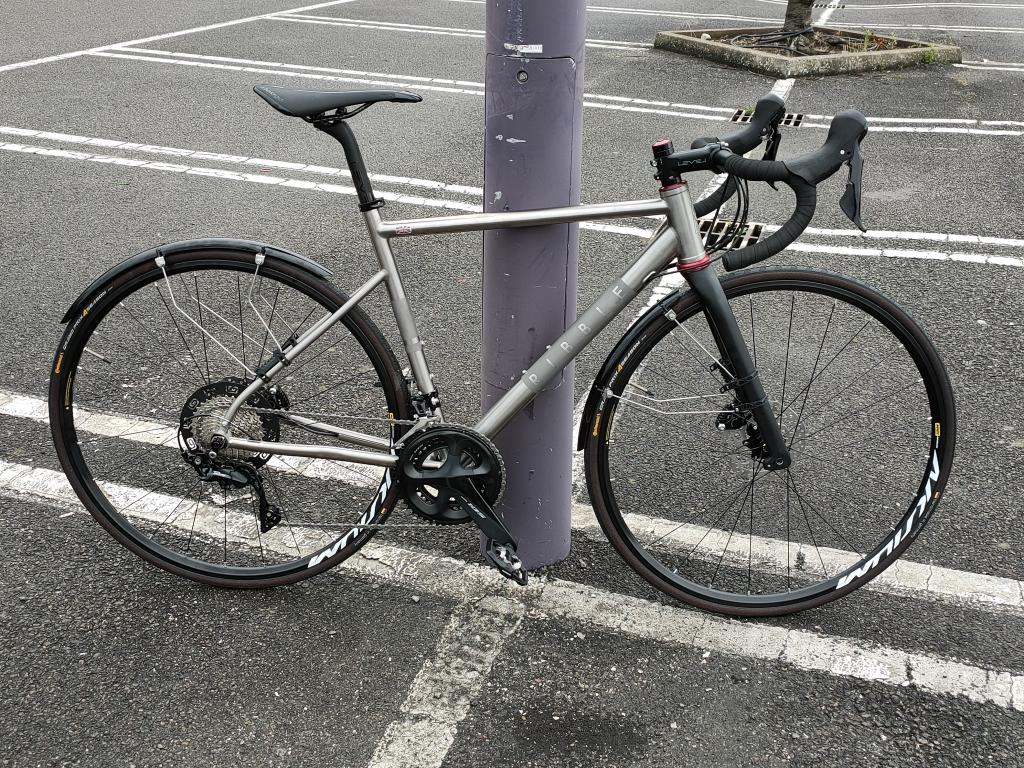 Steve K
IanMSpencer wrote:
IanMSpencer wrote:My eyesight has changed every few years over my life, there is nothing about laser surgery that stops the natural changes in the eye. However, the changes may be small enough to live with – with high prescriptions small adjustments can make a lot of difference, a near normal vision is easier for your eye and brain to cope with.Prior to my surgery, my eyes hadn’t changed in years – gradually decline from my teens to my mid/late twenties but then levelled off at around -5 each eye (I was 46 when I had the surgery).
My eyesight has changed every
My eyesight has changed every few years over my life, there is nothing about laser surgery that stops the natural changes in the eye. However, the changes may be small enough to live with – with high prescriptions small adjustments can make a lot of difference, a near normal vision is easier for your eye and brain to cope with.I wish it had been around 40
I wish it had been around 40 years ago. I have a high prescription (5.25 with 2.50 cyl – and the astigmatism is the killer – it means that contact lenses are problematic at that strength) and though I am statistically late to the world of reading glasses, I didn’t need them till my mid-50s, and even then could work around it, these days I ride with contact lenses which I only wear for riding – vision isn’t good enough for doing anything when combined with needing reading glasses – but I can see my Garmin with lots of fields and tiny maps well enough.My concern was always reliability of the op – and I have had friends who had repeat visits to deal with double vision, though eventually their problems were resolved. Although very reliable these days, getting damaged eyesight is a big risk. Contact lenses also have an element of risk if you are careless about them.
So, I don’t think it’s a cycling question, I think it is basically about whether getting rid of glasses is a quality of life thing enough to motivate you to have a serious, albeit routine, operation.
Steve K
Gm_Crop wrote:
Gm_Crop wrote:firstly: nothing lasts forever, and you almost certainly will be back in prescription glasses eventuallyI’m interested that you say that, because when I had mine done I was told it should last for ever – but that it wouldn’t prevent presbyopia, so I would still need reading glasses in time (as has turned out to be the case).
-
AuthorReplies
- You must be logged in to reply to this topic.