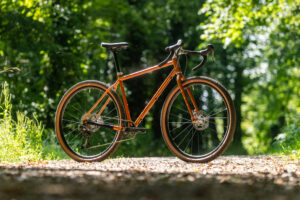
The Genesis Vagabond defies conventional bike categories. Built for big adventures and capable of being loaded up and taken just about anywhere, it’s comfortable, versatile, and ready for the long haul, though a few minor components might not suit everyone. Could this be the bike of choice for your biggest adventures?
Genesis Vagabond 20 – Technical Details
With a blend of mountain bike and drop-bar components, the Genesis Vagabond resists conventional categorisation. Best described as a drop-bar adventure bike built for off-the-beaten-track riding, it’s designed to tackle a wide range of terrain.
There are two models in the Vagabond range. The more affordable Vagabond 10, priced at £1,800, comes equipped with a Microshift drivetrain, cable-actuated disc brakes, and a similar finishing kit to the higher-tier model. Genesis also offers the frameset separately, priced at £900.

Both fully-built bikes share the same frameset, constructed from double-butted, cold-drawn, seamless Mjolnir chromoly steel, with a matching chromoly fork. Offered in five sizes (XS to XL), the two smallest sizes roll on 27.5in wheels, while Medium and above use 29in wheels. All come fitted with 2.35in-wide tyres as standard.

The frameset is packed with mounts, highlighting its adventure-ready design. The fork features three-bolt Anything Cage mounts, low-rider rack mounts, full mudguard mounts, and internal routing for a dynamo hub. The Medium frame has three sets of bottle mounts on the internal downtube, the lower two sitting close together, enabling you to adjust a standard bottle cage’s position, use an oversized cage, or a combination of a bottle with spares cage, similar to the 76 Projects Micro Piggy Stick On.
There’s another set underneath the downtube, as well as mounts on the seat tube and top tube. At the rear, there are pannier and mudguard mounts, along with external cable routing and provisions for an internally routed dropper post, while the gear cables run externally along the downtube. There are also ports at the top and bottom of the downtube for routing a rear dynamo light, and while it might not be their intended use, they could also be used for Di2 cabling if you wish to fit electronic shifting.
A notable modern feature is the T47 bottom bracket shell, replacing the previous 68mm BSA. The larger, threaded shell is set to improve stiffness, compatibility, and durability, although some may see it as a less convenient choice in remote areas where spares are scarce.

The medium-sized bike weighed without pedals, came in at 13.6kg. While that may sound heavy to some, for bikepacking riders an extra kilo or two is unlikely to make a significant difference.
Genesis Vagabond 20 – Components
The groupset is SRAM Apex XPLR Eagle 12-speed, paired with an 11-50T cassette and a 34T chainring mounted to a Genesis own-brand chainset. Braking is also handled by SRAM Apex hydraulic discs, with a larger 180mm rotor up front, uncommon for drop-bar bikes, and a more standard 160mm rotor at the rear.

Wheels are Amplitude G120s, with a reasonably wide internal rim width of 29mm, supplied tubeless-ready and fitted with 2.35in Maxxis Ikon tyres (60 TPI version, with EXO casing). Axle spacing is mixed, reflecting the bike’s hybrid nature: the front uses a 12x100mm thru-axle typical of road and gravel bikes, while the rear adopts a 12x148mm Boost spacing more commonly seen on mountain bikes.
The finishing kit comprises entirely Amplitude components. It’s a practical, no-frills setup that includes a straight inline seat post, a Madison Flux Switch saddle, and a wide G120 drop handlebar, which scales with frame sizes: 440mm on XS and Small, 460mm on Medium and Large, and a notably broad 480mm on the XL. All frame sizes come with a short 60mm stem to suit the bike’s off-road geometry.
Genesis Vagabond 20 – Performance
Some might argue a hardtail mountain bike or even a full suspension would be a better choice for day rides or adventures focused mainly on technical terrain. Where the Vagabond truly excels, however, is on multi-terrain rides covering long distances, especially when most of the route is over unpaved roads or rough back lanes. The multiple hand positions offered by drop bars make these kinds of rides far more comfortable.

Despite approaching almost every bike test with an open mind, I couldn’t help but have preconceptions about the Vagabond before riding it. It was refreshing to have most of those doubts dispelled on the very first ride. This is never going to be a fast bike, as speed and racing are about as far removed from its design intent as you can get, but it covers ground with surprising ease. The weight is noticeable on climbs, but with the right mindset, it can feel rewarding rather than punishing.

The riding position is very relaxed for a drop bar bike. The wide handlebar plays a big role here, encouraging a tall, slightly reclined posture. I found myself staying seated more often than climbing out of the saddle, which is unusual for me.
You might assume the wide tyres would slow things down, but with many gravel racers now opting for mountain bike tyres, wider doesn’t necessarily mean slower. The Maxxis Ikon tyres roll smoothly, though they’re definitely on the loud side, sometimes making it feel like you’re riding a tractor.
Running the tyres tubeless at pressures in the low 20s, similar to what I’d use on a cross-country mountain bike, makes a noticeable difference to comfort, particularly off-road on rougher terrain where the wide tyres soak up buzz and chatter. On backcountry roads, the frame and fork themselves become more apparent, but they add to the comfort and overall ride quality, making the Vagabond ideal for long days in the saddle.
The saddle feels excellent, with a scooped shape and just enough padding — important for a bike designed for extended saddle time. The only component letdown is the bar tape, which is thin and basic. Given the bike’s intended purpose, better quality, well-padded tape would be a simple but worthwhile upgrade, and something Genesis should address.

The SRAM Apex drivetrain performs reliably, though shifting feels somewhat clunky and slow. Gear changes are accurate, but the jumps between gears can be quite noticeable. For unloaded riding, the gearing is good, but the Vagabond might be one of the few off-road bikes where a double chainring setup would appeal, providing a smaller gear for long, slow climbs and a bigger gear for faster road sections, smoothing out the gear gaps.

On rougher terrain, the Vagabond is remarkably capable and often brought a smile to my face with where it could go. The relatively tall bottom bracket, large tyres, small gearing, and wide handlebar all combine to make it feel sure-footed, getting up some technical climbs that I would never have thought possible. On descents, it’s no mountain bike in terms of speed, and for the steepest sections a dropper post would be welcome for some, but it remains confident when picking a line and descending carefully.
The handlebar is wide compared with modern gravel bikes, where aero trends have narrowed bars. There are plenty of comfortable hand positions along the long flat tops and long reach sections, especially paired with the SRAM Apex levers, which also have long reach. I only found myself getting into the drops on the steepest descents, where the superb, powerful brakes really shine. It’s easy to modulate braking from the hoods on most gentle or fast forest road downhills.

Handling takes some getting used to, particularly early on, with a distinct difference between low-speed and high-speed descending. The tall riding position and short 60mm stem, combined with a typical gravel bike head angle, mean that low-speed handling is quick and nimble, but still manageable, even on steep climbs. At higher speeds, body positioning becomes more critical; the bike demands more lean and weight transfer to corner confidently, relying on the tyres to hold the line. On loose descents, the bike is easy to drift but becomes a lot of fun once you build confidence.
When it comes to fitting bags and bottles, the options are almost endless. The frameset’s mounts are chunky and feature long threads, designed to accommodate whatever cages, racks, or accessories you choose to carry.
Genesis Vagabond 20 – Verdict
The closest bikes to the Vagabond in terms of design intent include the Surly Grappler and, to some extent, the Cotic Cascade or Ritchey Outback. The Outback is less extreme in its purpose, better suited to less demanding and technical off-road riding, but still great fun to ride.

At £2,300, the Genesis is really well priced compared with other options, where purchasing a frameset is more common. The Surly Grappler frameset costs around £850, with a build option priced at £2,100 that features a specification closer to the Vagabond 10, including Microshift and cable disc brakes. The Cotic Cascade and Ritchey Outback framesets have been updated since they were tested by off.road.cc, with the Cotic now starting at £970 and the Ritchey now coming in just under £1,400.
The Vagabond is something of an outlier, not fitting neatly into any one category. It blends mountain bike and gravel bike traits, boasts more mounts than you can count, and delivers a ride that’s comfortable enough for long days in the saddle. When speed isn’t the priority, the aim is simply getting from A to B, whatever terrain lies ahead, the Vagabond manages it with ease and puts a smile on your face while doing so.
You might also like:
- The widest gravel bike handlebars you can buy: broad bars for bikepackers
- Opinion: We need to be more specific about what ‘gravel’ is
- Ten top tips for Alpine riding trips
About the bike
Tell us what the bike is for, and who it’s aimed at. What do the manufacturers say about it? How does that compare to your own :
Wanderer
The Vagabond 20 truly lives up to its name; a masterful wanderer. Immensely fun on the gnarliest excursions. Irresistibly loadable. Infinitely adaptable.
It’s the bike that will tackle any terrain thrown at it on your quest for newly discovered trails or whilst filling in unknown corners of the map.
State the frame material and method of construction. List the components used to build up the bike.:
Genesis specification:
Frame & Fork:
Genesis Mjolnir Steel Tubing
Genesis Vagabond Chromoly Fork
Drivetrain:
SRAM Apex XPLR Eagle
1 x 12-speed
34T Chainring
11-50T Cassette
Components:
Amplitude G120 Handlebar
Amplitude G100 Seatpost & Stem
Madison Flux Switch Saddle
Wheelset
Amplitude G120
Six-Bolt Rotor Mounts
100 x 12mm Front
148 x 12mm Rear
Brakes
SRAM Apex XPLR Hydraulic Discs
180mm Front & 160mm Rear Rotors
Tyres
Tubeless Ready Maxxis Ikon
27.5 x 2.35″ X-Small & Small Sizes
29 x 2.35″ Medium, Large & X-Large Sizes
Pre-taped Tubeless Ready Rims
Tubeless Valves Included
Frame & Fork
How much suspension travel does the fork have?:
Was the bike comfortable to ride? Tell us how you felt about the ride quality.:
How was the bike in terms of sizing and angles? How did it compare to other bikes of the same stated size and intent?:
Overall rating for frame
How much suspension travel does the rear end have?:
Did the bike feel stiff in the right places? Did any part of the bike feel too stiff or too flexible?:
Tell us about the build quality and finish of the frame:
Tell us about the geometry of the frame:
Key numbers for a medium-sized frame include 415mm reach and 475mm effective reach, 617mm stack.
160mm head tube, 69 head tube angle and 74 seat tube angle, which are the same on all sizes. The BB drop is 72mm, but XS and S are 47mm to account for the 27.5in wheels and fork offset of 50mm with a 1,122mm wheelbase.
Tell us about the materials used in the frame:
Riding
How did the bike transfer power? Did it feel efficient?:
How would you describe the steering? Was it lively, neutral or unresponsive?:
Tell us some more about the handling. How did the bike feel overall? Did it do particular things well or badly?:
Rate the bike for sprinting:
Any comments on sprinting?:
Rate the bike for high speed descending
Any comments on high speed descending?:
Rate the bike for technical descending:
Any comments on technical descending?:
Rate the bike for flat cornering:
Rate the bike for technical climbing:
Any comments on technical climbing?:
Rate the bike for climbing efficiency:
Any comments on climbing efficiency?:
Rate the bike for agility:
Any comments on agility?:
Drivetrain
Rate the drivetrain for performance:
Any comments on drivetrain performance?:
Rate the drivetrain for durability:
Rate the drivetrain for weight:
Tell us some more about the drivetrain. Anything you particularly did or didn’t like? Any components which didn’t work well to:
Rate the drivetrain for value:
Any comments on drivetrain value?:
Wheels & tyres
Rate the wheels for performance:
Any comments on wheel performance?:
Any comments on wheel durability?:
Rate the wheels for weight:
Rate the wheels for comfort:
Rate the wheels for value:
Rate the tyres for performance:
Any comments on tyre performance?:
Rate the tyres for durability:
Any comments on tyre durability?:
Rate the tyres for weight:
Controls
Rate the controls for performance:
Rate the controls for durability:
Any comments on controls durability?:
Rate the controls for weight:
Rate the controls for comfort:
Any comments on controls comfort?:
Rate the controls for value:
Any comments on controls value?:
Tell us some more about the controls. Any particularly good or bad components?:
Anything else you want to say about the componentry? Comment on any other components (good or bad):
Summary
Did you enjoy riding the bike?:
Would you consider buying the bike?:
Which components had the most effect (good or bad) on the bike’s performance? would you recommend any changes?:
Would you recommend the bike to a friend?:
Rate the bike overall for performance:
Rate the bike overall for value:
Use this box to explain your score:
All the deals displayed on our review pages are pulled from a constantly updating database feed of the best affiliate deals available. The criteria for deciding on what are the best deals is who is offering the lowest, delivered price. In most cases we will be showing the very best deal available online, but sometimes you may be able to find an item cheaper. If you can please feel free to post a link in the comments box below. To find out more about affiliate links on road.cc click here.