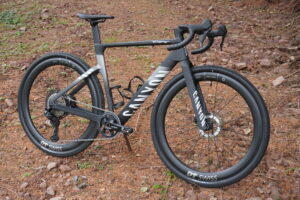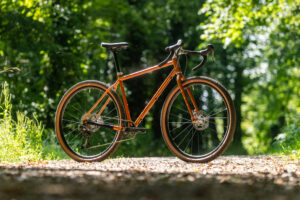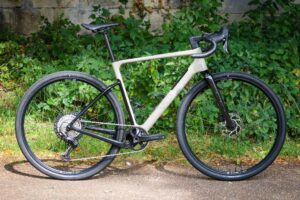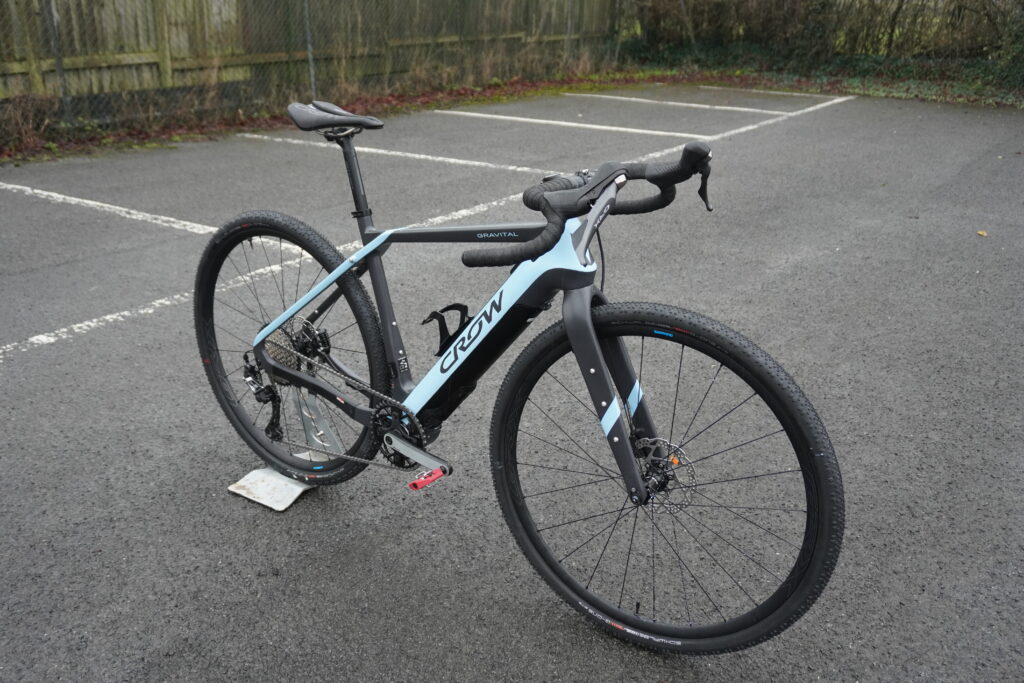

The Crow Gravital UL is a carbon-frame, lightweight e-bike that provides a balance between motor assistance and effort and delivers a rewarding ride. Said ride is excellent owing to the frame compliance and other components, however, the motor and its display presented some problems.
- Best gravel wheelsets 2023 – fast and furious off-road wheels
- Gravel bike geometry: everything you need to know
- Best gravel bikes under £1,500 in 2023 – drop-bar machines that won’t break the bank
Spanish company Crow specialises in e-bikes and all models in its range use smaller and lighter batteries and motors than many other e-bikes. The gravel bike line-up comprises models with carbon and aluminium frames, including the carbon frame UL 2 (pictured here), fitted with a Fazua drive system.
Crow Gravital UL2 – Design and aesthetics
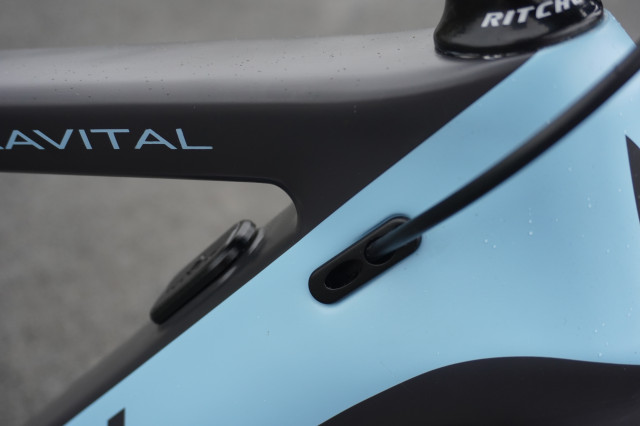
The UL2’s carbon frame and fork are nicely finished, and the Fazua powertrain and battery system are well integrated. The seatstays and chainstays are squared off, giving the tubes a chunky appearance. Several mounts are present on the frame, including two bottle cage mounts within the frame, three-bolt mounting on the fork legs and rack, and mounts for mudguards front and back. The UL2 model is fitted with a 1x Shimano GRX drivetrain but the frame can also be fitted with a double chainset. There is also a cable port for dropper-post integration.
Crow Gravital UL2 – Components
Our UL2 weighed 13.8kg with battery and motor in place (without pedals), which compares well against many other e-bikes of the same nature. At the heavier end, the excellent Cairn BRAVe is 18.6kg, although this is with much larger 2.25in tyres and a Shimano Steps motor with a significantly larger 630Wh battery.
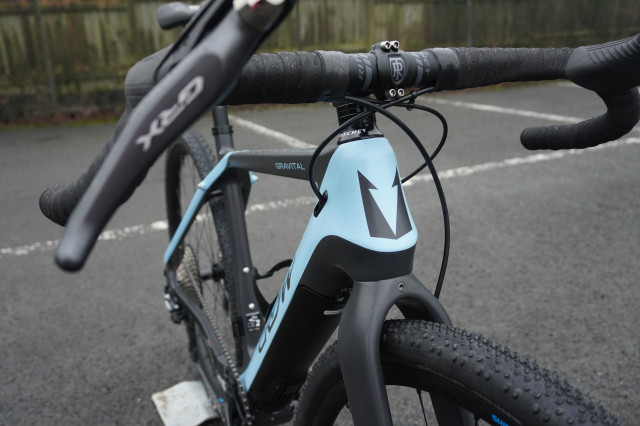
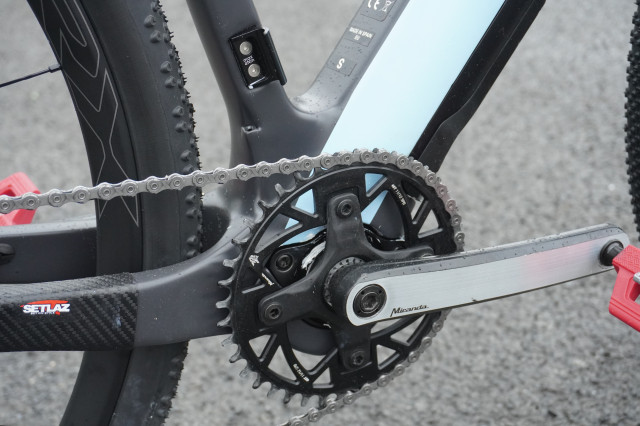
The GRX 810 mechanical groupset on the UL 2 with its 11-42T cassette and 38-tooth chainring performed well on all test rides. The finishing kit includes a Ritchey Beacon handlebar, stem and seatpost.
The Miranda Classic Plus chainset gave a minor problem because the thread on the basic aluminium unit was poor and needed to be chased in order to accept a pedal.
Although Shimano GRX 570 wheels are not commonly used for OEM bikes, they stood out thanks to their excellent rigidity and grip compliments of the 45mm Schwalbe G-One Bite tyres. The maximum tyre clearance supported by Crow is 45mm, or 650×2.25in, however, if mud clearance is not your main concern there is some additional room for a little wider tyre.
Crow Gravital UL2 – Performance
The Fazua motor has barely any noticeable drag. Combined with the bike’s weight, it helps create a platform that is useable without assistance, especially if you ride in areas without steep hills. Because of its lightweight, unlike many e-bikes, the UL2 can be ridden above the 25km/h speed where assistance stops – just like an unassisted bike. This was especially noticed on flatter terrain, both on- and off-road.
Fazua claims the battery and motor weigh 3.3kg. It is possible to completely remove them and replace the void with a cover, and this would drop the overall weight to 10.5kg for completely unassisted riding.
Under power when climbing, both with and without assistance, the frame feels stiff overall, adding to the bike’s fast, almost race-like feel. The size small’s short 372mm reach and 65mm stem make for quick handling that can be tricky to control while going uphill on steeper sections. The handling is also a bit too quick on descents but this can be solved by switching to a longer stem to slow things down.
On the small frame, the Ritchey Beacon handlebar is 42mm wide when measured at the hoods, with a low 80mm drop and 36-degree flare. This translates into a 54cm-wide bar in the drops. The higher and wider hand position in the drops makes slower and more technical downhill sections far more enjoyable.
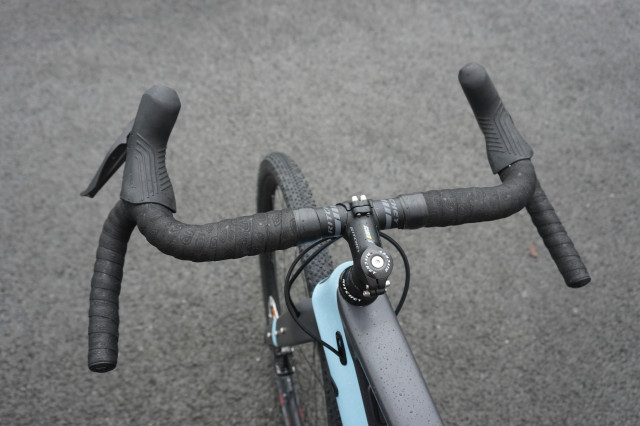
The Gravital’s uphill performance is not purely down to the motor but rather the taller front end, wide handlebars, and fantastic Schwalbe G-One Bite tyres and the way these components work together. The G-One Bite tyres were a true highlight as they never lost traction with the Fazua motor on steep climbs. The open tread also meant that mud was never an issue.
All UL models are only available in three sizes, spanning small to large. At 168cm, I am at the top end of the recommended height for the small and, while standover was fine for me (measured at 760 mm) riders at the lower end of the suggested size range may struggle.
Crow Gravital UL2 – Comfort
One area where e-bikes can suffer is ride comfort. The frame, fork and components need to adhere to safety standards and this can often have an impact on ride comfort. The Crow Gravital manages to buck that trend and, while it can’t quite reach the levels of comfort achieved by non-assisted bikes, it is the most comfortable e-bike that I have ridden to date.
The rear is the most impressive, with a very smooth and comfortable ride quality that allows you to remain seated over rough terrain. The reasonably wide 45mm tyres do also help but it’s more the frame that helps mitigate trail chatter.
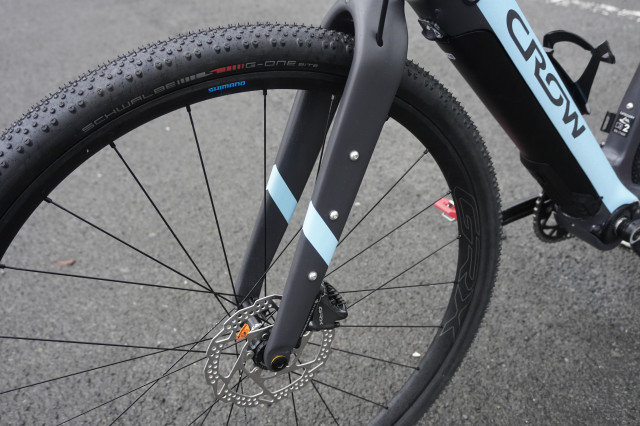
The front doesn’t quite match the same levels and, at times it can feel firm, but not to a level that is uncomfortable – and there is no noticeable buzz or high-frequency vibration that feeds through, which is often the biggest factor. Using thicker bar tape would improve things, as would a larger tyre, although the clearance may be a limiter. One idea is to perhaps use a tyre insert that will help reduce tyre pressures.
Crow Gravital UL2 – Fazua drive system
Fazua is among the well-known brands producing a lighter style drive system with a claimed total system weight of 4.6kg. A smaller battery helps to keep the weight low but the total range is less than that of larger, heavier systems from Shimano or Bosch. The main rival to the Fazua system is the recently released FSA E-System, which uses the same size battery.
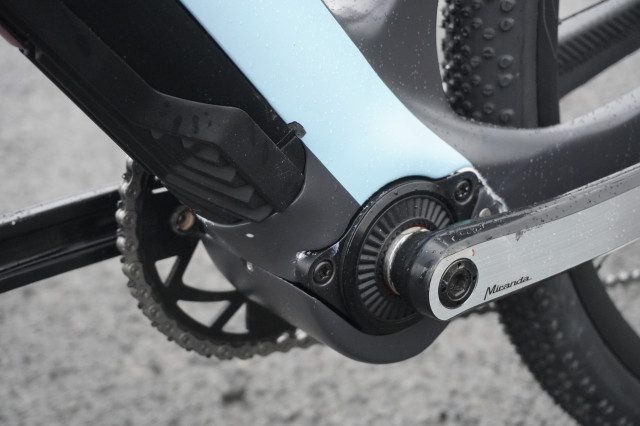
The Fazua Ride 50 Evation can still produce a maximum of 250W and deliver 55Nm of torque. Shimano Steps E5000 has a maximum torque of 40Nm, while Bosch Performance CX has a maximum torque of 85Nm and FSA E-System has a maximum torque of 42Nm.
The battery capacity of the Fazua Elation 50 is 252Wh, which accounts for the majority of the weight savings. All Bosch and Shimano Steps systems have larger batteries with Bosch ranging from 300Wh to 725Wh and Shimano Steps from 425Wh to 630Wh.
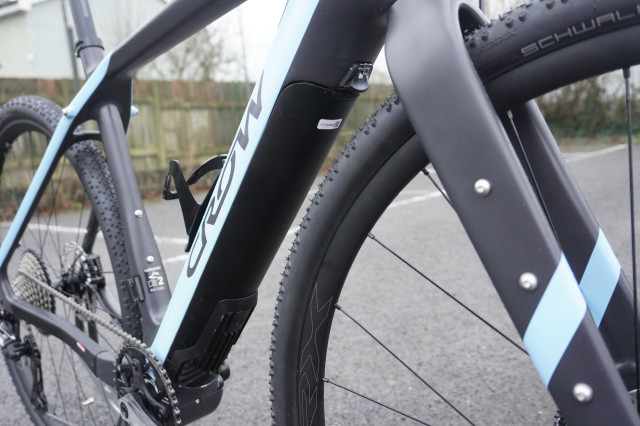
The Fazua really shines in the way it manages the assistance. In the lowest Breeze/Eco mode setting there are no sudden spikes of power. Each power level can be customised in the app, but I found that the default options were suitable for Breeze and River settings.
The battery range will vary depending on the terrain, the amount of power you apply and the level of assistance used but, for me, the distance was consistently between 55km and 63km, with climbing figures of up to 1,500m. This was achieved riding a variety of terrain, ranging from more sedate rides with more tarmac and less climbing to more technical tracks with steeper accents.
I almost always used Breeze/Eco mode. With the default settings, Breeze mode provides 100W of assistance, which was sufficient to take the edge off the steepest climbs while also helping to climb some technical sections in a way that would not have been possible on an unassisted bike.
The middle River setting provides a maximum of 210W, which is particularly useful for steeper climbs. Rocket mode provides up to 250W as standard, but it also delivers power very abruptly for any effort and is not constant, which is one area where I found it useful to adjust the settings in the app. Rocket mode also saw a significant drop in range; after a single, admittedly quite long 8km road climb, the battery was down to 2 of 5 on the display.
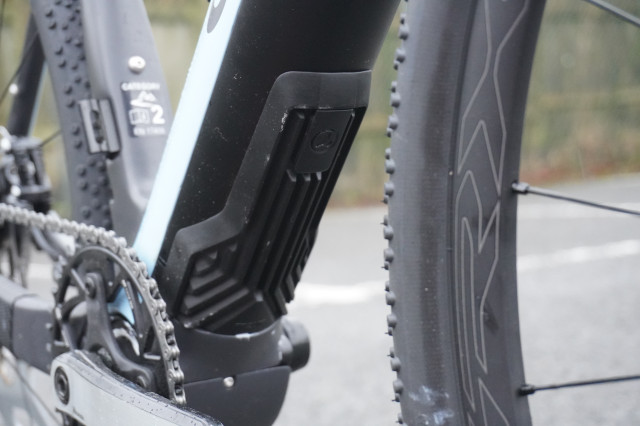
Compared to previous bikes tested with a Fazua drive system, including the Kinesis Range and Cairn E-Adventure the system appears to have been tweaked to improve how the power is produced, with lower cadence efforts in particular significantly improved. Another area where the Crow Gravital surpassed expectations was noise reduction from the battery connection area. There was no knocking noise while riding, which could be attributed to different fittings from Fazua or closer tolerances on the Crow frame. Some areas are slightly noisier than non-assisted bikes, the main one being shifting, which produces a louder noise and some reverb through the frame.
The Fazua display is fitted on the downtube, which I found really frustrating. Other bikes have their battery displays mounted on the top tube. When changing modes, you need to move to the left to make sure you are pressing the right button, and you must turn your head sideways to the right to view the battery level. Fazua makes a handlebar mount, that I believe should have been installed on the bike. There were also times when it was difficult to read the display and the battery level or mode because of the angle and the tiny LEDs.
We approached Willy Losa, CROW’s Director of Marketing who had this to say about the display, “Crow is offering two possible setups to control battery assistance. You can choose between the minimalist frame-integrated Remote FX or the accessible Dropbar Remote RX control on the handlebars. This feature is currently available upon special request but will be implemented in the website within the normal purchasing process starting on April”
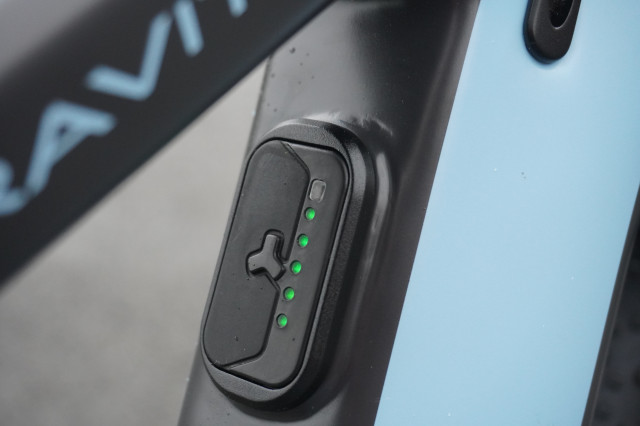
Although this would likely be fixed by Crow or Fazua, I experienced problems with the motor switching to the unassisted mode or dropping down levels, which made it more important to watch the display and aggravated the issue. Fazua did have a function to switch to ‘Rain Mode’, removing the touch panel element, but touch sensitivity can now be controlled via the app. The main benefit of this is to remove the need to cycle through all the power levels.
To charge the battery, it needs to be removed from the frame and while this makes swapping the battery easier, I much prefer the simplicity of charging with the battery installed. Crow also produces an accessory designed to carry an additional battery that can be strapped to the top tube of the bike, which costs £324 plus an additional £75 for the carry bag. While this is far more convenient than other integrated systems, a larger battery capacity is a better option in my opinion.
Crow Gravital UL2 – Verdict
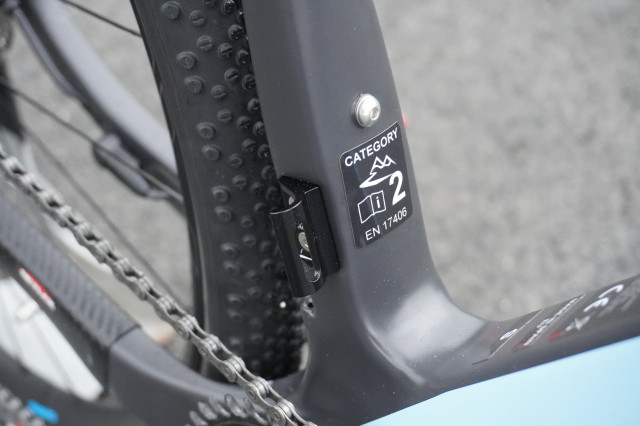
There are many areas in which the Crow Gravital e-bike was impressive; the geometry, handling and comfort, all of which are better than any other e-gravel bikes I’ve tested. The Fazua motor was problematic, and the location of the display proved to be very frustrating. The frame quality is excellent and with no noise from the battery connection, the frame tolerance on the fitment appears to be very good. The only problem with the frame itself is the seatstay accessory mounts that stand proud and rubbed my legs when pedalling.
Compared to the £3,900 Kinesis Range, the components and the frame of the £4,424 Crow alone are worth the extra spend, although the Range does have a better-positioned display. The £1,400 price difference to the Cairn E-Adventure is more difficult to justify, with the extra comfort the biggest area of improvement.
Canyon produces the Grail:ON with a carbon frame, Bosch Performance CX motor, double the battery size (500Wh) and similar Shimano GRX components. The specification level is tough to beat, with a lack of accessory mounts being a major drawback. The Grail:ON is a few kilos heavier, with the 7.0 version weighing 15.6kg (just 2kg more than the Crow).
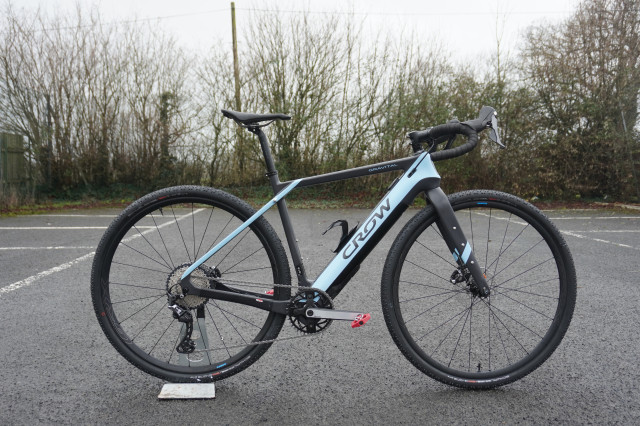
The Crow Gravital UL2 is an impressive bike, with comfort and handling levels that are far superior to most e-bikes I’ve tested. While the Fazua motor is far from perfect and can be a compromise, the biggest area of frustration is where Crow has placed the display unit. It makes it far more difficult to check and use, and increases range anxiety.
You might also like:
- Your complete guide to Canyon’s e-bike range
- off-road Opinion – E-bikes aren’t a menace, it’s all about trail etiquette
- Are e-MTBs the great leveller?
About the bike
Tell us what the bike is for, and who it’s aimed at. What do the manufacturers say about it? How does that compare to your own :
The perfect balance.
If you were looking for a bike with a dedicated gravel top-class groupset from Shimano, the GRX 800 series, and in a package with an ultra-light carbon fiber frame and fork, this is your bike.
The best of the top carbon technology with its magical impacts absorption and absolute agility to nail it in the most technical sections of your gravel rides.
State the frame material and method of construction. List the components used to build up the bike.:
- WEIGHT: 13.5 Kg / 30.2 Lbs
▪ FRAME: CROW Gravital UL Carbon
▪ FORK: Crow FRK CF
▪ SHIFTERS: Shimano GRX 810 1×11
▪ BRAKES: Shimano GRX 810
▪ DISC ROTORS: Shimano RT-54 160mm
▪ RD: Shimano GRX 810
▪ FD: w/o.
▪ CASSETTE: Shimano CS-M7000 11-42 11s
▪ CHAIN: KMC X11
▪ MOTOR: Fazua Ride 50 Street
▪ CRANKS: Miranda Classic Plus
▪ CHAIN RINGS: Miranda 38T
▪ WHEELS: Shimano GRX 570
▪ TIRES: Schwalbe G-One Bite Evo TLR
▪ TIRE SIZE: 700×45
▪ HANDLEBAR: Ritchey Comp Beacon
▪ GRIP: Ritchey WCS Pave
▪ STEM: Ritchey WCS 4-Axis
▪ SEATPOST: Ritchey 2-Bolt
▪ SADDLE: Essax Eón CrNi
Frame & Fork
How much suspension travel does the fork have?:
Was the bike comfortable to ride? Tell us how you felt about the ride quality.:
How was the bike in terms of sizing and angles? How did it compare to other bikes of the same stated size and intent?:
Overall rating for frame
How much suspension travel does the rear end have?:
Did the bike feel stiff in the right places? Did any part of the bike feel too stiff or too flexible?:
Tell us about the build quality and finish of the frame:
The finish was good, and tolerances especially around the motor and battery seem very good. There was no knocking, or rattle from the connection points and this has been an issue on previous Fazua motored bikes.
Tell us about the geometry of the frame:
Maximum tyre clearance, 700×45 or 27.5×2.25″
Reach 377.8mm
Stack: 527.7
Wheelbase: 1024.9
Head angle: 71.5 degrees
Seat tube angle: 73.25 degrees
Tell us about the materials used in the frame:
Riding
How did the bike transfer power? Did it feel efficient?:
How would you describe the steering? Was it lively, neutral or unresponsive?:
Tell us some more about the handling. How did the bike feel overall? Did it do particular things well or badly?:
Rate the bike for sprinting:
Rate the bike for high speed descending
Rate the bike for technical descending:
Rate the bike for flat cornering:
Rate the bike for technical climbing:
Rate the bike for climbing efficiency:
Rate the bike for agility:
Drivetrain
Rate the drivetrain for performance:
Rate the drivetrain for weight:
Tell us some more about the drivetrain. Anything you particularly did or didn’t like? Any components which didn’t work well to:
Wheels & tyres
Rate the wheels for performance:
Rate the wheels for durability:
Rate the wheels for weight:
Rate the wheels for comfort:
Any comments on wheel comfort?:
Rate the wheels for value:
Rate the tyres for performance:
Rate the tyres for durability:
Rate the tyres for weight:
Tell us some more about the tyres. Did they work well in the conditions you encountered? Would you change the tyres? If so, what:
Controls
Rate the controls for performance:
Rate the controls for durability:
Rate the controls for weight:
Rate the controls for comfort:
Rate the controls for value:
Summary
Did you enjoy riding the bike?:
Would you consider buying the bike?:
Which components had the most effect (good or bad) on the bike’s performance? would you recommend any changes?:
Would you recommend the bike to a friend?:
Rate the bike overall for performance:
Rate the bike overall for value:
Use this box to explain your score:
Product purpose:
The perfect balance.
If you were looking for a bike with a dedicated gravel top-class groupset from Shimano, the GRX 800 series, and in a package with an ultra-light carbon fiber frame and fork, this is your bike.
The best of the top carbon technology with its magical impacts absorption and absolute agility to nail it in the most technical sections of your gravel rides.
Build extra:
Bike Features
▪ WEIGHT: 13.5 Kg / 30.2 Lbs
▪ FRAME: CROW Gravital UL Carbon
▪ FORK: Crow FRK CF
▪ SHIFTERS: Shimano GRX 810 1×11
▪ BRAKES: Shimano GRX 810
▪ DISC ROTORS: Shimano RT-54 160mm
▪ RD: Shimano GRX 810
▪ FD: w/o.
▪ CASSETTE: Shimano CS-M7000 11-42 11s
▪ CHAIN: KMC X11
▪ MOTOR: Fazua Ride 50 Street
▪ CRANKS: Miranda Classic Plus
▪ CHAIN RINGS: Miranda 38T
▪ WHEELS: Shimano GRX 570
▪ TIRES: Schwalbe G-One Bite Evo TLR
▪ TIRE SIZE: 700×45
▪ HANDLEBAR: Ritchey Comp Beacon
▪ GRIP: Ritchey WCS Pave
▪ STEM: Ritchey WCS 4-Axis
▪ SEATPOST: Ritchey 2-Bolt
▪ SADDLE: Essax Eón CrNi
Product construction
Product performance
Product durability
Product durability extra:
Product weight
Product comfort
Product comfort extra:
product value
All the deals displayed on our review pages are pulled from a constantly updating database feed of the best affiliate deals available. The criteria for deciding on what are the best deals is who is offering the lowest, delivered price. In most cases we will be showing the very best deal available online, but sometimes you may be able to find an item cheaper. If you can please feel free to post a link in the comments box below. To find out more about affiliate links on road.cc click here.