


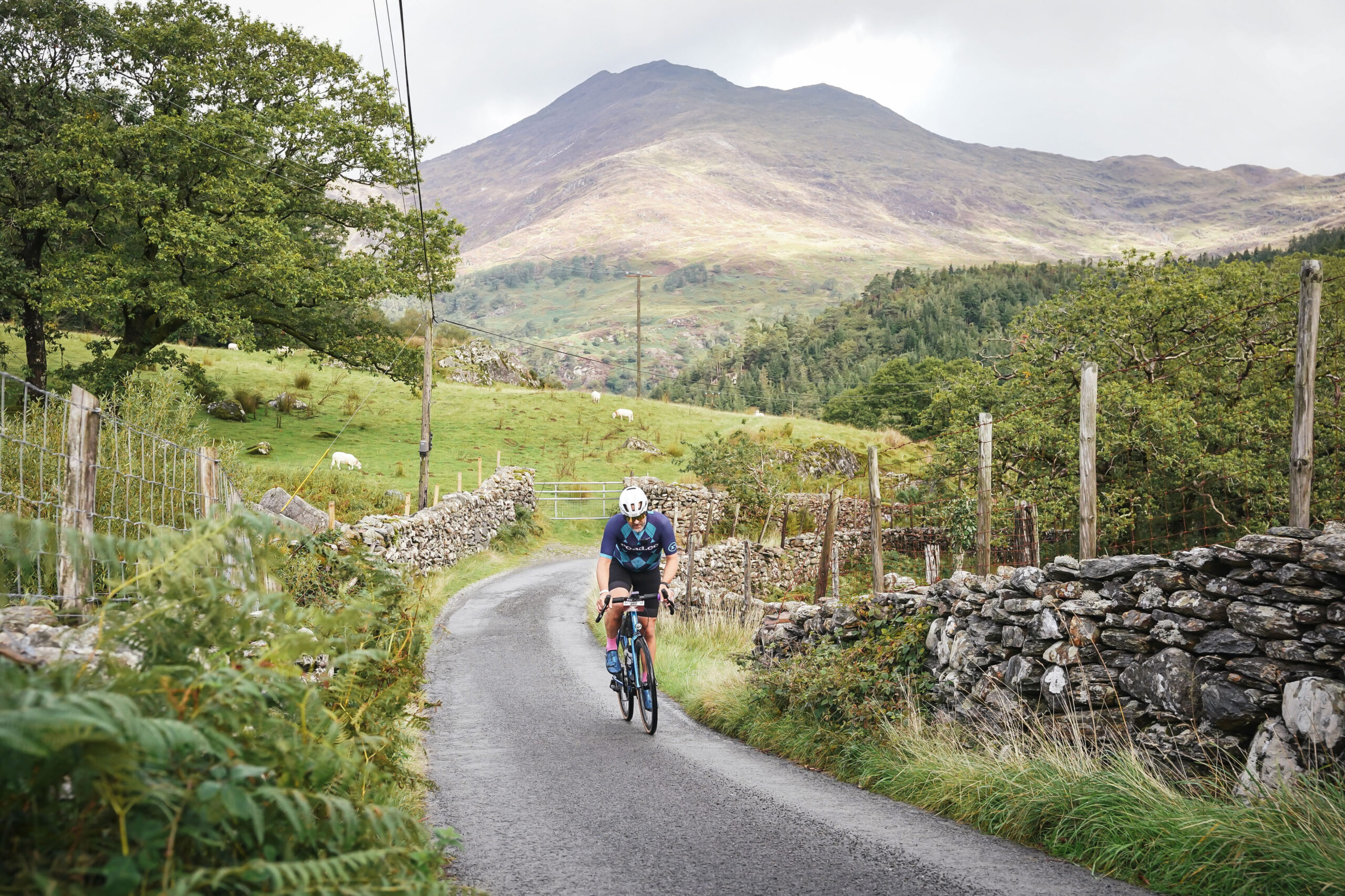

I love old main roads. Bits of high-grade tarmac, superseded and empty. Over time the lack of traffic volume means that nature starts to reclaim them, creeping in from the edges, tendrils heading out into the lanes. It has a deliciously post-apocalyptic feel to it, and on day two of the Ride Cymru, somewhere outside Builth Wells, the clouds have closed in and a light mist has pulled in horizons and deadened the ambience, until it’s just me and my freewheel, on smooth, deserted tarmac, and I’m left wondering, not for the first time: when the zombies take over on the telly, or the virus wipes out ninety percent of the population, why are there never any people on bikes? Everyone would be on bikes.
High grade tarmac isn’t something that Ride Cymru focuses on too much, and that’s to its credit. There are many, many splendid roads in Wales, and the trunk roads that snake up the lines of least resistance in the valleys are seldom the pick if you’re on two wheels.
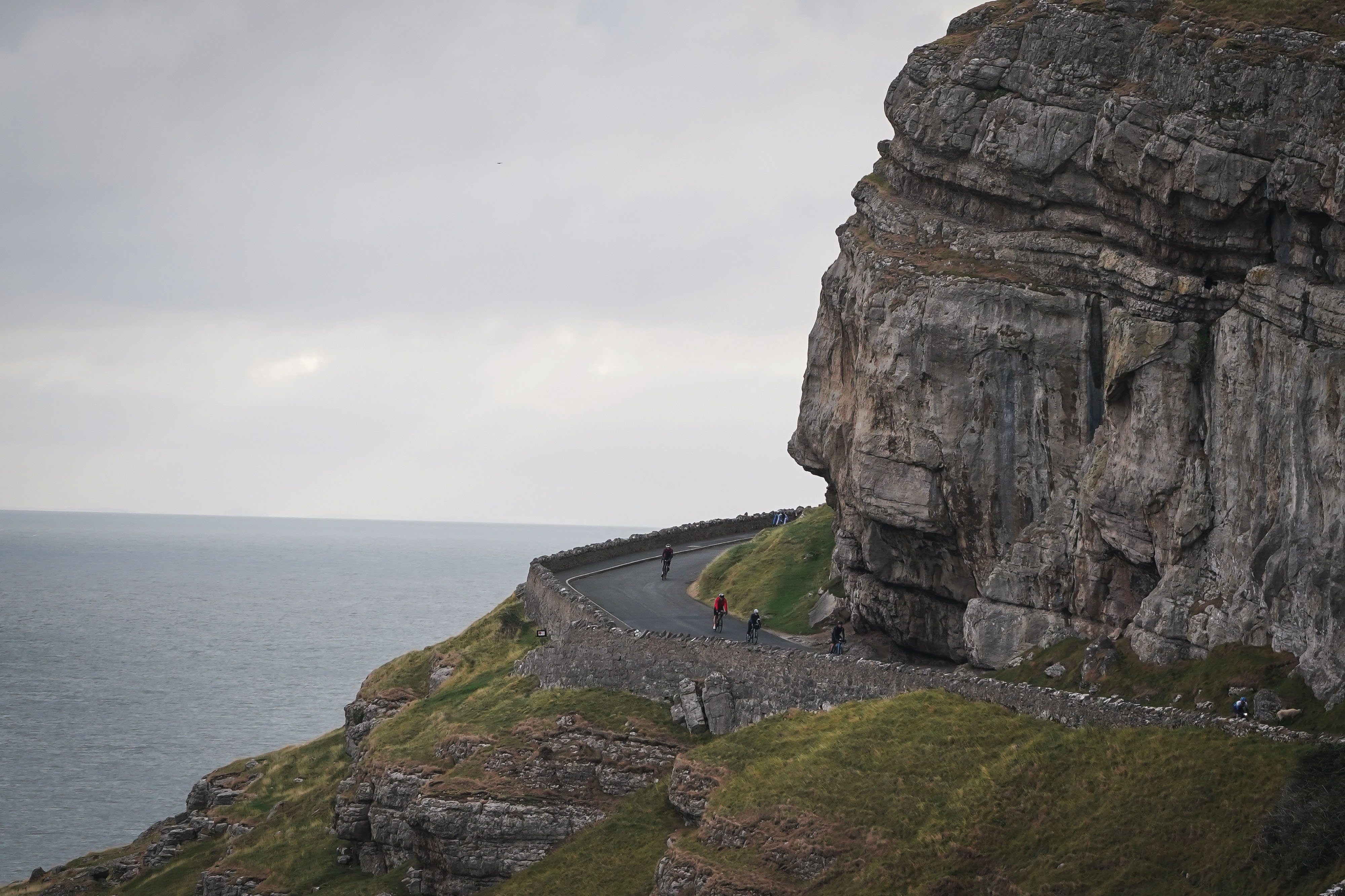
The bar is set high right from the off: from the seafront in Llandudno the ride immediately snakes round the headland of Great Orme on the Marine Drive toll road. It’s real edge-of-the-map stuff, and as you round the headland Eryri National Park looms on the horizon.
That’s for later, but not much later: the flat, fast roads up the Conwy valley and past the castle end abruptly with a hard right at Betws-y-Coed, and it’s time to settle into a grippy back-road climb for the first of many, many times over the three days it takes to get to Cardiff.
The lane spits us out high up in the mountains, and soon we’re haring past the Pen-y-Pass turn on the fabulous descent towards Llyn Gwynant and Beddgelert, and suddenly I’m on very familiar terrain.
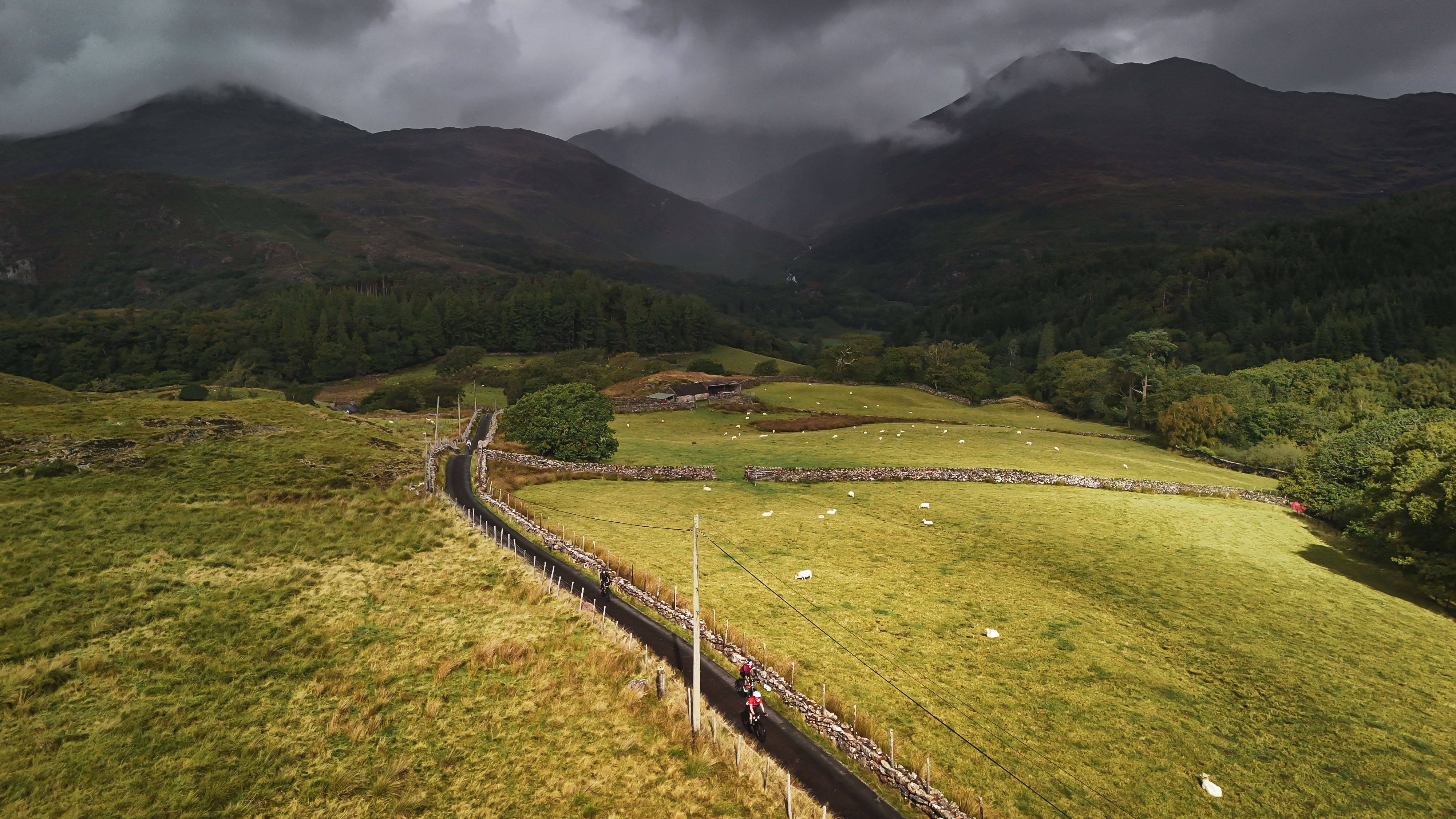
What kind of riding do you get on Ride Cymru? Well, it might not be sexy to say so, but these are my Audax roads. Every now and then, from the top of Snowdonia to the Usk valley, I suddenly find myself on lanes that jog memories – some good, some less so – of previous attempts to get from one end of Wales to the other, and, two-thirds of the time, back again: on the Bryan Chapman 600km (current success rate 50%), and the 3x200km Pauline Porter Populaire which somehow covers the same ground – Chepstow to Anglesey – in a more roundabout way, despite it being the same distance. You could ride a road bike, but something a bit comfier is better. There are plenty of gravel bikes on the start line.
> How I finally conquered the 600km Bryan Chapman Memorial audax ride
Lots of the Pauline Porter route is featured here, including the brilliant singletrack lane descent into Dolgellau in the Afon Wen Valley near the end of day one, which the Audax does in reverse. The final climb of that day, though, peeling off the A487 to grind up to the Aberllefenni slate quarries through the three gates, that you hope no-one will hold open and you’ll get a brief rest… I haven’t experienced that one before. It’s one of those roads you see from a long way off, and think: it’s going to be that one. And then you spend ten minutes hoping it isn’t that one, and then it is that one.
This isn’t an Audax though, where the entry is relatively cheap and the touch very light. This is a big juggernaut of a thing, brought to you by Threshold Sports, the same people that spent a decade organising Ride Across Britain.
There are a lot of people at the start, sure, but with a small group start and a climb first up it soon thins out, and the level of support is only really obvious as the day progresses. There are proper feed stops, mechanical assistance if you need it, and medi-bikes on the route looking out for anyone with issues. And, at the finish line of day one? It is an actual finish line, and there are people cheering you in. And a full bike workshop (handy if you didn’t check your brake pad wear before you left, not that I’d be so dumb…), and a marquee with food, showers, and a drying room for your gear. There’s also a bar and a big tent village, one of which has my name on it.
It’s the polar opposite of something like the Pauline Porter: a couple of nights at Kings YHA outside Dolgellau, and some scran if you arrive there in good time, but apart from that you’re more or less on your own. You have to make sure there’s enough room in your frame bag or your cargo pockets for your beers.
Day two is billed ahead of time as either the hardest day or not the hardest day, depending on who you listen to or what stats you look at, but by the time everyone rolls into Brecon there’s no doubt: it’s the hardest day!
I’ll go on record to say that the Machynlleth Mountain Road, in the sun, as you tear down to the fish and chip shop with all of North Wales laid out before you, is as good a bit of riding as you can enjoy anywhere in the world. But each time I do it, I think: I’ll bet this is no kind of fun at all going the other way. So, with a brutal cross-headwind trying to pitch you into a barbed wire fence on the steepest bit, it proves to be. There are plenty of people walking. There are even people walking on the flat bit…
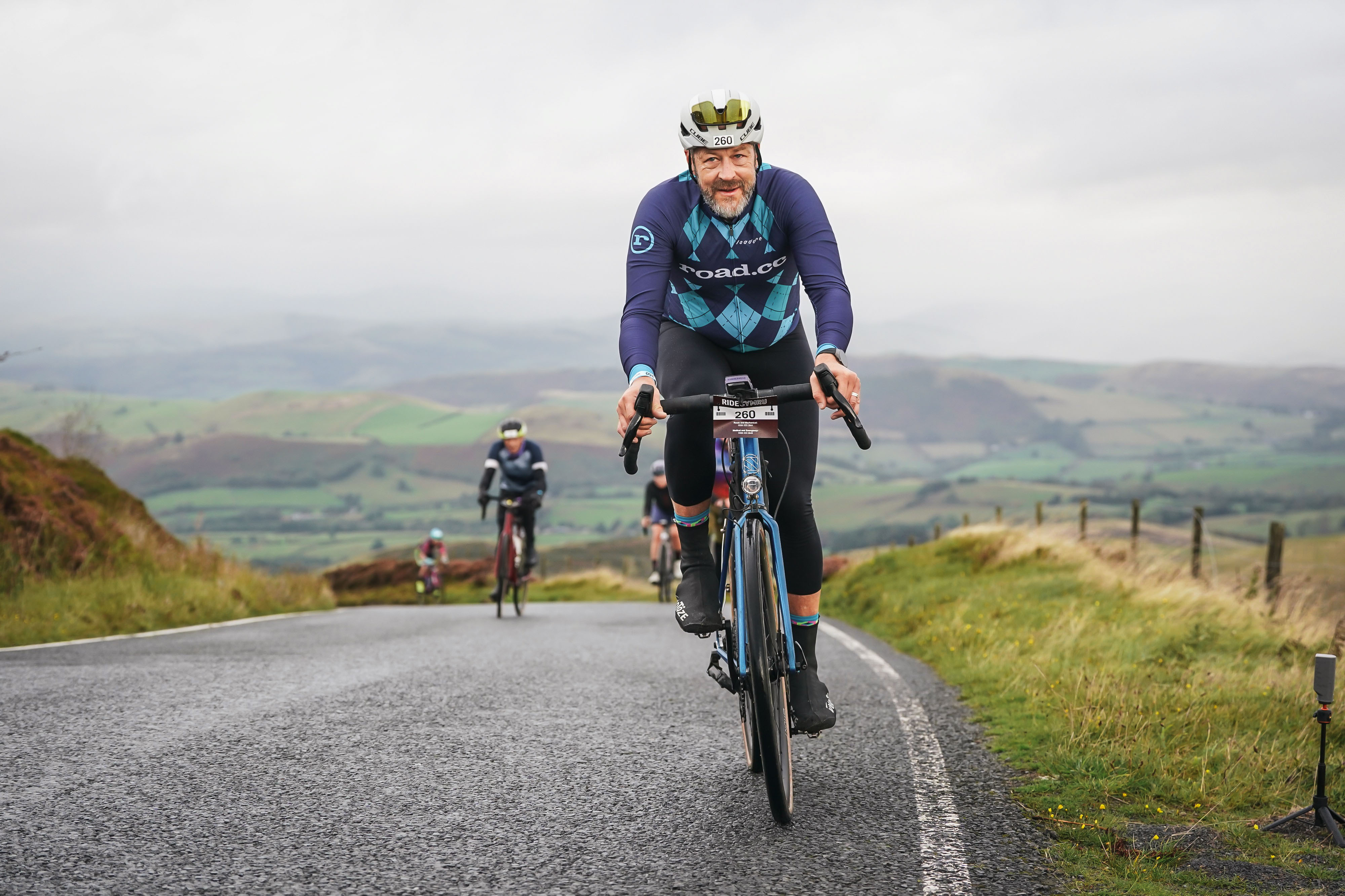
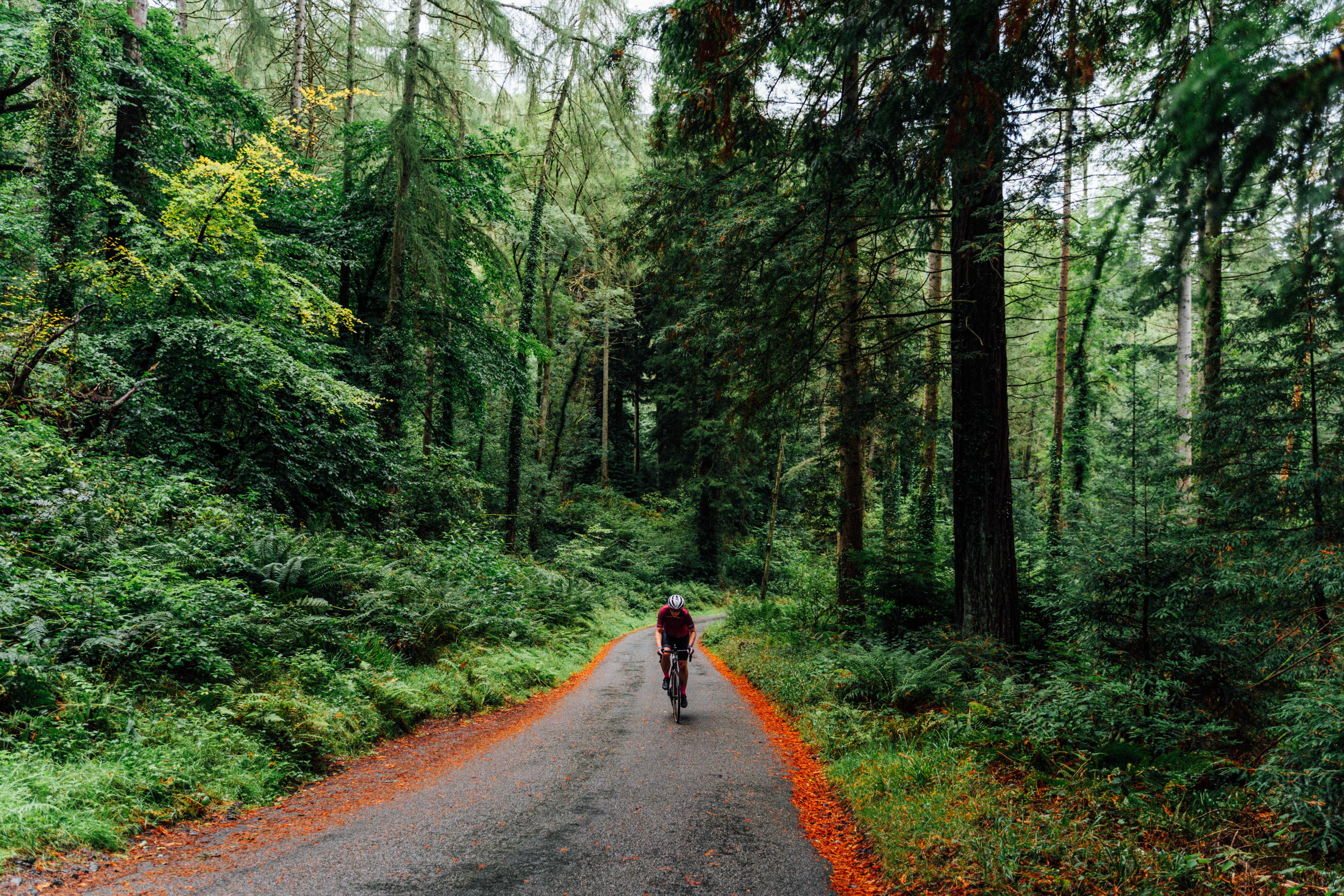
Better times are coming, though. Hafren Forest is a joy, and so is the gated NCN route in the Elan Valley, before some easy miles downhill on bigger roads: the first easy miles of the day.
Some people, it turns out, don’t see some of those bits: one of the advantages of a fully-supported ride like this is that if you’re genuinely not feeling it at one of the feed stops, you can elect to cut your losses and go again in the morning. On a day that I would describe as pretty attritional, I can’t say I blame anyone for making that call.
I’m sure the Sennybridge range is very pretty when conditions are kind, but it’s the very definition of bleak fighting a headwind on a blustery, foggy September day. It culminates in the strangest dual carriageway I’ve ever seen: basically two parallel farm tracks heading straight down off the mountain. I wonder if the speed limit is actually 70mph?
Rolling into the campsite feels like genuine success. A caravan on the finish straight is blasting out Queen. I like to ride my bicycle, but sometimes I also like it when it stops. For two days I have, surprisingly, been finishing fairly near the front. Not in a racing-for-the-win sense (there are proper fit lads taking hours out of me), more in a lunch-is-still-being-served sense.
Day three’s a different beast: by the time I roll out I’m more or less dead last thanks to some general faffing, and the pace to the bottom of the Gospel Pass in our backmarkers group is gentle and chatty.
We’re not treated to the full grandeur of the views back over the Marches as the clouds roll through on Wales’ highest bit of tarmac, but it’s still a genuine joy to be up on one of my favourite climbs. The descent is long and narrow and twisty, and pleasingly light on traffic on a day when there’s no view (or ice cream van) at the top. I bump into Lost Lanes author Jack Thurston, with kids in tow, near Abergavenny.
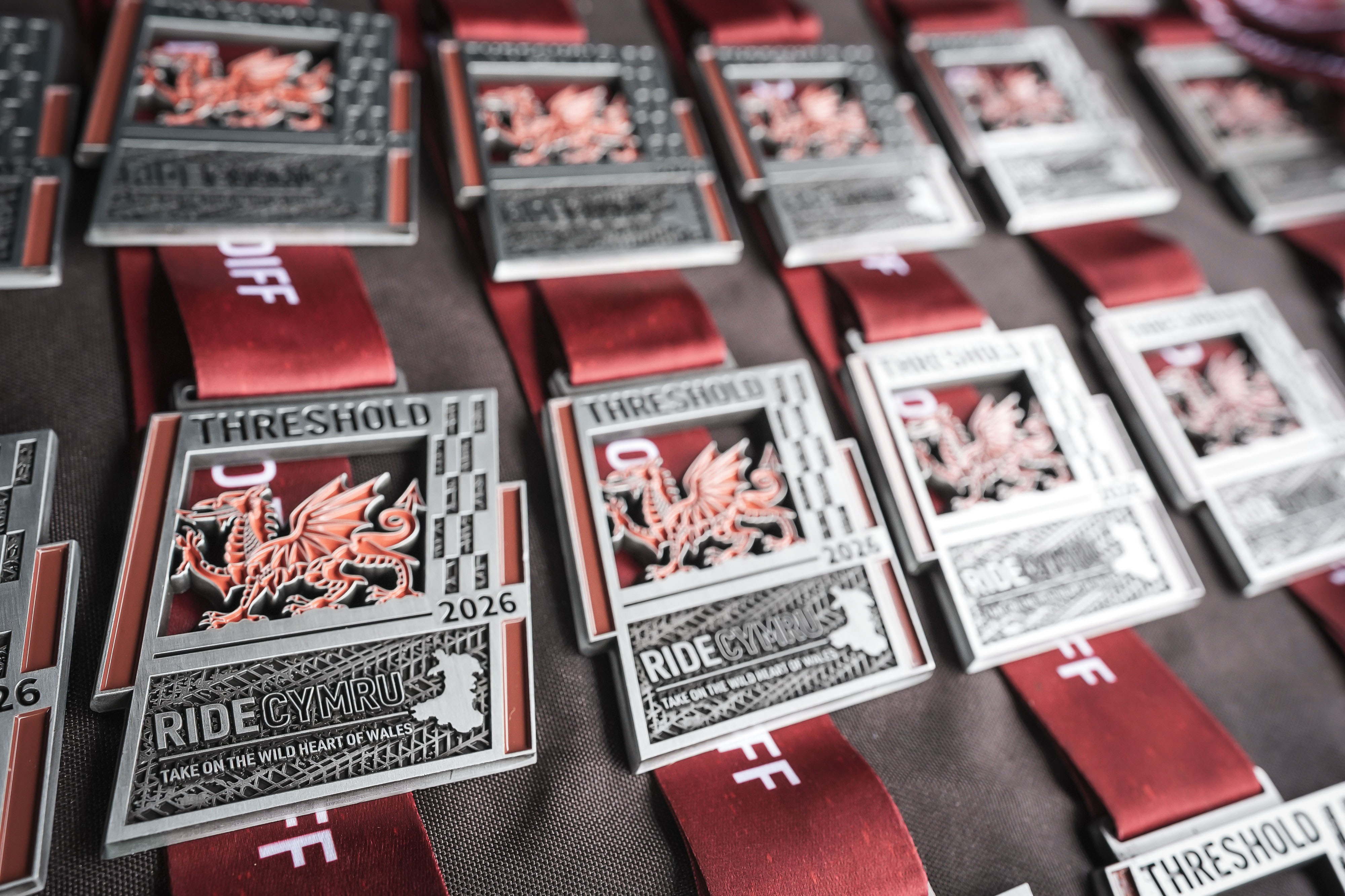
The flatter valley miles to Usk whizz by, and then suddenly we’re at the second feed stop, and it’s nearly done, and the legs feel strong. Time to put on a final push as the Hammerhead counts down the climbs on the lumpy last bit, until we’re on the final push up Caerphilly Mountain and all that’s left is to roll down through Cardiff to the finish zone, hand in my GPS tracker and claim my free pizza. Also, there is a medal. It’s the first time anyone’s given me a medal for doing a ride in quite a long time. It’s been a great three days.
So who’s Ride Cymru for? Threshold has pivoted to this ride from Ride Across Britain, and I think it’s fair to say that LEJOG has a cachet all of its own in terms of UK riding. For that reason it’s always going to attract a big audience, while Ride Cymru will be smaller: about 200 riders signed up in 2026, and next year the organisers are chasing a pretty modest increase.
There’s a lot of filler on LEJOG. Some of the riding is exquisite and breathtaking, while other bits are, well, not that exciting. The ratio on the Ride Cymru route is stacked much more in favour of the noteworthy. All three days feature some genuinely lovely roads, many of which – the Afon Wen valley, the Hafren forest, and the Gospel Pass, to pick just one one from each day – are world-class riding. The distance you have to cover on any given day is a bit shorter than LEJOG, and that means you’re less reliant on mile-munching over fast roads. You can go the pretty way, and it sure is pretty.
The USP of something like Ride Cymru is you get to have the experience of riding a long way on amazing and fairly remote (in UK terms) roads, but the level of organisation around the ride is a safety net that means that it’s much more accessible. There’s more of a mix in terms of abilities and background, which is a genuine positive in an era when cycling – along with seemingly everything else – seems to be more tribal than ever.
Would I spend my own money on coming again? Probably not, but I’m a chips-and-sleep-in-a-hedge kind of guy, and I’m comfortable in this kind of terrain without too much by way of support, so it’s not necessarily aimed at me. But other riders do want that, and for some people on the 2026 start line these were the longest, hardest days of riding they’d ever attempted. More again – a significant percentage, I’d say – were coming to Ride Cymru from other Threshold events, just because they like the way the company puts on a thing. And there’s a lot to like about the organisation: it’s slick and it’s professional, but it’s also personable and friendly.
Big thanks to everyone at Threshold, who worked so hard to make it a great weekend of riding for everyone. I hope the event continues to be a success.