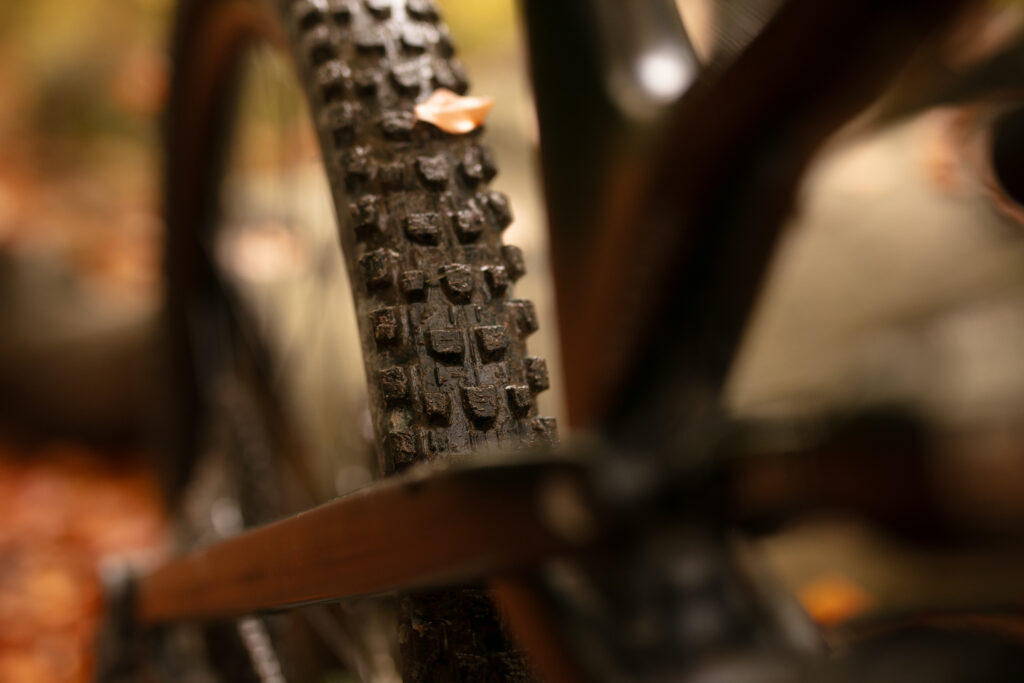

With the past couple of releases, Maxxis has, in a nutshell, taken cues from its more aggressively treaded tyres, and has tweaked them to suit slightly different riding styles, take for example, the Shorty-like High Roller III. The same has been done with the Dissector, but now employing an Assegai-esque tread, it combines the fast rolling nature of the older version, but revels in an increase in consistency, predictability, and all-out traction. In fact, it would be my go-to rear tyre if it were available in the 650b size.
- Best mountain bike tyres 2025 – quality rubber for trail, XC and enduro
- Pirelli Scorpion Race Enduro T DualWALL tyre review
- Mountain bike tyres – Everything you need to know about off-road rubber
Maxxis Dissector G2 MaxxGrip EXO+ – Technical details
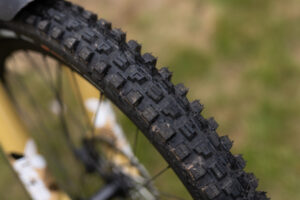
Having received a well-deserved update, the Dissector gets a rather different look. Now, it gets a more distinct 3-2-3 tread pattern that was made popular with the brand’s more aggressive Assegai, but pares it down to perform for downcountry to enduro riding, depending on which wheel it’s mounted, and the bike it’s on.
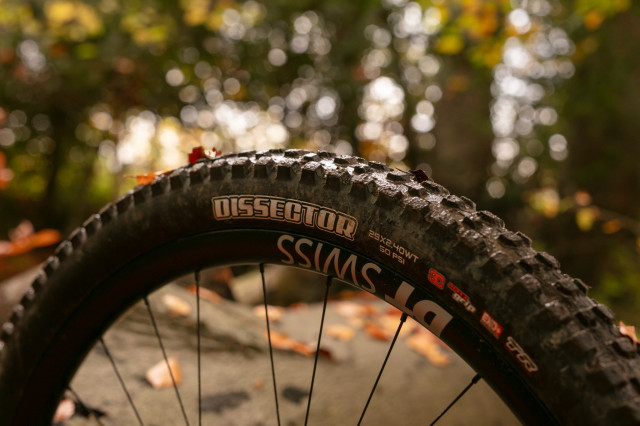
With that, Maxxis states that the tyre pairs well at the front of the bike with a Rekon or Forekaster at the rear on bikes of 130-140mm in travel. Then, the brand claims that it makes a great rear tyre on bikes of 150mm travel and more, in dry conditions.
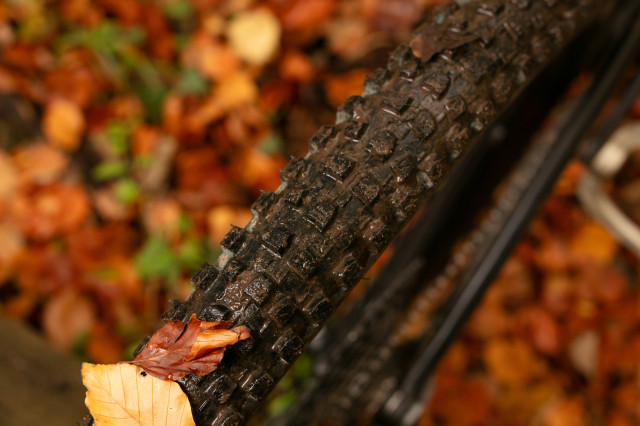
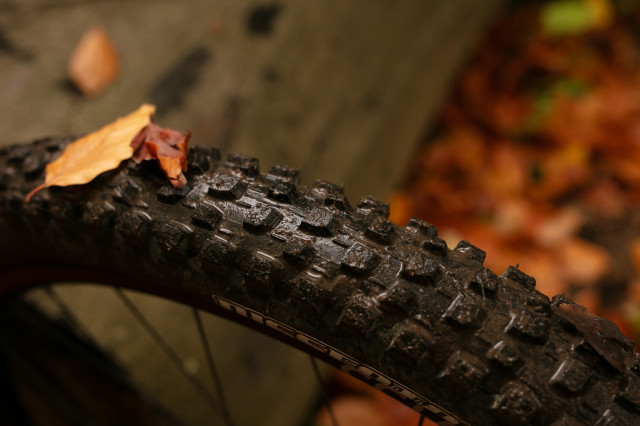
That tread pattern is heavily ramped, and almost every knob features some kind of siping. In fact, it reminds me a lot of Continental’s Xynotal, which equally follows a 3-2-3 pattern, with heavy ramping and plenty of siping.
It’s not just the centre tread that’s seen a change as the side knobs have been reshaped to provide a larger contact patch, resulting in a boost in traction and stability, says the brand. That is especially so on hard terrain, apparently. That 3-2-3 design promises to produce more traction under braking while helping the tyre conform better over trail imperfections. And in an attempt to fix a clear downside of the older Dissector, the new one gets transition knobs that are pushed further away from the centre tread, reducing the dead space that plagued the old model.
The new Dissector is available in almost Maxxis’s full suite of options, including Dual, MaxxTerra and MaxxGrip compounds, EXO, EXO+ and DoubleDown casings, but it only comes in one width – 2.4in. It’s also only available to fit 29in wheels.
As for weight, I’ve weighed my tyre to be 1,033g, where Maxxis claims 1,050g. For an EXO+ tyre, that’s not shabby at all.
Maxxis Dissector G2 MaxxGrip EXO+ – Performance
Now, I was quite the fan of the older Dissector, but I’m more than happy to admit that it was far from the perfect tyre. While it rolled and gripped reasonably well, its large gap between the centre tread and the shoulder knobs made it inconsistent when learning it over. Because of that, when receiving bikes with it mounted to the front, it was quickly changed, relegating it to a rear-only tyre.
The Dissector G2 was super easy to mount, requiring nothing more than a track pump, and when inflated onto a rim with a 30mm internal width, its profile is notably round. That’s definitely no bad thing, given that fast rolling is something of a priority for the tyre.
But with its recent overhaul, Maxxis has managed to retain the tyre’s fast rolling characteristic, while making it grippier, more predictable and notably more versatile.
Throughout my test, I rode with the tyre mounted to the rear wheel for the most part, on my 150mm trail bike, but mounted it to the front of a Lauf Elja, to see if Maxxis’s somewhat bike-specific claims rang true. I’m pleased to report that its performance is consistent regardless of which end of the bike it’s mounted to. Though, the brand’s somewhat bike-specific claims aren’t all that wrong, as a more aggressive tyre up front would suit a longer travel bike better, with the Dissector at the rear. The tyre then balances grip and rolling resistance in a way that’ll be applicable to the riding typically done on smaller travel bikes.
As mentioned before, thanks to the ramps and somewhat lower profile, the Dissector is a reasonably fast rolling tyre. It’s easier to pedal about than the DHR II, which is a welcome step for those who want to shed some rolling resistance. That’s in the MaxxGrip compound, too, which is notorious for being tough to pedal on.
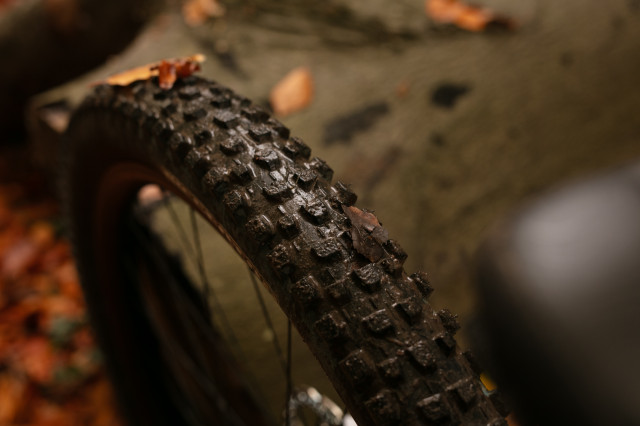
Much like the tyre of old, Maxxis reckons that this one is best used in drier conditions. And similarly to the old tyre, it’s surprisingly impressive, even as conditions get wetter. Granted, it’s not a tyre that I would want to be riding in softer and sloppier conditions, but as long as the surface is reasonably hard, the Dissector manages to find traction over surfaces where it’s not particularly expected. And to be honest, I mostly rode the tyre in wetter conditions without all that much to moan about, unless the trail got properly soft.
Maxxis’s move to space out the Dissector’s tread is one that’s improved the tyre to no end. It fixes that band of dead space thanks to its wider-positioned transition knobs, and the result is much more consistent traction and feel as the tyre is leant over. It feels very much like an Assegai, where there’s always a knob in contact with the ground.
Braking traction certainly isn’t anything to complain about either. There’s quite a lot of surface area provided by the braking edges, so it takes a surprising amount of effort to get the tyre to break free, only letting go of traction when you really want it to.
There are a couple of downsides, one more negligible than the other. The MaxxGrip casing does wear quickly, but that’s more than to be expected of a softer compound. If that’s something you’re worried about, go for the harder-wearing and faster rolling MaxxTerra rubber.
My main gripe is that it’s only available to fit 29in wheels. This would be my go-to rear tyre for year-round riding, but having moved to a mixed wheel bike, the option just isn’t there. In fact, sizes in general are fairly limited as it’s only available in a 2.4in width. That said, I can’t moan too much as it’s a pretty standard width that works well for the tyre.
Maxxis Dissector G2 MaxxGrip EXO+ – Verdict
At £75, the Dissector doesn’t stray from Maxxis’s usual pricing formula. It’s more affordable than Schwalbe’s Albert Radial with a similar construction, at £80. It does get that Radial tech, and its profile is a little more aggressive, so it’s really a matter of how much you value Schwalbe’s Radial construction.
A tyre that does give the Dissector a run for its money is the WTB Trail Boss. It’s currently retailing for £55, but with its squarer profile, it’s a notably lower rolling tyre. If it were my money, I’d rustle up the extra £20 for Maxxis’s offering.
Whether you’re looking for a reasonably light and fast rolling tyre for the rear of your trail or enduro bike, or looking for something more aggressive for a downcountry rig, the new version of the Maxxis Dissector performs. It rolls quickly, provides plenty of grip in an impressive range of conditions and generally, it’s a lot more predictable than the old version. If it were available in a 650b size, it would be my go-to.
You might also like:
- Mountain bike tyre pressures – everything you need to know
- Types of bike tyres – how to find the best tyre option for you
- Mountain bike tyre inserts – everything you need to know
Product purpose:
Build extra:
Casing options: EXO, EXO+, or DoubleDown
Use a 30-35mm wide rim for best performance
Tubeless Ready (TR)
Product construction
Product performance
Product performance extra:
Product durability
Product durability extra:
Product weight
Product weight extra:
product value
All the deals displayed on our review pages are pulled from a constantly updating database feed of the best affiliate deals available. The criteria for deciding on what are the best deals is who is offering the lowest, delivered price. In most cases we will be showing the very best deal available online, but sometimes you may be able to find an item cheaper. If you can please feel free to post a link in the comments box below. To find out more about affiliate links on road.cc click here.