

Now it’s been around for a couple of years, it was just a matter of time before T-Type went mechanical. Although SRAM’s Eagle 90 drivetrain costs more than rival mechanical alternatives, it brings consistent, easy-to-maintain, and reliable shifting in a package that’s lighter than most other Transmission drivetrains. With performance that’s not a stone’s throw away from AXS, it’s proof that the future needn’t be electric.
- SRAM MTB drivetrains 2025: SX to XX SL Transmission explained
- SRAM Maven Ultimate brake review
- SRAM Red XPLR AXS groupset review
SRAM Eagle 90 Transmission- Technical details
Belonging to SRAM’s latest Transmission ecosystem, it comes as no surprise that Eagle 90 shares an awful lot of cues in its design and its componentry. The main difference that sets Eagle 90 apart from any other modern drivetrain, away from SRAM’s lineup, is the Full Mount derailleur. Rather than being hung on a mech hanger, the derailleur mounts directly to a bike’s UDH (Universal Derailleur Hanger) mount, like SRAM’s other T-Type mechs.

With that, the drivetrain promises greater strength and improved shifting accuracy as this type of mount reduces flex while bolstering its joint to the frame. Similar to AXS T-Type systems, the Eagle 90 mech has no limit or B-tension screws in a bid to make installation and setup that bit simpler. SRAM then says that every part of the derailleur is replaceable.
Joined to the mech via a cable is the new Eagle 90 shifter. It’s shaped to follow a similar design to SRAM’s current crop of brakes that use the brand’s Stealth architecture. This means that it sits parallel to the bar and points the cable in a way that should help it look neater when used with headset routed internal cable routing layouts. A key difference in the shifter is that it only allows for up to two downshifts per lever throw. This is to help the drivetrain retain its ability to shift under load.
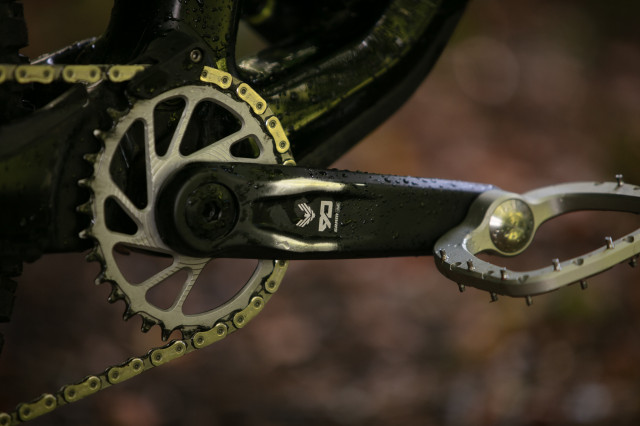
As for the crankset, it’s an aluminium number that’s available in lengths from 155mm up to 175mm. There’s then an e-MTB specific crank that’s available in a 150mm crank length. Just like others in the Transmission range, this crank comes with bash guards that bolt onto the stamped steel chainring. This chainring is a little weighty – it is stamped steel, after all, but aluminium rings can be bought aftermarket for not much money, and they’ll shed a bit of weight.
Elsewhere, Eagle 90 borrows kit from GX T-Type, including the cassette and chain. That means that the cassette provides a 520% range and a 55mm chainline.

With an uncut chain and a 165mm crank, SRAM Eagle 90 with a 165mm crank weighs in at 1,764g, which isn’t too bad at all. Shimano Deore XT M8100 comes in at around 1,800g with a 170 mm crank. SRAM GX Eagle weighs around 1,900g. To compare to other T-Type drivetrains, GX T-Type weighs 2,042g with 170mm cranks, and XX weighs 1,722g.
SRAM Eagle 90 – Setup
With the introduction of the T-Type ecosystem, SRAM brought a new method of installation, which is certainly different but, in the long run, much simpler. However, as there’s no motor in the mech to keep the chain over the new setup cogs, the Eagle 90 mech requires a 4mm allen to be pushed through a small hole on its underside. This locks it in place, allowing you to perfect its placement before tightening everything down.
Only then do you bring the cable to the party, and here, it’s all very similar to regular mechanical drivetrains. Nail the cable tension, adjust it with the barrel adjuster on the shifter, and you’re good to go. There are no tension or limit screws to battle with, so once you’ve got your head around the initial installation, the drivetrain is genuinely good to go from there.
SRAM Eagle 90 Transmission – Performance
While testing SRAM GX T-Type, I loved how fuss-free the whole system was. It was as fit-and-forget as I’ve gotten from a drivetrain, and impressively, the brand has managed to translate much of Transmission’s performance to a cable-actuated drivetrain.
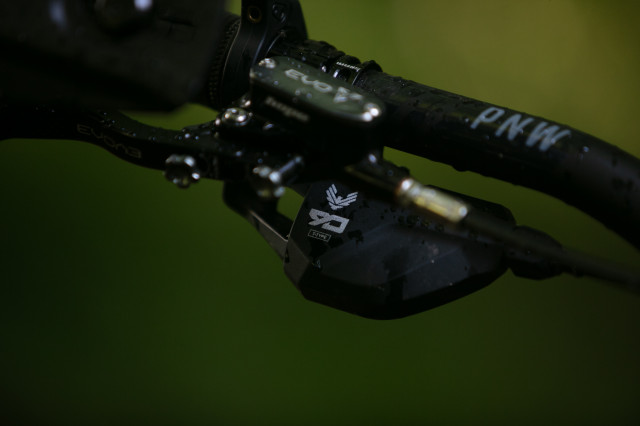
Firstly, once set up with proper cable tension, the quality of its shifts is excellent. Each tactile click of the shifter, gear changes are definite, prompt, and impressively smooth. As with T-Type drivetrains, Eagle 90 is a powerhouse when shifting under load, in both directions of the cassette. This makes for a drivetrain that you can absolutely abuse, whereas more conventional designs require the rider to let off the power as the chain moves to an easier gear. Instead, Eagle 90 allows you to switch off your brain when changing gear, meaning that you can keep the power coming while moving the chain around the cassette with very little drawback to overall power delivery.
Where each shift feels very purposeful and assured, general shifting is a little slower than other mechanical drivetrains. From gear to gear, there’s not all that much lag, but there’s a clear restriction in multi-shifts that is completely by design. As there’s no servo in the mech that precisely times when the chain switches gear, it is faster than the wireless T-Type stuff (pre-firmware update), but SRAM has built in a two-click restriction into the shifter, so it can only downshift twice per lever throw. Personally, I didn’t see much issue with this in practice, but you will be throwing that lever about a little more than with other systems. I can imagine it may irk some. However, as it shifts the chain from cog to cog, rather than throwing it over a whole cassette, it shifts a little slower than non-T-Type offerings, but that’s where the compromise lies – solid, calculated, and consistent shifts over all-out speed.

That said, with rapid-speed action on the levers, you can encourage the chain to drop through the whole block to the hardest gear. Granted, that’s never going to be something you would want or need to do.
As I mentioned before, I’m a fan of how little care T-Type drivetrains require, and a lot of that is because there are no cables to keep on top of. Obviously, Eagle 90 does have a cable, and cables are prone to stretch, which at some point will diminish the quality of shifts and a drivetrain’s stability. However, Eagle 90 has proven to be surprisingly resilient against cable stretch. Throughout my whole time with the system, I’ve adjusted the barrel adjuster once, maybe twice. But even then, those were just incredibly minor adjustments to quieten down any noise from the chain trying to shift into a different gear. Otherwise, there hasn’t been any ghost shifting or any other kind of weirdness that can arise with a stretched cable.

Another thing that’s remained super consistent throughout the test period is how easy it is to actuate the shifter’s levers. Later in a cable’s lifespan, other shifters can get tough to press a lever, but with Eagle 90, it’s still shifting like new even after 770km plus of riding.
As for the shifter itself, I’m a big fan. It provides a tactile experience that’s not too dissimilar from the non-T-Type GX model. It’s comfortable, and pressing each lever results in a defined click. Those who don’t get on with the wireless Pod shifter will have a great time here.
Durability-wise, Eagle 90 holds up very well. After all of the kilometres, the cassette is still looking rather fresh, and the chain shows little sign of stretch. The bottom bracket has gotten a little creaky, I’ll admit, but functionally, the drivetrain is working as seamlessly as it did when brand-new. The crank has picked up some heel rub, but it’s incredibly rare for any crank not to show this kind of wear after a while.
SRAM Eagle 90 Transmission – Verdict
Where Eagle 90 does a lot of things very well, there is a bit of a premium attached to it. And I get it, Eagle 90 is a mechanical drivetrain that offers some things that conventional ones don’t, namely the ability to shift so smoothly under a lot of pedalling load. But for some, that may just be a minor upgrade. However, as it’s so consistent and it doesn’t need all that much upkeep, there is an argument that Eagle 90’s value is rather good.
To compare, Shimano XT M8100 will set you back £610, and it’s a mighty fine drivetrain. SRAM GX Eagle can be picked up for £550, too. Both of these are excellent offerings, but they do use mech hangers, which can bend if knocked, something that Eagle 90 won’t do.
Compared to GX T-Type, which will set you back £1,180, Eagle 90 offers a significant saving without sacrificing all that much. Its performance is very similar, but you will have to take care of its cable every now and then. Eagle 90 is lighter, too, which makes it well worth considering against SRAM’s wireless products.
With its mechanical Eagle 90 drivetrain, SRAM has taken all of the best bits of its T-Type AXS drivetrains and has successfully built them into cable-actuated shifting. SRAM Eagle 90 is easy to care for, super consistent, and mighty durable. It almost fixes the slower shifting qualms found on its wireless cousins, too, though it’s still not quite as quick as other mechanical drivetrains. That said, if you’re looking for a fuss-free mechanical drivetrain, Eagle 90 is exactly that.
You might also like:
- Confused by Shimano’s huge range of mountain bike drivetrains? From CUES to XTR, here’s everything you need to know about Shimano MTB components
- SRAM NX vs GX: which drivetrain is best for you?
- Could new Microshift Advent 9-speed be a wallet friendly drivetrain for mountain and gravel bikes?
Product purpose:
Build extra:
Product construction
Product construction extra:
Product performance
Product performance extra:
Product durability
Product durability extra:
Product weight
Product weight extra:
product value
All the deals displayed on our review pages are pulled from a constantly updating database feed of the best affiliate deals available. The criteria for deciding on what are the best deals is who is offering the lowest, delivered price. In most cases we will be showing the very best deal available online, but sometimes you may be able to find an item cheaper. If you can please feel free to post a link in the comments box below. To find out more about affiliate links on road.cc click here.