


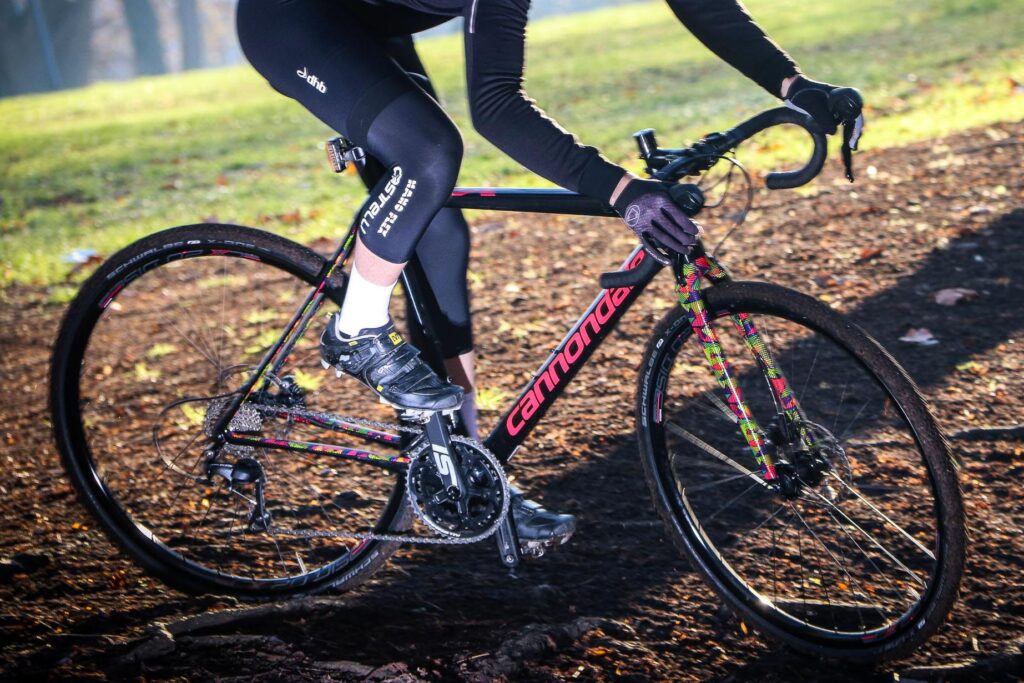
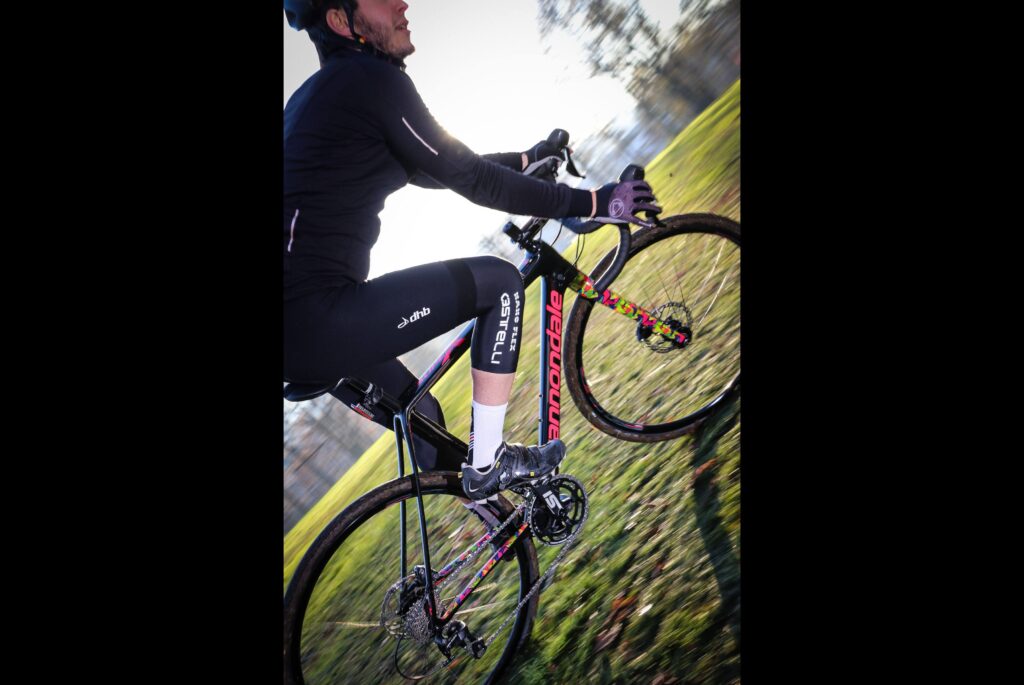
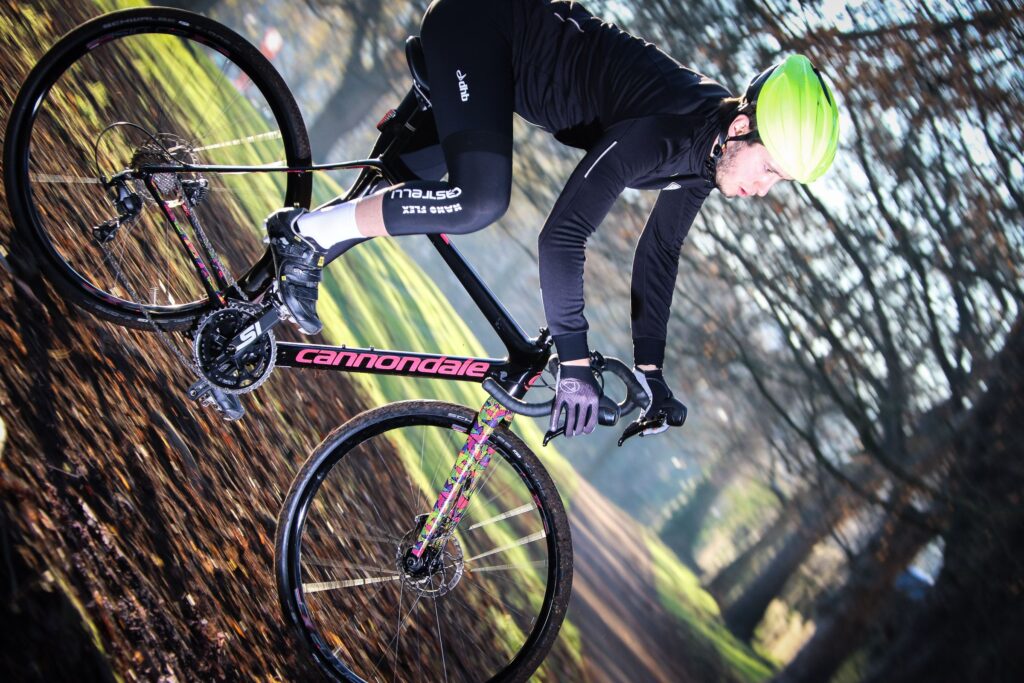
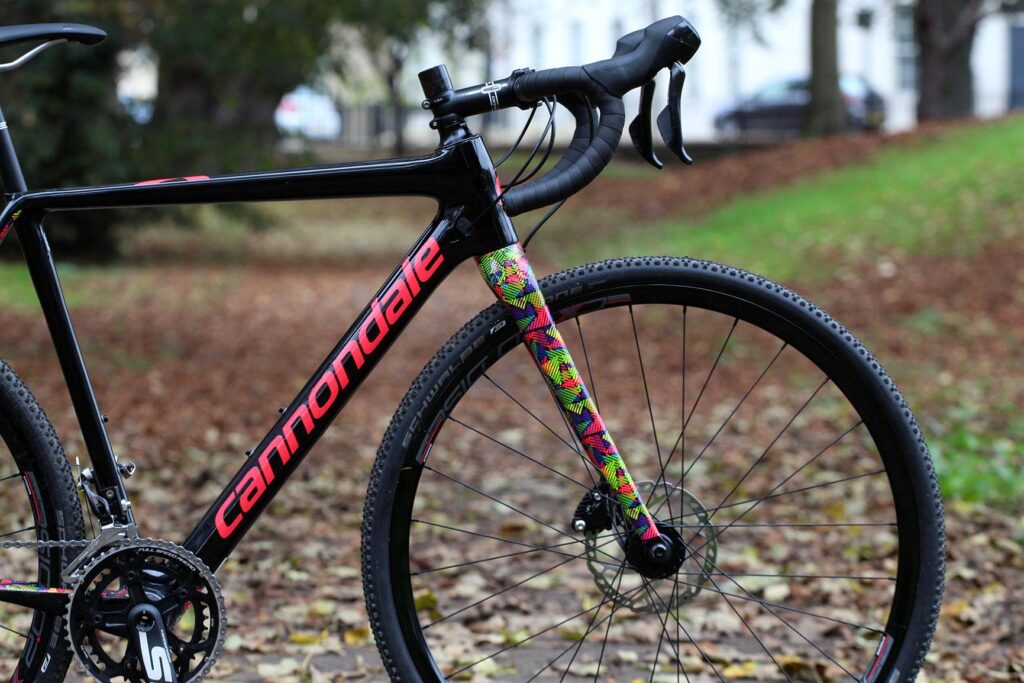
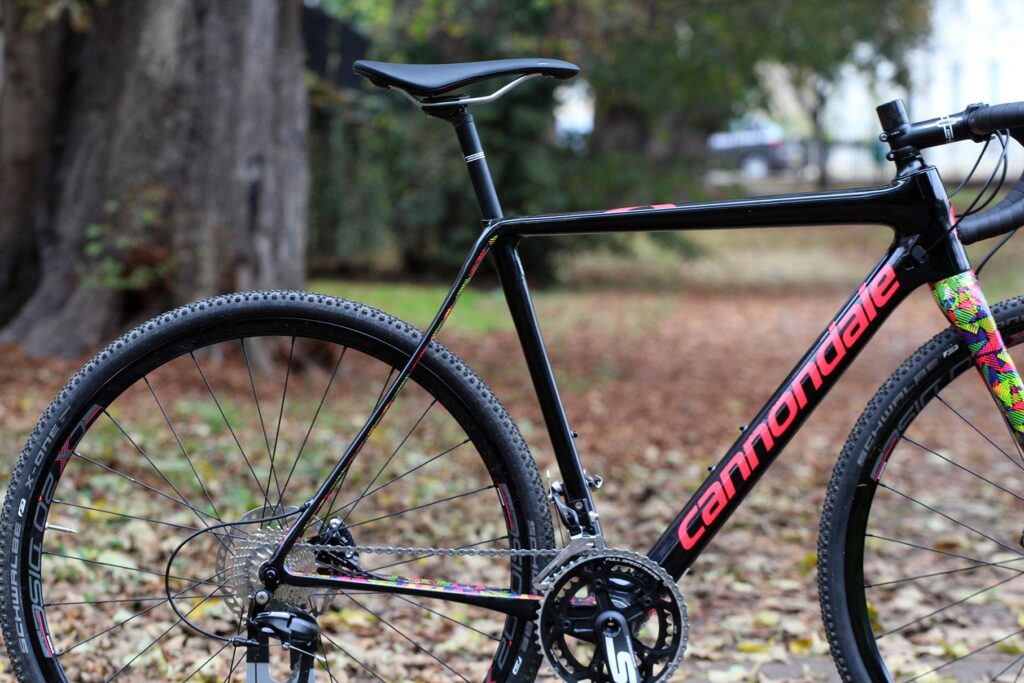
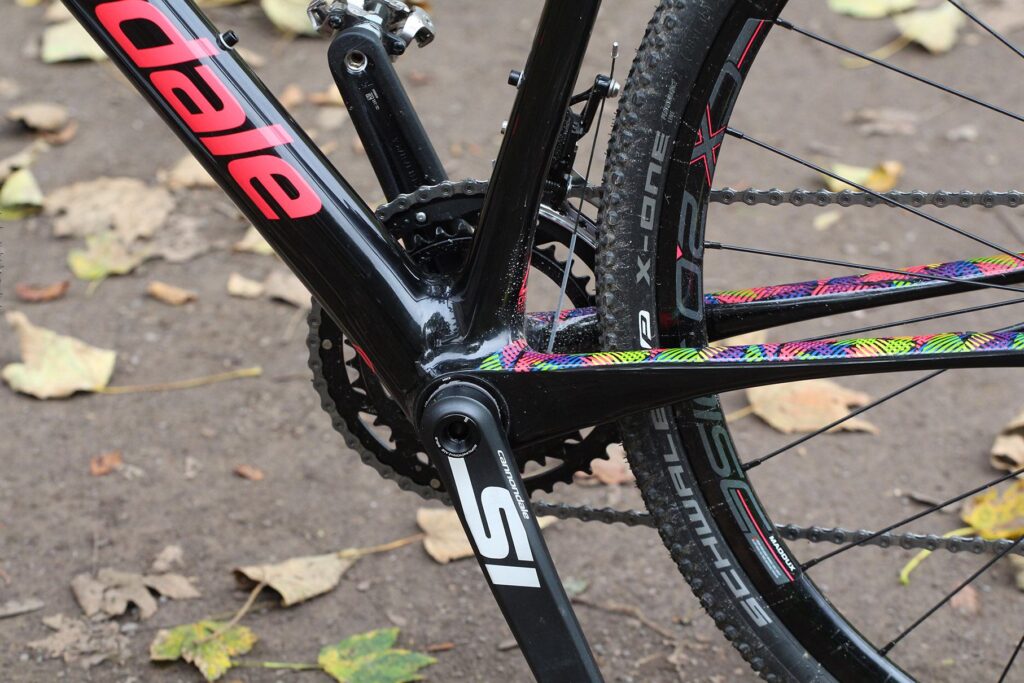
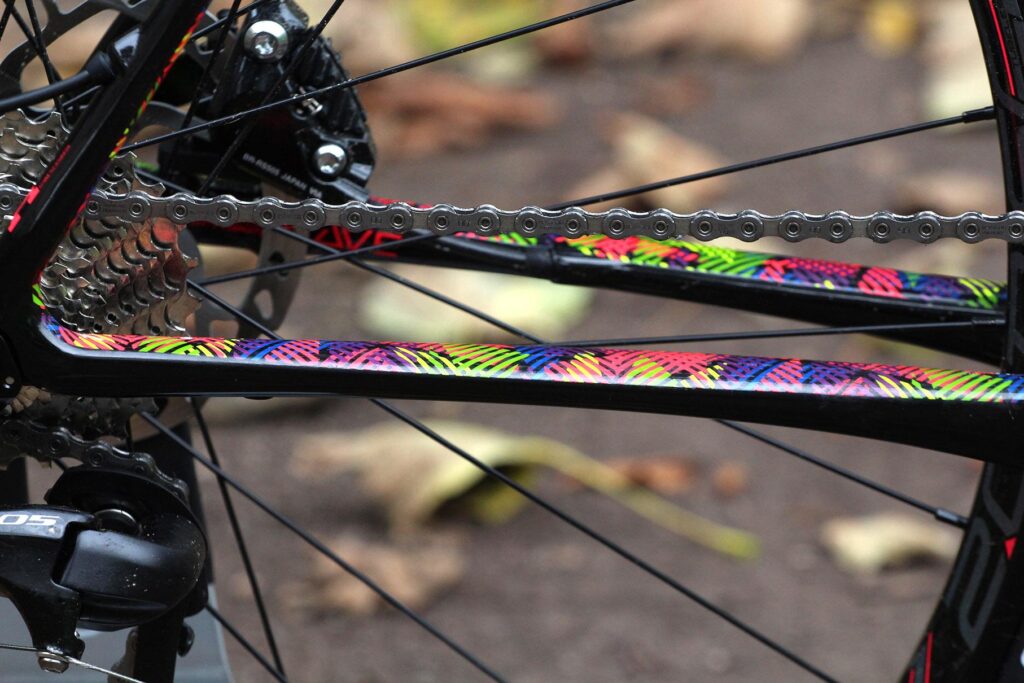
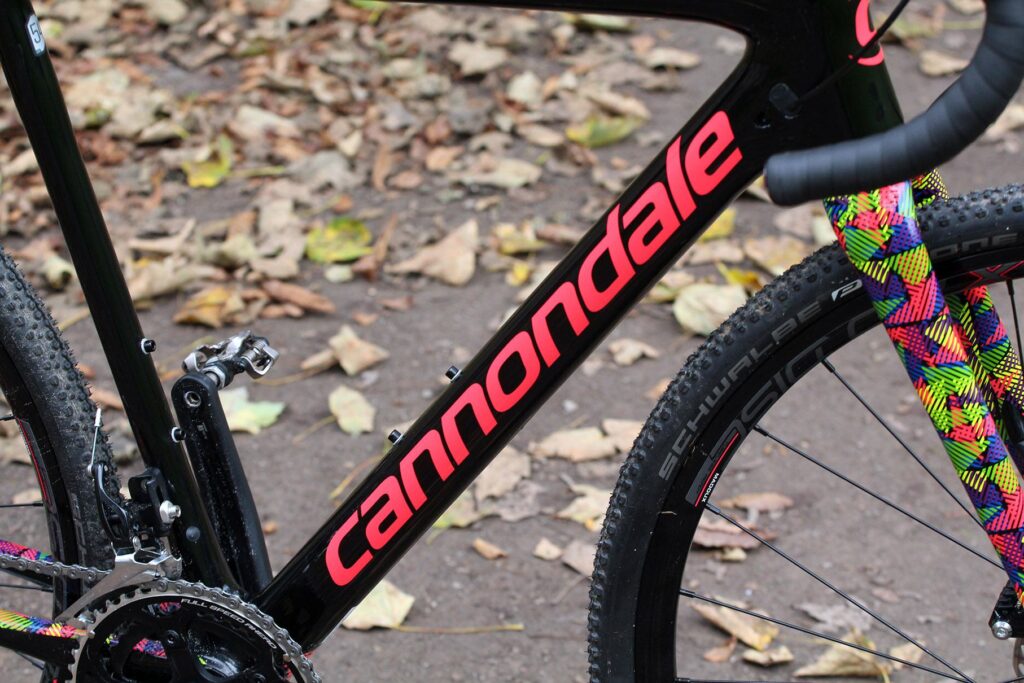
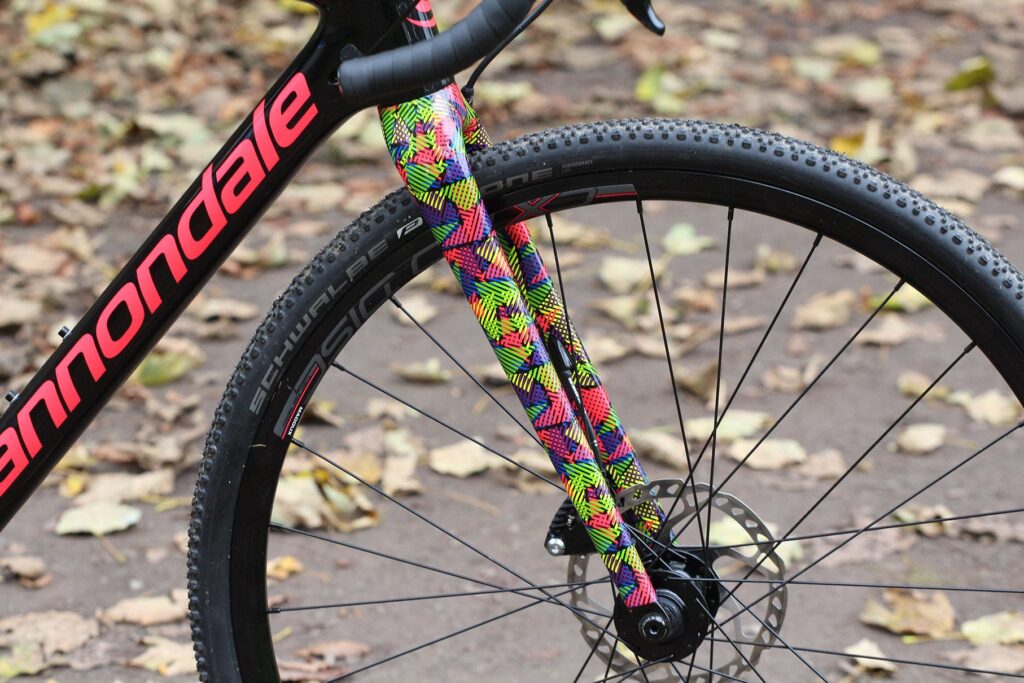
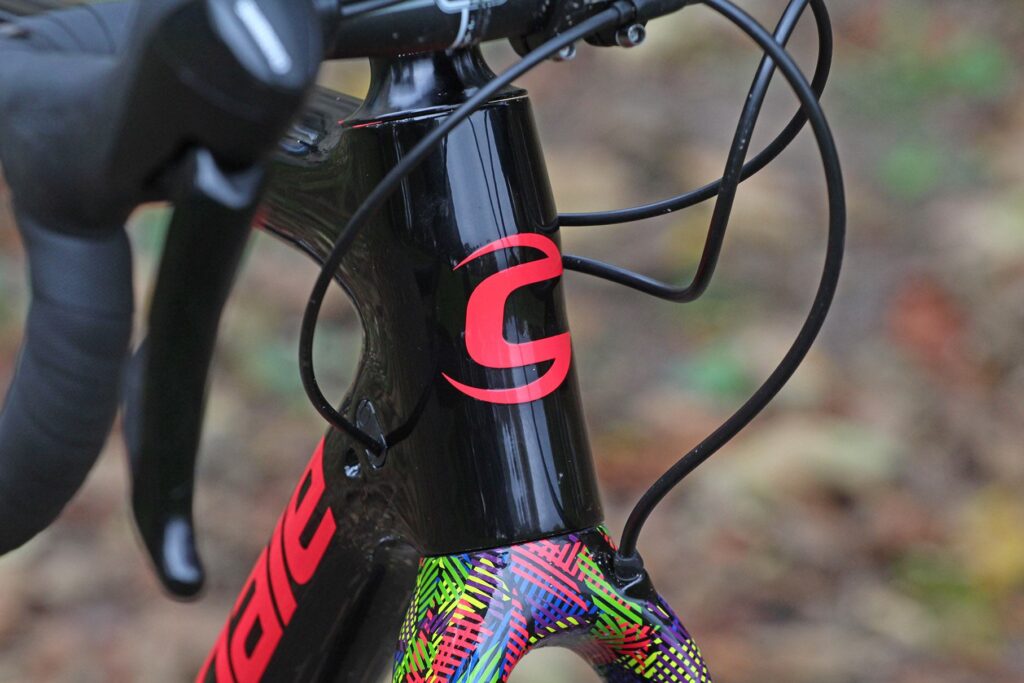
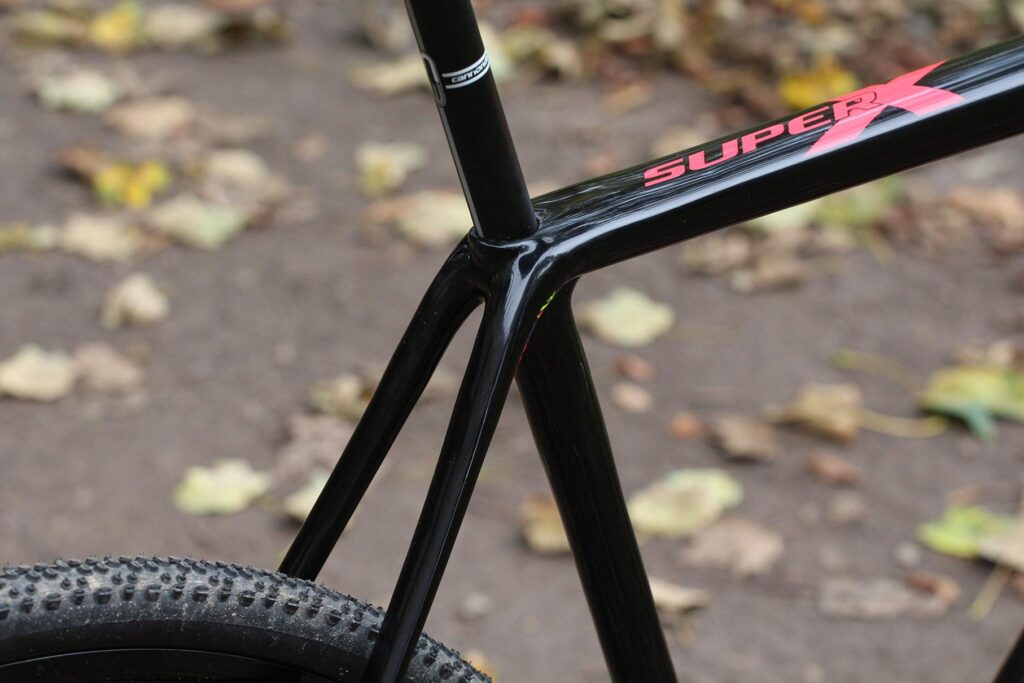
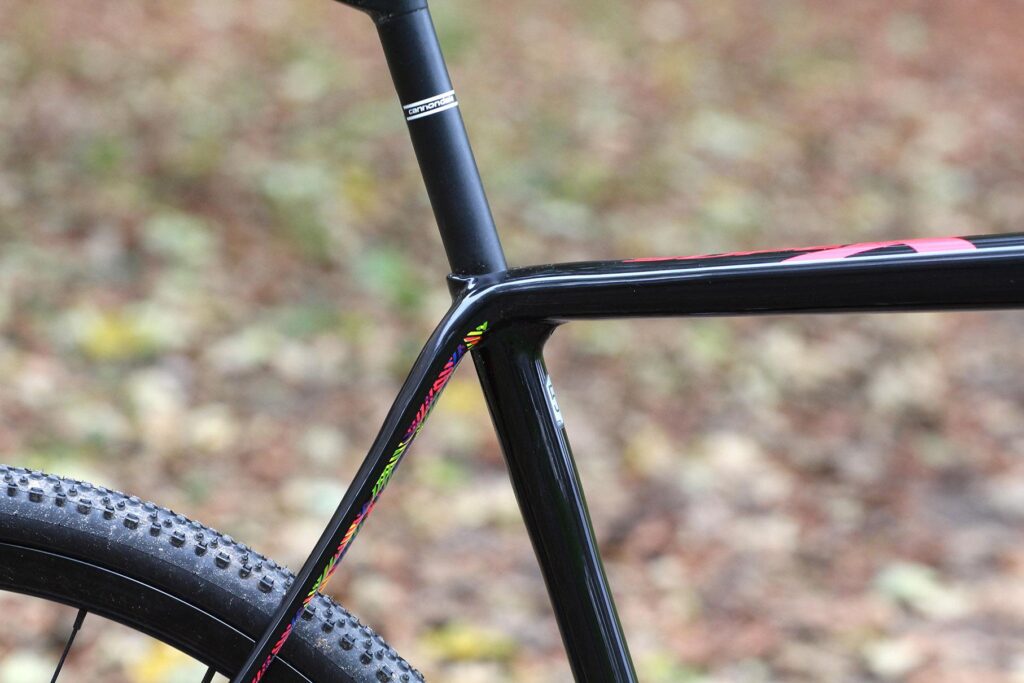
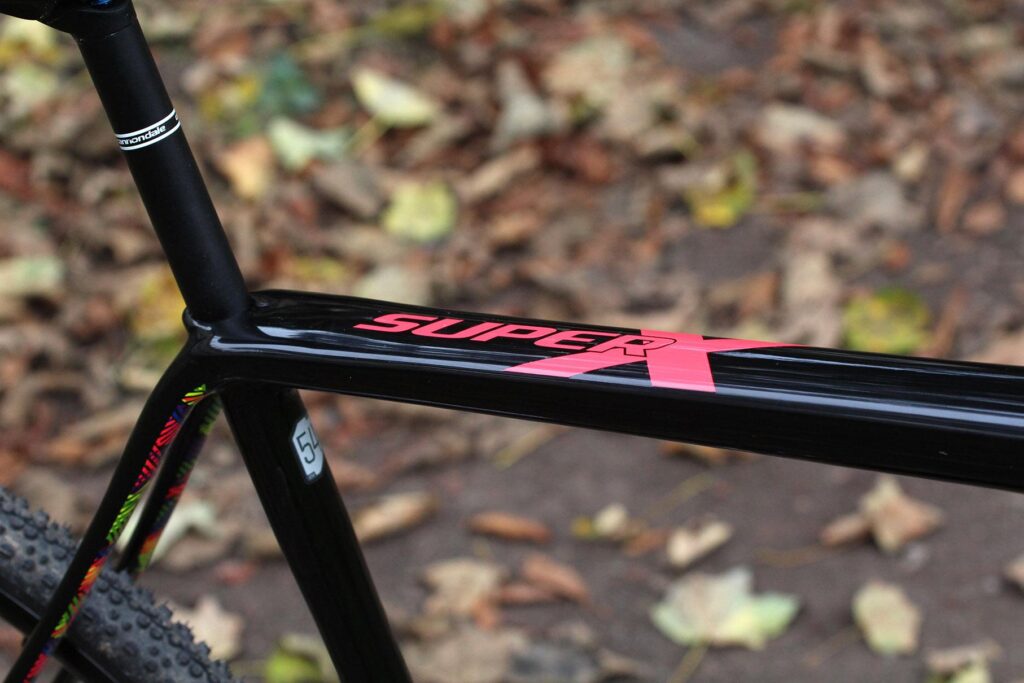

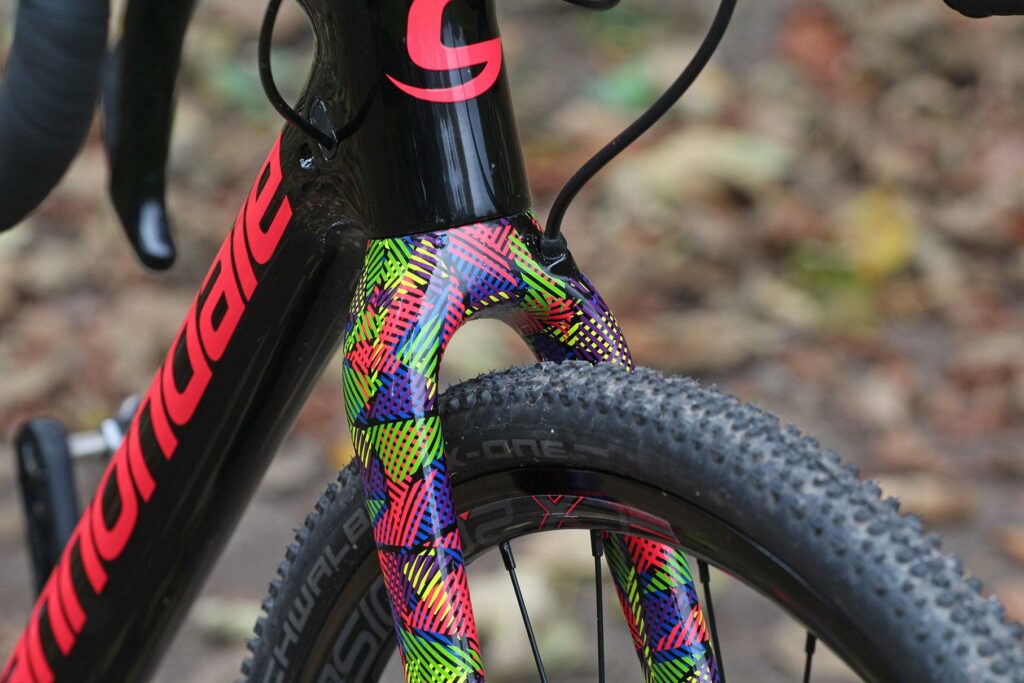
The Cannondale SuperX 105 Disc features a fantastic carbon frame with one of the best paint schemes I’ve seen. Wow. (That’s what it’s called.) It’s stiff yet smooth, and with very short chainstays would be incredibly nimble… except that some of the component choices really dull the handling. The heavy wheels, in particular, let the frame down and ultimately make it poor value compared with its rivals.
Cannondale has seven bikes in its cyclo-cross range for 2017: four aluminium CAADX models, and three carbon SuperX models. All seven come with disc brakes as standard.
> Find your nearest dealer here
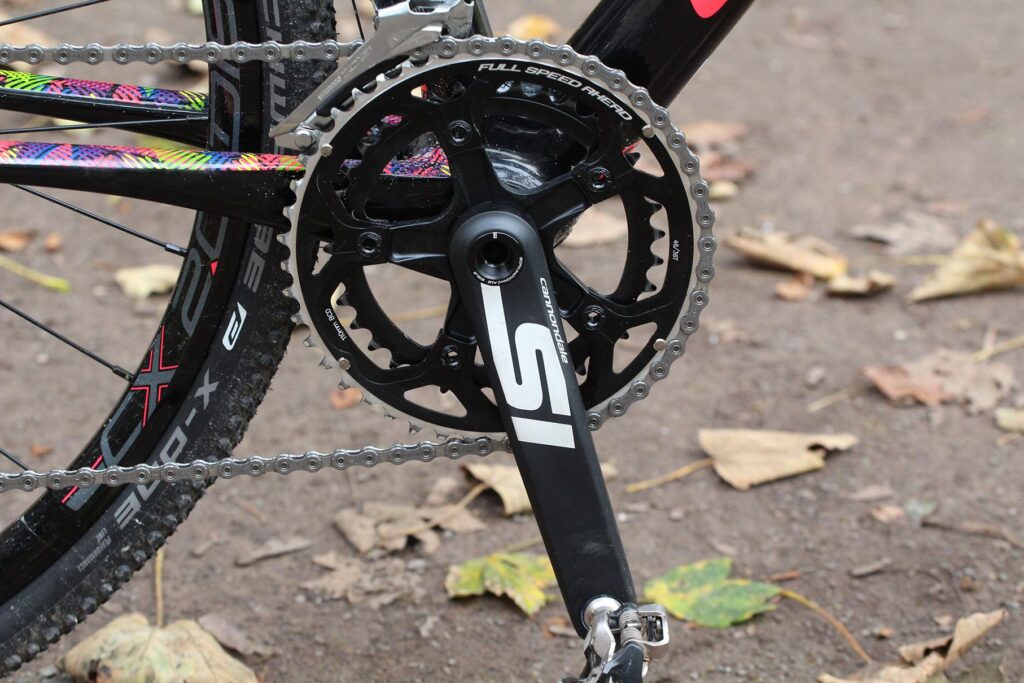
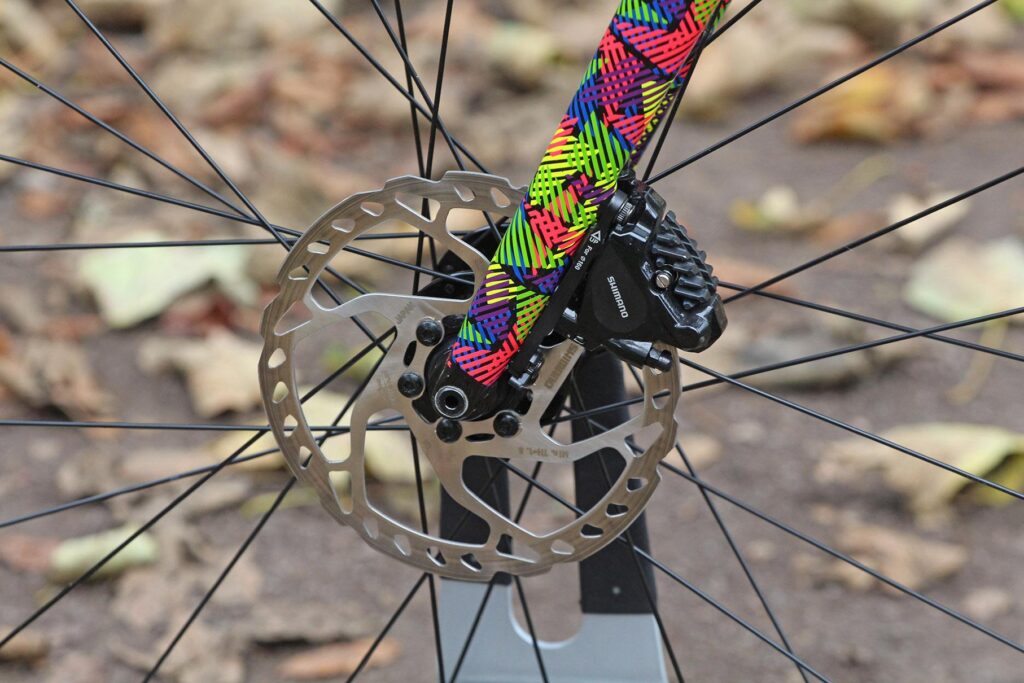
The £2,500 model on test is the cheapest of the carbon trio. It comes with Shimano 105 11-speed shifting a Cannondale Si cranket, FSA 46/36t chainrings, 105 hydraulic brakes, and Maddux CX 2.0 Tubeless Disc wheels.
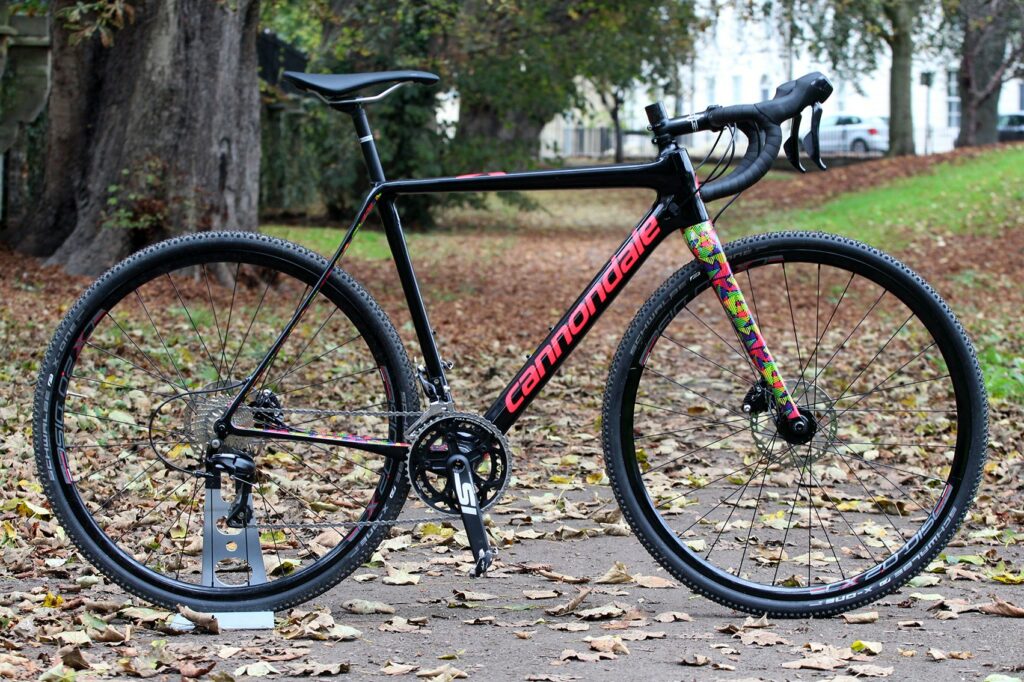
The SuperX is designed as a full-on race bike. There are no mounts for mudguards or a rack – if you want to get off the beaten track for adventuring rather than racing, you’re better off looking at the Cannondale Slate. Yes, there is nothing to stop you sticking two bottle cages on the SuperX and taking it out on a long ride – it’s certainly a seriously comfortable bike for way more than an hour between the barriers – but the main reason anyone is going to buy this bike is for racing.
Frame and equipment
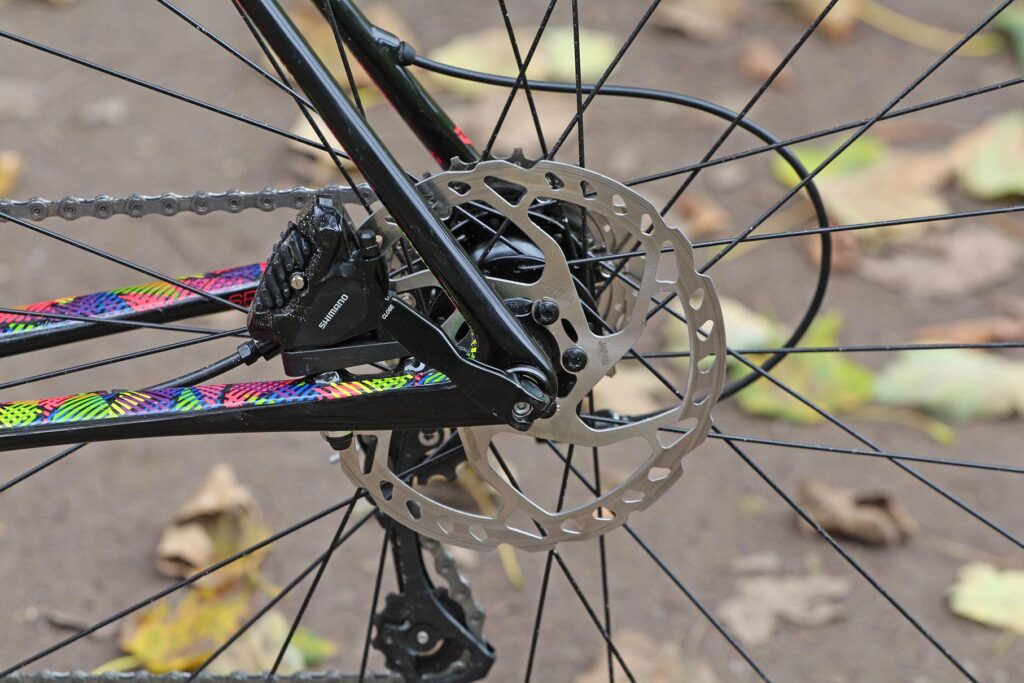
The BallisTec carbon frame and fork are disc brake-specific, with internal routing for both gear cables and also the brake hose. The 100×12 thru-axle up front and 142×12 spacing in the rear is perfect for upgrades or changing to a race wheelset (although not without some redishing of the rear – more on that below). This also gives the option to use a 29er mountain bike wheelset.
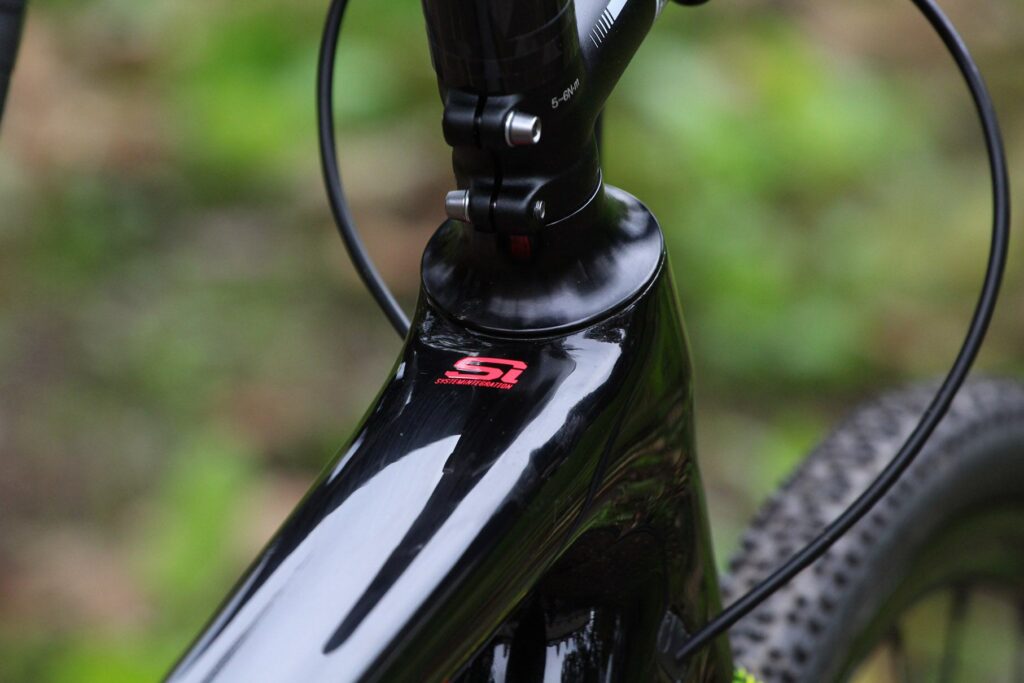
The Maxle axles are perfectly secure when installed, but it’s a hassle getting them in. The front is an Allen-key operated design which is plain difficult and next to useless for quick access. The rear only engages via a small catch, and while it’s better than the front, it’s still a faff.
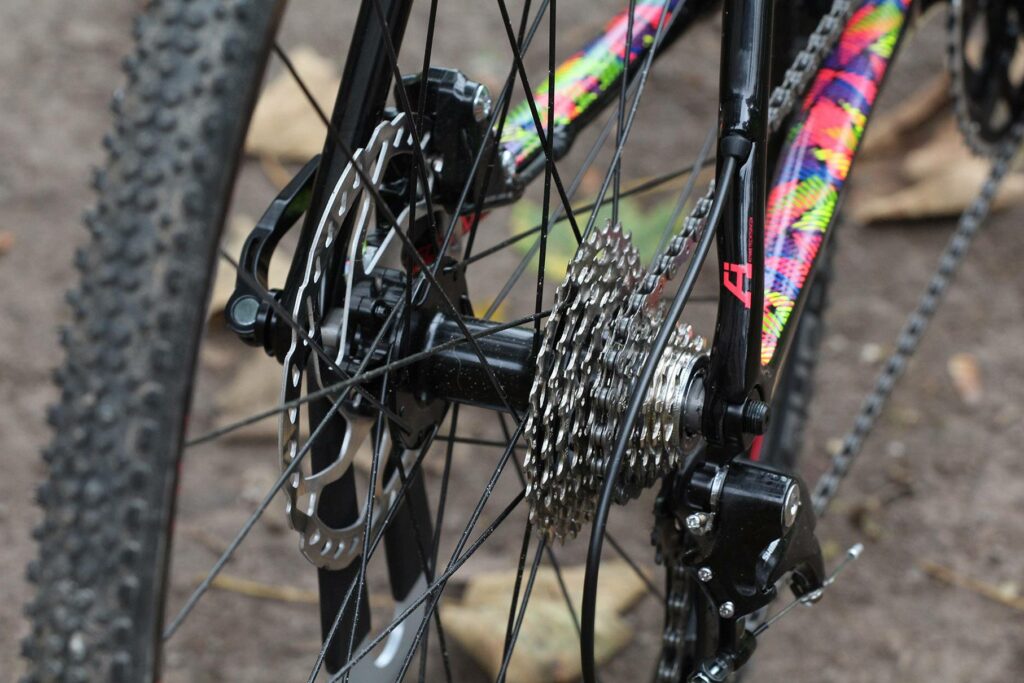
Out back, Cannondale has redesigned the chainstays, taking them from 43cm down to just 42.2cm, with the aim of increasing traction while also making the bike brilliant fun to ride. There is a drawback – though how major this is depends on how many wheelsets you have. The drive-side has been moved out by 6mm. It’s called an “Asymmetric Integration (Ai) drivetrain” and it requires a standard 142x12mm wheel to be re-dished 6mm to the left. It’s only an issue if you’ve got multiple race wheels, and once your wheels are dished the problem is solved. It’s a little annoying but seems a better solution than Specialized’s ill-fated move to a 135mm system that limited you to a small selection of wheels only. Specialized has moved back to 142×12 this year, possibly putting Cannondale on the back foot in wheel-compatibility.
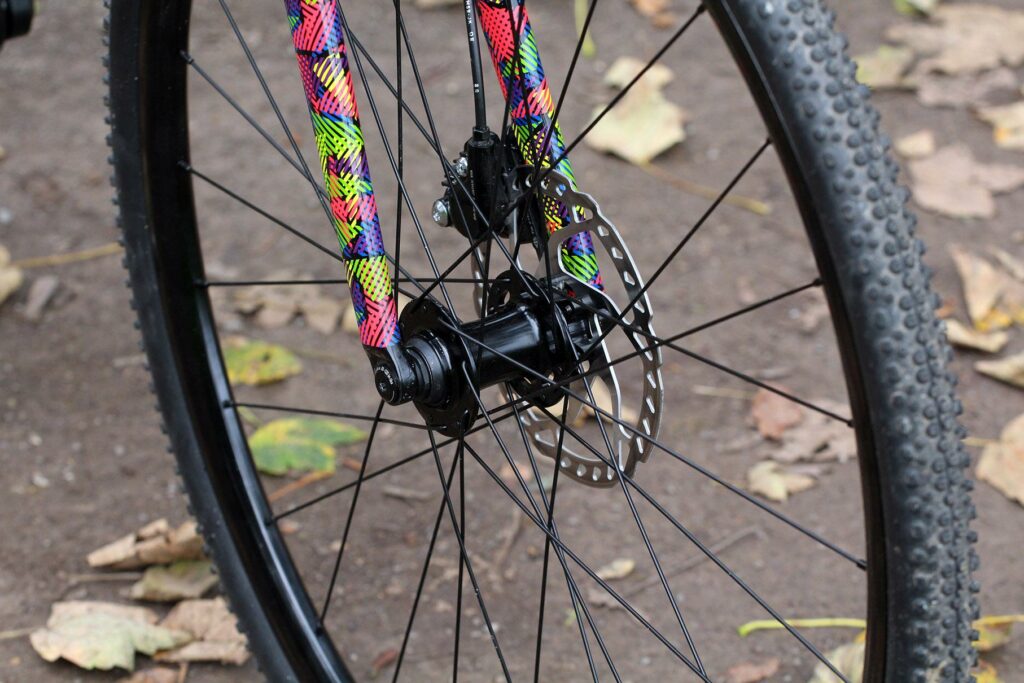
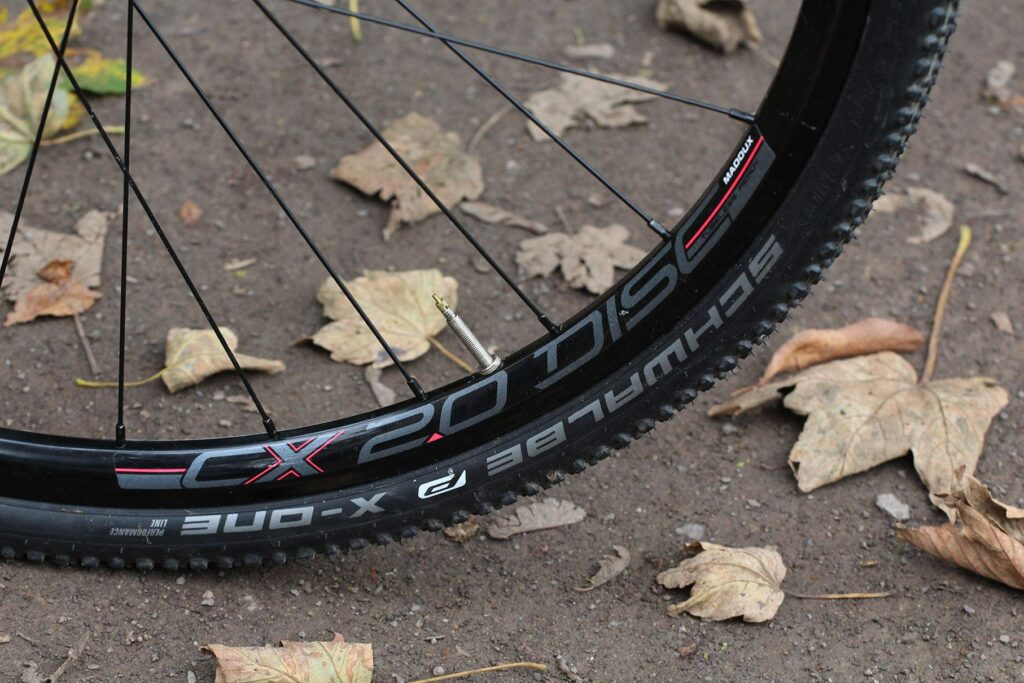
There’s plenty of tyre clearance around the 33mm Schwalbe X-One tyres, which makes this a very good bike for the UK. The Schwalbes feature a closely packed pattern of knobs that offer grip on dry courses but aren’t the best in the mud, with the tread filling up quickly and failing to clear. The thing that annoyed me was a lack of tubeless compatibility. With the rims being tubeless ready, I wasn’t impressed that a standard clincher tyre had been provided.
Wheels are 32-hole Maddux CX 2.0 Tubeless Discs, with Formula CX20 hubs and DT Champion 1.8 spokes. They’re tough – I had no problems with broken spokes or the wheel going out of true – but not ideal for racing, being heavy and slow to accelerate. Weighed with tyres and cassette, they’re 3.2kg. The wheels alone weigh 2.2kg. To be honest, they’re a bit disappointing on a £2,500 bike. But with the money being put into the frame, there’s got to be a saving somewhere I suppose. As training wheels, they’re great – I was able to hit rocky sections and hop barriers without a second thought – but for racing I’d be quick to upgrade to lighter and stiffer tubulars.
Disc brakes arrived in cyclo-cross a few years ago and, on the amateur scene at least, have become the primary way of slowing down in the mud, although some pros have converted to them, including world champion Wout van Aert. This was my first time and wow, the difference. The Shimano system is excellent and provides perfectly modulated power in all conditions. Even when my hands were frozen, I could still brake with (relative) skill. The weight penalty is easily cancelled out by the improvements in stopping.
Gearing
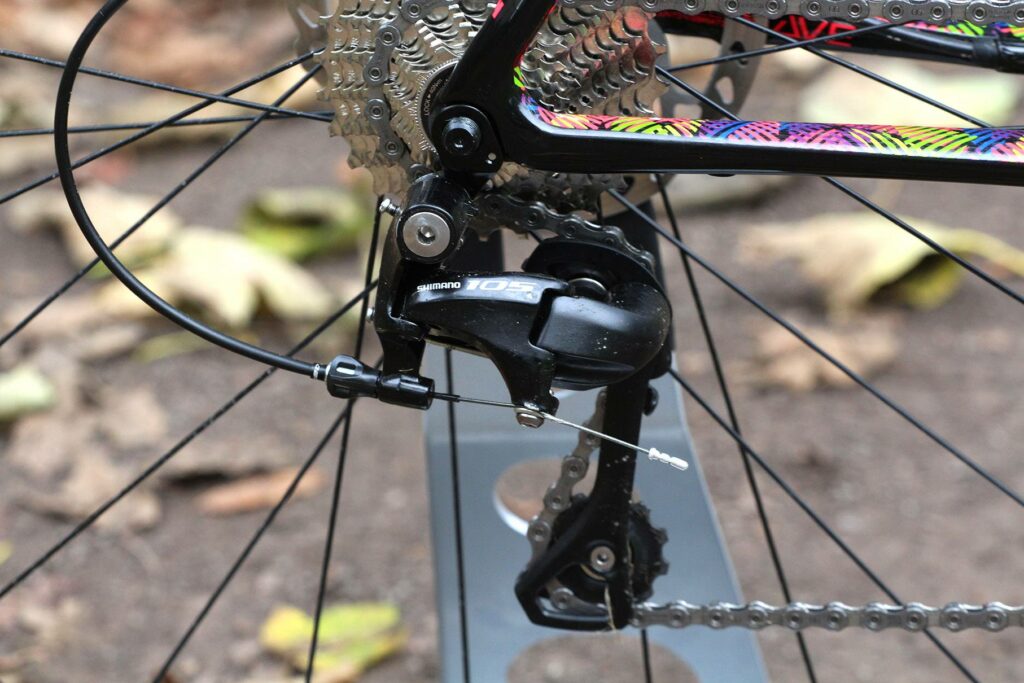
Shimano provides the bulk of the gearing with its excellent 105 11-speed mechs. For muddy cyclo-cross races, where you can get numerous broken mechs, you really don’t need anything higher value.
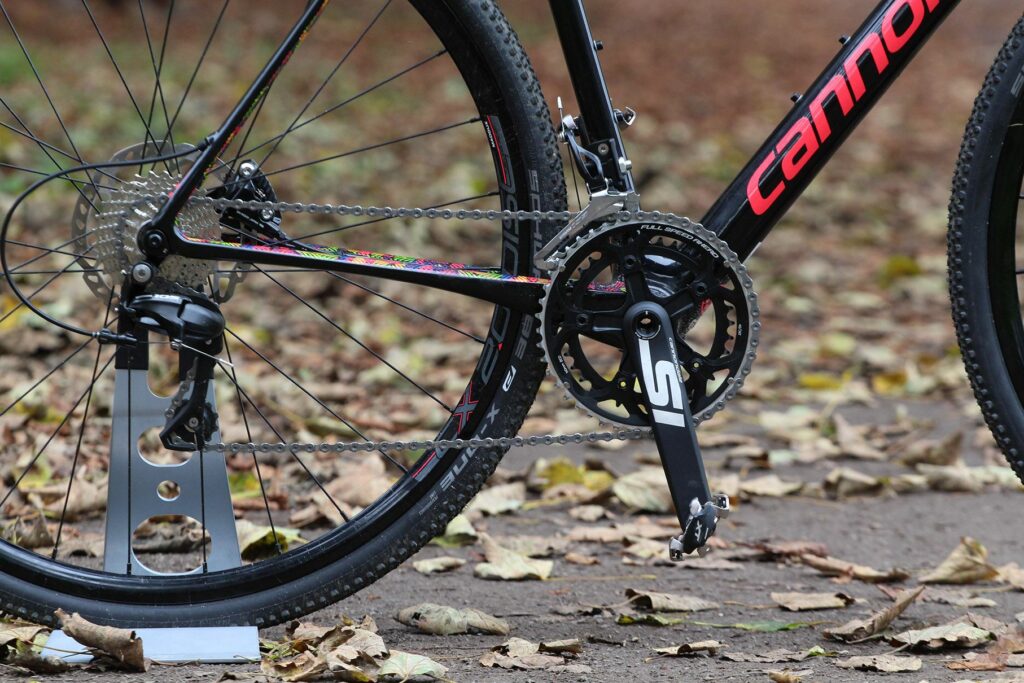
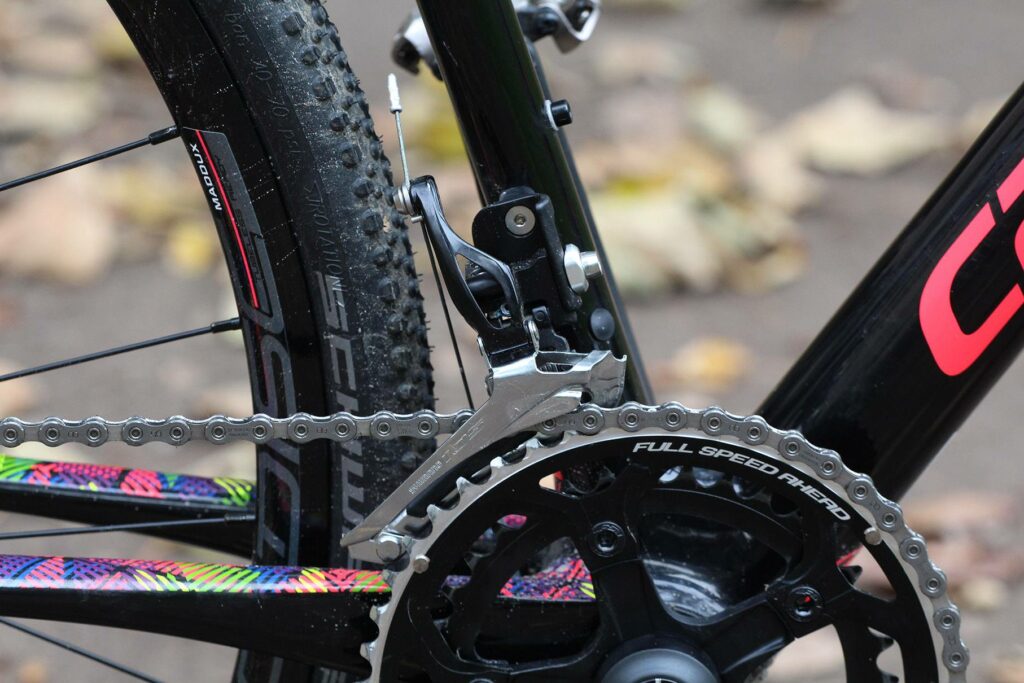
Up front, Cannondale has specced its Si cranket with 46/36-tooth FSA chainrings. I much prefer a 40 or 42t single ring; for me, especially off-road, the front mech simply becomes a collection point for mud. For most CX races, a single ring provides an ample gear range. Yes, having the 46t ring is good for the faster sections out on the road, but if this was my bike I’d soon change to a single ring.
At the rear, the 11-28 cassette was perfect for the double chainring. Running a single ring might make you want a larger ratio, though that would depend on the conditions and course.
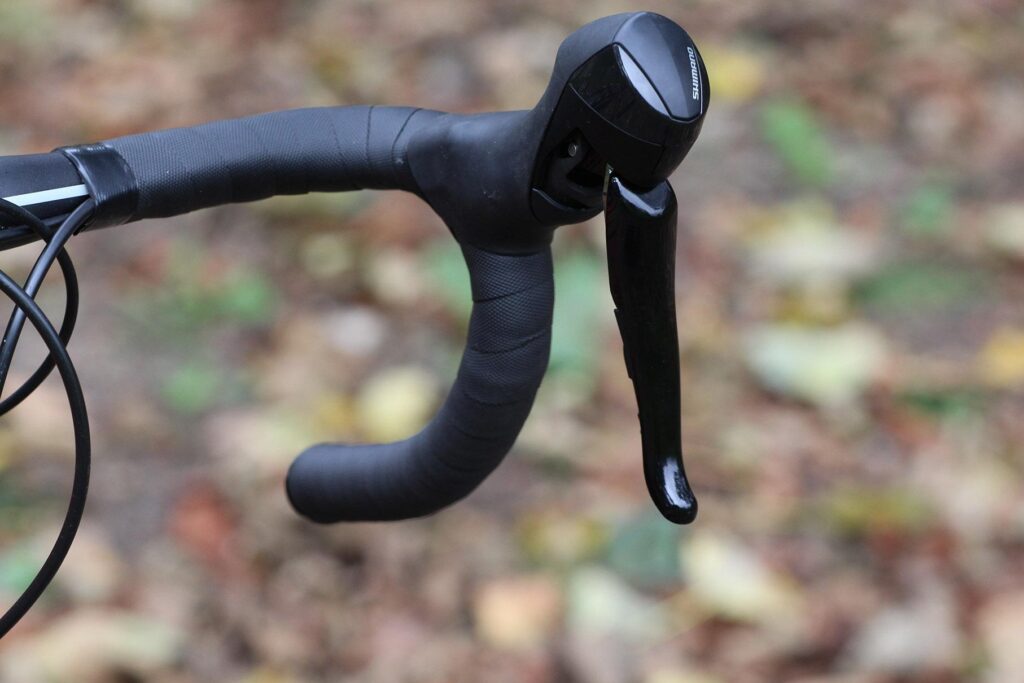
Controlling the mechs are Shimano’s lower end hydraulic shifters. While the jury’s still out on the aesthetics of SRAM’s hydraulic shifters, these are just plain ugly. Out on the road, I also found them uncomfortable and detrimental to handling.
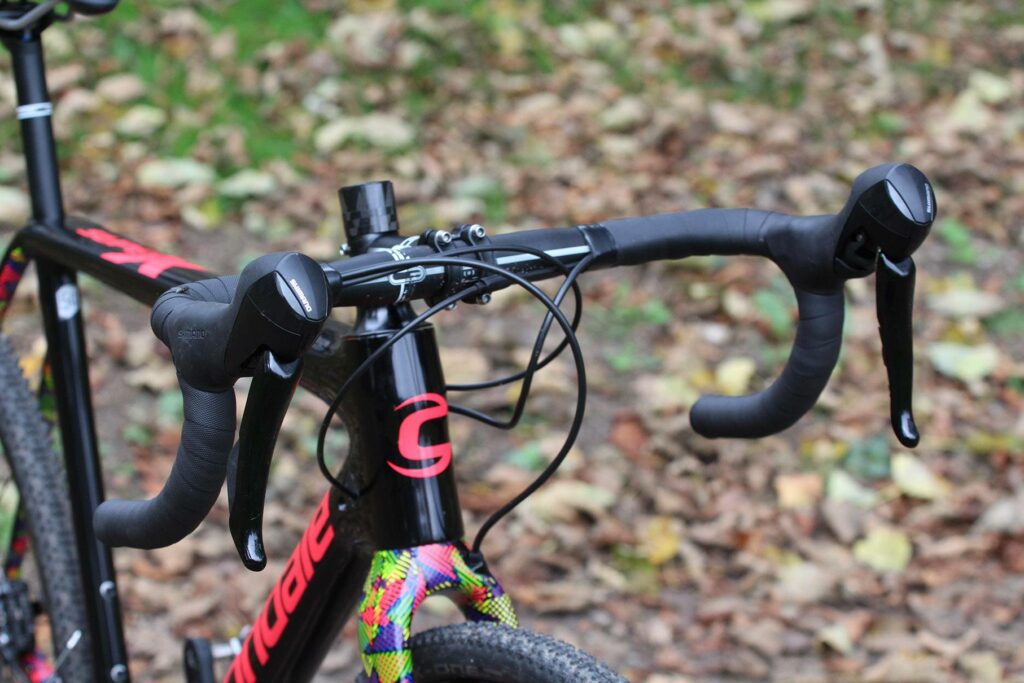
The comfort issue stems from a lump – the bleed point – on the inside top section of the hood, which caused a rather painful corresponding lump on my hand. The shifter body is also very long and puts your hands quite a way out front of the bar. I found this moved my weight too far forward over the front wheel, which would become an issue on some corners in the rain as the front end would slip out under too much load. While it’s no problem on the road, slippery mud requires a more central body position, though it was only an issue when the rain started to fall.
Finishing kit
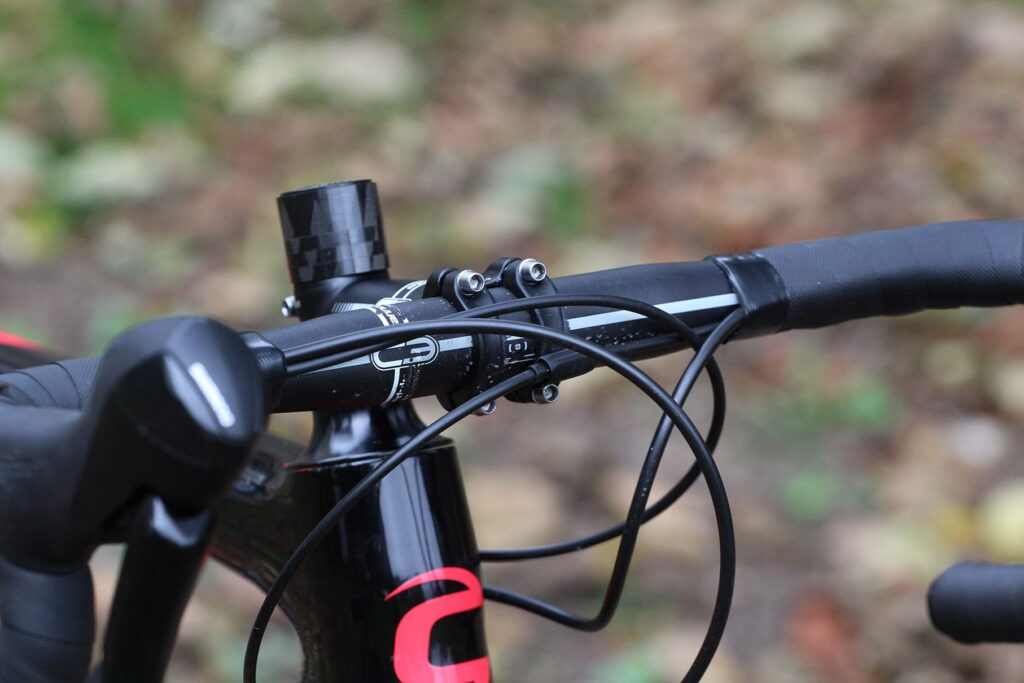
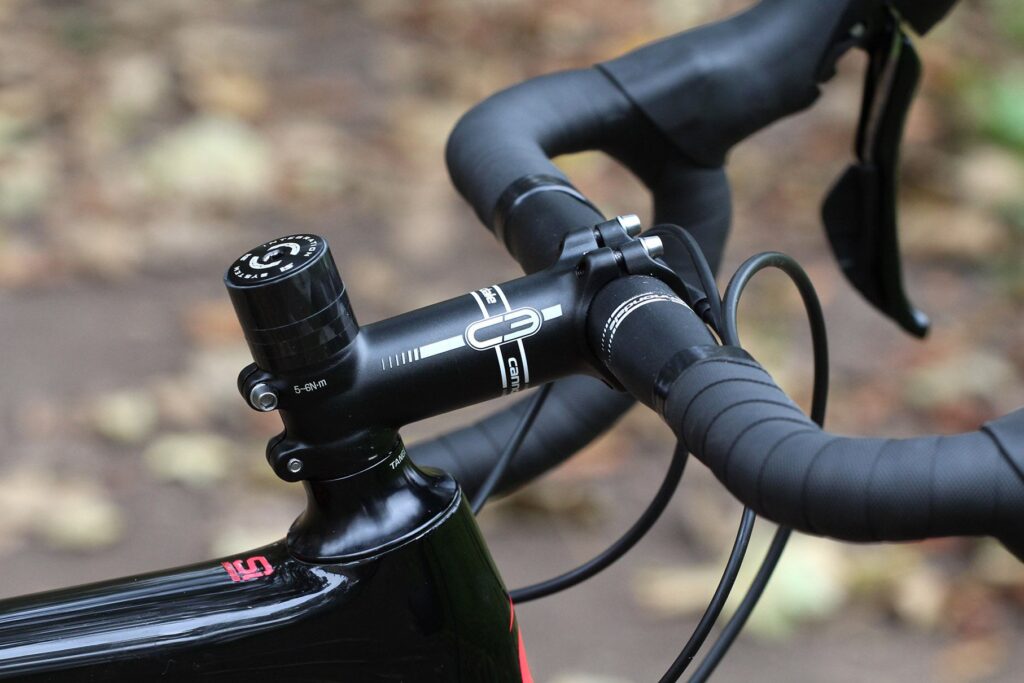
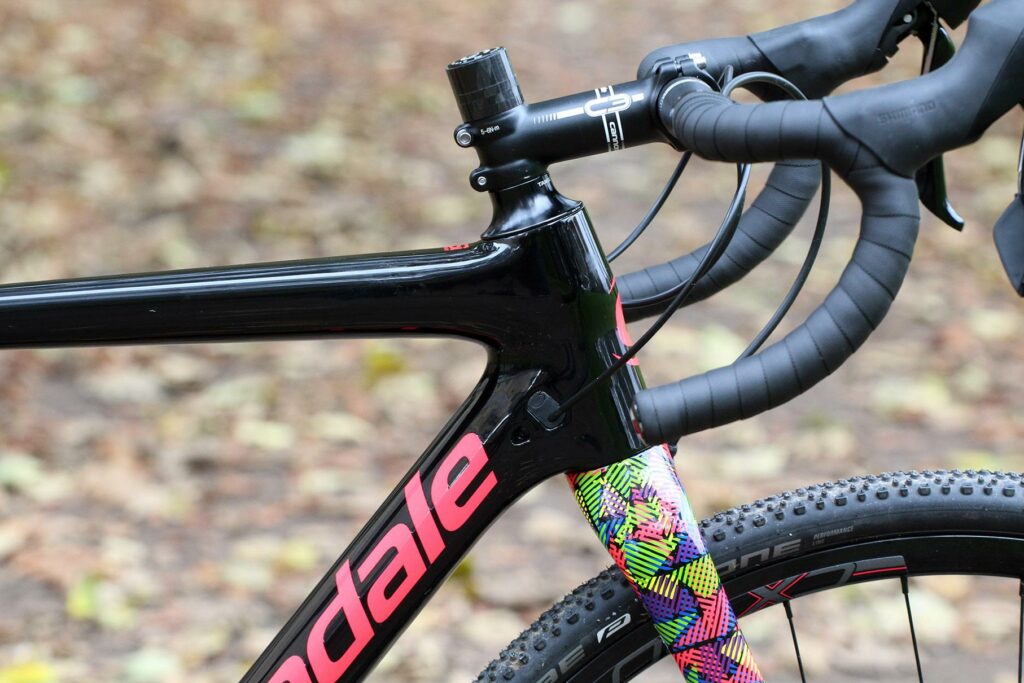
The seatpost, stem and bar are all Cannondale units. The bar has a nice compact drop, for easy access to the brakes and a stable riding position. Being aero isn’t as important in cyclo-cross as it is on the road, so it’s good to see Cannondale prioritising control. The 54cm frame comes with a 42cm bar and 10cm stem, and although I’d probably look to change them for something lighter, to bring the overall weight down from 9kg, they’re not too heavy.
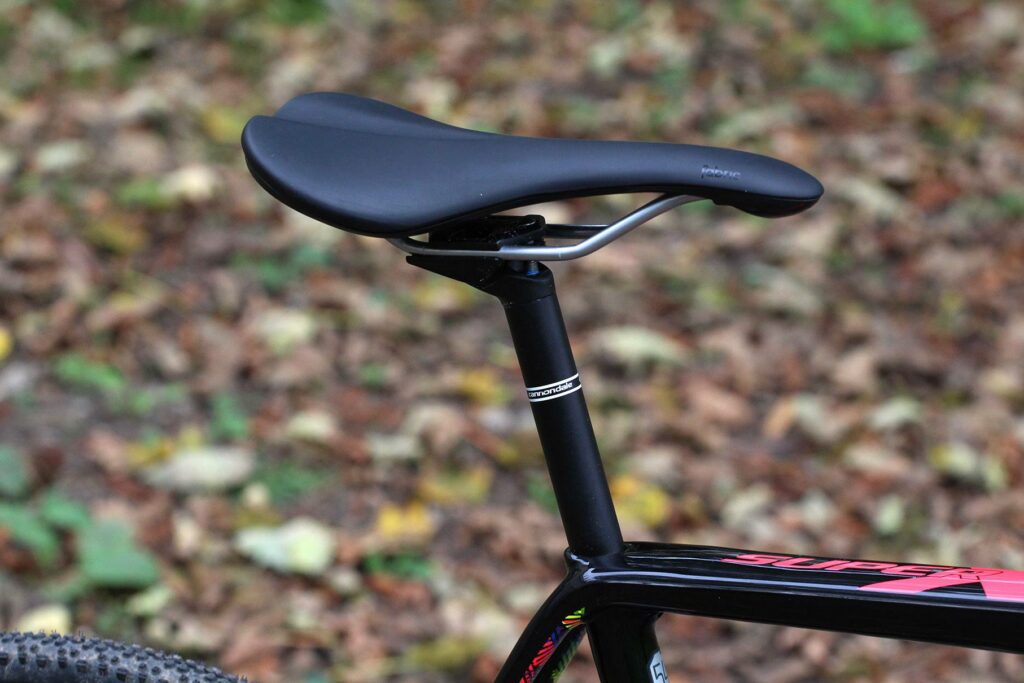
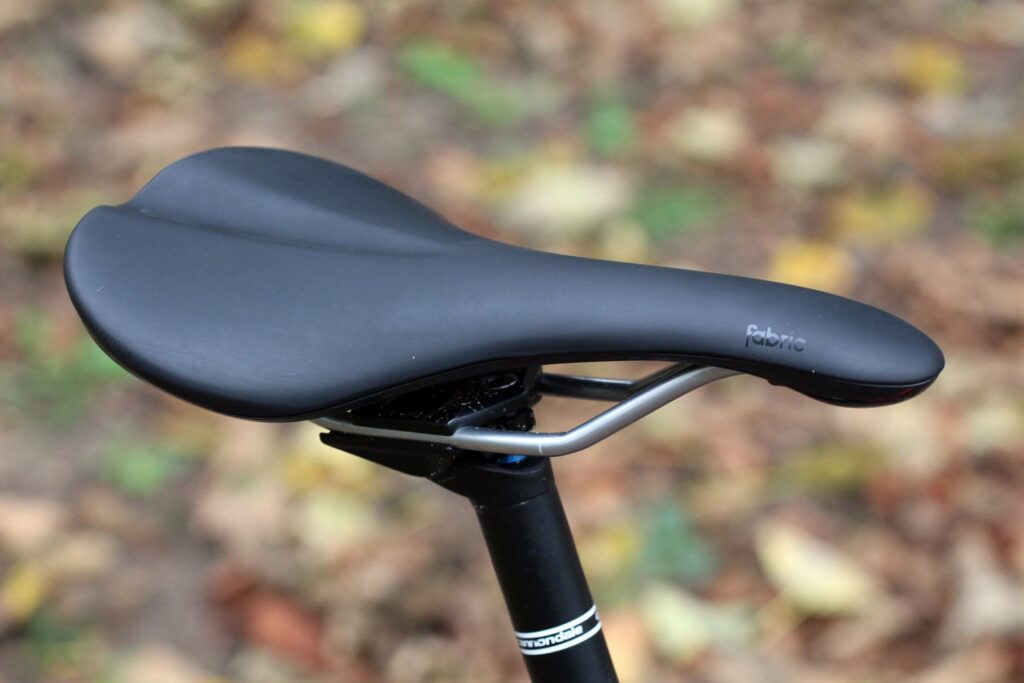
Topping the Cannondale C3 seatpost is a Fabric Scoop Shallow Elite saddle. With chromoly rails, it’s a very smart looking seat. The flat profile suited me very well, and the supportive padding was perfect for sloppy remounts at the tail end of a race.
Ride and handling
One of the main assets of the Cannondale frame is the smoothness of the ride. Even on the road with the tyres pumped up hard, the frame soaks up vibrations and remains planted over rough ground. That’s not to say it’s at all spongy; the huge tubes provide plenty of stiffness for hard sprints.
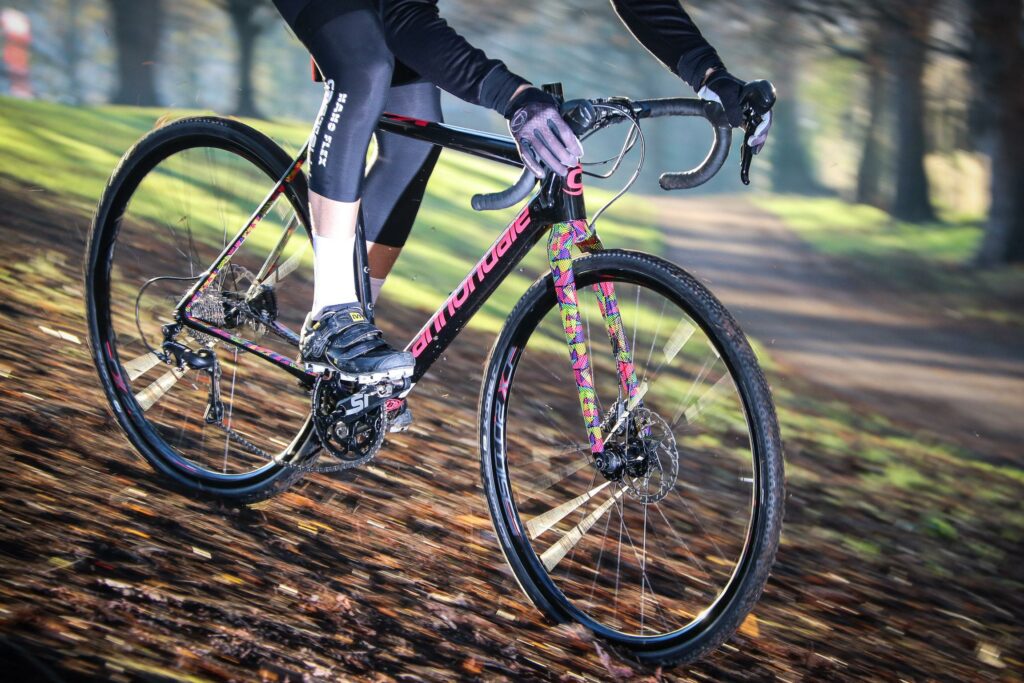
The front end does let the bike down a little, the bar and stem being a bit flexible under load. This undoubtedly helps with the smooth ride, but I found I wanted more stiffness during races, especially on tough climbs.
Climbing and tight corners highlight the weight of the wheels. While slowing down using the disc brakes is a revelation, getting back up to speed is a chore as the weight of the wheels dulls acceleration. The other drawback of the heavy wheels is that the fantastic frame is made to feel very slow through tight corners. Although it’s a very stable bike in a straight line, I didn’t feel it reacted well to fast changes of direction.
> Cyclo-cross bikes vs gravel/adventure bikes: what’s the difference?
On flat and fast courses, typically found in America, rarer in the UK, the SuperX really excels; the slightly heavier weight isn’t a problem, and the stability lends itself to high-speed, flowing courses. On the tighter, slower courses you tend to get in the UK a slightly lower overall weight would be better, but it’s not a deal breaker.
Away from the cyclo-cross course and the SuperX actually handles a mix of riding very well, despite its racing credentials. It’s been a comfortable commuter, with the tyres just about fast enough. And rougher ground is, of course, no issue, with the robust wheels and tyres coming in very handy when I’ve hit the odd rock.
Conclusion
I’m left with rather mixed feelings. The SuperX is a brilliant frameset, but in trying to keep the whole package below the £2,500 price mark there are some obvious compromises. To my mind, a SRAM 1x system would be more suitable, and I’d look to upgrade the wheels for more serious racing. Given the choice (and the money!) I would probably opt for the Ultegra version at £500 more, with Mavic Aksium wheels and Shimano R685 levers.
Verdict
Wow is the paint job and wow! is the frame, but the spec is a price point compromise
All the deals displayed on our review pages are pulled from a constantly updating database feed of the best affiliate deals available. The criteria for deciding on what are the best deals is who is offering the lowest, delivered price. In most cases we will be showing the very best deal available online, but sometimes you may be able to find an item cheaper. If you can please feel free to post a link in the comments box below. To find out more about affiliate links on road.cc click here.
road.cc test report
Make and model: Cannondale SuperX 105 Disc
Size tested: 54cm
About the bike
State the frame and fork material and method of construction. List the components used to build up the bike.
Cannondale has used the “All New SuperX Disc, BallisTec Carbon, SPEED SAVE, BB30-83 Ai, 142×12 thru-axle” for the frame and “All New SuperX Disc, BallisTec Carbon, 1-1/8″ to 1.5″ steerer, 100×12 thru-axle” for the fork.
Spec:
RIMS
CX 2.0 Tubeless Disc, 32-hole
HUBS
Formula CX20 100×12 thru QR front, CX22 142×12 thru QR rear (Ai offset dish)
SPOKES
DT Champion 1.8 (Ai Offset dish – Rear)
TIRES
Schwalbe X-One, 700x33c
CRANK
Cannondale Si, BB30-83 Ai, FSA rings, 46/36
BOTTOM BRACKET
FSA BB30 Bearings
CHAIN
Shimano HG601, 11-speed
REAR COGS
Shimano 105, 11-28, 11-speed
FRONT DERAILLEUR
Shimano 105, braze-on
REAR DERAILLEUR
Shimano 105 GS
SHIFTERS
Shimano RS505 hydraulic disc
HANDLEBAR
Cannondale C3, butted 6061 Alloy, Compact
GRIPS
Cannondale Bar Tape w/Gel, 2.5mm
STEM
Cannondale C3, 6061 Alloy, 31.8, 6 deg.
HEADSET
SuperX, 1.5″ lower to 1-1/8″ upper w/ reducer, 25mm carbon top cap
BRAKES
Shimano BR505 hydraulic disc, 160/160mm
BRAKE LEVERS
Shimano BR505 hydraulic disc
SADDLE
Fabric Scoop Shallow Elite, Cromo Rail
SEATPOST
Cannondale C3, 6061 Alloy, 25.4x300mm (46-51) 350mm (54-61)
SIZES
46, 51, 54, 56, 58, 61
EXTRAS
Stan’s NoTubes Valve Stems
Tell us what the bike is for, and who it’s aimed at. What do the manufacturers say about it? How does that compare to your own feelings about the bike?
Cannondale says: “The ultimate ‘Cross race machine, the all-new SuperX delivers the two things a today’s cross racer needs most, stability and traction, better than anything else on the market. The ultralight weight, stiffness and smooth ride are just icing on the cake.”
Stability is very good, and traction, smoothness and stiffness are all excellent. But it’s not very light, at all.
Frame and fork
Tell us about the build quality and finish of the frame and fork?
The carbon frame is super-stiff but still very smooth. The oversized tubes and horizontal top tube look amazing and also make the bike easy to shoulder.
Tell us about the materials used in the frame and fork?
It’s Cannondale’s excellent BallisTec carbon for both.
Tell us about the geometry of the frame and fork?
The short chainstays mean the traction is amazing, but any wheels you buy aftermarket will need to be re-dished. Cannondale has used what seems to be the market standard for thru-axles, making getting a pair of race wheels a lot easier. Our 54cm test model has a top tube of 53.7cm, ideal for cross.
How was the bike in terms of height and reach? How did it compare to other bikes of the same stated size?
It comes up very similar to my CAADX for reach – though it’s a little long when you take the shape of the shifters into account (with Ultegra shifters it would be perfect); the height is a little lower because of the slightly dropped bottom bracket.
Riding the bike
Was the bike comfortable to ride? Tell us how you felt about the ride quality.
It’s a super-smooth ride, though stiff at the same time.
Did the bike feel stiff in the right places? Did any part of the bike feel too stiff or too flexible?
The front end has a little too much flex, but this is down to the bar/stem/front wheel combination rather than the frame or fork.
How did the bike transfer power? Did it feel efficient?
The bottom bracket is superb and the oversized top tube means no power is lost through the frame. It actually highlights the poor wheelset and bar.
Was there any toe-clip overlap with the front wheel? If so, was it a problem?
I had no problems when pedalling through tight turns.
How would you describe the steering? Was it lively, neutral or unresponsive? Somewhere between neutral and unresponsive.
Tell us some more about the handling. How did the bike feel overall? Did it do particular things well or badly?
Switching the wheels and bar/stem combo out to something stiffer will make the bike more nimble. As it is it’s very well set up for American courses and I had no problems on faster UK courses.
Which components had the most effect (good or bad) on the bike’s comfort? would you recommend any changes?
The frame is perfectly comfortable, so the ‘flexy’ wheels are a little bit overkill, and end up letting the overall package down.
Which components had the most effect (good or bad) on the bike’s stiffness? would you recommend any changes?
The wheels again mean the power you put in gets lost.
Which components had the most effect (good or bad) on the bike’s efficiency? would you recommend any changes?
The wheels really let the frame down.
Frame is great. Power is lost quickly through the wheels.
The weight and the wheels hold it back out of slow corners.
At speed it’s very stable and maintains traction well.
It’s designed for this. It’s super-stable.
The hubs are smooth, so once up to speed the bike holds onto it well.
It’s stable, but slow to react because of the wheel weight, so also a bit dull.
If the speed is high, it tracks very well.
It remains planted and is very smooth through sweeping bends.
The wheel weight makes this quite sluggish uphill.
The drivetrain
11-speed Shimano 105 is brilliant, but the shifters cause a vagueness which is annoying.
I haven’t cleaned it once, yet it stiff shifts predictably.
The Si double crankset and basic shifters add more weight than a 1x SRAM setup.
Standard 105 is brilliant value, but this version (with disc brake shifters) is more money for less performance.
Tell us some more about the drivetrain. Anything you particularly did or didn’t like? Any components which didn’t work well together?
The shifters are uncomfortable, put you too far forward and give vague shifting. I think Cannondale should have specced a SRAM group at this price.
Wheels and tyres
They’re strong but not very light and hold back the bike’s potential.
Easy-to-service hubs and a high spoke count mean they shouldn’t give you many problems.
Weighed with cassette and tyres at 3.2kg, they really let the bike down. They slow acceleration and dull the ride a little.
The high spoke count means that they are very comfortable.
Tell us some more about the wheels.Did they work well in the conditions you encountered? Would you change the wheels? If so, what for?
I’d be very quick to change the wheels for racing, though their tubeless compatibility makes them good for training.
Fast in the dry but quick to clog up when it gets a little muddy, and no use in deep mud.
There’s quite a lot of tread so it should last.
They’re okay for a cyclo-cross tyre.
The wide profile soaked up road buzz well.
As a stock tyre, they’re quite versatile. A decent option for a bit of everything.
Tell us some more about the tyres. Did they work well in the conditions you encountered? Would you change the tyres? If so, what for?
For racing I’d have tubulars, but for training and general riding, these were fine. They become quite clogged if it gets a little muddy, and don’t clear that well.
Controls
A bit too flexible.
Aluminium will stand up to abuse, which is perfect for a bit of rough and tumble on the ‘cross course.
About right for the price.
The reach to the brakes is perfect and the drops are usable.
As a stock package, they’re not too bad. I’d look to get something stiffer for racing.
Tell us some more about the controls. Any particularly good or bad components? How would the controls work for larger or smaller riders?
The handlebar drop is perfect for ‘cross as the position is usable. I have relatively small hands and I found the brakes easy to reach.
Anything else you want to say about the componentry? Comment on any other components (good or bad)
The saddle, for me, is a gem. It’s cheap, very comfy and its sleek design looks great.
Your summary
Did you enjoy riding the bike? Yes
Would you consider buying the bike? With a change of spec to a 1x SRAM group, yes. In its current form, no, I’d go for the Ultegra version.
Would you recommend the bike to a friend? Yes, if they’re not too bothered about racing.
Use this box to explain your score
I love the frame, but to hit the £2.5k price tag there are compromises in the spec, and I can’t help feeling you’d be better off spending another £500 for the Ultegra version.
About the tester
Age: 22 Height: 177cm Weight: 64kg
I usually ride: Cannondale Supersix Di2 My best bike is:
I’ve been riding for: 5-10 years I ride: Every day I would class myself as: Expert
I regularly do the following types of riding: road racing, time trialling, cyclo-cross, commuting, club rides, general fitness riding, I specialise in the Cafe Ride!


10 thoughts on “Cannondale SuperX 105”
It is a great bike, but it
It is a great bike, but it really does depend when you buy it. I paid £1499 for my 2016 model with 105 and R685 shifters. Hocked the wheels for £100 and stuck my bargain Pro Lite on there. For racing CX it’s superb. Indeed, I DID have 1x on my previous bike but the ability to take this on wet sportives and do CX is a bonus. £2500 is poor value compared to what’s out there. Perhaps the brexit effect (pulls up chair and gets popcorn). But never ever by a ‘Dale when they just come out. Saved £700 on my Supersix, same on my SuperX and about £200 on my CAADX.
Incidentally, it’s interesting just how close the CAADX can push the SuperX
Horses for courses – I find
Horses for courses – I find my ST-RS505 on bike #2 far comfier than that ST-RS685 on bike #1. IMO the added length of the hoods is out front and doesn’t affect overall on-hoods reach.
It’s mostly pointless
It’s mostly pointless complaining about wheels on a stock CX bike because they never come with the wheels you want. Although it’s now 3.5 years old, this http://cyclocosm.com/2013/08/yes-you-should-probably-just-get-cyclocross-tubulars/ remains true. (If anything, in that 3 years tubs have gotten easier – this stuff http://www.effettomariposa.eu/en/products/carogna/ is excellent.) You still can’t beat the Planet X XLS (£1699 with Force CX1 and carbon tubs; you can buy some cheap – heavy – commuting/training wheels for £200 and still have change left over from the ‘Dale) for value in this regard.
I had an XLS and I have to
I had an XLS and I have to say that the SuperX is a much nicer frame all round. Comfier and less harsh. But for racing CX the Planet X is still superb value. Mind, I’d probably just get a build it yourself XLS at £799 and be left with, well, masses for other wheels.
http://www.planetx.co.uk/i/q/CBUBPXXLSAPEX1/planet-x-xls-sram-apex-1-hydraulic-disc-cyclocross-bike-(special-build)
Indeed, you could have stock commuting wheels, and two pairs of carbon tubs for CX, one with mud and one with intermediate.
I agree with you both. The
I agree with you both. The reason I got into CX was that the bike was cheap to build and it was loads of fun. The frame is amazing and a helleva lot better than the Planet X. But races are won in the corners, especially when it’s muddy, so I’d sooner have a few sets of tubs with a range of tyres than a flash frame.
Oh, and I’ve glued a set of wheels the night before a race and they were fine. Can’t say i’ll ever trust tape in the same way…
PS. Schwalbe x-one are
PS. Schwalbe x-one are tubeless, in the review you said they weren’t for some reason. Tubeless rims, tubeless wheels, you just need to seal the holes, insert sealant and pump up.
I found the rs-505 to be pretty dead in terms of brake feel and gear shifts, so wooden braking and you couldn’t tell when you changed gear as the audible / tactile feedback was too low.
Paint job is cool but does seem a bit expensive. Thanks for the review!
gunswick wrote:
I can’t be sure from the photos but the branding on those tyres looks suspiciously like it includes the P of the dreaded Schwalbe “Performance” line – basically cheaper versions of their tyres which aren’t actually tubeless ready. My Roadhouse came with Performance Line S-Ones, which was a bit of a shame.
I like the paintjob though, reminds me of something Jo might have drawn in a previous life 🙂
Morat wrote:
I can’t be sure from the photos but the branding on those tyres looks suspiciously like it includes the P of the dreaded Schwalbe “Performance” line – basically cheaper versions of their tyres which aren’t actually tubeless ready. My Roadhouse came with Performance Line S-Ones, which was a bit of a shame.
I like the paintjob though, reminds me of something Jo might have drawn in a previous life 🙂— gunswick
Yep, the P line aren’t tubeless. They’re also very very good and available for around £17.99 from athleteshop at the moment.
bendertherobot wrote:
Not tubeless, these are the performance line. I whacked some sealant in and they were ok, just quite pourous in the sidewalls.
£18.99 certainly puts it into
£18.99 certainly puts it into perspective when you compare with the cost of the tubeless version!
Comments are closed.