


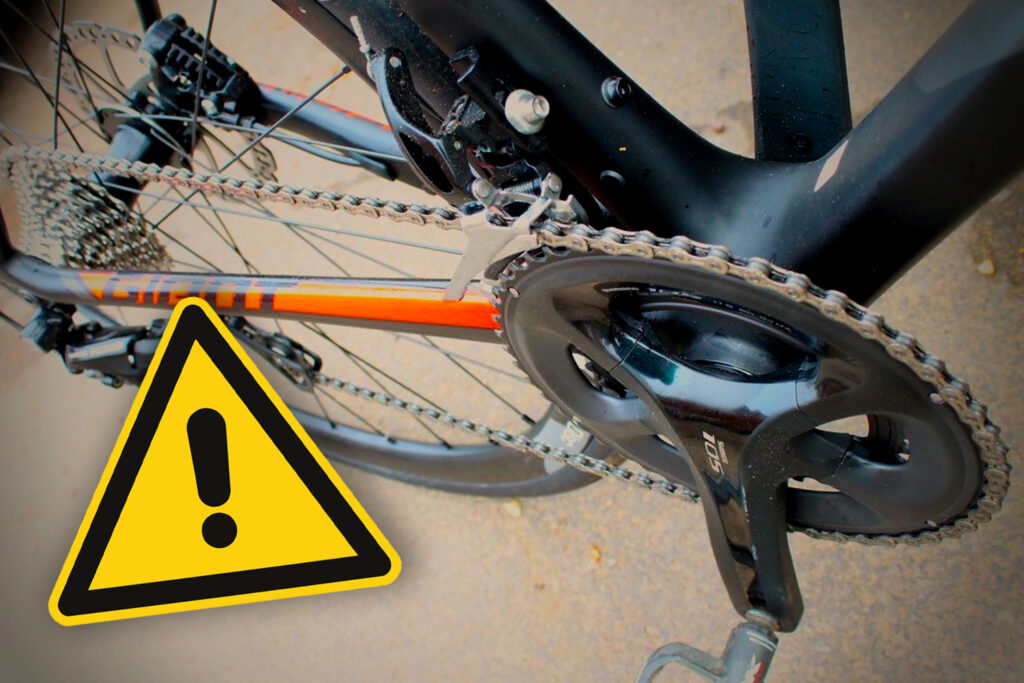

Cross-chaining has long been considered a major cycling faux pas by many, with riders quick to call out those stuck in the big chain ring-big sprocket or small chainring-small sprocket. But is it really that bad? We spoke with experts at Shimano and SRAM to find out whether it truly damages components, affects power transfer, and more.
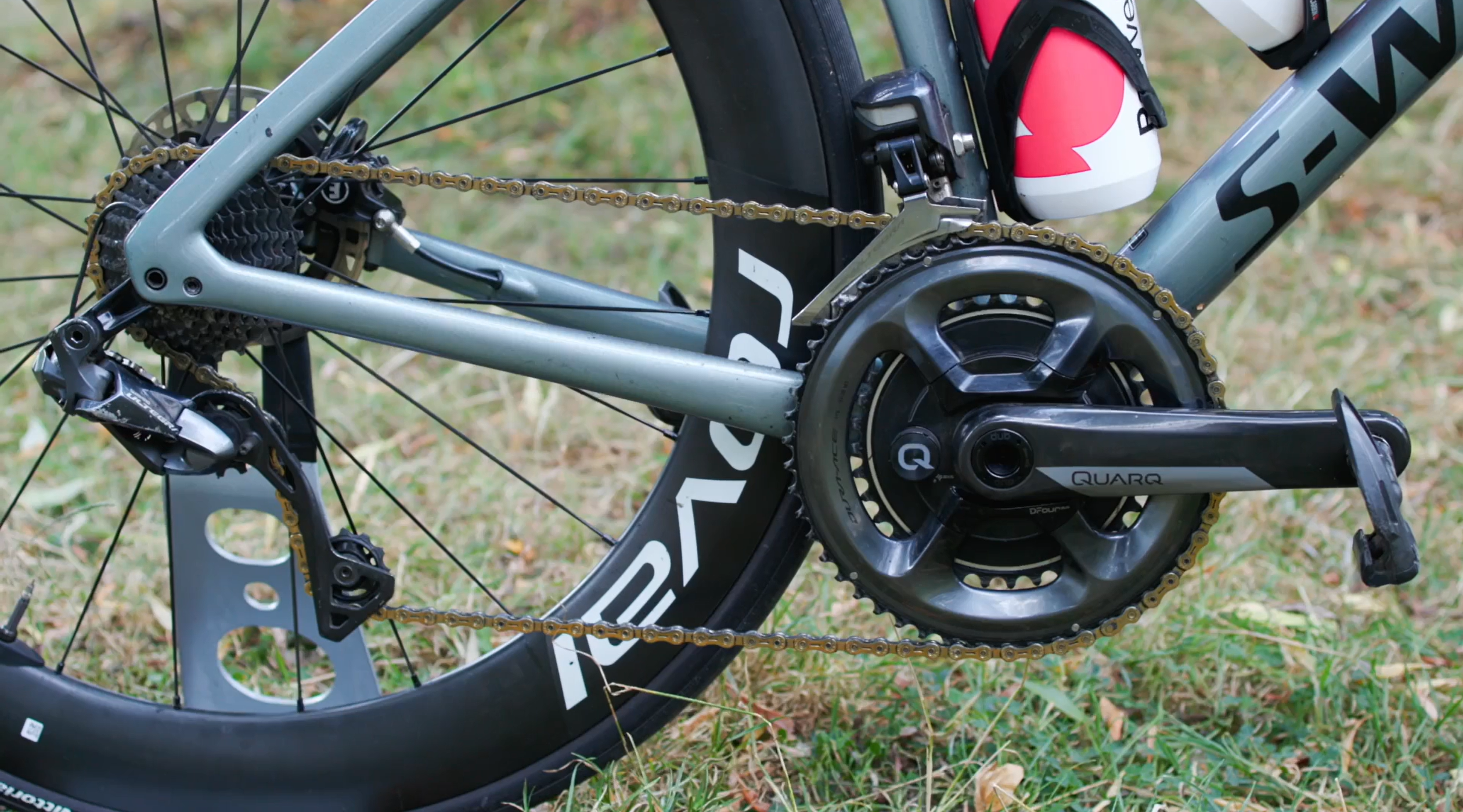
Cross-chaining is often a debated topic amongst cyclists and there are many of us (myself included) who find ourselves in the big chainring at the front and largest sprocket at the back from time to time – especially on shorter climbs.
To try and get to the bottom of this, we reached out to some of the biggest component manufacturers to answer key questions and help riders make more informed gear choices.
In this guide, we are going to explain what cross-chaining is, how it impacts component wear, and whether it’s still something to avoid or if advancements in drivetrain technology have made it less of a concern.
What is cross-chaining?
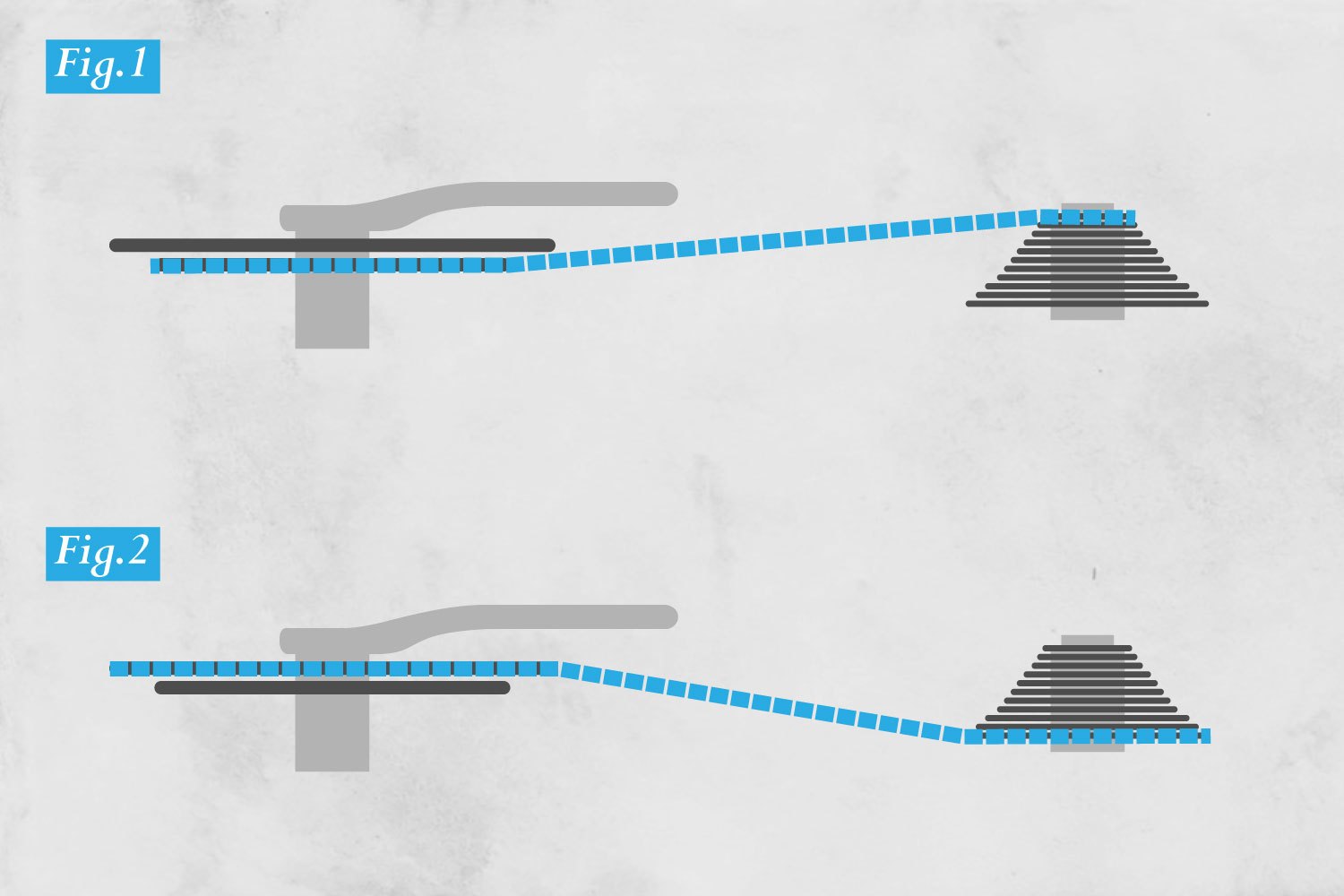
First things first, what exactly is cross-chaining? On a double chainring setup, it refers to riding with the chain on either the small chainring and the smallest sprocket on the cassette (as shown in Fig. 1 above), or the larger chainring and the largest sprocket (as shown in Fig. 2 above).
Chains are most efficient when they run in a straight line, but these gear combinations force the chain into an extreme angle, placing it under additional tension.
Should you avoid cross-chaining?
There’s a divided opinion on whether you should avoid cross-chaining with some arguing that it leads to less efficient pedalling, increased wear on components and unnecessary strain on the drivetrain.
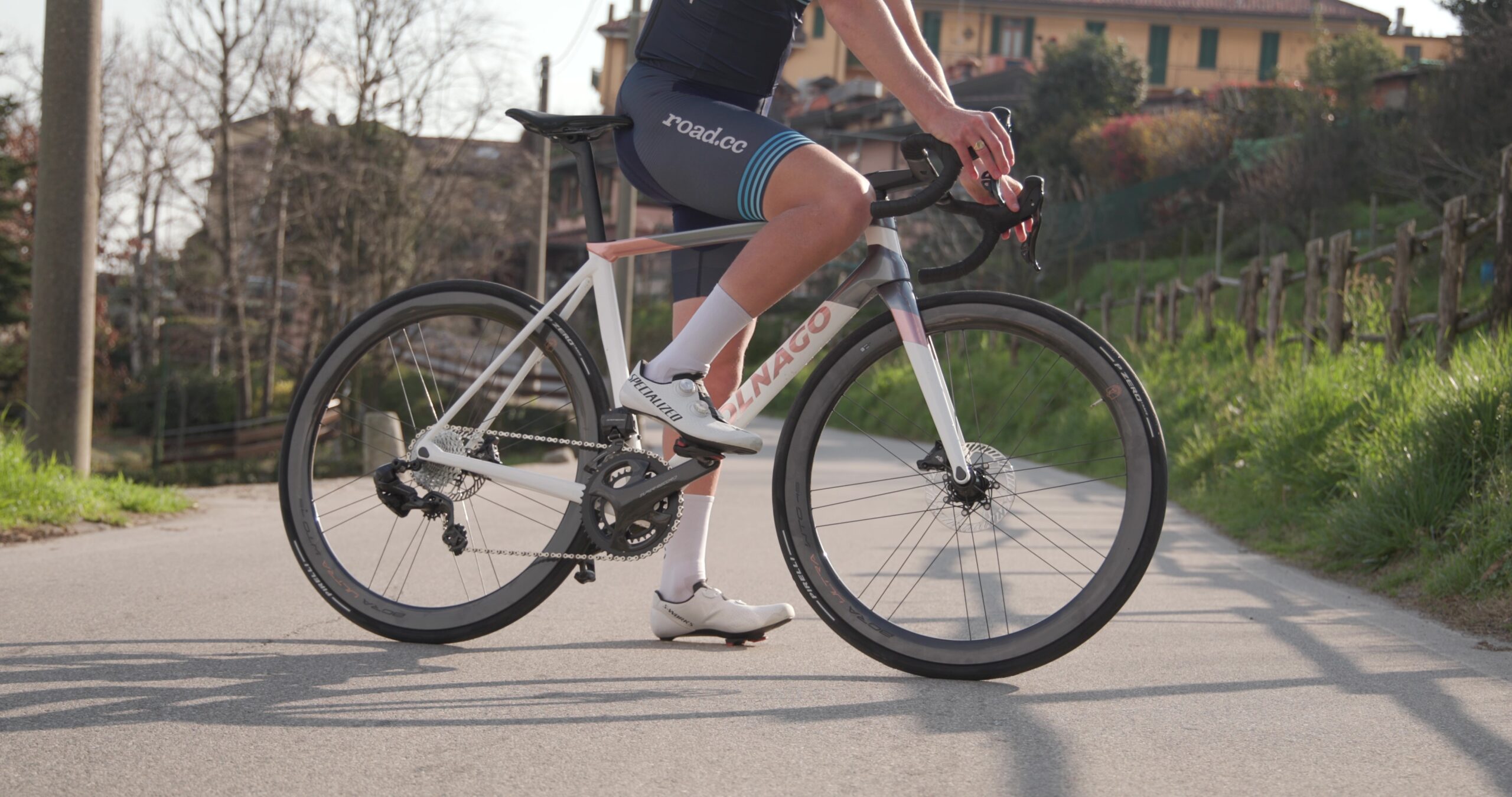
However, on the other hand, others would argue that the differences are negligible. We spoke with SRAM Road Product Manager Jason Fowler and SRAM Chief Engineer Anthony Medaglia and they would argue that the overall effect of cross-chaining on performance is minimal and likely inconsequential in typical road riding.
On a 2x setup, there are a lot of cross-over ratios which are gear combinations that provide nearly the same overall ratio but are achieved in different combinations. This results in a straighter chain line, reducing the need for cross-chaining. However, there may still be situations where cross-chaining is practical or unavoidable, such as during the heat of the battle in a race or up short climbs on the club run, when quick gear changes take priority over optimal drivetrain alignment.
How does cross-chaining affect drivetrain efficiency and power transfer?

We’ve all been told multiple times that one of the disadvantages of cross-chaining is that it reduces drivetrain efficiency and power transfer. This is reported to be due to increased friction between the chain and the cassette sprockets as well as the chain and the chainring which increases resistance, decreasing pedalling efficiency.
But, are there actually measurable losses in watts? This does depend largely on the gear combination and the components, as well as the load the drivetrain is under but Medaglia says that when you consider the overall efficiency of a bike, the reduction in efficiency is a miniscule amount. He adds, “a reminder that the benefit of a few tenths of % absolute drivetrain efficiency may not be realised in a time benefit in any typical road riding or racing scenario given the variability due to other factors.”
While chain alignment does influence drivetrain efficiency, other factors also play a role. Medaglia says, “It’s not just chain alignment but other factors like chain backtension provided by the rear derailleur through the lower segments of the drivetrain. This can vary by gear and for a given rear derailleur it also will depend on b-gap adjust, cassette size and also derailleur hanger length and position”
“This can potentially vary tension in the lower segments of drivetrain enough to influence results when the differences are this small”, he adds.
How does cross-chaining impact wear on components compared to not cross-chaining?
Interestingly, SRAM Road Product Manager JP McCarthy says, “cross-chaining has no effect on chain wear. The effect of cross-chaining on big cog and big ring is insignificant”. With the exception of small/small in a 2x system, McCarthy encourages riders to have fun and choose the gear ratio that feels best.
When you run big-big you’re pushing an uneven power transmission to the rollers, plates and bushings, especially at the points where the chain meets the sprocket and the chainring. This uneven load causes extra friction which increases the wear on the chain and longer term leads to less than optimum gear shifting.
In addition to increasing wear on the chain, cross-chaining also places extra strain on the chainring, cassette teeth, and front derailleur due to the extreme chain angle. This misalignment causes both the internal and external parts of the chain to make direct contact with the components, accelerating wear and tear.
Is running the chain on small chainring/small sprocket worse than big chainring/big sprocket?
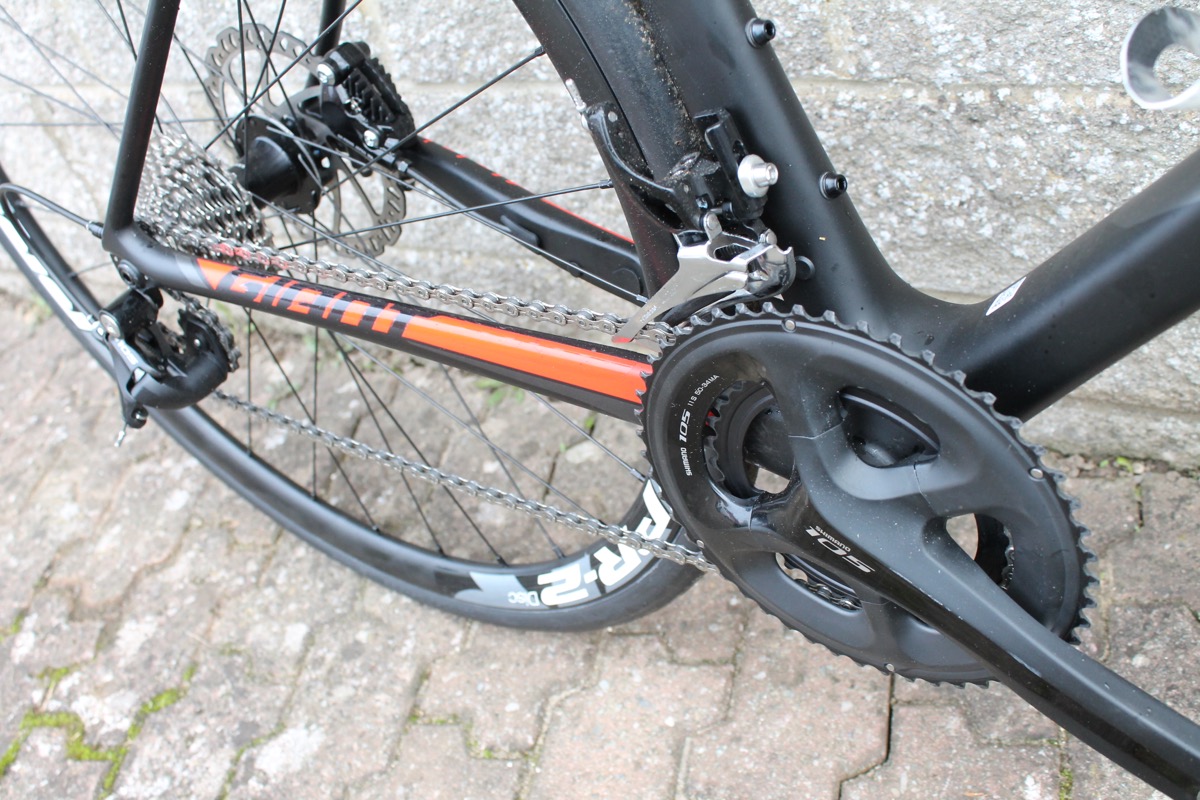
While some believe cross-chaining causes extra wear and power loss, SRAM maintains that using the big chainring with the big sprocket is fine. They recommend avoiding the small chainring and small sprocket combination, as it can cause low chain tension and lead to mechanical issues like chain interference. As McCarthy explains, “With 2x, big-big is fine. But riders should avoid small-small because the chain tension is low, which may result in chain-drop, and there’s a small risk of inadvertent chain pick-up by the large ring”.
Can you cross-chain with a 1x setup?
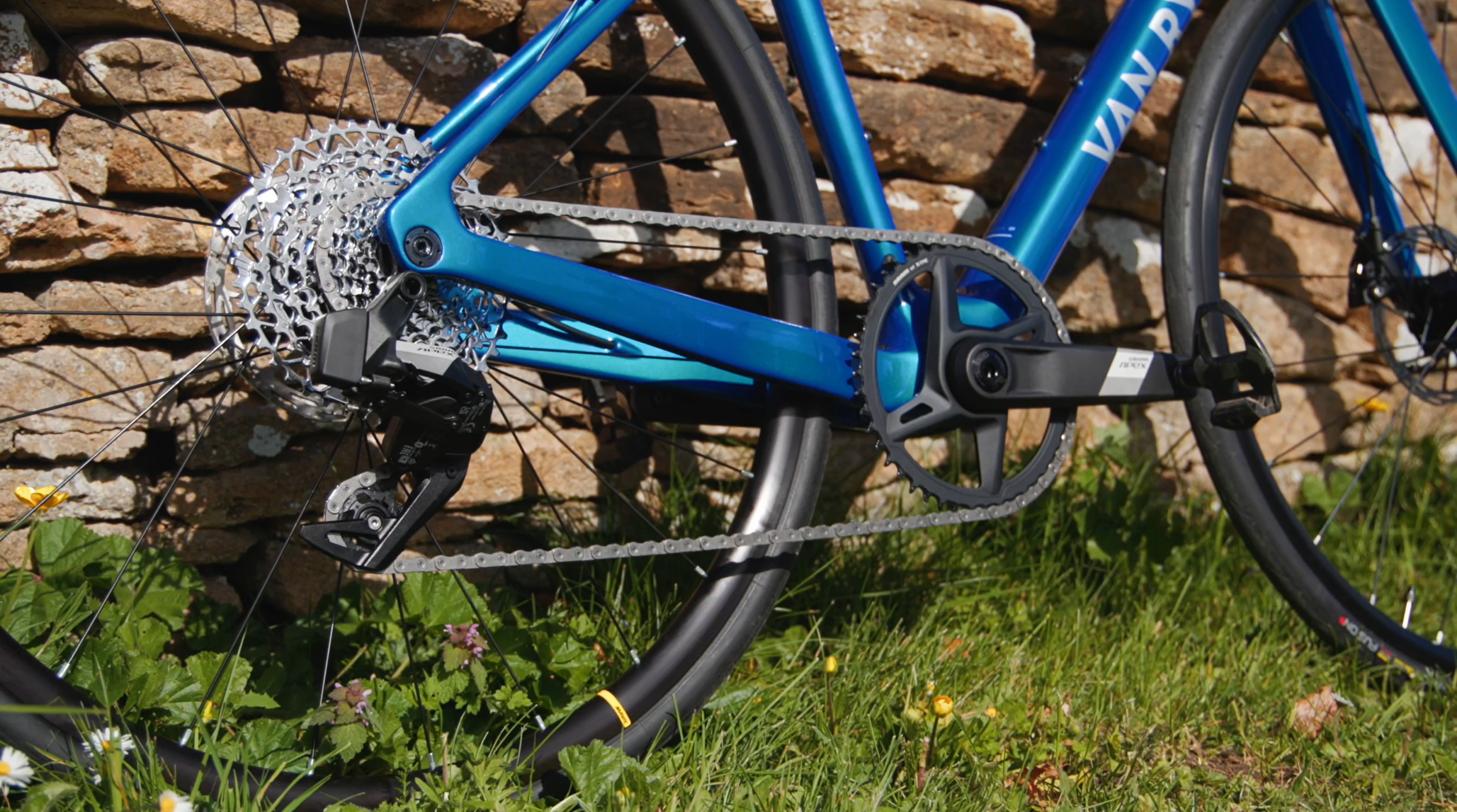
1x setups are designed to use the entire cassette range which naturally results in a more extreme chain line, but this isn’t considered cross-chaining. SRAM says, “there’s literally no such thing as cross-chaining with a 1x system”.
Are electronic drivetrains better at managing cross-chaining than mechanical ones?
Electronic drivetrains are better at preventing cross-chaining than mechanical ones because they are designed to block certain gear combinations. For instance, many component offerings have been limiting access to the two smallest cassette cogs for many years now.
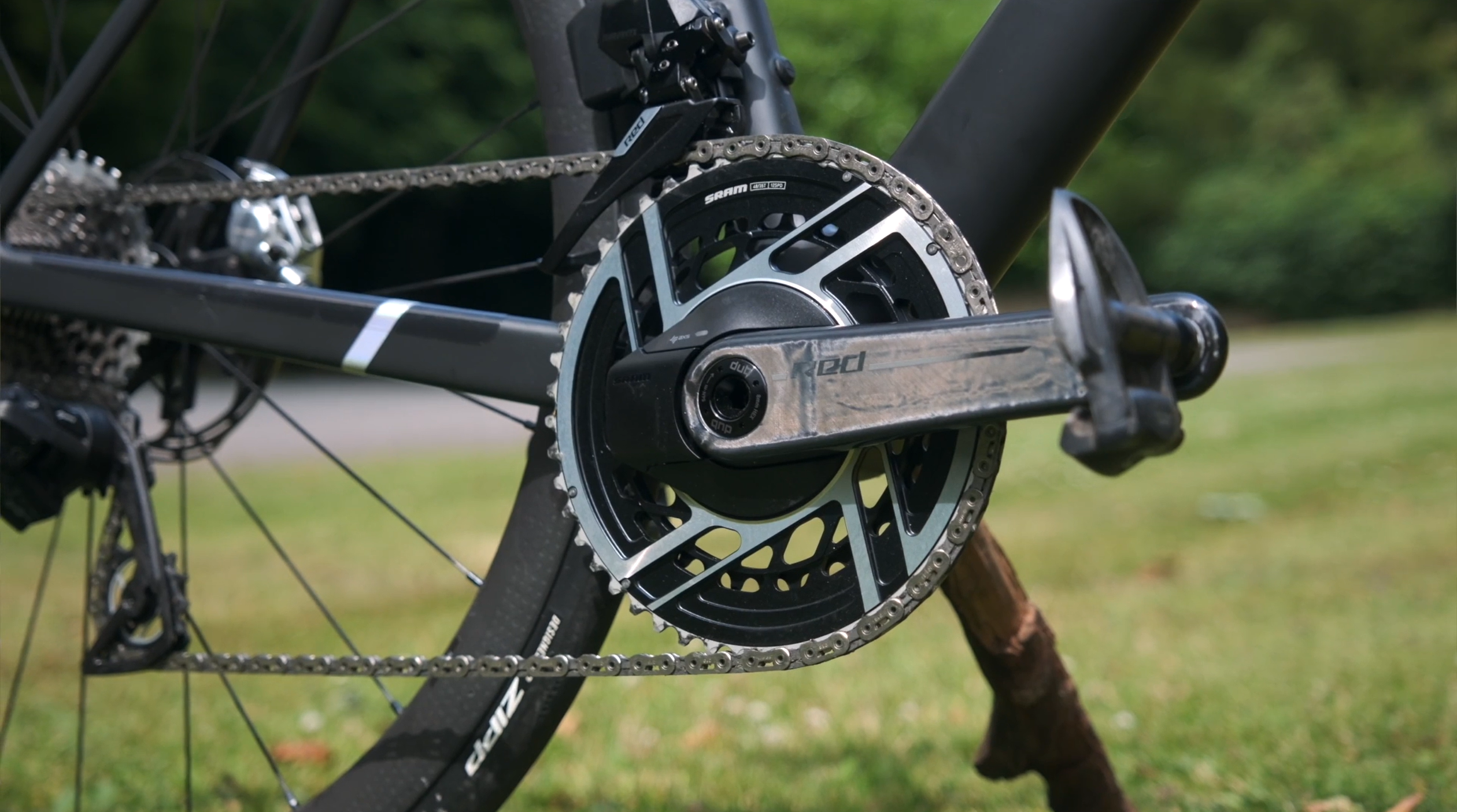
SRAM’s 2x electronic groupsets prevent the small/small combination, while some Shimano Di2 groupsets use gear position control to prevent shifting into the smallest cogs when in the small chainring.














53 thoughts on “Cross-chaining”
This article is vaguely
This article is vaguely familiar….
Must be a slow news day
Must be a slow news day
In fairness, not everyone
In fairness, not everyone will have read it before – and it’s a perennial question. I’d have appreciated if the earlier draft had been improved in the meantime, though, perhaps by including input from experts/firms who don’t stand to benefit from premature chain wear!
Yeah, it’d be good to know
Yeah, it’d be good to know when they spoke to Sram and Shimano, too. I think I read this article when 11-speed was the thing.
Is article-recycling really
Is article-recycling really that bad? Find out what road.cc had to say
lesterama wrote:
I think it can be quite wearing, but it is seems to be efficient even if there is a lot of noise in the comments section, unlike cross chaining.
I developed a one hand color
I developed a one hand color coded sequential non-reduntant shifting system for front/rear derailleurs. I now run a 3×7 but use to run a 1×7. On several occasions I broke chains on the 1×7. With the 3×7 system I advise pedal only riders to shift like this 1(1-4); 2(2-5); 3(4-7) for 12 sequential non-reduntant gears. On my motorized bicycle I shift like this Red Gears 1(1-3) Yellow Gears 2(3-5) Green Gears 3(5-7). This way the bicycle chain stays in a fairly straight line.
as long as your ocd about a
as long as your ocd about a straight line is satisfied!
https://www.gear-calculator
https://www.gear-calculator.com/ gives chain angle so you can estimate the extremes. Question is, what angle becomes a problem?
As soon as the angle is
As soon as the angle is greater than 0 degrees there will be an unintentional force normal to the leading teeth at the top of the cassette and the trailling teeth at the top of the chainring. Wear will then occur if the sides of the teeth and the insides of the chain plates are not lubricated. Doesn’t answer your question though in terms of how much wear will occur.
A total amateur cross chains.
A total amateur cross chains… if a chain is straight then it runs/turns better 👍
No it doesn’t
No it doesn’t
this is one of those made hip things that someone told you and you, wanting to sound ‘experienced,’ regurgitate
inverse137 wrote:
It is what Shimano says, not some bloke in a pub.
The biggest issue with cross
The biggest issue with cross-chainging is increased wear rates for the chain, chain rings, and cassette. In terms of efficiency? Cross-chaining isn’t going to be a big deal, especiallly when you consider that power losses in the drivetrain are on the order of 3-5% or so.
Chain efficiency varies with a number of factors:
–chain tension (increased chain tension decreases efficiency)
–chain articulaton angle (smaller cogs decrease efficiency)
–number of chain engagement/disengagement points (fixies are more efficient on this point since they only have 2 engagement and 2 disengagemet points)
–the sine of the lateral chain angle (cross-chaining…..this is a tiiny number number on bikes, even when you’re in small-small or big-big)
–chain’s lateral stiffness (12 and 13 speed chains have less lateral stiffness than 10 or 11 speed chains, so they’re more efficient when ross chaining)
IMHO, the worries about cross-chaining are a remnant of the past when chains were much more stiff laterally.
The biggest issue with
The biggest issue with crosschaining is that it’s noisy.
What about if it’s 1x but you
What about if it’s 1x but you’ve got a really tall cassette – not technically crosschaining but is it morally?
I still can’t avoid the feeling there’s something off about my 1×10. OTOH it’s on the recumbent so it’s about 5 feet from the chainring to the cassette, albeit with an idler pulley in the middle somewhere.
I’ve got a 1 x 11 speed 11-46
I’ve got a 1 x 11 speed 11-46. I just change my chain each year as a consumable as the rear cassette is way more expensive than a few chains.
exactly! This!
exactly! This!
The biggest issue with ‘cross
The biggest issue with ‘cross chaining is mud accumulation.
ktache wrote:
Noise = wear.
Cyclingtips did some chain
Cyclingtips did some chain efficiency testing with ceramicspeed some years ago, and they got quite a facinating chart of losses at different gearing combinations, both 1x and 2x
Interesting. It does bear out
Interesting. It does bear out the article, it shows the cross chain positions are slightly less efficient, with big-big showing less of an effect.
RedJohn wrote:
“slightly less efficient”
no it isn’t. No one reading this is fast enough to have ANY measurable drop due to “cross chaining”. NONE
inverse137 wrote:
Not even Road.cc knows the power output of the readership of this article.
The graph demonstrates the opposite of what you are saying – that the drop in power is measurable.
Frictional losses affect everyone, else perpetual motion (at least in a vacuum) might be a reality.
inverse137 wrote:
[/quote] You are right, inverse137 is wrong. The graph, if correct, shows a loss of 4 watts at a 3.5 ratio when pushing 250 watts. Plenty of riders on here are capable of maintaining 250 watts. 1.6% is certainly measurable, and suggests that anyone stupid enough to cross chain throughout a 90 minute, relatively flat, ride could shave a minute and a half off their time by selecting a more appropriate gear. (Whether anyone is really that stupid is another matter).
On the other hand, if I was
On the other hand, if I was able to climb Ventoux in the big ring, I’d be a lot less worried about sacrificing 1.6%.
[Edit: added an approximation of the original quote, since the subsequent edit made this make no sense.]
mdavidford wrote:
On the other hand, if I was able to climb Ventoux in the big ring, I’d be a lot less worried about sacrificing 1.6%.
[Edit: added an approximation of the original quote, since the subsequent edit made this make no sense.]— Griff500
So you came on here to comment on an “approximation” of a poor example (Ventoux) which I had already deleted before you made your post? I guess time hangs heavy on your hands.
Er – I’d replied before you
Er – I’d replied before you made your edit. Otherwise I wouldn’t have been able to see it to comment on it. That’s why it’s an approximation, because following your edit I can’t see the original to be sure of the exact wording
mdavidford wrote:
Er, clearly not. If my quote had been there you would have been able to see the exact wording to quote, and in fact quote direct, instead of by your own admission, using an approximation to a deleted post.
You’re confused.
You’re confused.
Anyway, this is all rather more analysis than was needed. If a joke becomes less funny when you have to explain it, I’m not sure what happens to it when you have to explain the process of how it came to be.
On that basis a triple would
On that basis a triple would likely be even better and give an almost flat line somewhere between 8 and 10 watts. I’m going to add that 4th chainring to my touring bike but not one of these. But maybe one of these Rene Herse 5-ring chainsets…although the date it was announced suggests it might not be available.
Logically each sprocket
Logically each sprocket should have its own chainring for best chain line. That would reduce wear also – win!
Not aero you say? Just have one ring then but hide all the cogs inside the rear hub!
(Rohloff for efficiency, given that the mechanically interesting Sachs Elan
https://www.sheldonbrown.com/elan.html
is no longer made).
Road.cc wrote:
I don’t understand what has changed on “modern” drivetrains to make cross chaining less of a problem “as some might think”. Whilst efficiency might not be an issue, wear is. Has SRAM somehow developed a chain that defies the laws of physics so that there is no force normal to the teeth on the chainring and chain plates when cross-chaining?
Modern chains have to be more
Modern chains have to be more laterally flexible to cope with the wider rear cassettes than back in the days of 5sp screw on freewheels. So I would assume that the extra flexibility also reduces the cross chainring problem.
There is nothing magic or
There is nothing magic or special about cross chaining from a wear perspective.
Your chain wear point is mostly irrelevant, as it depends on time in cross chain mode, which for most riders is always going to be a tiny proportion of their ride time.
Also the steel links and rollers that chains are made from have a very high elastic limit and functionally speaking the stress from cross chaining isn’t materially different from the stress from being in the gear below. It’s only a couple more mm to the side and a few more degrees of angle.
Secret_squirrel wrote:
I see it too frequently to agree with your point.
Pub bike wrote:
Anecdata isn’t data.
Secret_squirrel wrote:
My anecdata is better than your anecdata.
cross chaining is not an
cross chaining is not an issue. It never was
I doubt you have seen “an issue”
Secret_squirrel wrote:
Your chain wear point is mostly irrelevant, as it depends on time in cross chain mode, which for most riders is always going to be a tiny proportion of their ride time— Secret_squirrel
The stigma of cross chaining
The stigma of cross chaining came about when triples were common and was often used as an argument against them. In fact used correctly triples allow a better chain line if used correctly where 1x gives you no option…
“chain line” is nonsense and
“chain line” is nonsense and always has been
Having snapped a chain many
Having snapped a chain many years ago setting off hard once too many times from traffic lights with a very crossed chain my own experience is that it is an issue. In this case the sideways force pushed the outer chain plate off the pin. It was a SRAM chain. I’ve learnt my lesson since then and avoid standing starts with a severely crossed chain, and will drop a chainring if I feel the need to make a quick getaway.
I want to know what Campag
I want to know what Campag have to say about it.
Why?
Why?
https://www.mondly.com/blog
https://www.mondly.com/blog/italian-hand-gestures/
I used a 1 X 11-46 Shimano XT
I used a 1 X 11-46 Shimano XT (11 spd) some years ago during my wuzzy Everesting attempt. After several hours, I was in a front chain ring (possibly 42) X 46 for the entire ride, and once the ride was over, the outside edges of the chainring teeth showed considerable wear. n = 1, but it’s not just about chain wear. Other components get worn too.
No it’s not that bad; if you
No it’s not that bad; if you’ve paid money for your bike, then you should be able to use all of the gears available.
Far too many people worry about insignificant things in cycling – just go out a ride your bike.
Velophaart_95 wrote:
The article doesn’t actually quantify how bad “that bad” is so there isn’t anything substantial to agree or disagree with.
For sure everyone can ride their bikes how they like and bike gears don’t come with much guidance. But whatever the actual increase in wear or loss of efficiency is when cross-chaining I think the comment by Shimano – who may have been involved in developing the odd groupset – sums it up as they probably know what they are talking about.
Velophaart_95 wrote:
You don’t get all the gears you think you’ve paid for; for example in a 2×11 system, there’s considerable overlap, you don’t get 22 ratios. Why grind away in 52/32 (big ring/big cog) when a far more sensible 36/22 is near identical in terms of ratio and won’t wear away the chain, rings and cassette so much (which you’ve paid money for).
Exactly. Why use big ring big
Exactly. Why use big ring big sprocket when another ratio has a straighter chainline and simmilar ratio.
I have an old bike that physically does not allow me to cross chain big ring big sprocket. Chain would be to short. That’s no issue since I never wanna be in big ring big sprocket anyways.
It’s also very easy to avoid cross chaining. If you have 2×11, ~6 sprockets belong to the big ring, and 6 to the small one. When you get to the crossover point you shift both front and rear at the same time. Smaller chainring at the front and harder sprocket at the back. That usually is one gear easier. It’s really easy to do if you know how (on all bikes besides downtebe shifters). It avoids cross chaining…
Tonight, on Road.cc we ask
Tonight, on Road.cc we ask “The Devil – is he all bad?”
UPDATE : T shirt idea
Horrible – please fix it so
Horrible – please fix it so that the crank is properly aligned.