

- News
- Reviews
- Bikes
- Accessories
- Accessories - misc
- Computer mounts
- Bags
- Bar ends
- Bike bags & cases
- Bottle cages
- Bottles
- Cameras
- Car racks
- Child seats
- Computers
- Glasses
- GPS units
- Helmets
- Lights - front
- Lights - rear
- Lights - sets
- Locks
- Mirrors
- Mudguards
- Racks
- Pumps & CO2 inflators
- Puncture kits
- Reflectives
- Smart watches
- Stands and racks
- Trailers
- Clothing
- Components
- Bar tape & grips
- Bottom brackets
- Brake & gear cables
- Brake & STI levers
- Brake pads & spares
- Brakes
- Cassettes & freewheels
- Chains
- Chainsets & chainrings
- Derailleurs - front
- Derailleurs - rear
- Forks
- Gear levers & shifters
- Groupsets
- Handlebars & extensions
- Headsets
- Hubs
- Inner tubes
- Pedals
- Quick releases & skewers
- Saddles
- Seatposts
- Stems
- Wheels
- Tyres
- Health, fitness and nutrition
- Tools and workshop
- Miscellaneous
- Buyers Guides
- Features
- Forum
- Recommends
- Podcast
news
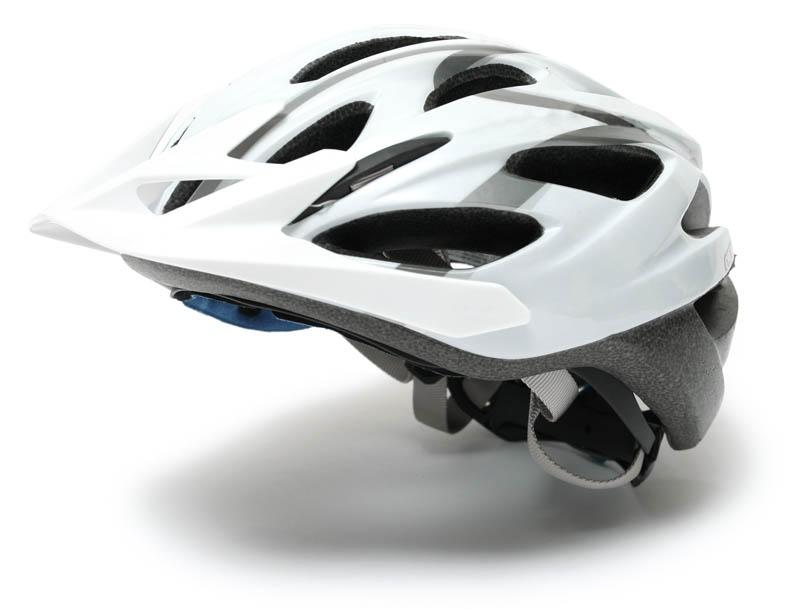 White cycle helmet
CTC and Sustrans launch online petition to fight helmet compulsion
Sustrans and the CTC are have launched an online petition in their continuing efforts to fight a bill that would make cycling with a helmet compulsory in Northern Ireland by launching a petition and presenting evidence to the committee of the NI assembly that is currently scrutinising the bill as part of the legislative process. The online petition can be signed by anyone living in the UK.
Last month the Northern Ireland assembly passed The Cyclists (Protective Headgear) Bill by two votes which if it becomes law will make it an offence to ride a bicycle in public in the province without wearing protective headgear.
The bill was backed by the Northern Irish council of the BMA and its passing lead to calls for similar legislation to be passed in both the UK and the Republic of Ireland. One reason no doubt that both Sustrans and the CTC are asking people from across the British Isles to sign the petition.
In this latest stage of their campaign against the bill both organisations, which work to promote cycling are careful to explain that they are not “anti-helmet”. Instead, they point to a catalogue of evidence showing that Northern Ireland would see a sharp reduction in the number of people who would cycle if the bill became law. This would have serious consequences for public health, quality of life, congestion and the environment.
Explaining his organisation's stance, Roger Geffen, campaigns and policy director at the CTC, said: “Cycling for day-to-day journeys is a relatively safe activity and it gets safer the more people there are cycling. This bill may be well-intentioned, but it will deter vast numbers of people from cycling, while increasing the risk for those who remain. At a time of mounting concern about obesity and climate change, scaring people into car-dependence is bound to shorten more lives than helmets would possibly save. I’d recommend our petition to everyone who enjoys cycling. With their support we can defeat this fundamentally flawed bill.”
Sustrans’ position was set out by its Northern Ireland Director Steven Patterson who said: “We share the wish of the supporters of this bill to improve the safety of cyclists but there are many better ways of doing this, such as giving every child on-road cycle training or reducing speed limits to 20mph in residential areas.”
The Cyclists (Protective Headgear) Bill was proposed by Sinn Fein assemblyman and ex-Mayor of Derry Pat Ramsey who during the Assembly debate himself acknowledged the concerns of the CTC and Sustrans.
“I am not for one minute dismissing claims that cycling incidence reduces after the introduction of helmet legislation,” he explained. “In fact, it is out of concern for any negative impact that I have proposed a three-year introductory period, if the legislation were approved, during which there would be a publicity campaign and time for schools, the Department and other parties to enter into a full awareness campaign. That full three years would allow ample opportunity for those groups and other cycling groups to come on board and to become aware of the regulations.”
Mr Ramsey, a former Mayor of Derry, added:
“It surprised me that some cycling organisations are opposed to the Bill. The reason why it surprises me is that in organised cycling events, even informal rides out, cyclists are invariably helmeted. It also surprised me because the main governing body for cycling racing, the Union Cycliste Internationale (UCI), has made helmets compulsory in all racing events.
The UCI does not as far as we are aware have an position on the wearing of helmets outside of close road cycling events and certainly Mr Ramsey's comments could be said to show a distinct failure to grasp the relative risks involved in riding a road race and popping down to the shops on your bike or riding to work a fact not lost on those who opposed his bill both within and outside of the Assembly.
You can read the CTC's briefing paper on the NI helmet bill on the CTC website.
road.cc's founder and first editor, nowadays to be found riding a spreadsheet. Tony's journey in cycling media started in 1997 as production editor and then deputy editor of Total Bike, acting editor of Total Mountain Bike and then seven years as editor of Cycling Plus. He launched his first cycling website - the Cycling Plus Forum at the turn of the century. In 2006 he left C+ to head up the launch team for Bike Radar which he edited until 2008, when he co-launched the multi-award winning road.cc - finally handing on the reins in 2021 to Jack Sexty. His favourite ride is his ‘commute’ - which he does most days inc weekends and he’s been cycle-commuting since 1994. His favourite bikes are titanium and have disc brakes, though he'd like to own a carbon bike one day.
Latest Comments
- quadtodd 38 min 21 sec ago
And 3 of the 'workers' are just leaning!
- yellowjack 1 hour 9 min ago
Same sketch everywhere, or so it seems. Take Whitelegg Way in Bournemouth. Wide cycle lanes put in both sides of a (formerly very wide) two lane...
- yellowjack 1 hour 25 min ago
Sounds cool. I haven't taken an "unnecessary flight" since 1992. Flown many times since then for work, but you can't patrol the Iraqi desert, or...
- NOtotheEU 1 hour 49 min ago
My first thought on reading the headline was "ooh, has Clevedon put in covered bike parking now?".
- TheBillder 2 hours 45 min ago
I rented a car a few weeks ago, a Skoda Octavia (needed a big car for a weekend), and the ride was astonishingly good compared to my own 10 year...
- Sriracha 3 hours 42 min ago
Shimano were castigated for not bringing on new factories to meet pandemic demand, thus gumming up the supply chain. Their argument at the time was...
- Romanp 3 hours 52 min ago
I figured out a reason of that squeaking noise. I have xpresso 2 and 7, and also xpro 10 pedals, and that squeaking isn't present only at Xpresso 2...
- MichaelWinnerRIP 4 hours 53 min ago
Italian tourist and pussycat in Portugal.
Add new comment
52 comments
There's plenty of junk science on both sides of the argument. Despite what you might think, there's good science in both camps too. What there plainly isn't is any kind of concensus in the data, like that which has backed up other compulsory safety measures like seatbelts and motorbike helmets. The data is massively culturally specific, because it's infrastructure, legal frameworks and people's attitudes to cycling – not helmets – that make the biggest difference to casualties. Helmets are a red herring and any money spent on compelling people to wear them could be better spent actually making cyclists safer.
I am a professional cycling instructor. Before I trained, I religiously wore a helmet. After I qualified, I stopped wearing one. I just didn't feel the need any more. When I asked myself why, the answer seemed to be that previously a helmet had made me feel safer, but when I thought about it, I hadn't actually been doing anything to decrease the risks of a collision. I also drive a car from time to time, and when I do, although I am wearing a seat belt and it has a driver airbag, I focus on the same thing: reducing the likelihood of a collision rather than surviving one. I'm glad for anyone who has avoided serious injury or death by wearing a helmet, and I've nothing against people wearing them if they choose to, but day in and day out I see people clad head to foot in hi-viz gear making basic mistakes in on-road positioning, failing to be aware of other road users, particularly behind them, failing to communicate properly with other road users, and wearing helmets that would be useless in a collision because they are not properly fitted. Off-road and in sport cycling, different ball game, and I'd probably wear a helmet. I've now clocked up over 20,000 miles on-road in London, and the miles since I stopped wearing a helmet have been a lot more relaxed and far less risky, imho. In a nutshell, my view now is that how you ride is a lot more important than what you wear. Making people wear helmets won't reduce the risk of collisions, and head injuries are caused by collisions.
The CTC should stick to the personal freedom aspect when fighting helmet laws.
There are so many myths recirculating among the anti-helmet folks that unfortunately they actually start to believe them. Then when they actually get to public hearings they repeat these myths, but those in favor of the helmet laws have actual facts.
There has _never_ been a reduction in cycling levels as the result of a helmet law. In Australia, ONE highly flawed study, conducted soon after a helmet law was implemented, claimed such a reduction, but even those behind that study admitted that future counts showed that cycling levels quickly recovered and soon exceeded pre-helmet law levels (that's not a claim that the helmet law caused an increase in cycling, correlation is no the same as causation).
Similarly, every study by ER personnel, comparing the level of injuries of helmet wearers versus non-helmet wearers involved in similar types of crashes, showed a very large reduction in injuries and fatalities.
We should not be forced to wear helmets. But using junk science and statistics in an attempt to stop helmet laws is not only dishonest, it doesn't work.
The biggest myth is that there is an 'anti-helmet' lobby. No-one is anti-helmet, just anti-compulsion.
As said, the issue is the 'compulsion' of wearing a helmet not the wearing of one. I wear one soley because it puts my girlfriend's mind at rest. The problem is, my lid is not going to protect me when some motorist ploughs into me at 50+mph!!! Sadly, it is the vunerable road user who is being forced to take measures to protect themselves from the motorist and if Mr Ramsey and others have their way will find themselves breaking the law - what next, ban pedestrians from walking along country roads?!
Motoring bodies and politicians would be better of addressing the shoddy standards of driving in the UK - not trying to give the image that cycling is an 'inheritently dangerous activity' by helmet legislation!!! And when has anyone seen the tv motoring programmes advocating safer driving?? All you get is speed, power slides and huge bhp from the petrolheads!!
If this gets the green light and somebody down the line has the misfortune to get bounced and has the audacity to make a claim against the driver. Can anyone guess the loophole the insurer will use to crush the claim? Yep, the integrity of the helmet and if it was worn correctly will be questioned regardless of the motorist not paying attention to a highly visible, lidded cyclist. Oh and more than likely speeding!


Certainly difficult to enforce (as are all the other traffic laws (for any form of transport, which is clear from a quick ride around central london).
As for the effect on the bike hire scheme, I was recently approached when hiring a boris bike by a man from TfL doing a survey on helmet usage. They were apparently looking into the provision of helmets with the bikes, possible using a disposable helmet or helmet liner to deal with perceived (or actual) hygiene issues. But again, I agree that compulsion would be likely to have a negative impact on the scheme - it reduces the perceived convenience, and I suspect lots of people just won't want to mess up their hair for a quick trip down the road!
If number plates are next, 'road' tax couldn't be far behind...
The tiresome argument about whether bike helmets make a difference misses the point entirely. I have a simple test for those who want to quantify in detail whether a helmet makes a difference at 10mph, 20 mph, 30mph - or being hit by a car, bus or meteorite. Come around to my house and let me whack you on the head with a heavy wooden mallet - once wearing the helmet and once without and you can decide whether helmets protect the head at all.
I suspect that most of the time - especially in accidents involving larger, harder, faster vehicles a helmet makes no difference at all - but if I'm out on fast rides I wear one as even tiny odds in my favour are better than nothing and I'd rather meet the road head first with one on than not. I met the road without and I don't want to repeat that experience.
Illogically when I pop to the shops I don't wear one and I will defend everyone's right not to wear one.
Illogically I also defend people's right to smoke and drink themselves to death as well - even though the cost to the NHS of those two habits are hugely more than dealing with head injuries from people not wearing helmets.
perfect. couldn't have put it better myself, (so i wont bother trying either).
Quite - these are the experienced people I was talking about.
Nicely put MercuryOne - I find the freedom argument against compulsion more persuasive than any of the safety arguments. I'll continue to exercise my choice to wear a helmet most of the time (I dont wear one on Boris bikes, for example), just as those who decide not to can exercise theirs (and hopefully we can all continue to do so).
I am similarly illogical.
Surely any helmet law would have a negative impact on the cycle hire scheme in London and elsewhere, and be impossible to enforce. Maybe number plates for bicycles would be the next thing on the list...
x
Well stated.
The endless attempts to use "science" and statistics to "prove" that helmets don't work, are amusing, but they also play right into the hands of the compulsion folks because they are so weak.
The government should encourage people to eat less fatty foods, not smoke, wear seat belts, wear helmets etc., but unless the behavior has a direct negative impact on others (i.e. texting while driving or driving drunk) their role should end at "encouragement."
While you could correctly argue that we all pay for irresponsible behavior through higher health care costs, the solution is still not legislating behavior. There could be financial incentives for responsible behavior like keeping one's weight within certain limits, wearing helmets, not smoking, etc.
At what point does a helmet cease to be a safety device intended for the good of the wearer? Some say 12 mph, some 20 mph. I say when it becomes compulsory by law. Then it is transformed in to something else entirely. That will be when I stop wearing mine.
I take the point that kinetic energy is proportional to the square of speed - but (a) I travel at well over 20mph on my bike at several points on my commute, and regularly over 30mph(and I am not especially fast), and (b) if I hit my head on a stationary object even at 20mph, I am likely to do myself a nasty injury.
The thing I can't get away from in this debate is that cycling on the roads *is* potentially dangerous, even when no other traffic is involved. I'm still not convinced by the arguments that try to distinguish cycling so clearly from other on-road vehicles. Thing is, I don't think that level of danger is unacceptable - life is full of danger - but the risks do exist and can be mitigated using a number of methods.
I think I'm concluding that I am anti-compulsion, but only from a political 'pro-freedom' point of view, rather than because I'm not convinced by the safety-based arguments against compulsion.
@mowatb - did you read about those people who have been paralysed due to the effect of a helmet in an accident. Helmets protect in specific form of accidents and in others they can be a downright risk.
oh also my sons don't wear a helmet but they are taught bike control, awareness of surroundings and the like. They also climb run and generally do things that children have been doing for centuries with out a helmet.
I ride a bike, drive a car, in fact I have licenses for both car and motorbikes and the best skill I bring to riding a bike is the skills learnt riding a motorbike specifically the road awareness you get from the training and actual riding of a motorbike. The same things happen on a motorbike that happen on a bicycle but only quicker and with greater impact.
while I am on this rant. Bicycle helmets only work under 10mph, I have read - whether this is true or not I have no idea but it goes to show how information or research can be skewed to suit any argument.
I have been on bikes all my life. I know if helmets are made compulsory I will dump my bikes and withdraw the cycle training and fitness rides from my companies portfolio. The choice is mine not the anyone else as no one has proved that helmets work.
I see stacks of people in London in normal clothes for cycling but, interestingly, my perception is that most wear a helmet (most meaning more than half - I would have said around 70:30). That said, that is at peak times - in the middle of the day, I'd say the 'helmeted' number goes down, especially as none of the couriers seem to wear helmets.
Out of interest, are those who are against helmet compulsion (sounds like a psychological disorder) also against motorcyclists and moped/scooter riders having to wear helmets (even on mopeds/scooters) and car drivers having to wear seatbelts? I can see that people have 'anti-nanny-state' arguments against those things too, but I'd be interested to know if the views tend to coincide.
It's not necessarily a valid comparison - motorcycle helmets are significantly stronger than bike helmets and a seatbelt will certainly stop you from smacking into the steering wheel or going through the windscreen. The benefit from helmets is much more tenuous and the risk associated with cycling doesn't merit compulsion.
It isn't so much an argument about the 'nanny state', it's more about the way that compulsion paints cycling as being dangerous and shifts the emphasis away from other safety measures, such as better driver training, more thorough enforcement of the Highway Code and a more considerate driving culture.
Quite right that motorcycle helmets are stronger than bike helmets - but if we accept that that makes motorcycle/moped helmets justifiable, then doesn't that just mean that we should have similar helmets required when cycling on the road? The reason I keep mentioning mopeds and scooters is that their speeds are much lower and could therefore be perceived to be less dangerous. The main risk of serious injury cycling on open roads isn't to do with the cyclist's own speed - it is related to the likelihood of being hit by something (usually a car or other heavy, fast moving object).
I don't think it is wearing a seatbelt (or having airbags) that makes people think driving is a safe activity - they get that impression from having driven around lots without having had an accident that injures them.
So, I think that the idea that having to wear a helmet automatically portrays the activity as dangerous is a misperception (and one that is made worse by negativity towards helmets). Helmets are simply one of a number of easy, cheap ways to reduce the risk of injury - along with paying attention to the road conditions, and making sure your bike is well maintained. I totally agree that helmet compulsion shouldn't detract from other, probably more important, safety measures, but it doesn't have to - we could have both.
Actually, the kinetic energy your body has when travelling at 30 mph (motor scooter) is a lot more than when travelling at 20 mph (fast cyclist); 2.25 times more in fact. This is why helmets are necessary for motor cyclists - you have enough energy to deliver serious injury without the involvement of another vehicle. Kinetic energy is proportional to the square of the speed. When compared to a slower cyclist travelling at 15 mph, the 30 mph scooter rider has 4 times the kinetic energy.
I think your first point is incorrect due to the principle of 'risk compensation'. John Adams has some really interesting research about this here:
http://john-adams.co.uk/
I think your second point is also incorrect. There is no possible reason for wearing protective equipment other than to mitigate risk, unless you accept vanity or advertising as genuine reasons. Helmets indicate danger and I can't see how you would come to any other conclusion.
Incidentally, cycling's modal share has apparently dropped in every country that has tried helmet compulsion.
I should have said *too* dangerous. The point is that people do all sorts of activity daily where they use safety equipment (driving a car or riding a motorbike being theain examples) and they don't see the need for safety equipment as and indication that the activity is too dangerous. Perhaps modal share drops because of the inconvenience of wearing a helmet, rather than the safety concern?
No, I'm in favour of the nanny state... sometimes. In the case of cycle helmets the evidence to support the case for compulsion is not there. It has some value in low speed falls onto hard surfaces but is totally ineffective when hit by 2 tonnes of car at speed.
The answer is: Education, education, education.
So I was annoyed when as part of the Sustrans Bike It involvement my kids' school sent home a "design your own helmet" drawing. Of all the safety-related things they could have done.....

I am not sure sure is that this is an argument to force ALL cyclists to wear a helmet. Most casual cyclists do not reach 30mph. My wife barely gets above 10mph, my kids too. People riding where there is a high proportion of bicycles sharing the road rarely fall off, are rarely knocked off by anything and we have a reflex action that prevents the head hitting the floor in a fall.
For driving a car I'm sure a seat belt is a good idea. My Dad knocked the windscreen out of our VW Beetle in one piece after a head-on at 15mph in fresh snow. He had a sore head.
I would most definitely NOT ride a motorcycle (except tootling around the streets in 1st gear) without a top quality helmet and invariably good quality handmade leathers. My Arai helmet saved me from a concrete fence post. There's absolutely no doubt I'd be dead if I had been helmetless.
Interesting point step-hent, not at all a scientific observation, but riding around central London last week I was struck (if that's the right word) by how many of my fellow cyclists weren't wearing helmets. The majority I'd have said were wearing normal non-cycling clothes too.
Perhaps fear of injury - and the desire to wear a helmet - declines with the popularity or modal share of bicycle use for personal transport. If there are a large number of people cycling around you, mostly dressed in casual clothing, then where's the need for hi-viz?
I didn't bother with any cycling kit for the easy 5 miles through the town centre but when the office moved so I was riding further and on busy A-roads my family badgered me to wear a helmet. I still don't bother wearing it for casual, quieter rides.
The place where I find good colour contrast really has an impact is on 60mph country two-lane roads with a significant amount of traffic. More vehicles means more chances of an incident, but also that they don't see you so far in advance. Many drivers on country roads aren't expecting cyclists on the road. I was knocked off once at a junction because I didn't stand out sufficiently. I'd rather that didn't happen again so I wear a white or yellow jersey or my purple jacket.
I dont think the argument is that compulsory helmets would put committed cyclists off as much as people who would use a bike nipping down the shops, riding a mile to school, going for a pootle to the local cafe etc. where they otherwise might have driven.
Does anyone have any stats on what the current proportion of helmet wearers amongst cyclists is? And what proportion of those who took up cycling, say, this year wear helmets? One key argument seems to be that making people wear a helmet will stop people from cycling (or from taking it up), so I'd be interested to know if there is data on this. Pretty much all the new cyclists in my workplace get themselves a helmet with their cycle to work bike, and dont mind wearing it. Very few members of my club seem to ride without helmets either. In fact, the main group I see riding helmet-less are very experienced riders who have been cycling avidly for many years (long before helmets were commonplace) and would not be stopped from cycling by having to wear one.
I can't make my mind up whether I care about compulsion, but I'd love to see some more data for both sides of the debate.
Go on a CTC ride or an audax and you might have a different view.
Yes roadies tend to wear helmets, especially because they are now compulsory in UCI races and roadies want to look pro.
Audaxers and CTCers and tourers, who tend to be an older age group with a lot more years on the road, are far more likely to be wearing cycling caps.
I notice it when I ride out around Surrey/Kent when I'm home. I usually give a nod or a wave to other riders but I find the roadies ignore me because I'm not wearing a helmet so I'm not one of them, whereas the older and often helmetless guys tend to respond.
I think CTC and Sustrans, and ervyone else for that matter, should also lobby the BMA, because advocates of helmet compulsion get undeserved succour from doctors, individually or as a trade body.
I have always thought the "helmet saved my life" argument particularly spurious because is it entirely anecdotal - how can you know whether it did nor not, with all the other variables? How can you know that an unhelmeted cyclist might not have been more badly hurt if he had been wearing one (rotational injuries etc)?
Much medical support comes from head trauma surgeons in hospitals. It is more scientific in that they have their case papers to draw conclusions from, but as the Bicycle Helmet Research Foundation observes, studies like this have their own flaws.
But more to the point I am amazed at the tunnel vision so often displayed by doctors, and indeed the BMA, whose focus seems to be entirely on the head injury aspect - have they asked the heart surgeons, diabetes physicians, dieticians,oncologists, psychiatrists etc etc for their view of the impact of reduced incidence of cycling on cardiovascular fitness, obesity, cancer risk, general 'happiness' etc? It doesn't sound like it.
Exactly. It's an immutable law that any discussion of this type will invariably feature at least one participant (frequently more) claiming that their helmet has saved their life. I don't doubt that they have had a nasty experience, but just because their helmet (larger surface area don't forget) made contact with a hard surface that does NOT equate to a near death experience. In fact, if you were to add up all the individuals who make this claim I suspect that it would compare very oddly with the death/serious injury rate from the time before helmets became common.
If you feel better wearing one, that's fine, but there is no substitute for good road sense and training and no-one should be under the illusion that wearing one is the key to being safe.
From what I understand, Sustrans, like the CTC is pro choice, anti compulsion, and this is a stance I firmly agree with.
I ride a beautiful quick road bike most of the time, to commute and compete. I wear a helmet and have no issues about doing so, as I travel at high speeds and were I to come off, be it my own fault or not, I'd like a bit of extra padding.
However not everyone travels as quickly and not everyone rides on the road - there is an ever increasing network of off road routes out there for our riding pleasure, which should be used at lower speeds, given they are enjoyed by cyclists, pedestrians, and horse riders. The need for a helmet there is not so pressing, although consideration for all is needed.
As for kids, I believe that all kids should be given cycle training and it be left to the parents to decide if they want to helmet them up. If we stop the kids from riding (which helmet compulsion may lead towards) then they will not grow in to the next generation of adult cyclists. And that would be bad!
Pages